

Ayurvedic Oils: Classical Thailams
Buy Ayurvedic oils at Art of Vedas in the form of classical Thailams: herbal oils prepared for Abhyanga, Shiro Abhyanga, Nasya, hair and scalp rituals and for use by trained practitioners. Each oil is linked to a traditional Ayurvedic use, so you can choose by ritual, area of the body or Dosha.



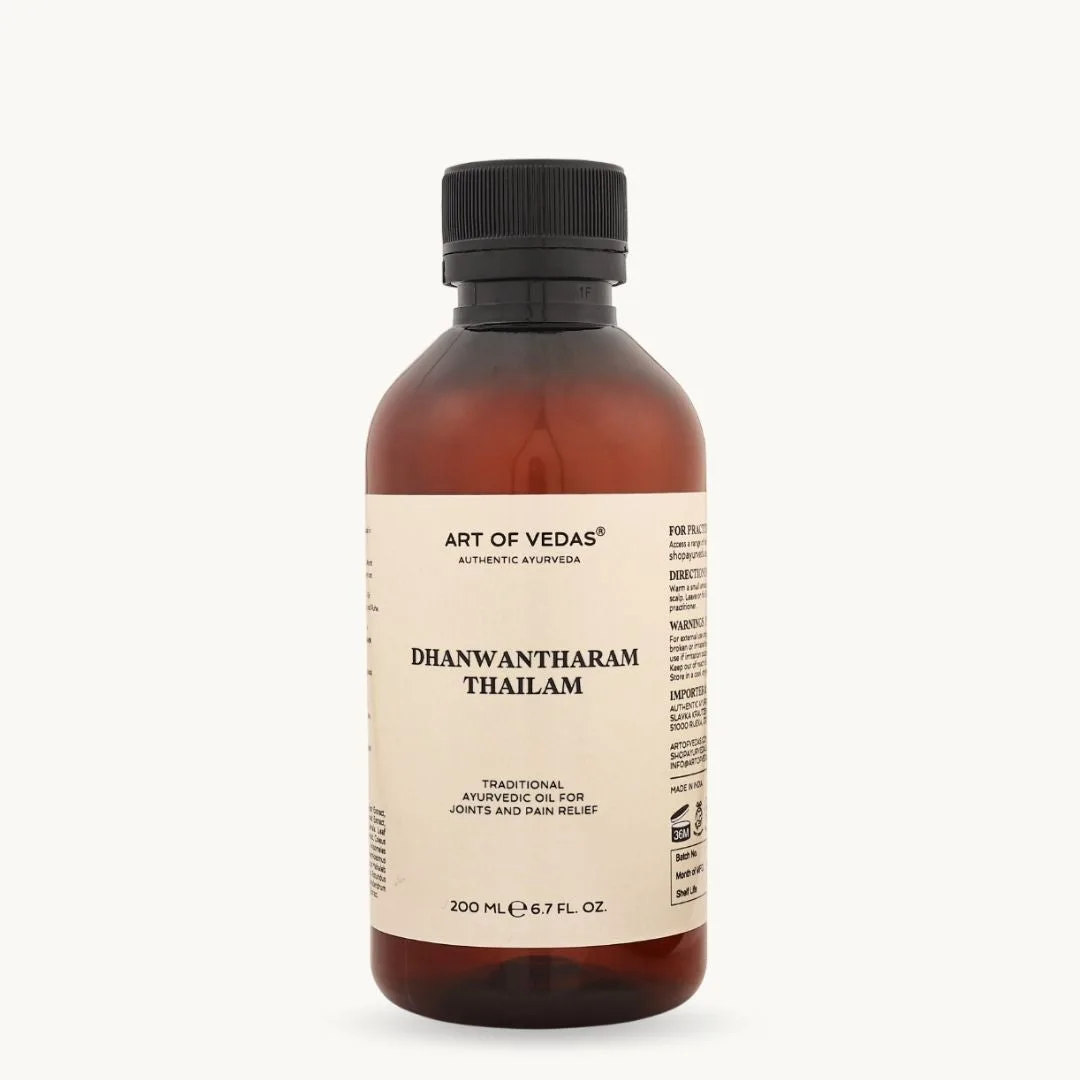
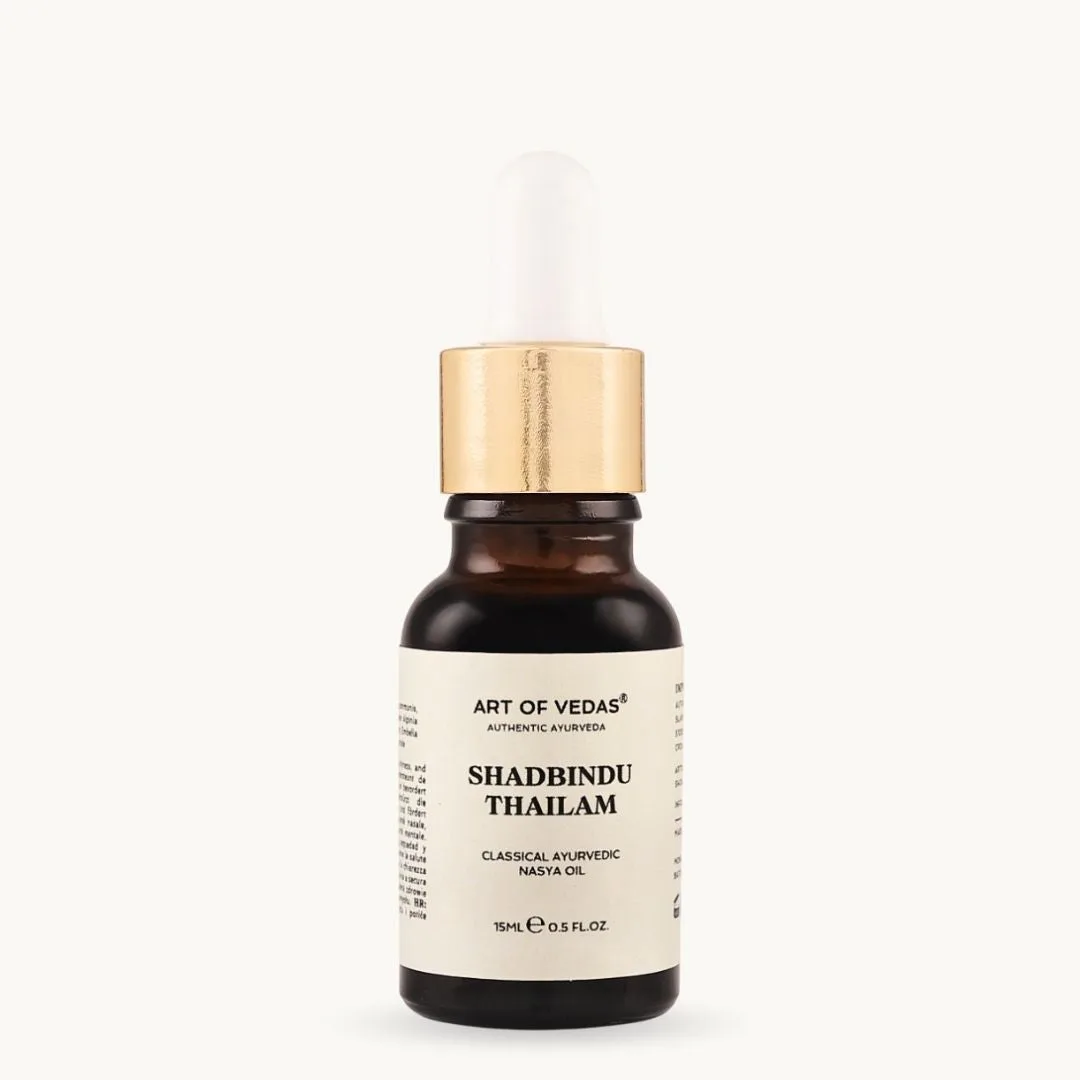
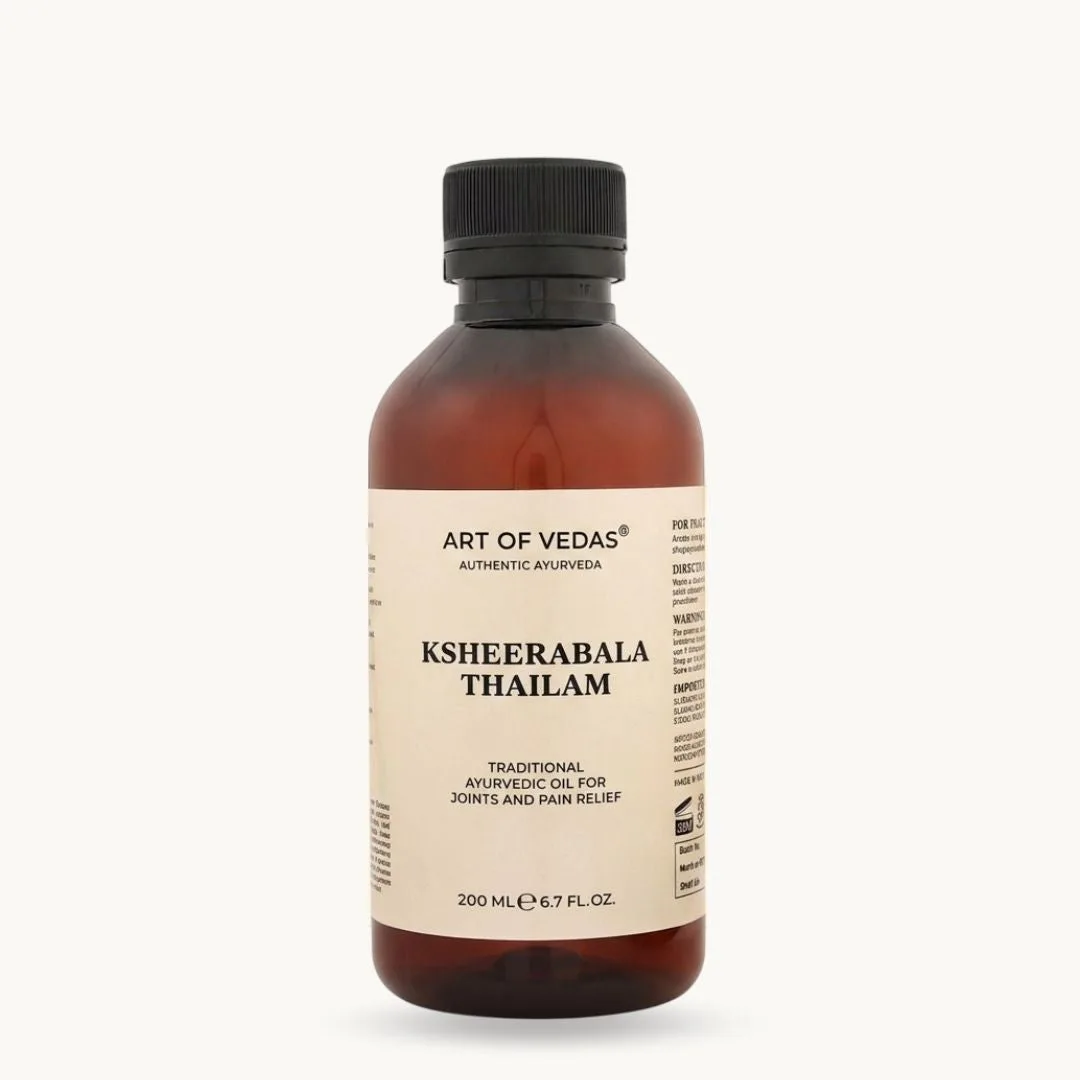
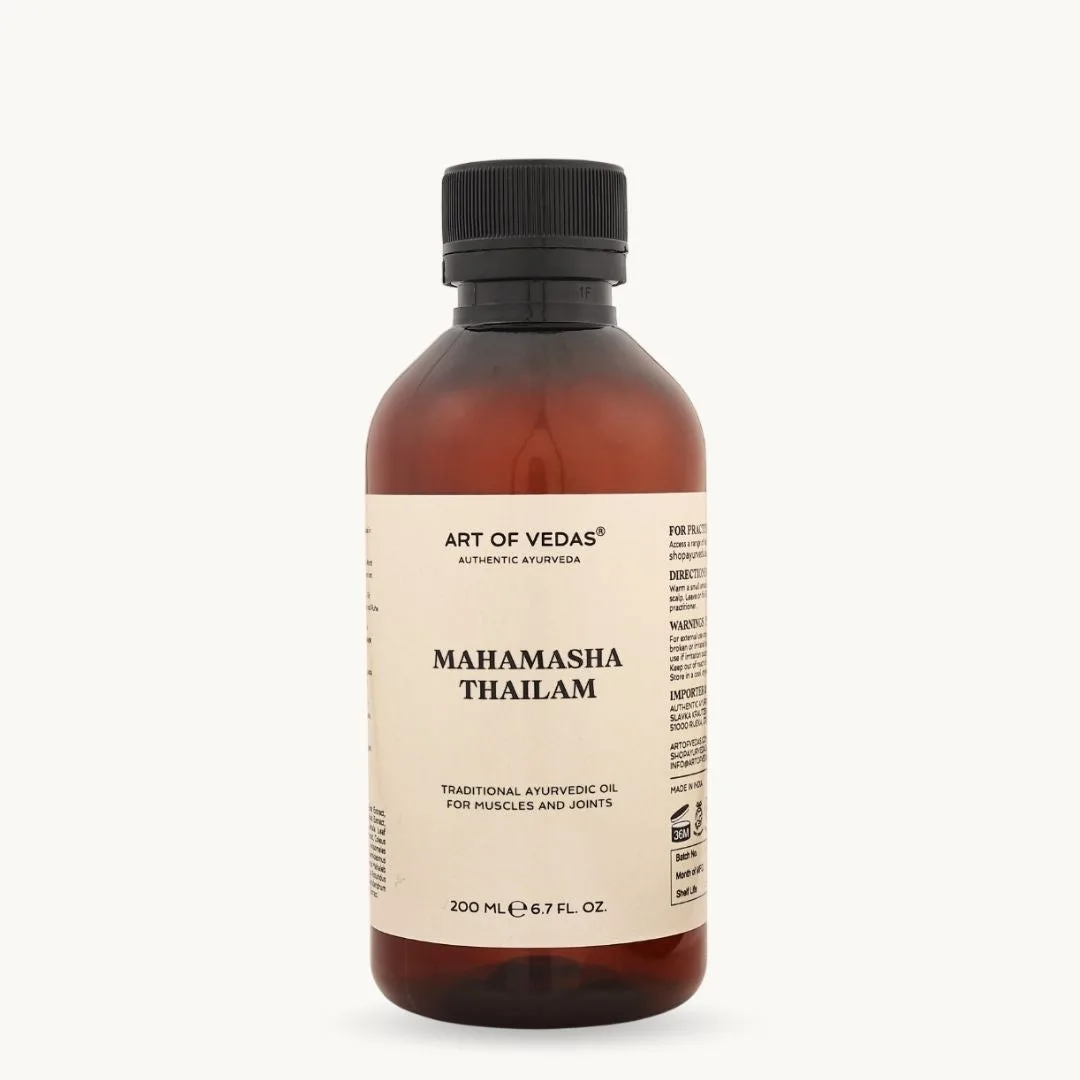
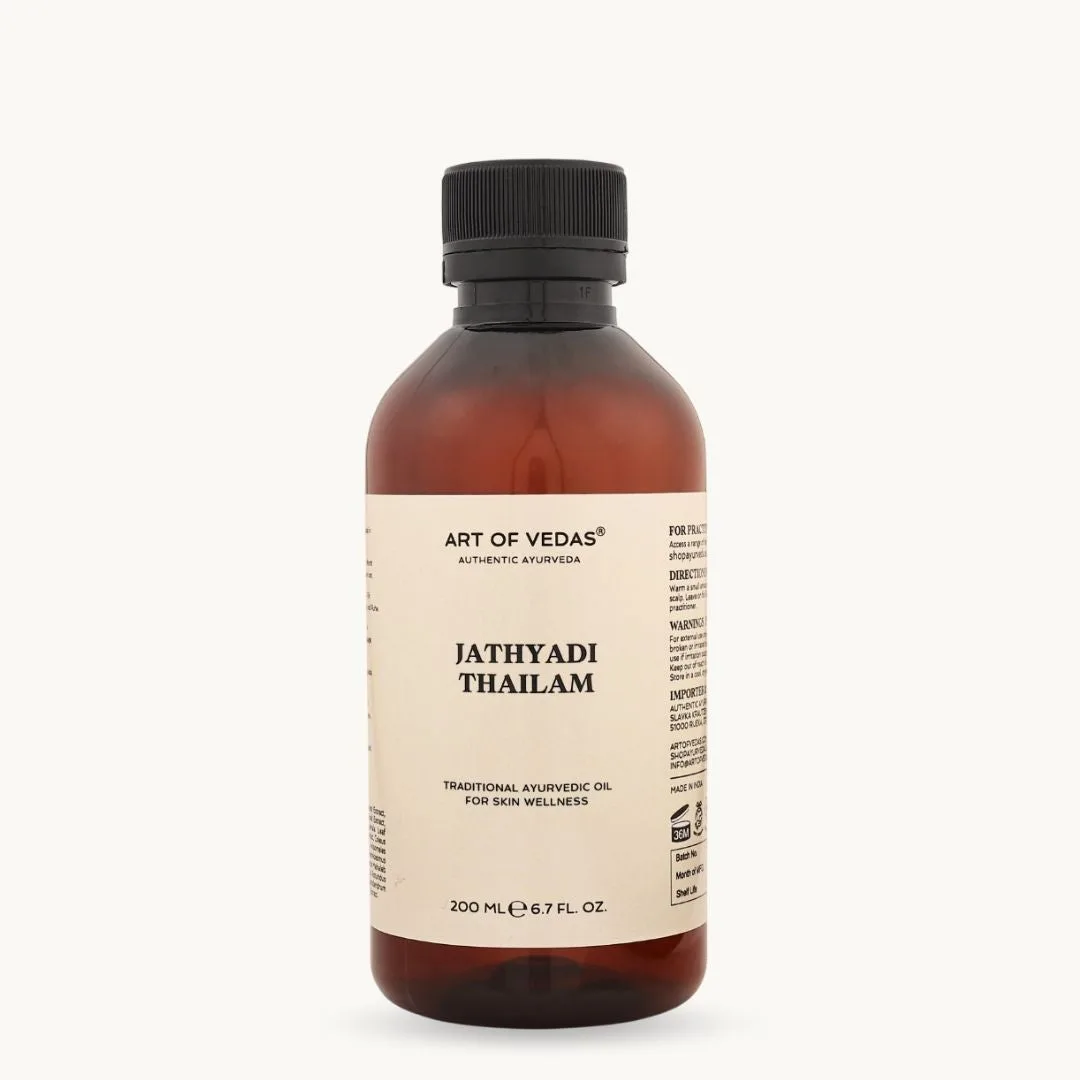
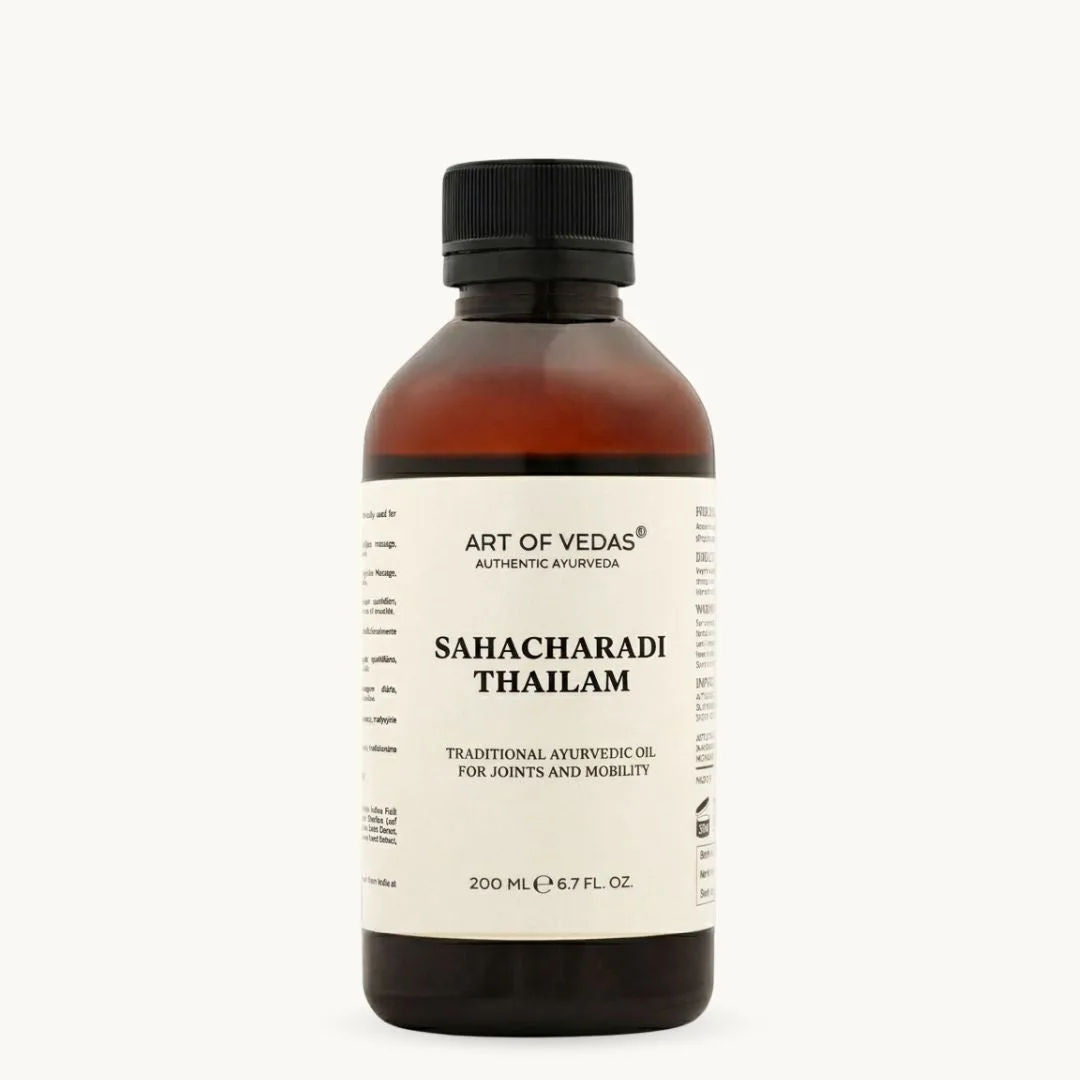
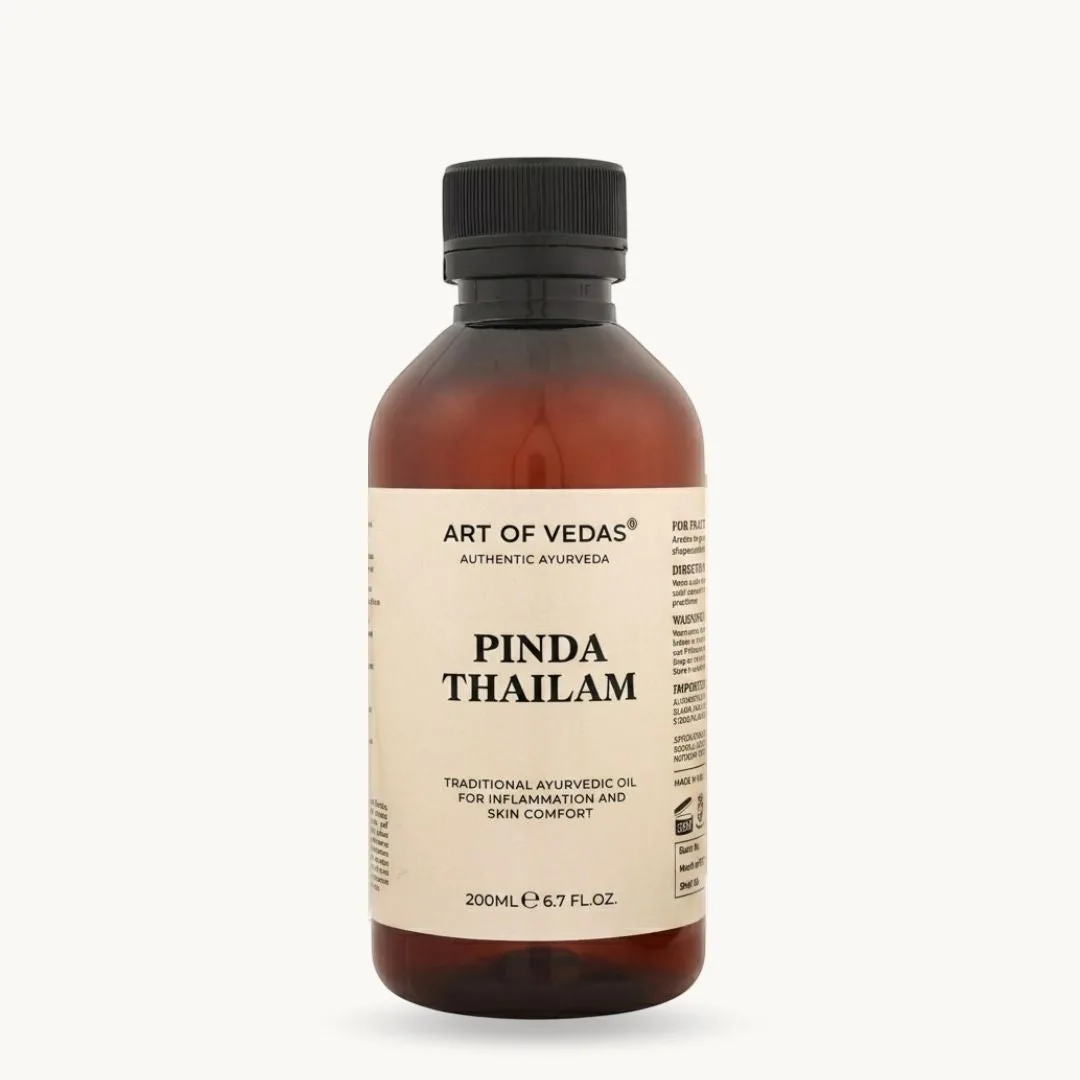
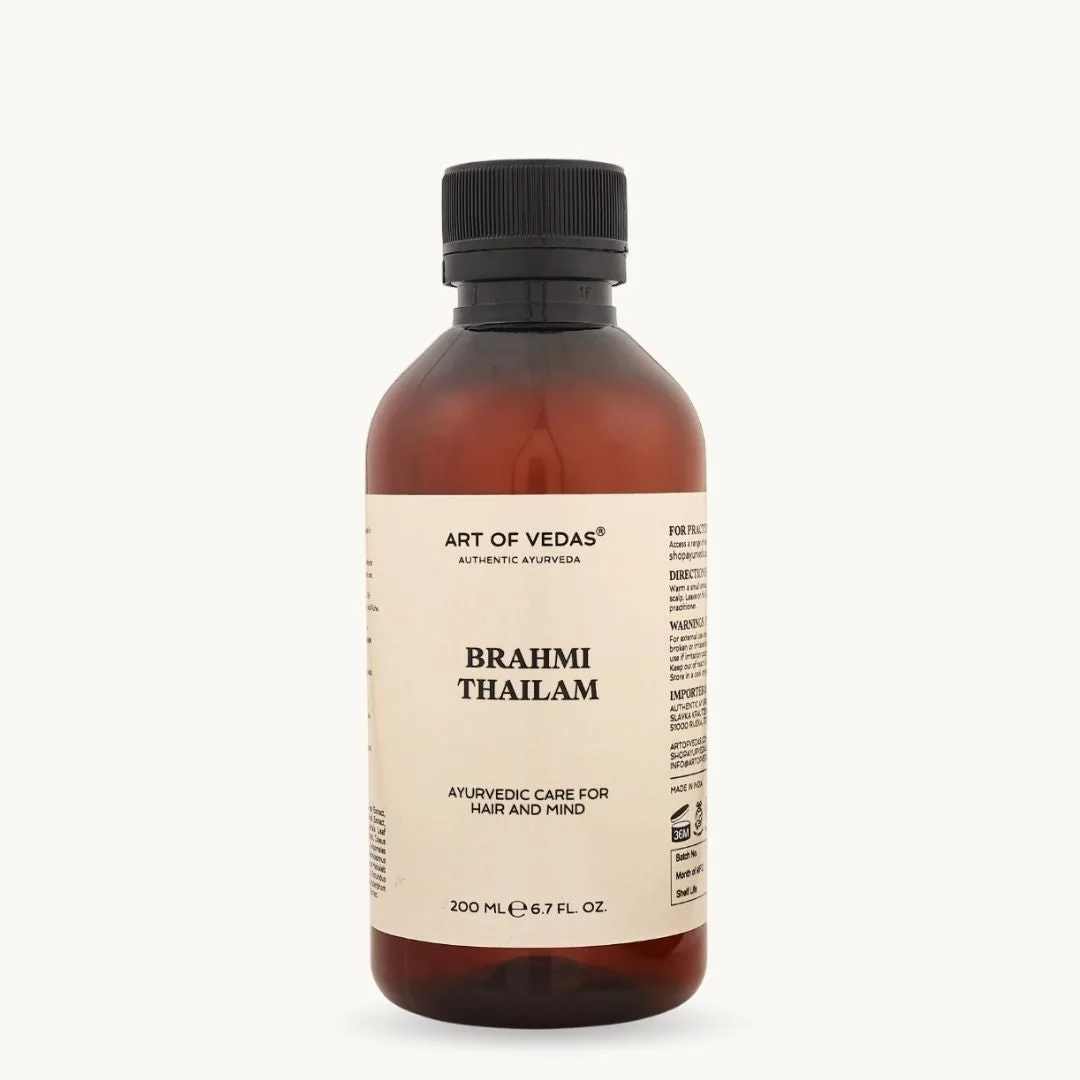
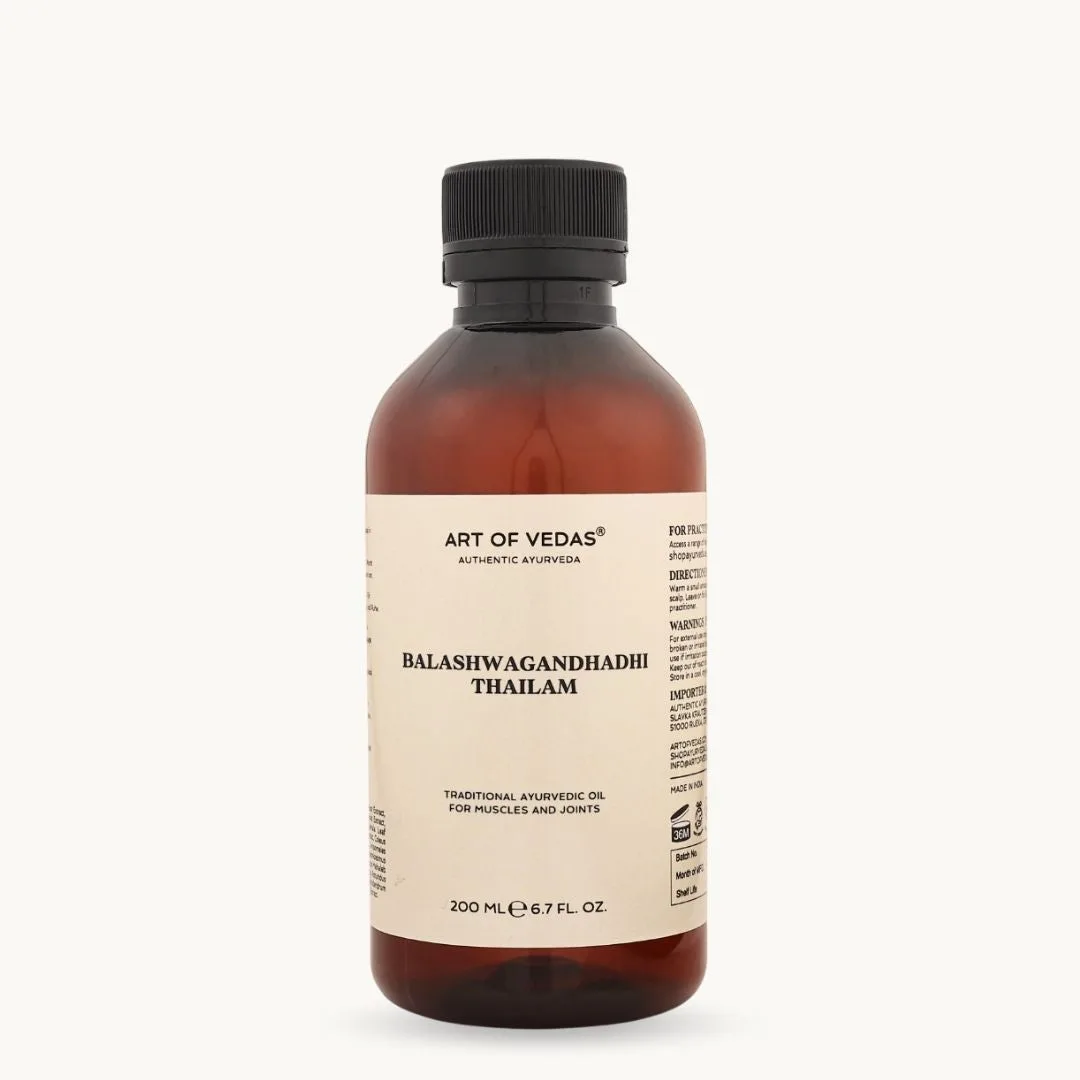
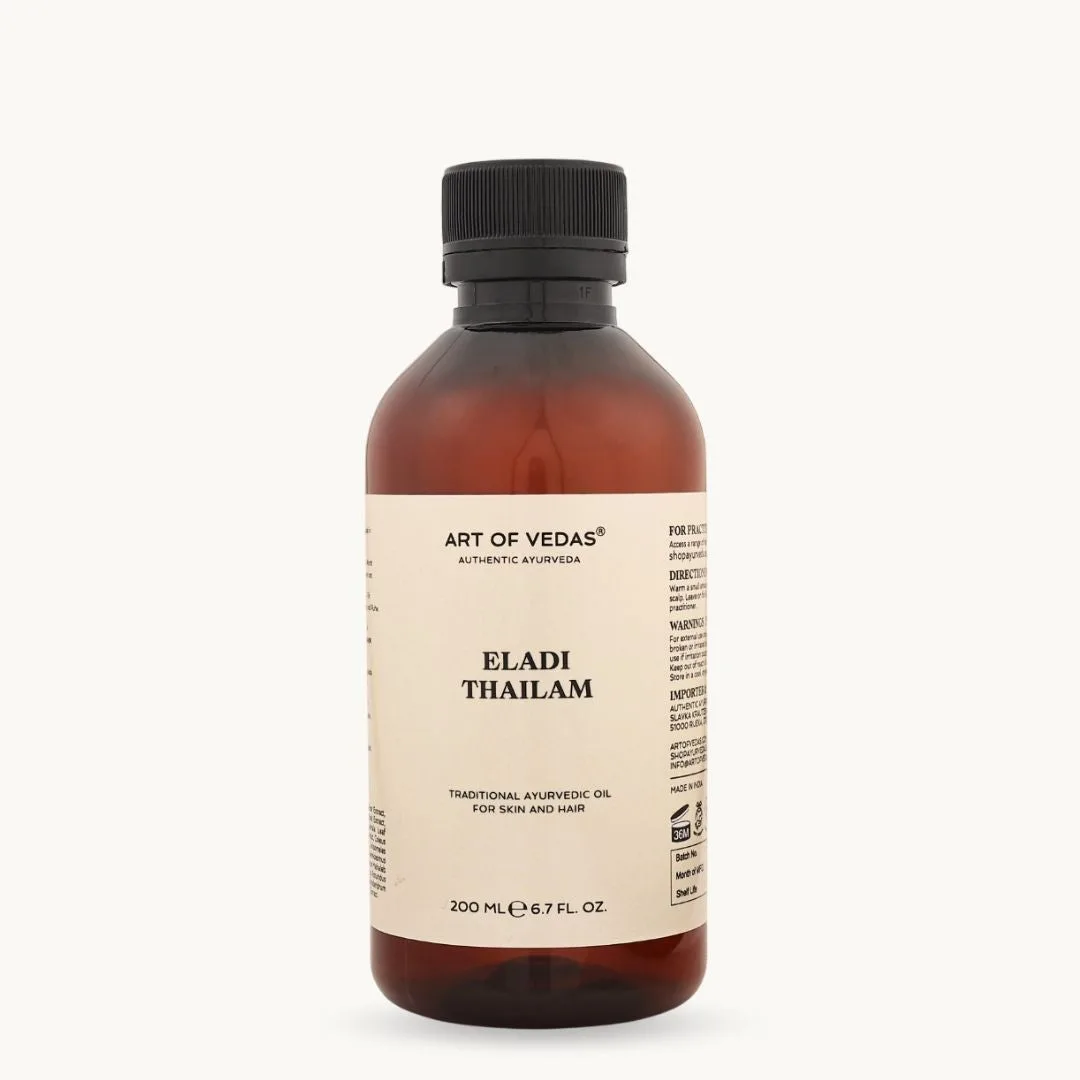
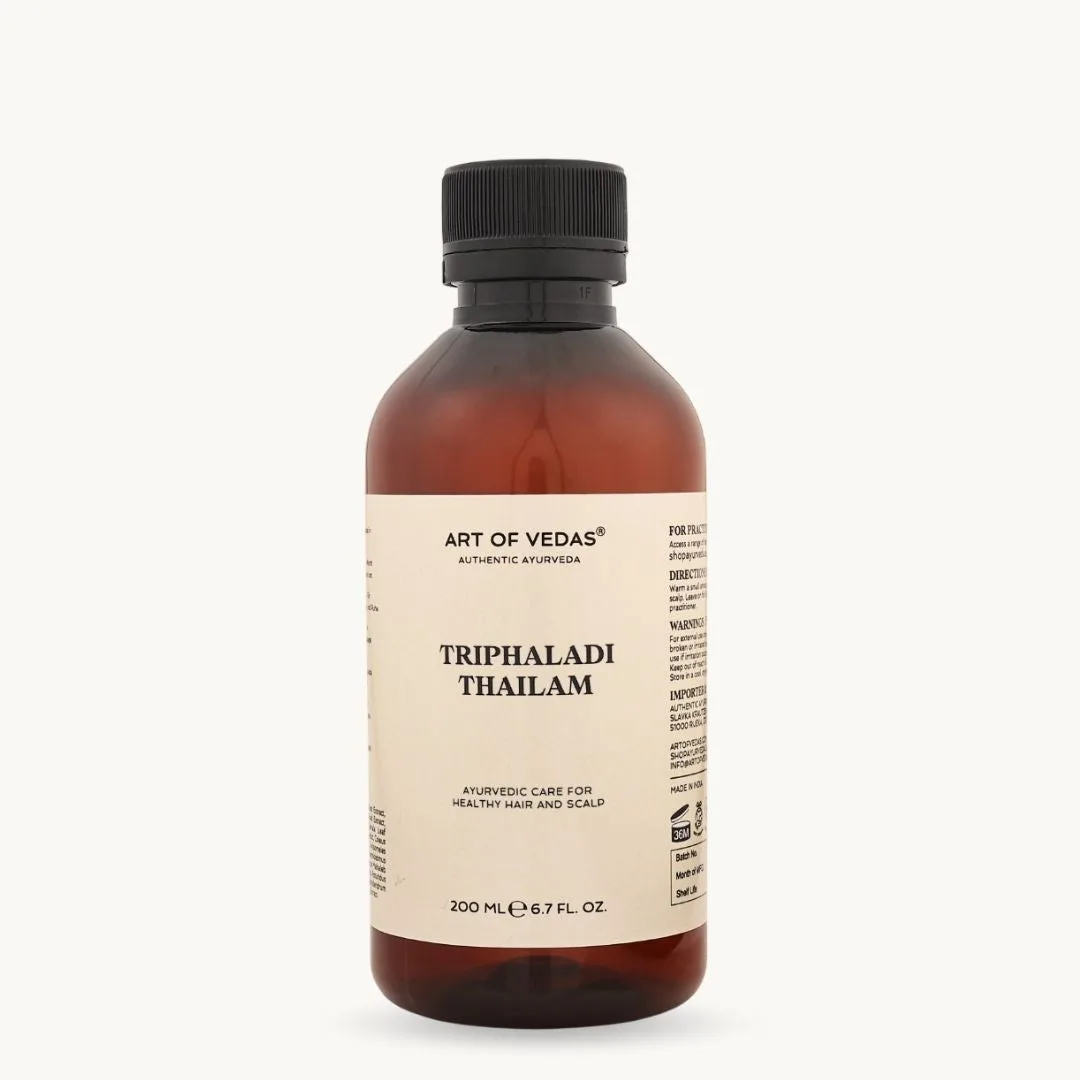
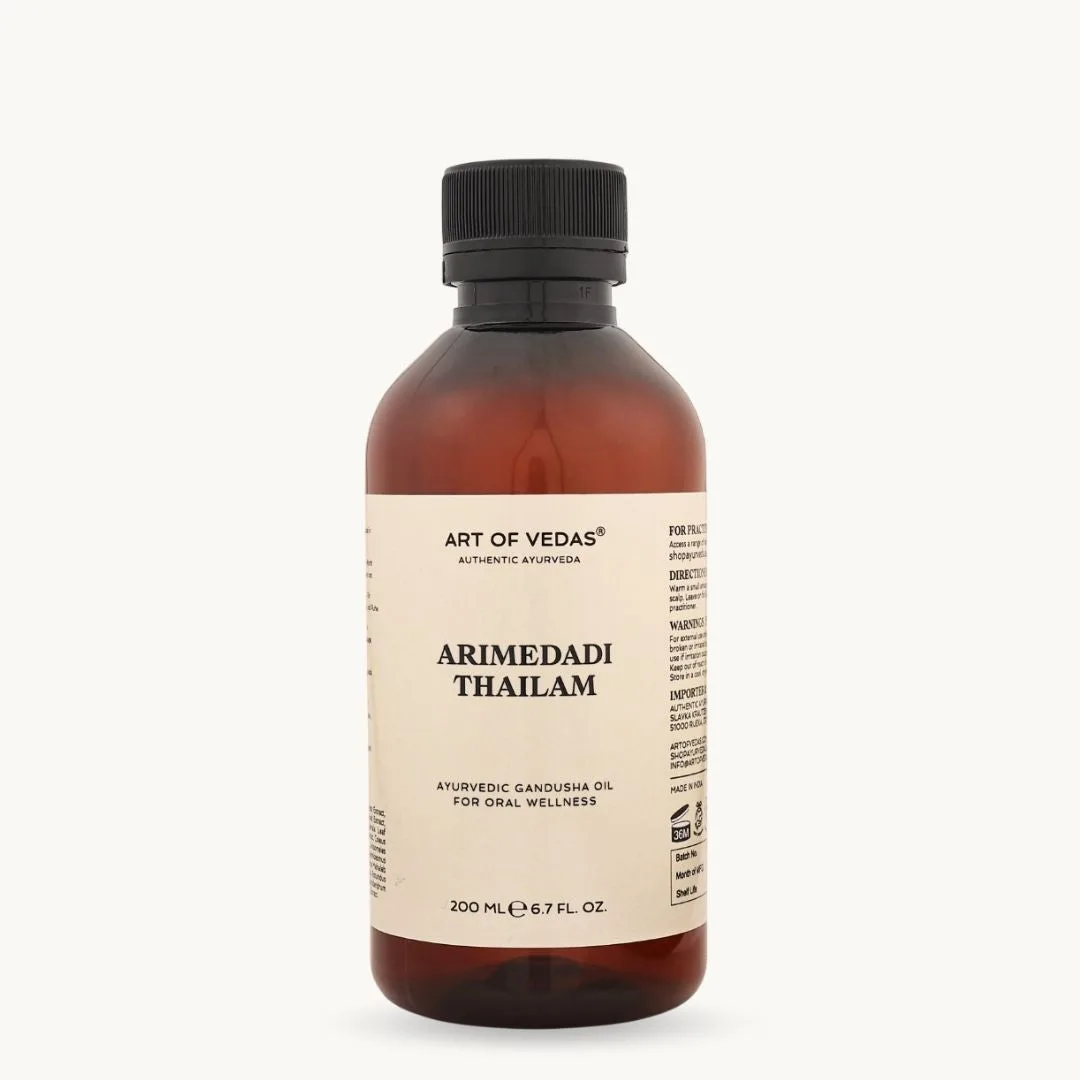
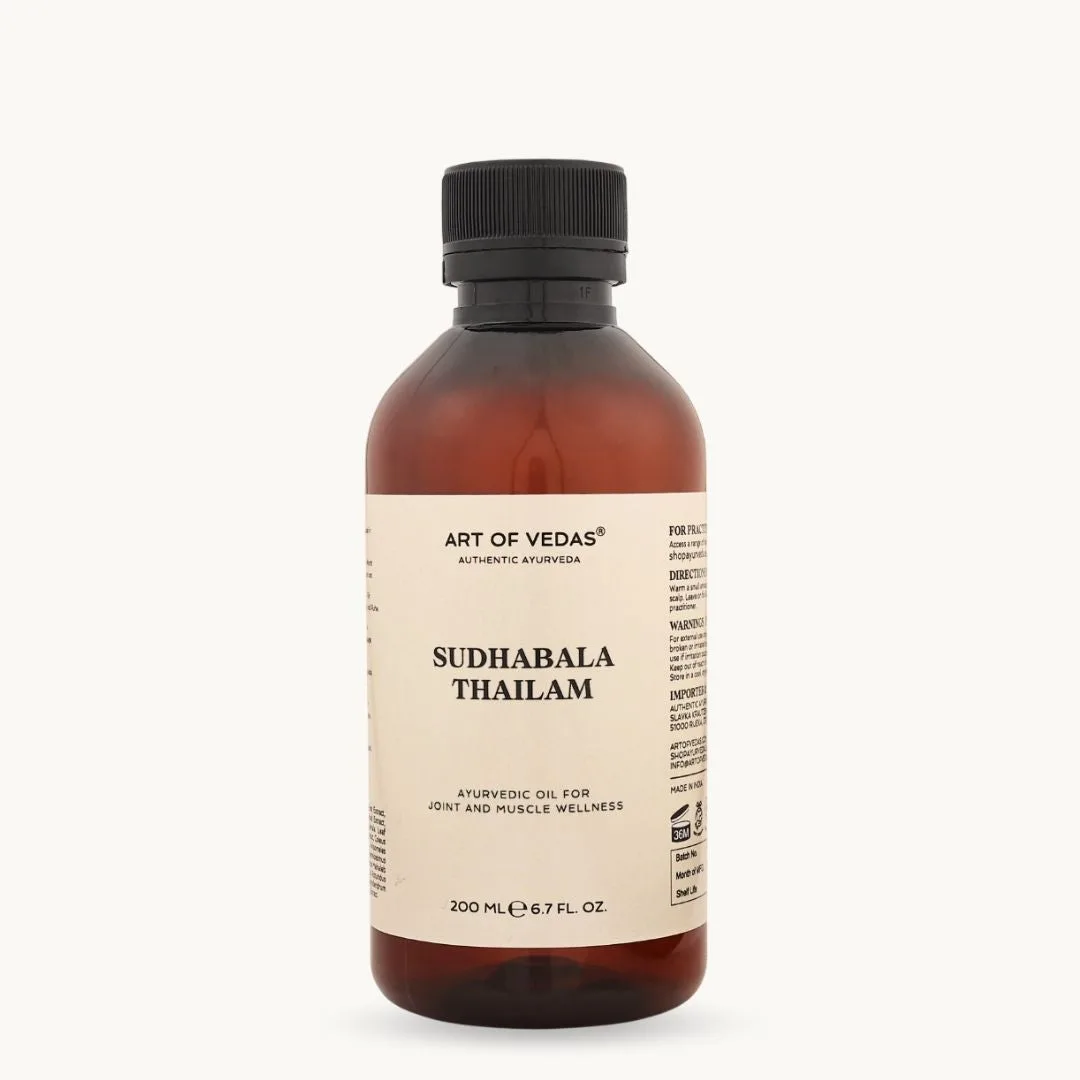
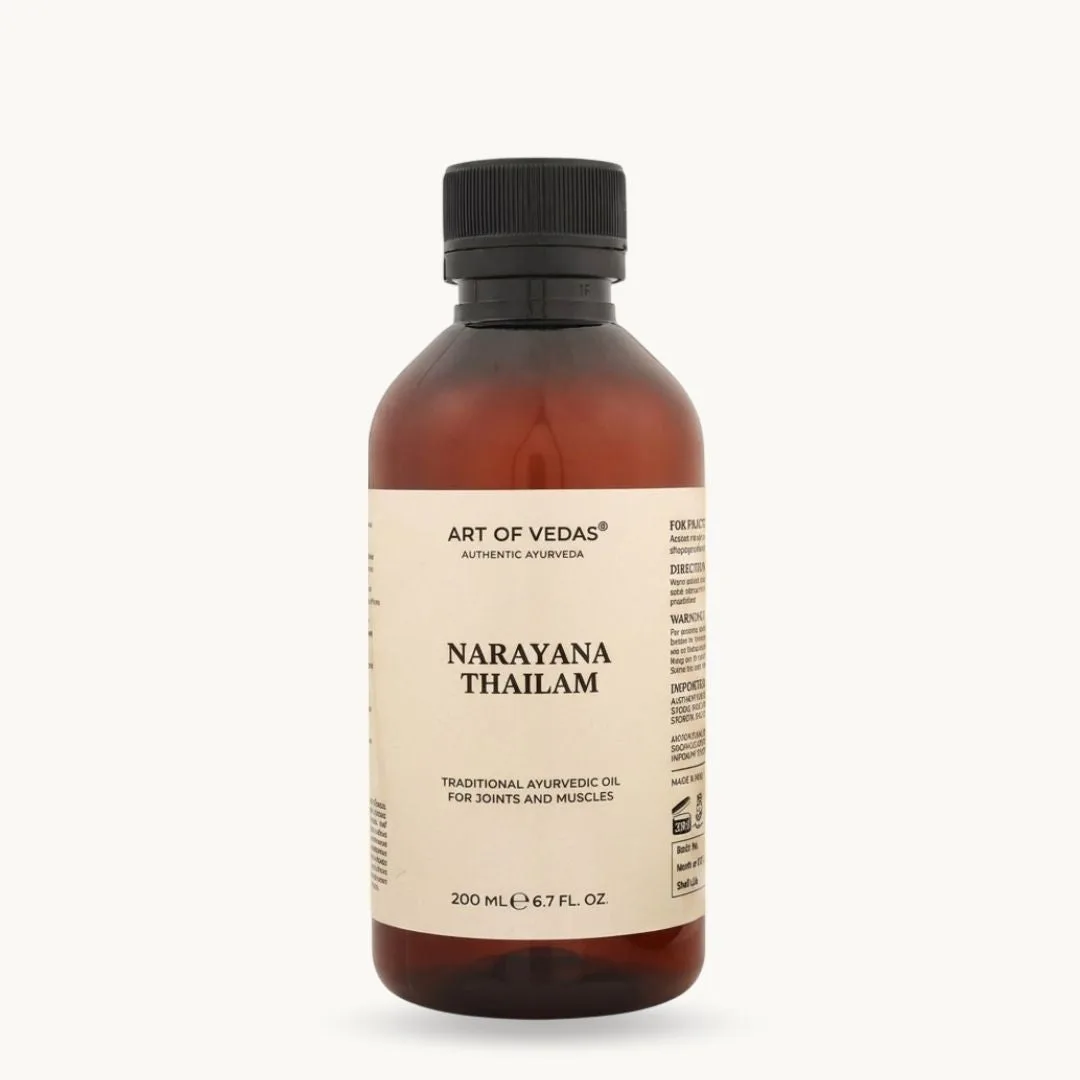
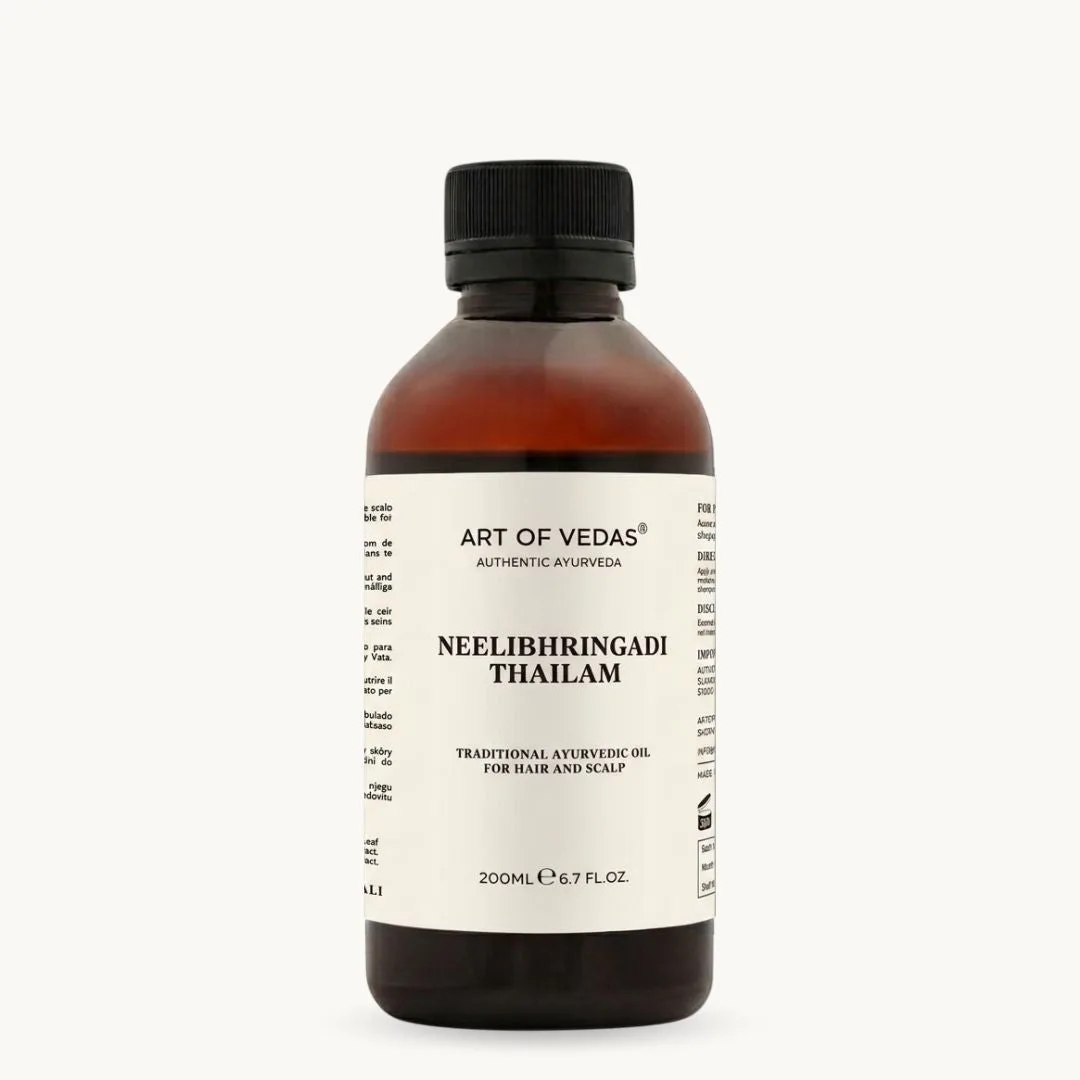
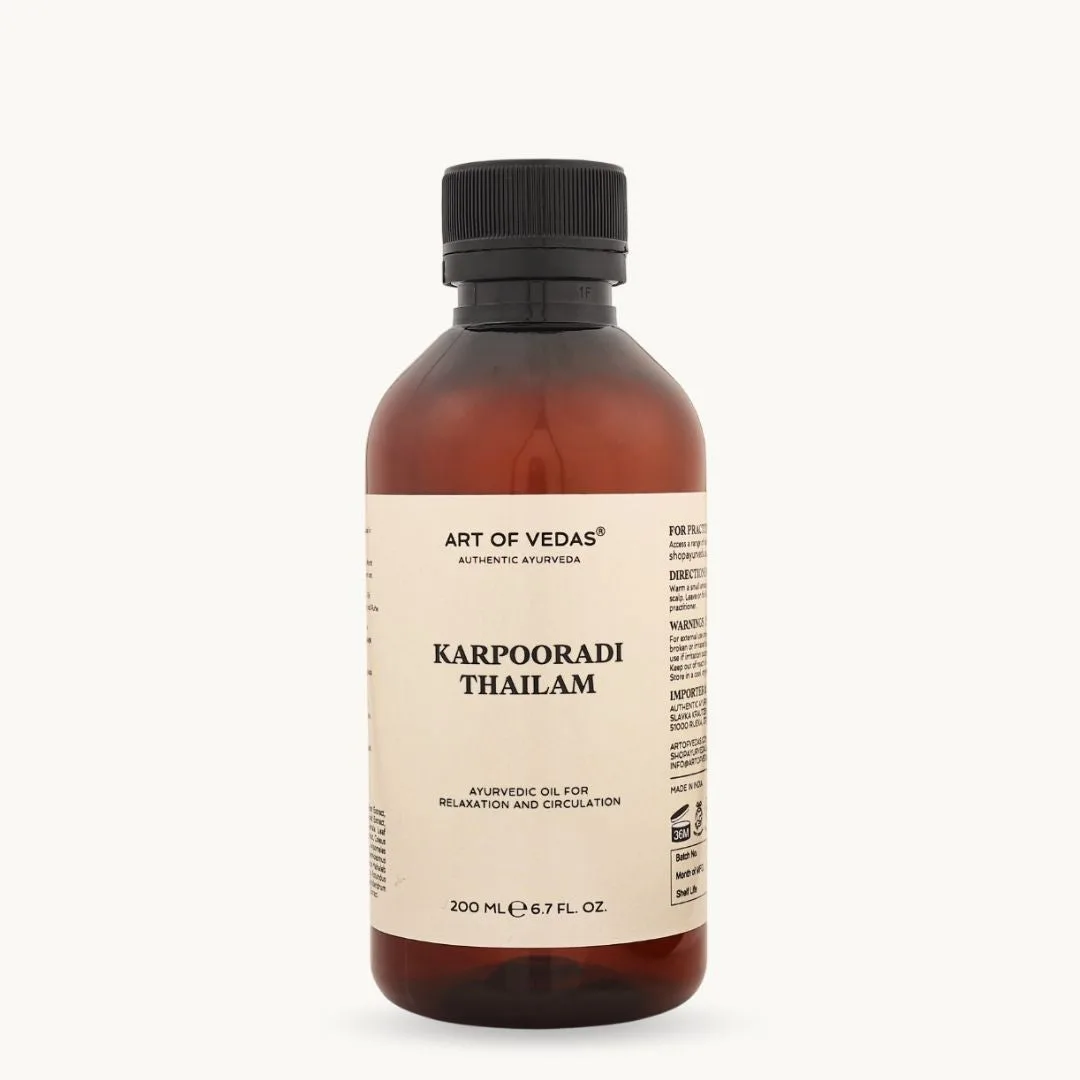
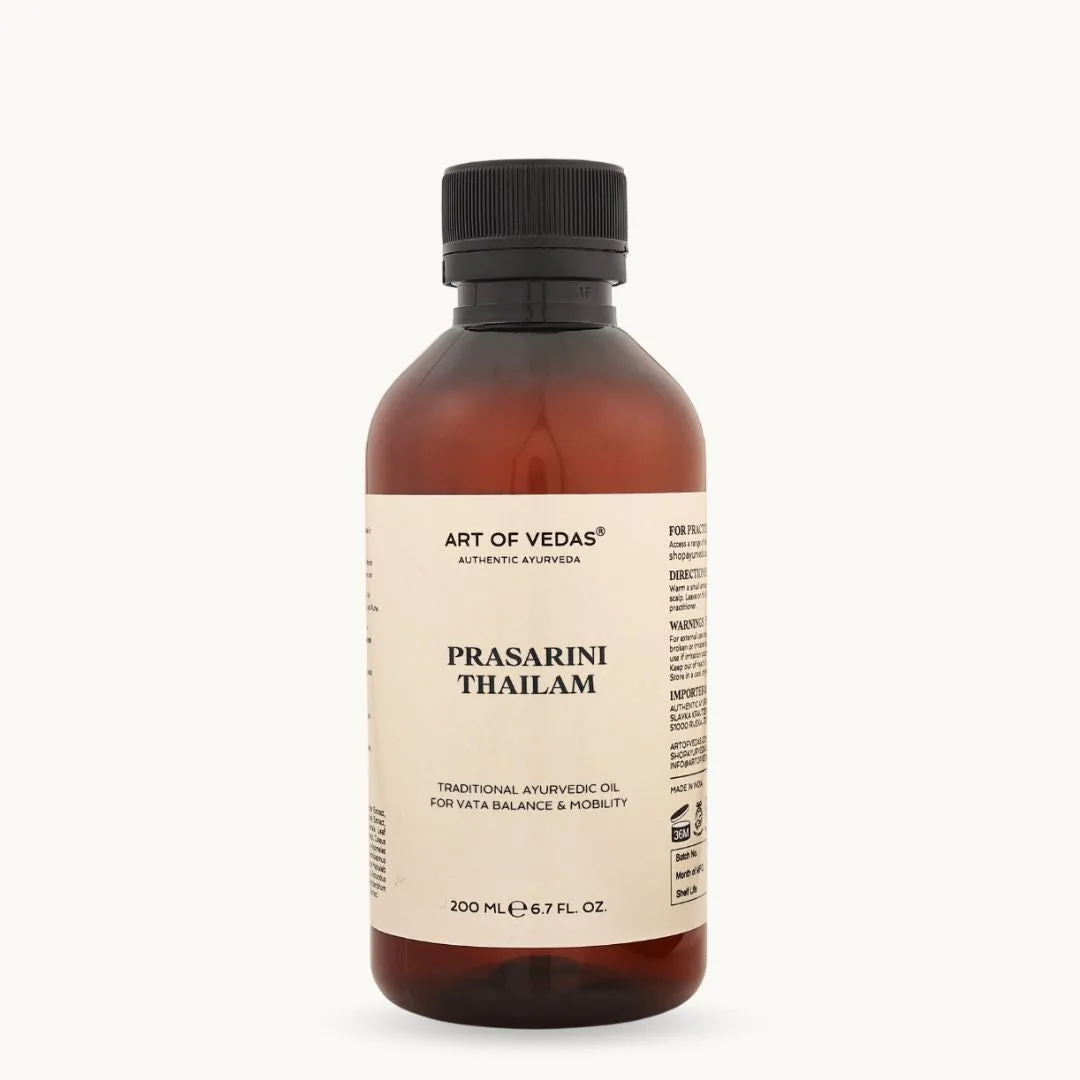
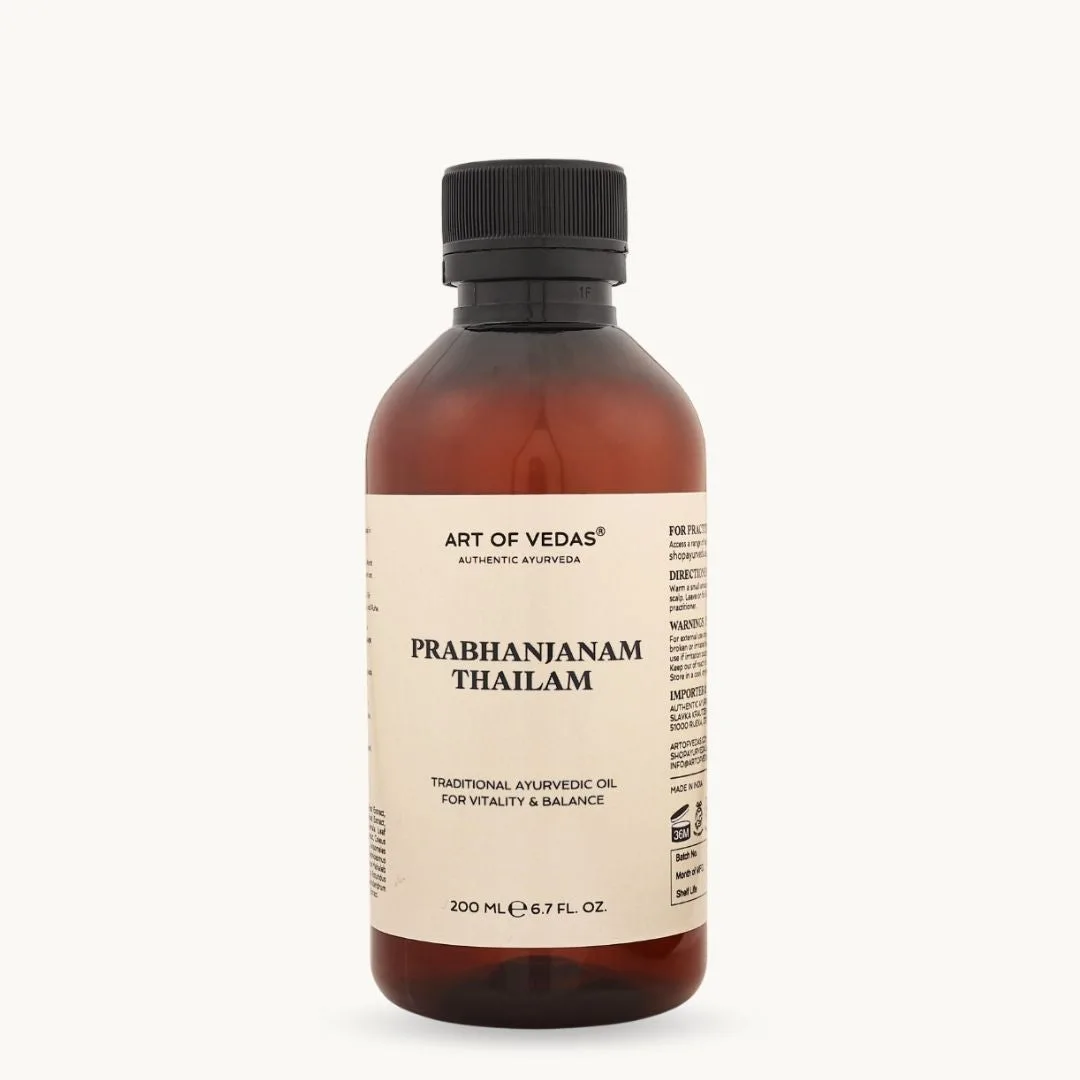
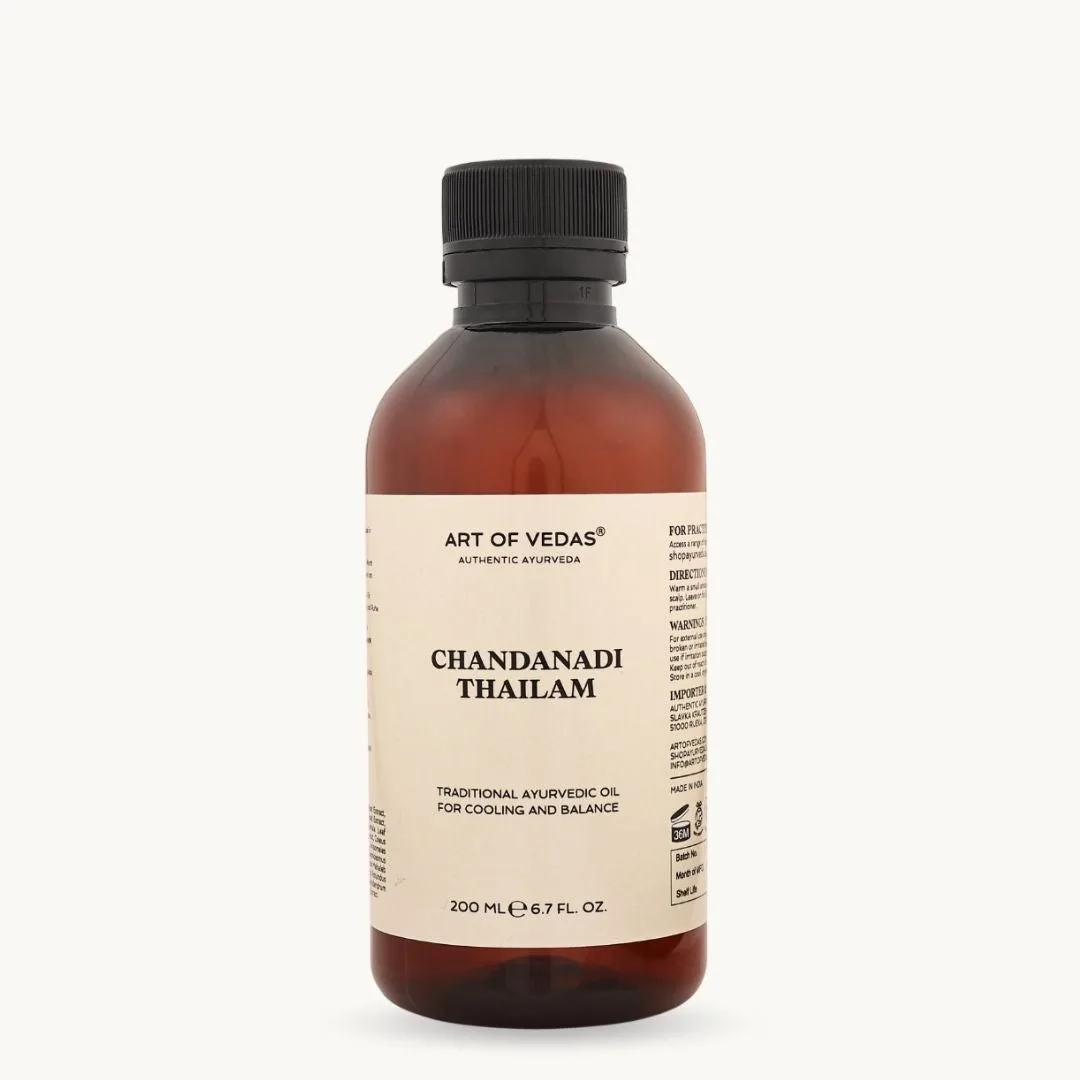
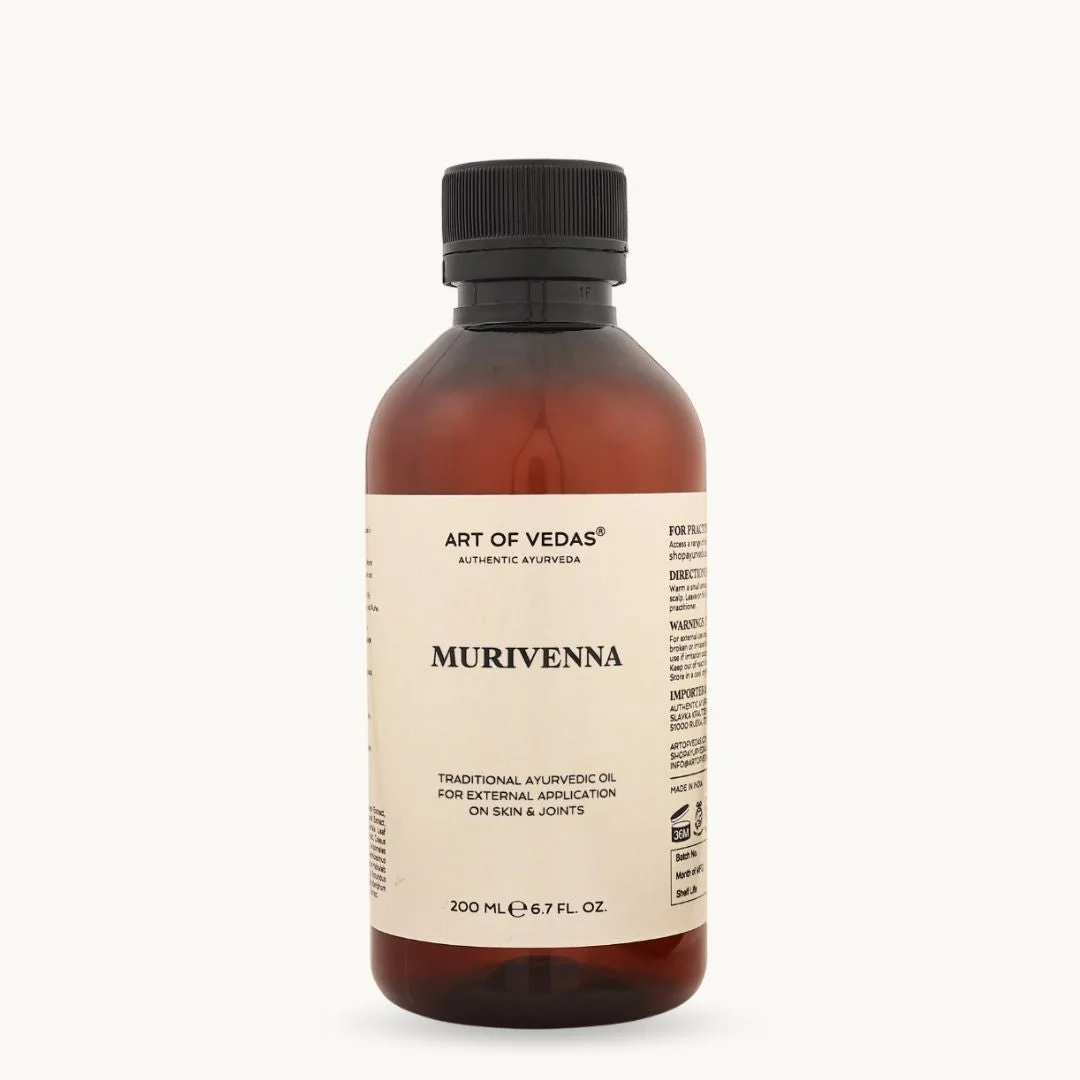
Thailams, the medicated oils at the heart of Ayurveda
A Thailam (classical medicated oil) is one of the oldest forms of Ayurvedic care, prepared by slow-cooking herbs into a base oil so their qualities pass into the oil itself. Classical texts call this method Sneha Paka Vidhi, and it is what separates a true Thailam from a simple scented massage oil. Each oil in this collection follows a named classical formulation, with herbs chosen for a particular constitution and purpose. Whether you are drawn to a warming oil for the joints or a cooling oil for the skin, the starting point is the same: understanding what each Thailam is made to do.
Classical Thailams: your questions answered
What is a Thailam?
Thailam is the classical word for a medicated oil prepared according to traditional Ayurvedic method. Rather than blending essential oils into a carrier, herbs are simmered into a base oil, typically sesame or coconut, until their properties are drawn into the oil. The result carries the qualities of the whole formulation, not just its fragrance. Thailams have been used for thousands of years for Abhyanga (traditional warm oil self-massage) and other forms of daily and seasonal self-care.
How are Thailams prepared?
The traditional process is called Sneha Paka Vidhi. The herbs are first made into a paste known as Kalka and a decoction known as Kashaya, then combined with the base oil and cooked slowly over many hours. The water content gradually evaporates while the herbal properties pass into the oil. Classical practice judges the preparation complete by tests of colour, scent and consistency rather than by the clock. This slow method is the reason a Thailam feels and behaves differently from an ordinary blended oil.
What is the difference between a Thailam and a regular massage oil?
A regular massage oil is usually a plain carrier oil, sometimes scented with essential oils for fragrance. A Thailam is built around a classical formulation, where specific herbs are cooked into the oil so their qualities become part of it. The herbs are chosen for a defined purpose and constitution, not for scent alone. In practice this means you select a Thailam the way you would select a remedy in Ayurveda: by what it is intended to support, and by which Dosha (one of the three constitutional energies, Vata, Pitta and Kapha) it suits.
Are these Thailams suitable for professional clinical use?
Many of these formulations are the same classical Thailams used by Ayurvedic practitioners and in Panchakarma (classical Ayurvedic cleansing therapy). They follow named formulations documented in the classical texts and are prepared to traditional standards. If you are a practitioner sourcing for a clinic or treatment room, our professional collection on the Art of Vedas site has bulk formats and trade access set up for professional use.
Which classical texts document these formulations?
Classical Ayurvedic oils are recorded across the foundational texts. The Charaka Samhita and Sushruta Samhita, two of the oldest works of Ayurveda, set out the principles of medicated oils and of Abhyanga. The Ashtanga Hridayam organises these teachings into daily and seasonal practice. Formulation collections such as the Sahasrayogam and Bhaishajya Ratnavali record specific named Thailams and their classical uses. Each oil in this collection traces back to a named formulation within this body of work.
How should I store my Thailam?
Keep your Thailam in a cool place away from direct sunlight, with the cap closed firmly between uses. Traditional sesame-based oils are naturally stable and do not need refrigeration. Use a clean, dry spoon or simply pour, so that no water enters the bottle, since water shortens the life of any oil. Warmed gently and stored well, a Thailam keeps its character for a long time.
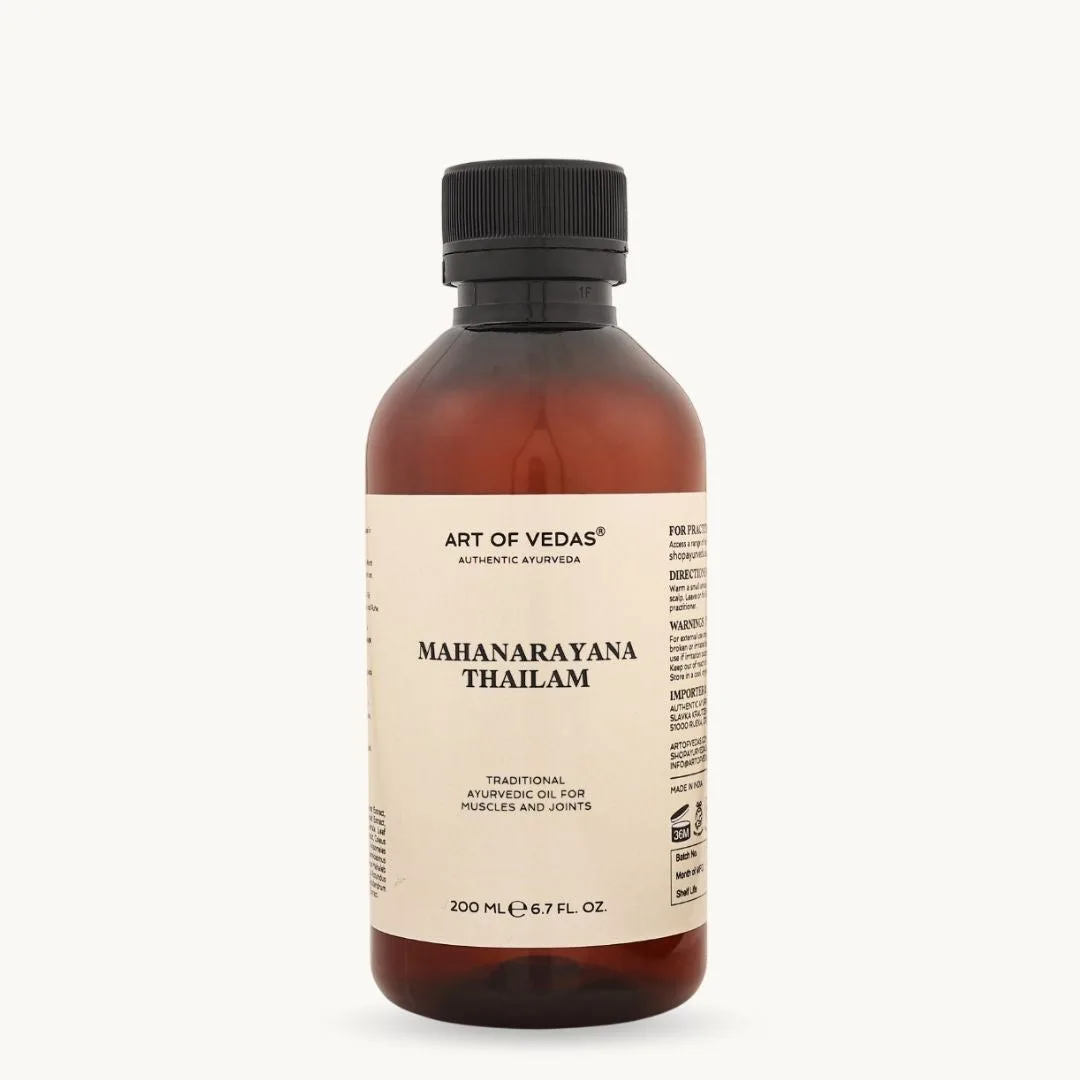
What is Mahanarayana Thailam used for?
Mahanarayana Thailam is one of the most widely used classical oils, traditionally valued in Ayurveda for the joints, the muscles and the Vata Dosha that governs movement. It is a warming formulation, often chosen for Abhyanga before a warm bath, and favoured by those who keep an active life or feel stiffness in cold weather. In classical practice it is used both at home and within Panchakarma. As with any Thailam, it is intended as part of a daily self-care practice rather than as a medicine.
What is Abhyanga massage?
Abhyanga is the traditional Ayurvedic practice of massaging the body with warm oil, ideally as part of Dinacharya (the daily Ayurvedic routine). It is usually done in the morning before bathing, working the oil into the skin with long strokes along the limbs and circular strokes at the joints. Beyond caring for the skin, Abhyanga is valued in Ayurveda as a grounding, calming practice that settles the Vata Dosha. Even ten minutes a few times a week can become a steady anchor in the day.
Which Thailam suits each Dosha?
In Ayurveda the right oil depends on your Prakriti (your natural constitution) and the Dosha you are working to balance. Warming, grounding oils generally suit Vata, which tends toward dryness and cold. Cooling oils, such as those built around sandalwood, suit Pitta, which runs warm. Lighter, more stimulating oils suit Kapha, which tends toward heaviness. If you are unsure of your constitution, a warming sesame-based Thailam is a settling and widely suitable place to begin.
Should Thailams be warmed before use?
Yes, gentle warming is traditional and makes a real difference. Warm oil spreads more easily, absorbs better and feels deeply comforting on the skin. The simplest method is to stand the closed bottle in a bowl of hot water for a few minutes, or to warm a small amount in a metal spoon held over warm water. Test it on your wrist first, it should feel pleasantly warm and never hot.
Can I use a Thailam every day?
Daily use is the traditional intention. Classical Ayurveda places Abhyanga at the heart of Dinacharya, the daily routine, precisely because the benefit comes from consistency rather than intensity. A short daily or near-daily practice is more valuable than an occasional long one. Listen to your skin and your season, and adjust the oil you choose as your needs change through the year.
Which oil is best for a full-body massage?
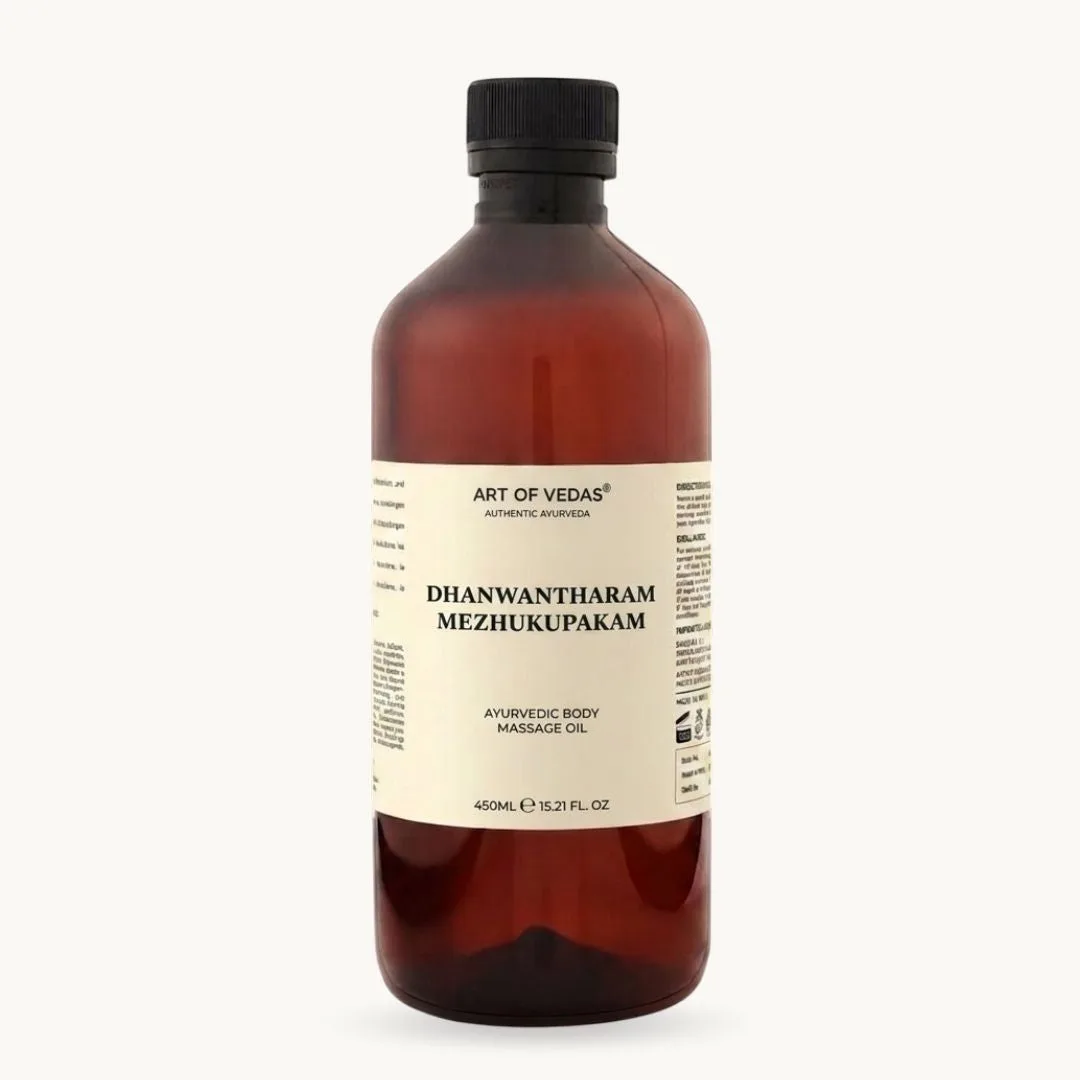
For a full-body Abhyanga, a warming sesame-based Thailam is the classic choice, since sesame is the base oil most often called for in the texts and suits most constitutions. Mahanarayana and Dhanwantharam are long-standing favourites for the whole body, particularly where the joints and muscles need attention. In the warmer months, or for those who run warm, a cooling oil built around sandalwood may feel more comfortable. Choose the base by your Dosha and the season, and warm the oil before you begin.