
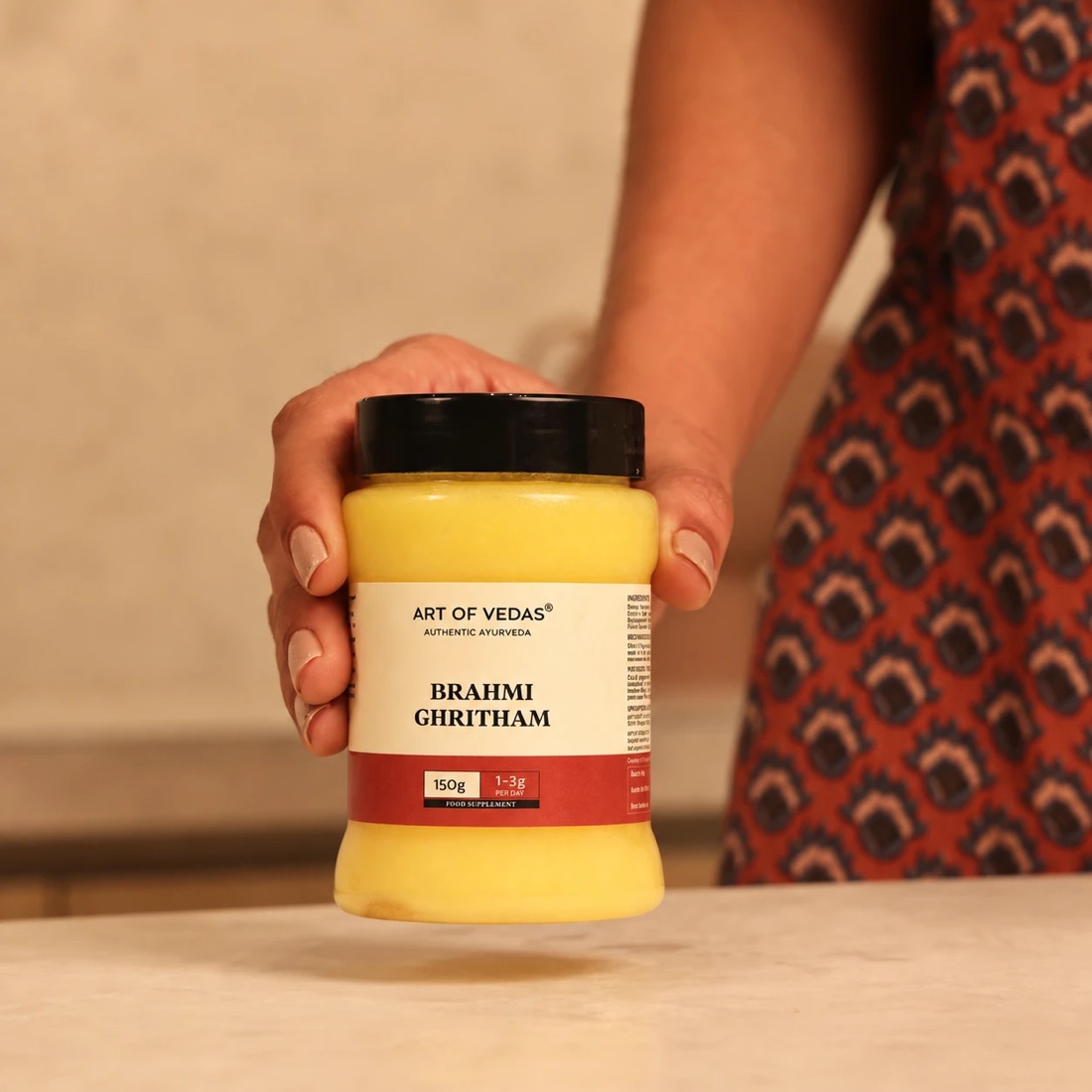
Ghrithams
Ghrithams are classical Ayurvedic ghee preparations described in texts such as the Ashtanga Hridayam and Charaka Samhita, made by slowly cooking pure ghee with herbal decoctions through the time-honoured Sneha Paka method. This collection includes practitioner-grade Brahmi, Dhanwantharam, Thikthakam and Mahathiktakam Ghrithams.


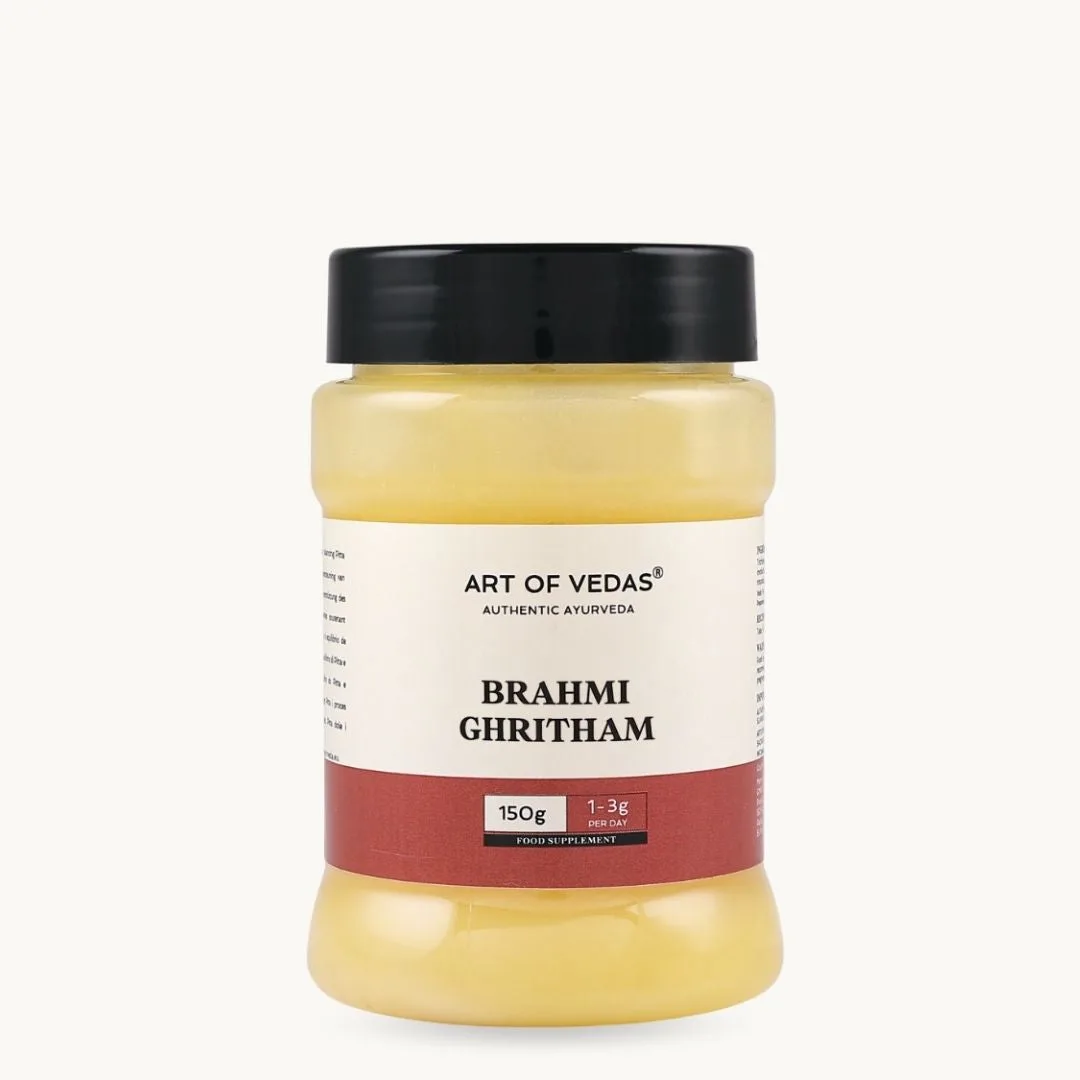
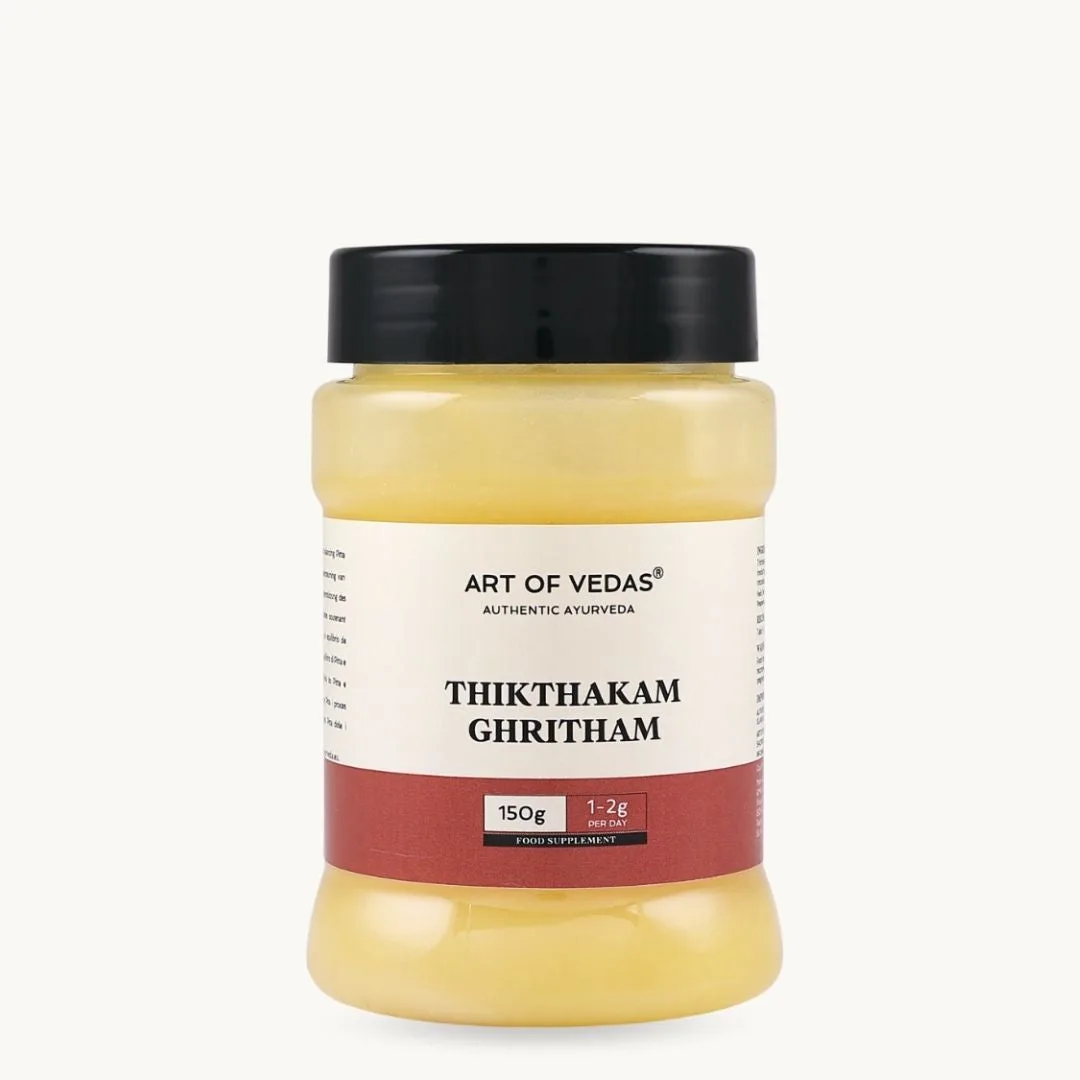


Medicated Ghee, Slow-Cooked the Classical Way
A Ghritham (medicated ghee) is one of the oldest preparations in Ayurveda: clarified ghee is gently simmered with herbal decoctions and fine herb pastes until the fat-soluble qualities of the plants pass into the ghee itself, a process the classical texts call Sneha Paka. Formulations of this kind appear throughout the Ashtanga Hridayam, Charaka Samhita and Sahasrayogam, where ghee is valued for carrying herbs deep into the body and for its grounding effect on Vata. Each Ghritham in this collection follows a named classical recipe rather than a general blend, so the herbs and their traditional purpose differ from one preparation to the next. Because these are practitioner-grade formulations, the most reliable way to choose is to follow the guidance of a qualified Ayurvedic practitioner who can match the preparation to your Prakriti (constitution) and the state of your Doshas. If you are new to medicated ghee, begin with the formulation that speaks to your constitution and keep to modest, regular use.
Questions about Ghrithams
What exactly is a Ghritham?
A Ghritham is medicated ghee, made by slowly cooking clarified ghee together with herbal decoctions and fine herb pastes over low heat. As it simmers, the fat-soluble principles of the herbs are drawn into the ghee, which then acts as the carrier. This preparation method is described in classical texts such as the Charaka Samhita and Ashtanga Hridayam under the technique known as Sneha Paka.
How is a Ghritham traditionally used?
In classical Ayurveda a Ghritham is taken internally in small, measured amounts, usually first thing in the morning, and its use is normally guided by a practitioner who sets the quantity and timing for you. Because each formulation follows a specific recipe with a specific intent, the way one Ghritham is used can differ from another. We always recommend consulting a qualified Ayurvedic practitioner before beginning, rather than self-prescribing.
How do I choose between the Ghrithams in this collection?
Each preparation is rooted in a named classical formula, so the choice depends on your constitution and what a practitioner is working towards with you. Brahmi Ghritham, for instance, is traditionally associated with the qualities of Brahmi, while Dhanwantharam, Thikthakam and Mahathiktakam each follow their own classical recipe. The clearest path is to have your Prakriti and the balance of your Doshas assessed and let that guidance point you to the right one.
Are Ghrithams suitable for everyone?
Ghrithams are practitioner-grade formulations rather than everyday food items, so they are best suited to those working with informed Ayurvedic guidance. They may not be appropriate for every constitution or situation, and ghee-based preparations in particular call for thoughtful use. If you are unsure whether a Ghritham suits you, speak with a qualified Ayurvedic practitioner before you start.
Which Dosha do Ghrithams relate to?
Ghee is traditionally valued in Ayurveda for its grounding, nourishing quality, which makes ghee-based preparations classically associated with settling Vata. That said, the herbs cooked into each Ghritham shift its character, so a given formulation may be directed more towards Pitta or Kapha depending on its recipe. A practitioner reading your Prakriti can tell you how a particular Ghritham relates to your own Dosha picture.
How should I store a Ghritham?
Keep your Ghritham tightly closed in a cool, dry place away from direct sunlight and use a clean, dry spoon each time so that no water enters the jar. Ghee can change consistency with temperature, turning firmer when cool and softer when warm, which is normal and does not affect the preparation. Stored with care and kept free of moisture, a Ghritham holds well for the period noted on its packaging.