

Pure Oils: Sesame Oil & Castor Oil
The classical Abhyanga foundations Ayurvedic practitioners have trusted for thousands of years: cold-pressed Sesame oil (Tila Taila), the traditional base of nearly every Thailam and the choice for daily self-massage, and Castor oil (Eranda Taila), the thick, penetrating oil for joints, hair and scalp. Available in home sizes and in 1L and 5L volumes for practitioners and Panchakarma centers.

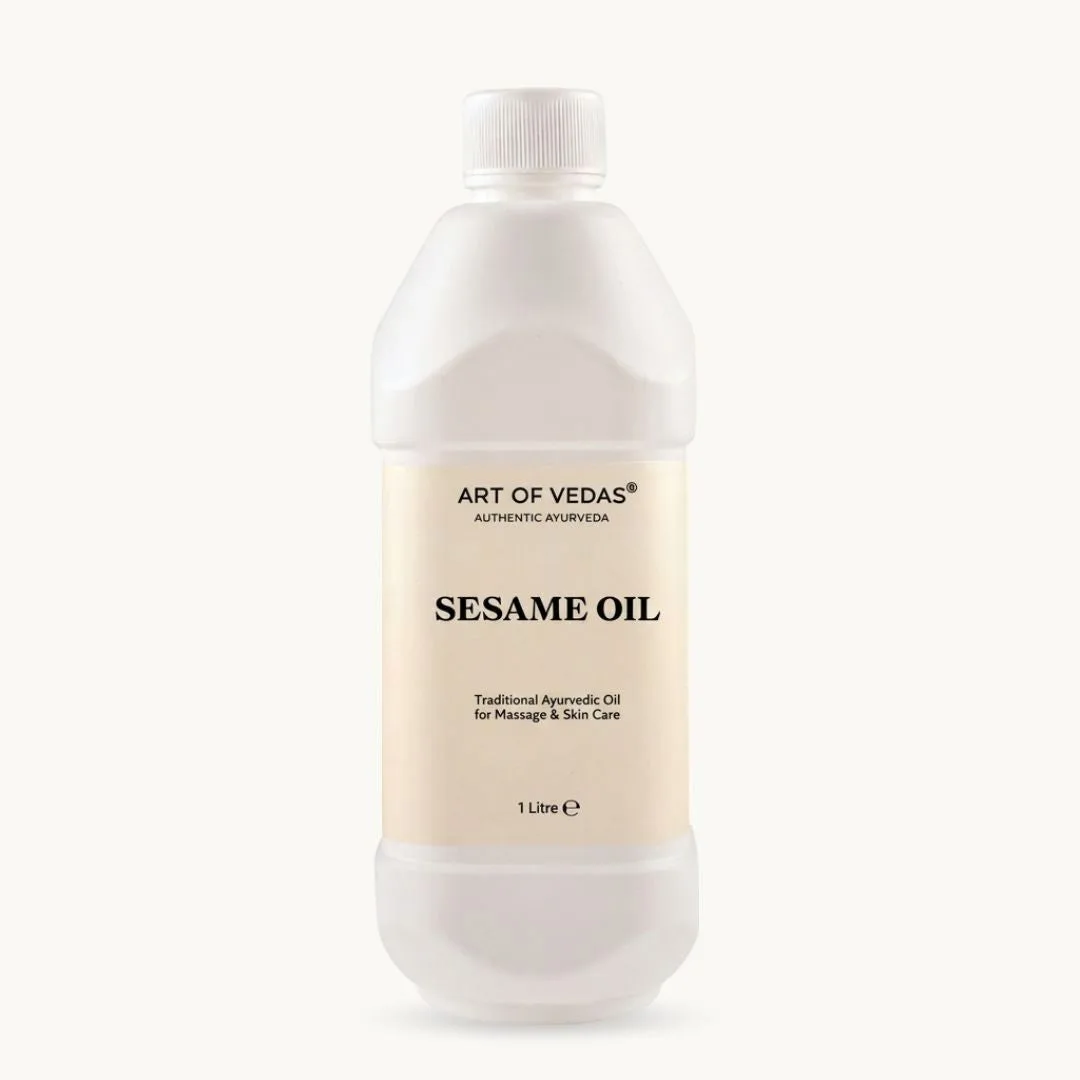


The base oils that carry every Ayurvedic massage
Pure Oils are single, cold-pressed base oils with nothing added: no herbs, no essential-oil blends, simply the oil itself. In classical Ayurveda these are the foundation of Abhyanga (oil self-massage) and the carrier into which medicated Thailams are prepared, which is why a practitioner's shelf usually begins here. Sesame oil (Tila Taila) is the everyday choice for full-body Abhyanga and is valued in tradition for its warming, grounding quality, making it well suited to Vata. Castor oil (Eranda Taila) is thicker and slower to absorb, kept for focused work on joints, hair and scalp rather than the whole body. To choose, start with your purpose: a light daily massage points you to sesame, while targeted, heavier application points you to castor.
Questions about pure base oils
What makes these "pure" oils, and how do they differ from a Thailam?
A pure oil is a single, cold-pressed base oil with no herbs or essential oils added, so what you pour from the bottle is exactly one plant oil and nothing else. A Thailam, by contrast, is a medicated oil in which herbs have been cooked into a base such as sesame following Sneha Paka Vidhi (the classical oil-preparation method). You reach for a pure oil when you want a clean carrier for daily Abhyanga or for diluting concentrated preparations, and for a Thailam when you want the added herbal character built into the oil.
Which oil should I choose, sesame or castor?
Let the use guide you. Sesame oil (Tila Taila) is the traditional choice for full-body Abhyanga and is light enough for daily practice, while castor oil (Eranda Taila) is much thicker and slower to absorb, so it is usually kept for targeted application to joints, hair and scalp rather than the whole body. Many people keep both: sesame for the everyday massage and castor for occasional focused use.
How do I use a pure oil for Abhyanga?
Warm a small amount of oil to body temperature, then apply it to dry skin and massage with the palms, working long strokes along the limbs and circular strokes over the joints. Allow the oil to settle for ten to fifteen minutes before a warm shower or bath. Traditionally Abhyanga is part of Dinacharya (the daily routine) and is done in the morning, though an evening practice suits those who find it settling.
Which oil suits my Dosha?
In classical Ayurveda sesame oil is regarded as warming and grounding, which is why it is the oil most often suggested for Vata, the dry and mobile quality that benefits from oiliness and steadiness. Pitta types, who run warm, often prefer a lighter touch and cooler conditions, while Kapha types may want a lighter, less frequent oiling. These are general traditional tendencies rather than fixed rules, so notice how your own skin and Prakriti (your natural constitution) respond and adjust accordingly.
Can I use these oils on my hair and scalp?
Yes. Sesame oil makes a gentle weekly scalp and hair oil, massaged into the roots and left for an hour or overnight before washing. Castor oil is heavier and is traditionally used in smaller amounts, often blended with a lighter oil so it spreads more easily and rinses out without difficulty. Whichever you choose, a little goes a long way on the scalp.
How should I store the oils, and how long do they keep?
Keep the bottle tightly closed in a cool, dark place away from direct sunlight, which helps the oil stay fresh and stable. Use clean, dry hands or a spoon so that no water enters the bottle. Cold-pressed oils are best used within several months of opening; if the smell turns sharp or the oil tastes bitter, it has aged and is best replaced.