★★★★☆Verified buyer
Happy with the products
Make tea very easy and good taste hoe is heals the body so soon i cannothing dat about it

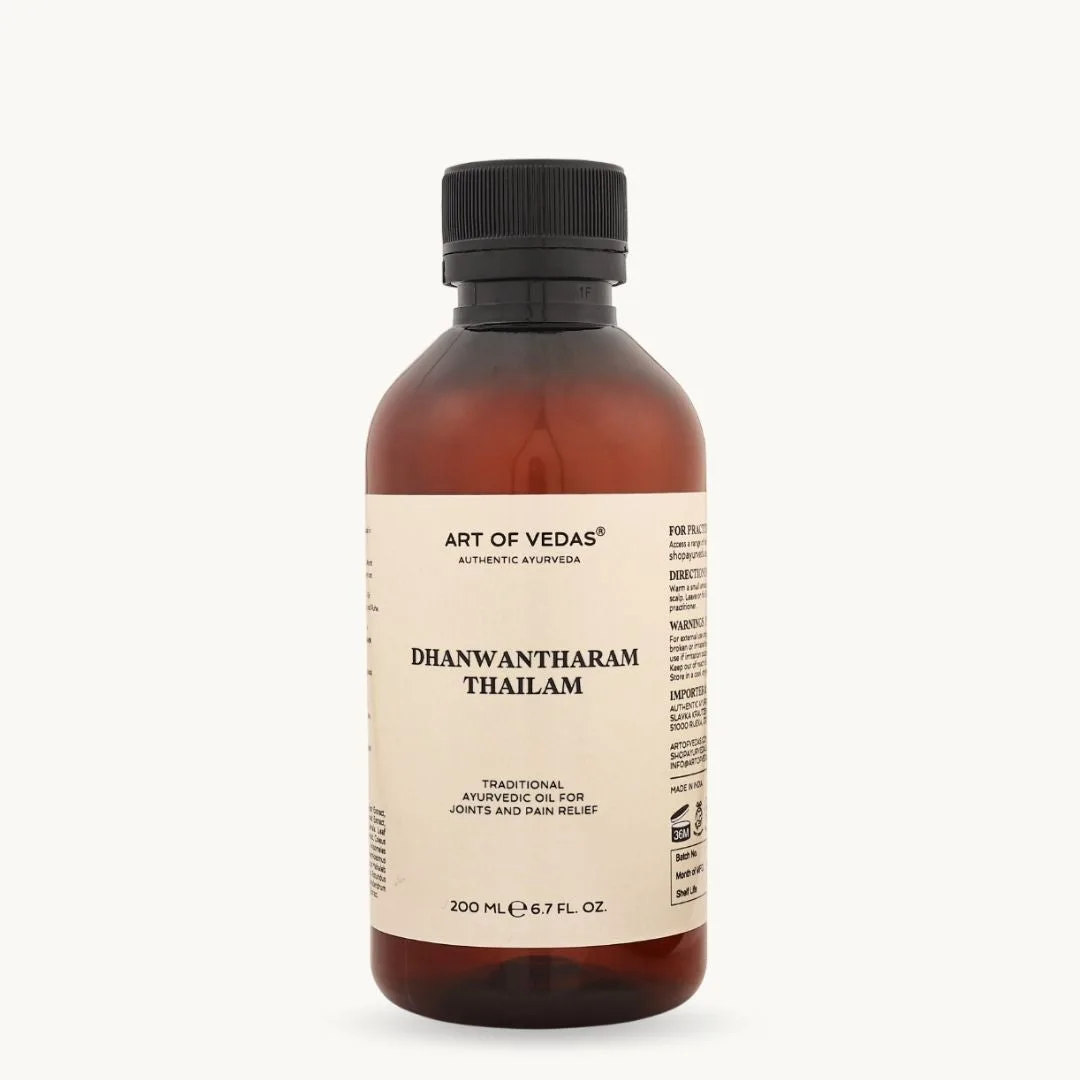
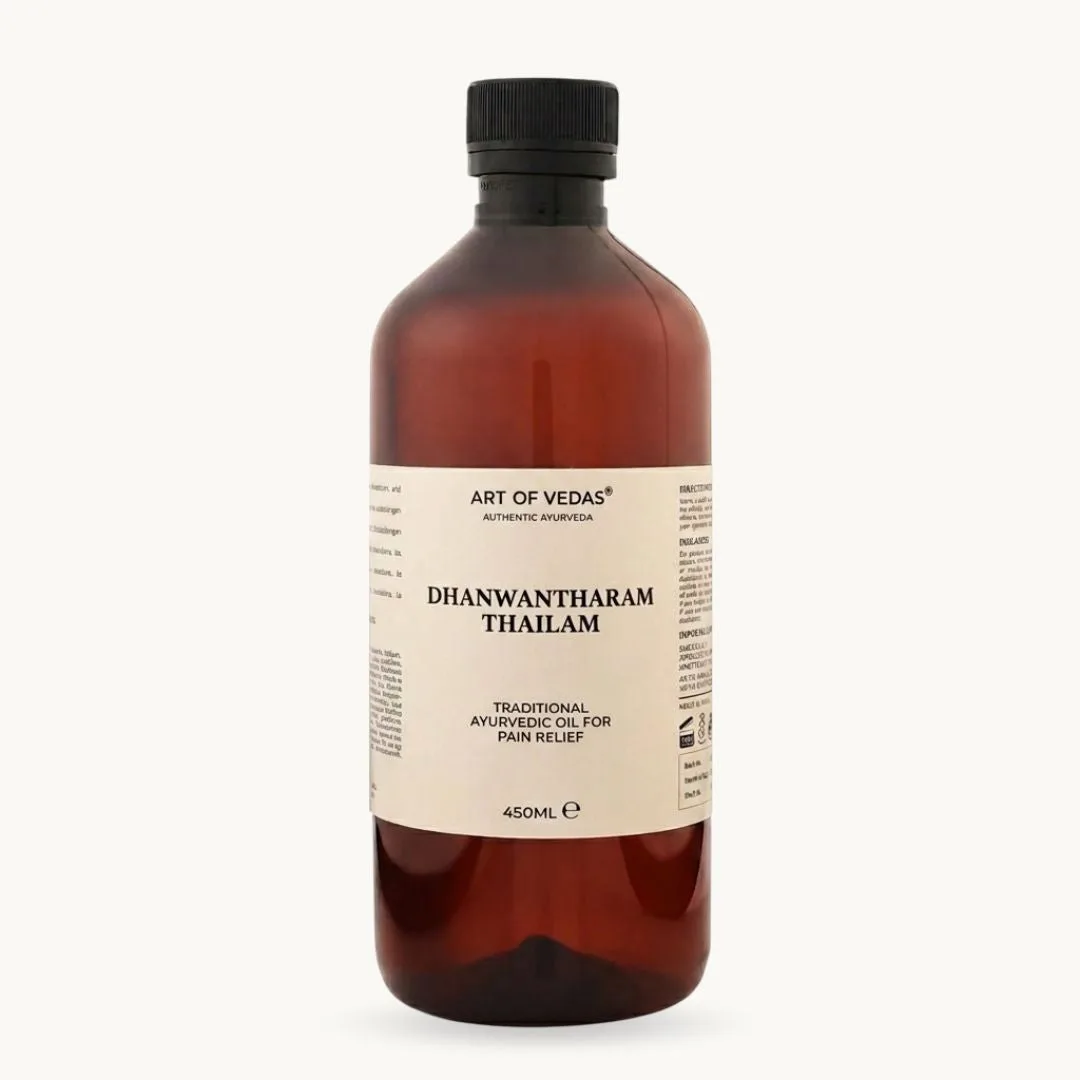
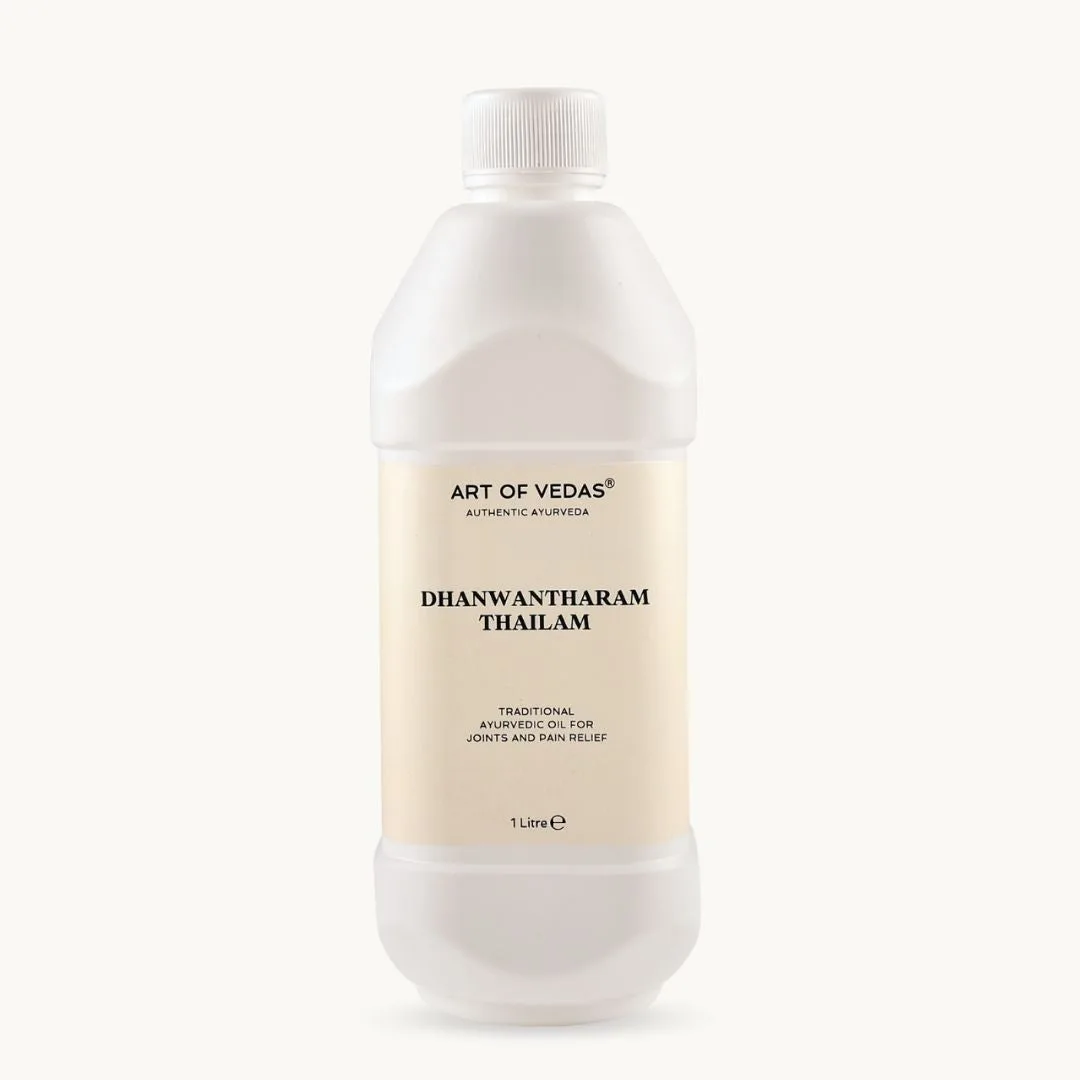
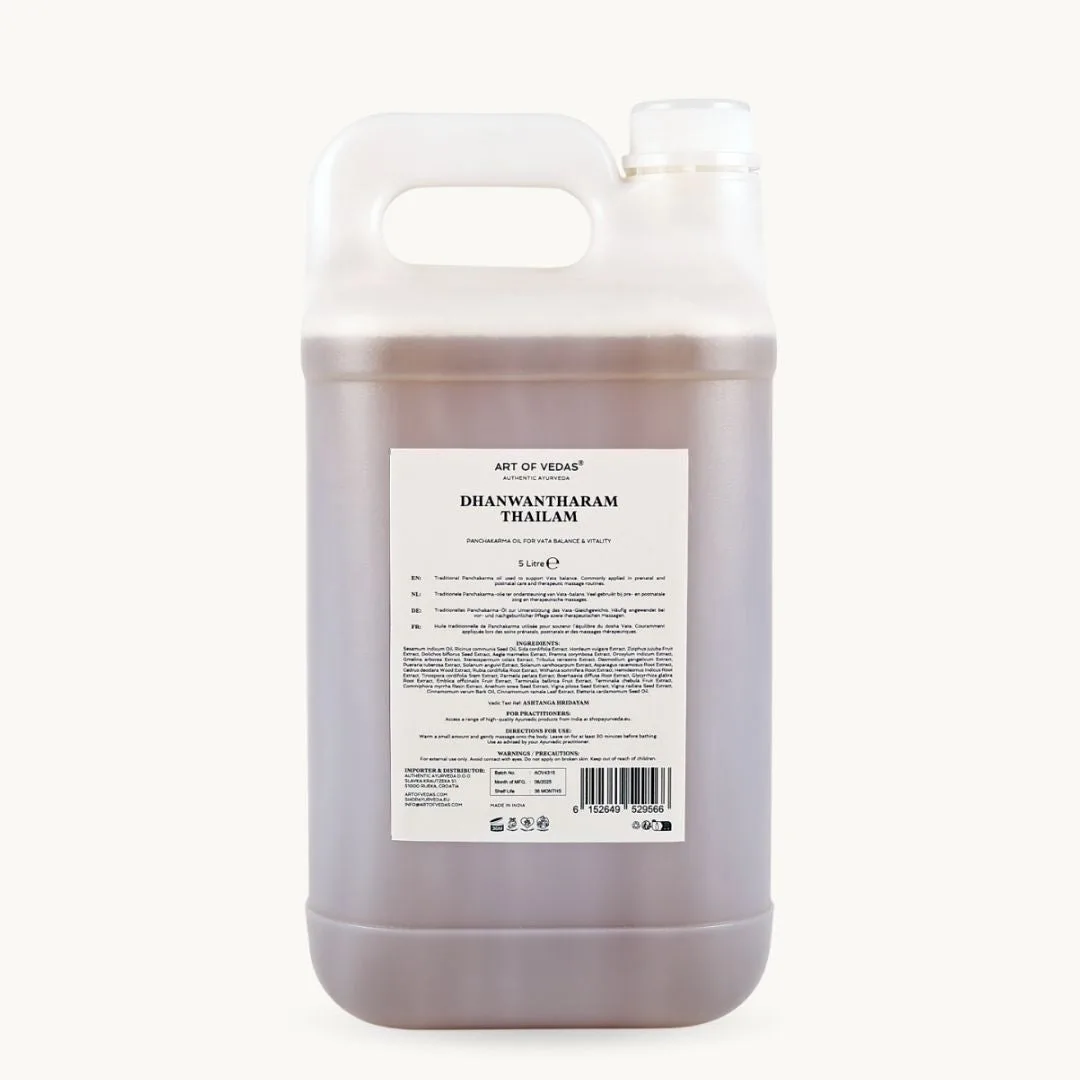
Thailam
Classical Ayurvedic Body Oil
Dhanwantharam Thailam holds a distinguished place in classical Ayurveda, named in honour of Dhanvantari, the divine physician and originator of the tradition.
Sesamum Indicum (Sesame) Seed Oil, Sida Cordifolia (Bala) Extract, Hordeum Vulgare (Barley) Extract, Ziziphus Jujuba (Jujube) Fruit Extract, Dolichos Biflorus (Horse Gram) Seed Extract, Aegle Marmelos (Bael) Fruit Extract, Premna Corymbosa (Agnimantha) Leaf Extract, Oroxylum Indicum (Shyonaka) Bark Extract, Gmelina Arborea (Gambhari) Root Extract, Stereospermum Colais (Patala) Bark Extract, Tribulus Terrestris (Gokshura) Fruit Extract, Desmodium Gangeticum (Shalaparni) Extract, Pseudarthria Viscida (Prishniparni) Extract, Solanum Indicum (Brihati) Fruit Extract, Solanum Xanthocarpum (Kantakari) Extract, Asparagus Racemosus (Shatavari) Root Extract, Cedrus Deodara (Deodar) Wood Oil, Rubia Cordifolia (Manjistha) Root Extract, Withania Somnifera (Ashwagandha) Root Extract, Hemidesmus Indicus (Anantmool) Root Extract, Ipomoea Mauritiana (Vidari) Root Extract, Trigonella Foenum-Graecum (Fenugreek) Seed Extract, Parmelia Perlata (Stone Flower) Extract, Boerhaavia Diffusa (Punarnava) Root Extract, Glycyrrhiza Glabra (Licorice) Root Extract, Phyllanthus Emblica (Amla) Fruit Extract, Terminalia Bellirica (Bibhitaki) Fruit Extract, Terminalia Chebula (Haritaki) Fruit Extract, Commiphora Myrrha (Myrrh) Resin Extract, Anethum Sowa (Dill) Seed Oil, Vigna Pilosa (Wild Mung) Extract, Vigna Radiata (Mung Bean) Seed Extract, Cinnamomum Verum (Cinnamon) Bark Oil, Cinnamomum Tamala (Tejpat) Leaf Extract, Elettaria Cardamomum (Cardamom) Oil, Cinnamal, Eugenol, Linalool, Coumarin, Benzyl Benzoate, Limonene, Carvone
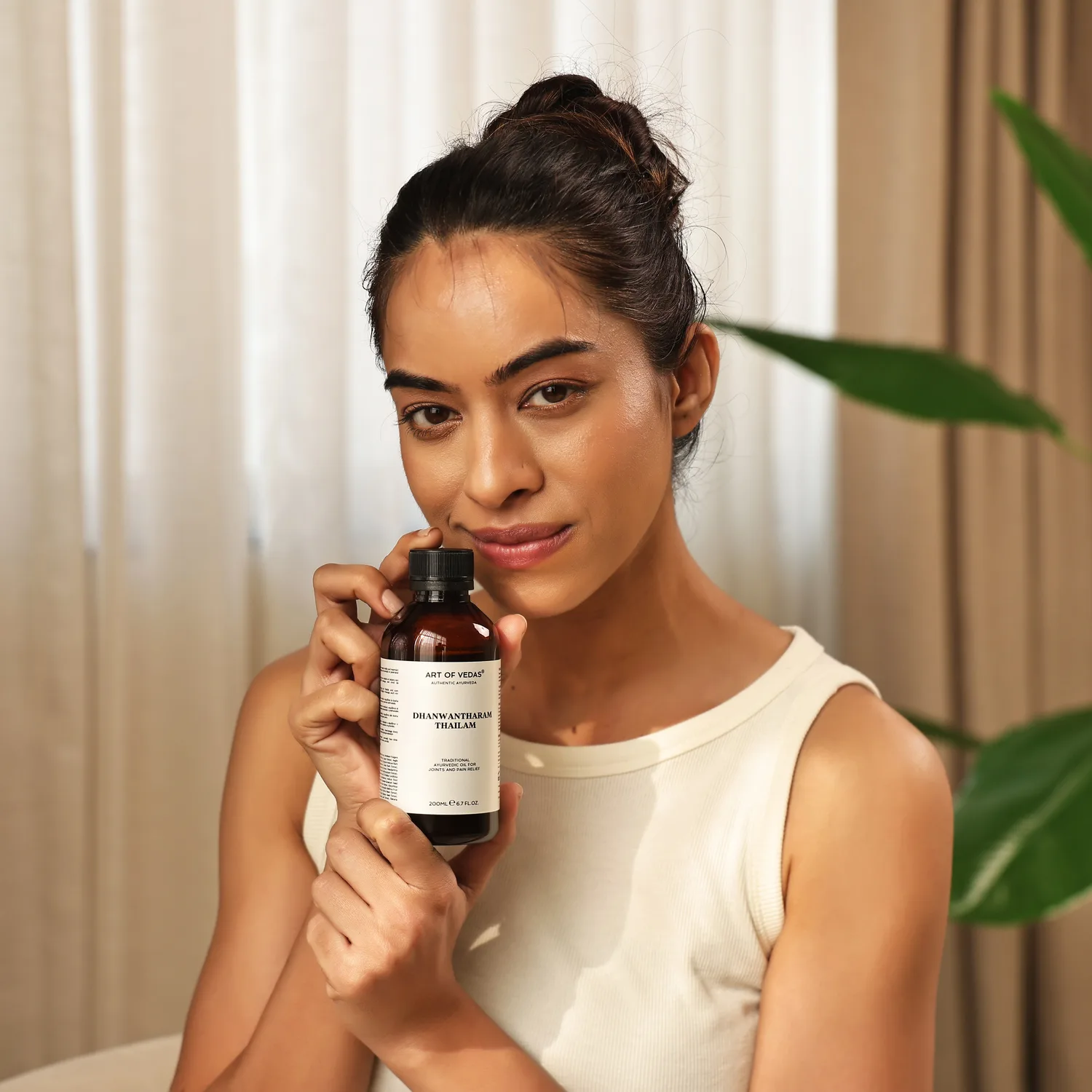
Documented in Ashtanga Hridayam and Sahasrayogam, this warming, Vata-pacifying oil is traditionally cherished for grounding daily Abhyanga.
Traditionally suited for:
For Abhyanga (full body massage)
For targeted use
Apply a small amount to the chosen area and massage gently until absorbed.
Recommended frequency
Daily use is the traditional practice. For maintenance, use two to three times a week.
Important
Dhanwantharam Thailam is documented in two primary classical texts: Ashtanga Hridayam, the foundational text of Ayurvedic medicine composed by Vagbhata, and Sahasrayogam, the complete classical formulary.
Sanskrit: धन्वन्तरं तैलम् (Dhanvantaraṃ Tailam)
This formulation is classified in Ayurvedic pharmacology as follows:
Rasa (Taste): Madhura (sweet), Tikta (bitter)
Guna (Quality): Snigdha (unctuous), Guru (heavy)
Virya (Potency): Ushna (mildly warming)
Vipaka (Post-digestive effect): Madhura (sweet)
Dosha: Pacifies Vata primarily; balances Pitta and Kapha secondarily
Karma (Actions): Balya, Brimhana, Vatahara
This information is from classical Ayurvedic texts for educational purposes. Consult a qualified Ayurvedic practitioner or healthcare provider for personalised guidance.
Dhanwantharam Thailam is a classical Ayurvedic body oil named after Dhanvantari and documented in the Ashtanga Hridayam and the Sahasrayogam. It is prepared in a sesame oil base with Bala, Ashwagandha and a traditional blend of supporting herbs. Art of Vedas offers Dhanwantharam Thailam as a warming, grounding oil for Abhyanga.
Dhanwantharam Thailam is traditionally used for Abhyanga, the full-body Ayurvedic oil massage. It is especially valued for balancing Vata and for a daily ritual that nourishes the muscles, joints and lower back.
Warm the Dhanwantharam Thailam by standing the bottle in warm water, then apply generously. Use long strokes along the limbs and circular motions around the joints, and you may work a little into the scalp and hair. Allow it to absorb before a warm bath. For external use.
Dhanwantharam Thailam is traditionally considered best for Vata. Its warm, unctuous sesame base is valued for grounding Vata, making it a favourite for the Vata season of autumn and early winter.
Yes. A daily Abhyanga with Dhanwantharam Thailam fits naturally into Dinacharya, the classical Ayurvedic daily routine, in the morning before bathing or in the evening to unwind.
Classical Ayurveda includes gentle infant Abhyanga, and Dhanwantharam Thailam is one of the oils traditionally chosen for it. Warm a small amount, test on a small area of skin first, and for infants seek the guidance of a qualified practitioner. For external use.
Both are classical Vata-balancing oils for Abhyanga. Dhanwantharam Thailam is traditionally favoured as a gentle, grounding oil for everyday massage, while Mahanarayana Thailam is the classical choice for focused massage of the joints and muscles.
It is prepared in a sesame oil base with Bala, Ashwagandha and a classical blend of supporting herbs, without synthetic fragrance or colour. Store in a cool, dry place away from direct sunlight; it may thicken in the cold, so warm it gently before use.
From our customers
Make tea very easy and good taste hoe is heals the body so soon i cannothing dat about it
Kwaliteit van deze olie en zeer goede service zijn de sterke punten van de verkoper. Deze olie is niet alleen ontspanning voor de spieren maar ook echte loslaten van geblokkeerde energie en emoties. Het is voeding voor lichaam en geest.
Very happy with my purchase. So glad to have this.
Ordine arrivato subito, sito affidabile e preciso. Ottimo servizio clienti
Very good for muscle pain.

Namaskār
Subscribe for classical Ayurvedic rituals, new arrivals and 10% off your first order.
By subscribing you agree to receive marketing emails from Art of Vedas. You can unsubscribe at any time.
Thank you for subscribing. A welcome email from Art of Vedas is on its way.
Apply it at checkout on your first order.
Art of Vedas
Before we begin
Share your details so our team can reply by email within 24 hours if your question needs a personal answer.
We use your details only to reply to your enquiry. We never share them with third parties.
Leave your message here and the Art of Vedas team will reply by email. Please do not share sensitive personal or payment details.
Required for the shop to function: cart, checkout and security. Always active.
Anonymous, cookieless statistics that help us improve the site. No personal data, no tracking across other websites.
Cookies that measure our advertising and show more relevant ads, including via Google. None are set without your consent.