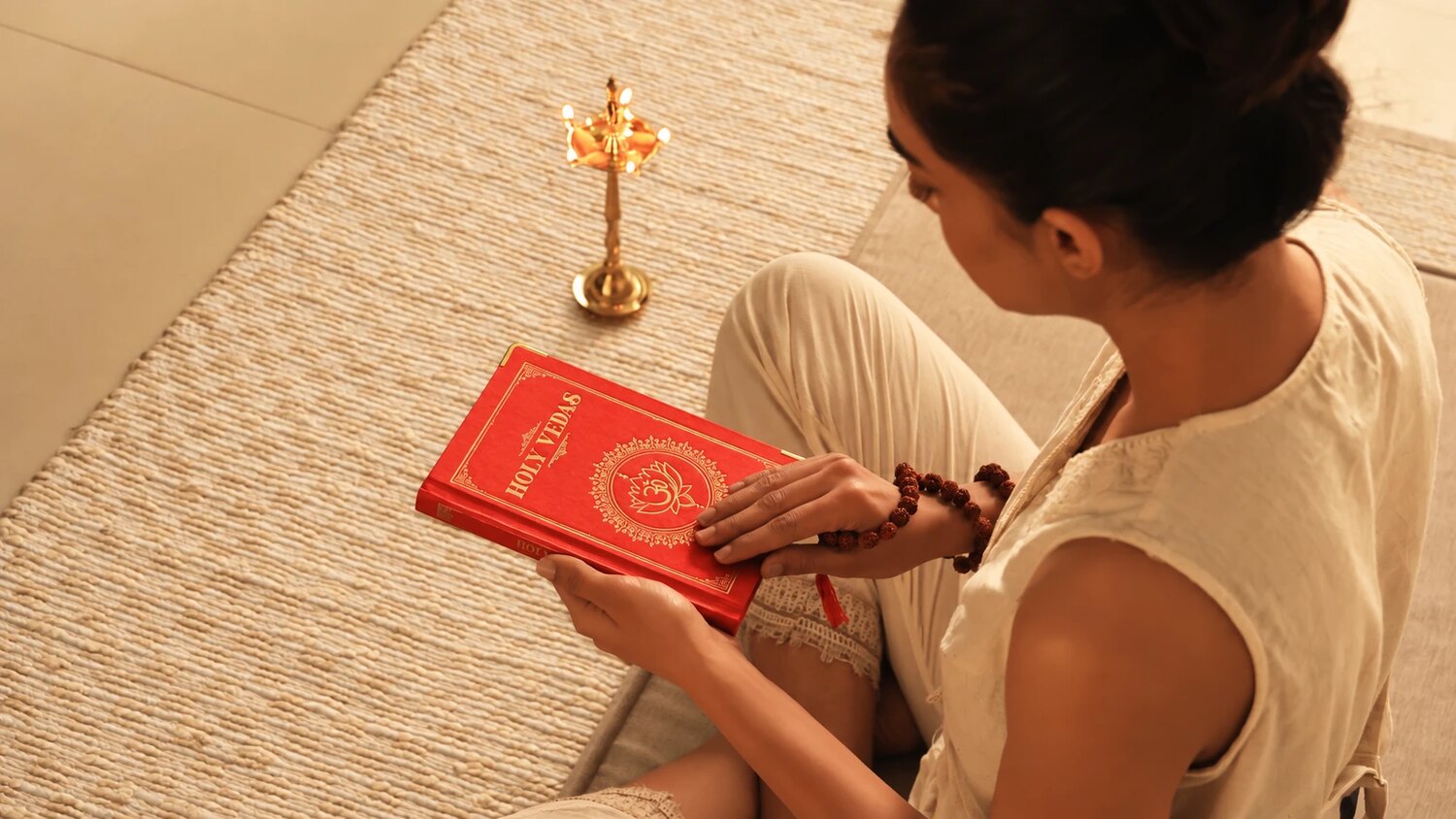

Hair & Scalp (Kesh Charya)
Kesh Charya is the Ayurvedic tradition of hair and scalp care within Dinacharya: nourish the scalp with herbal oils, massage to support circulation, and choose formulations suited to your constitution. Art of Vedas pairs classical herbal hair oils with bronze Kansa scalp tools that stimulate the marma points for a complete ritual.





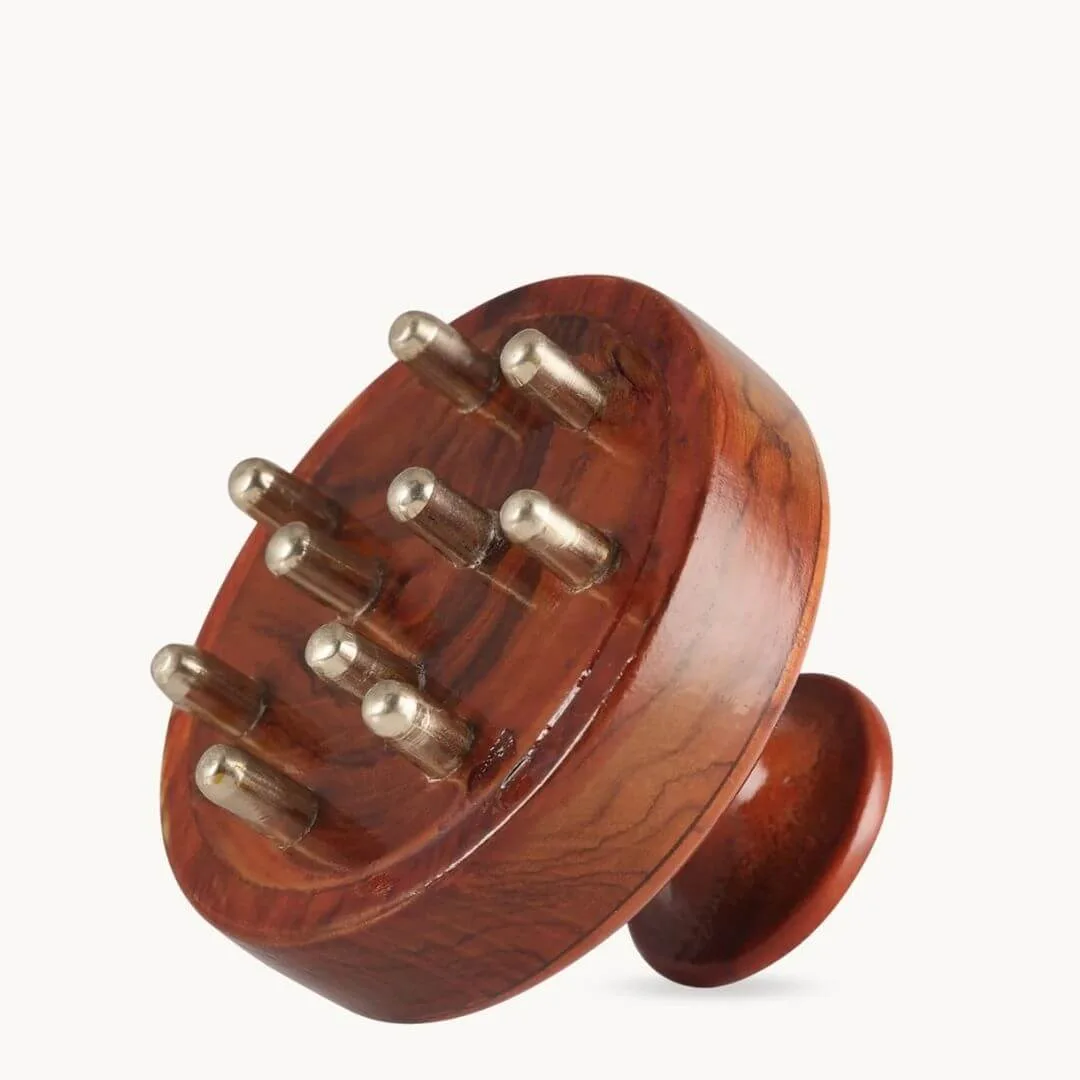
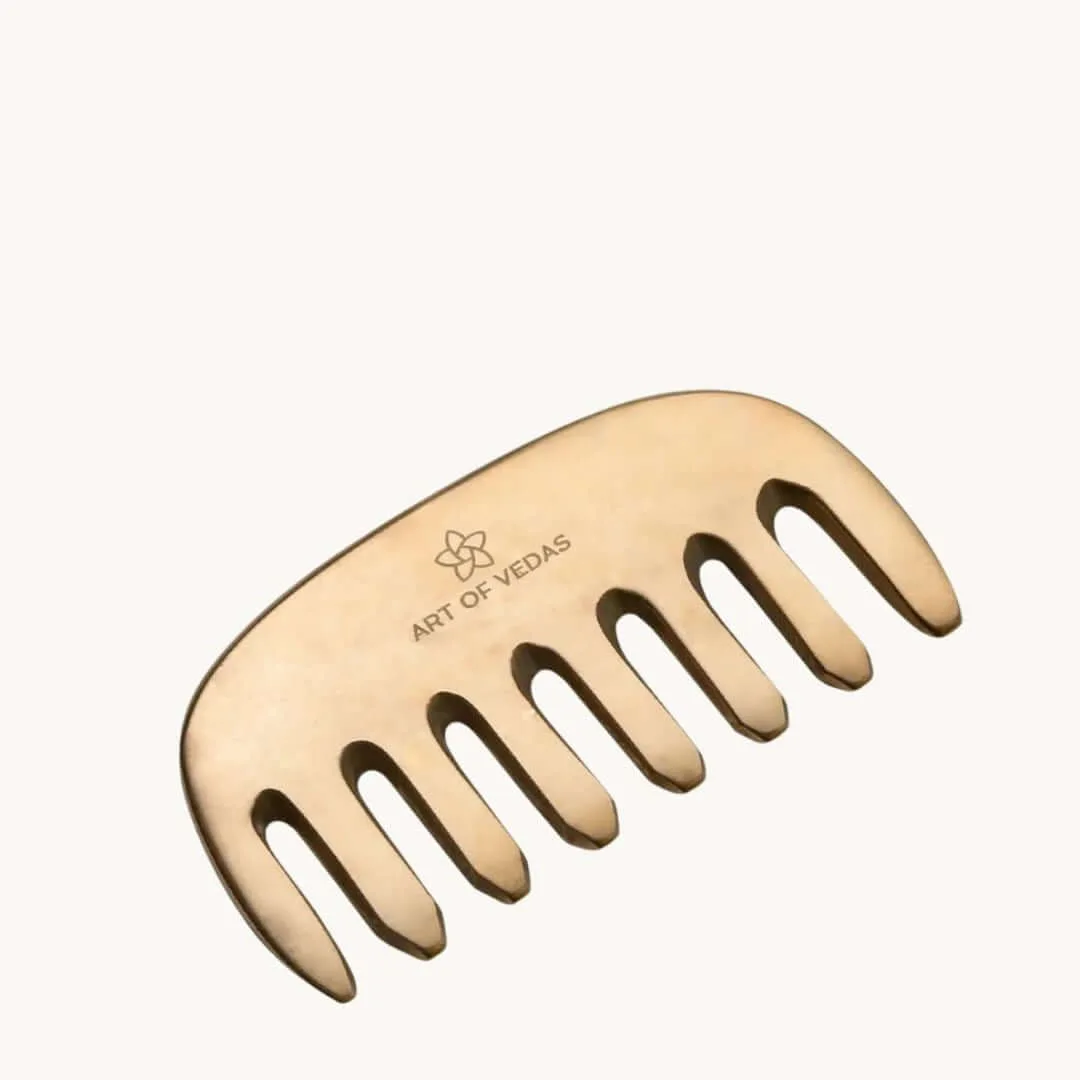

Kesh Charya: the daily care of hair and scalp
Kesh Charya is the Ayurvedic practice of caring for the hair and scalp, counted among the daily observances of Dinacharya (the daily routine) in the classical texts. The practice rests on a few unhurried habits: oiling the scalp with herbal Thailams (medicated oils prepared by slow cooking herbs in a base oil), massaging gently to warm the skin and settle the mind, and choosing oils suited to your own constitution. Within this collection you will find classical hair Thailams formulated to nourish the roots and cool the scalp, alongside Kansa (bronze) tools that work the Marma (the sensitive energy points used in massage) across the head during massage. If you tend toward warmth and a sensitive, easily heated scalp, you may prefer a cooling oil such as Brahmi or Neelibhringadi; if you simply want a steady, grounding routine, begin with regular oiling two or three evenings a week and let the rhythm do its work. Art of Vedas brings these preparations and tools from India to Europe so the routine can take its place in your week.
Questions about Kesh Charya hair and scalp care
What does Kesh Charya mean, and what is in this collection?
Kesh Charya is the part of the Ayurvedic daily routine, Dinacharya, that concerns the hair and scalp. In practice it means oiling the scalp with herbal Thailams, massaging regularly, and keeping to a consistent rhythm. This collection brings together that practice in two forms: classical hair oils such as Triphaladi, Neelibhringadi and Brahmi Thailam, and Kansa bronze tools, a scalp and body wand and a comb, used to work the scalp during massage.
How do I use a hair Thailam, and how often?
Warm a small amount of oil between your palms and work it into the scalp with the fingertips, then draw it gently down the lengths of the hair. Let it rest for thirty minutes or longer, or leave it overnight on a towel, before washing it out with a mild cleanser. Two or three applications a week is a sensible starting rhythm, and you can adjust from there once you see how your hair and scalp respond.
How do I choose between Triphaladi, Neelibhringadi and Brahmi Thailam?
Each oil is formulated for a slightly different intention. Neelibhringadi is traditionally valued in Ayurveda for nourishing the roots and supporting the depth and richness of the hair, Brahmi Thailam is known in classical Ayurveda for its cooling, settling qualities and is often chosen for a heated or restless scalp, and Triphaladi is the lighter, more cleansing preparation of the three. If you are unsure, begin with the one whose qualities most match what your scalp asks for, cooling for warmth and sensitivity, nourishing for dryness.
What is a Kansa tool and how does it fit into the routine?
Kansa is a traditional bronze alloy long used in Ayurvedic bodywork. The scalp and body wand and the Kansa comb let you carry the oil across the head and work the Marma (the sensitive energy points) along the scalp with even, unhurried strokes. Used after applying a Thailam, they turn a quick oiling into a proper massage, which is the part of Kesh Charya that helps to warm the skin and calm the mind at the end of the day.
Which oils suit which Dosha?
As a general guide, a dry scalp that points toward Vata appreciates the richer, more nourishing oils and a slower, warming massage, while a scalp that runs hot and easily irritated, a Pitta tendency, is usually more comfortable with cooling preparations such as Brahmi or Neelibhringadi. A Kapha tendency, with heavier or oilier hair, often does better with lighter, more cleansing oils and less frequent application. These are starting points rather than rules, and your own Prakriti (constitution) and how your scalp feels should guide the final choice.
How should I store these oils and care for the Kansa tools?
Keep the Thailams tightly closed, away from direct sunlight and heat, and use clean, dry hands so no water enters the bottle, as the oils are anhydrous and best kept that way. The Kansa tools should be wiped clean and dried thoroughly after each use, since bronze can darken or tarnish if left damp. A little of the hair oil rubbed over the bronze now and then keeps the surface conditioned and ready for the next massage.