
Nourish (Lepana)
In Sanskrit, Sneha means both oil and love, and anointing the skin with herbal oils is among Ayurveda's oldest practices to nourish, soften, and restore a natural glow. Apply our Saffron, Sandalwood, Manjishtha, and Lotus face oils after cleansing, before your Kansa massage, to let the wand glide and leave skin supple and luminous.
Face serums in the Ayurvedic tradition of Sneha
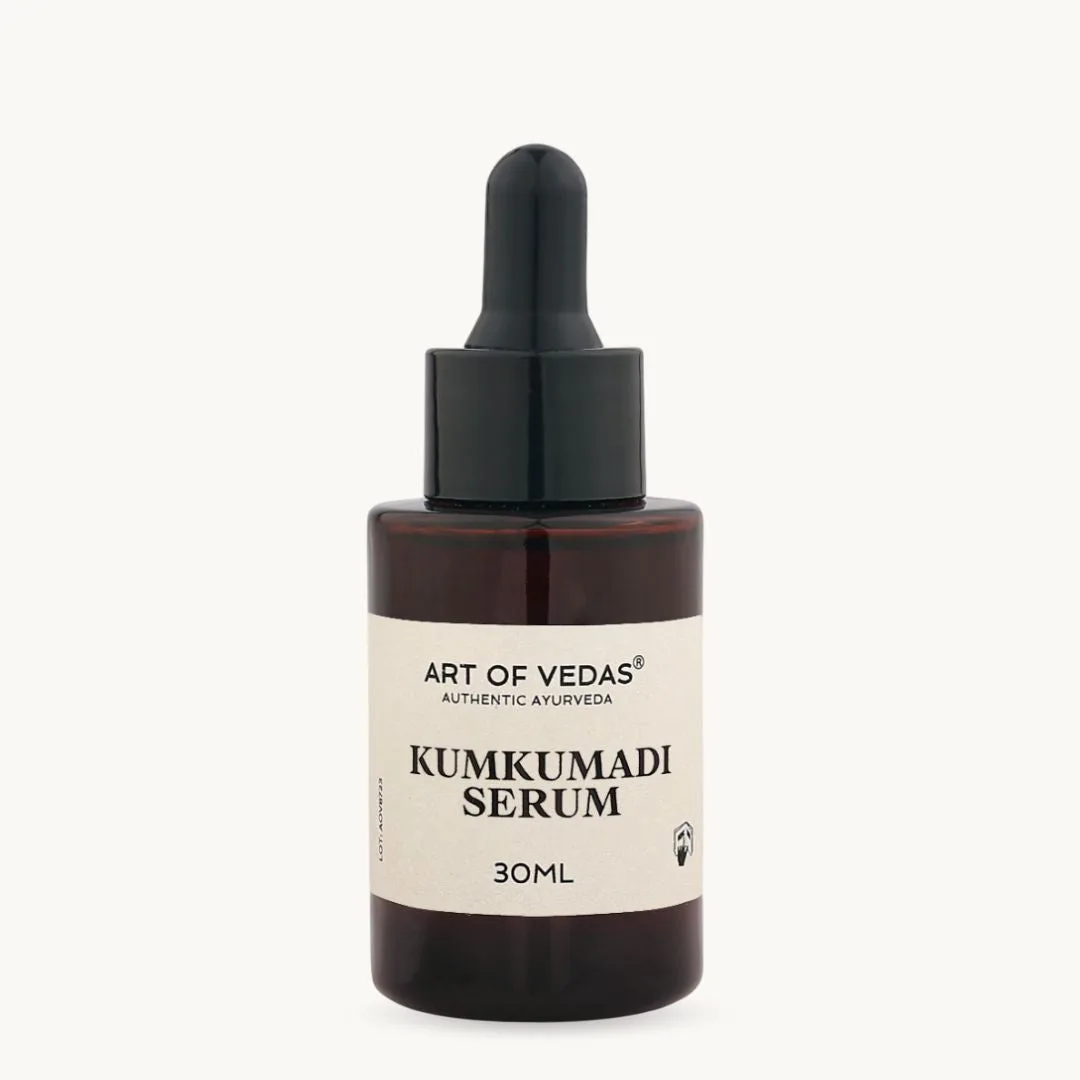
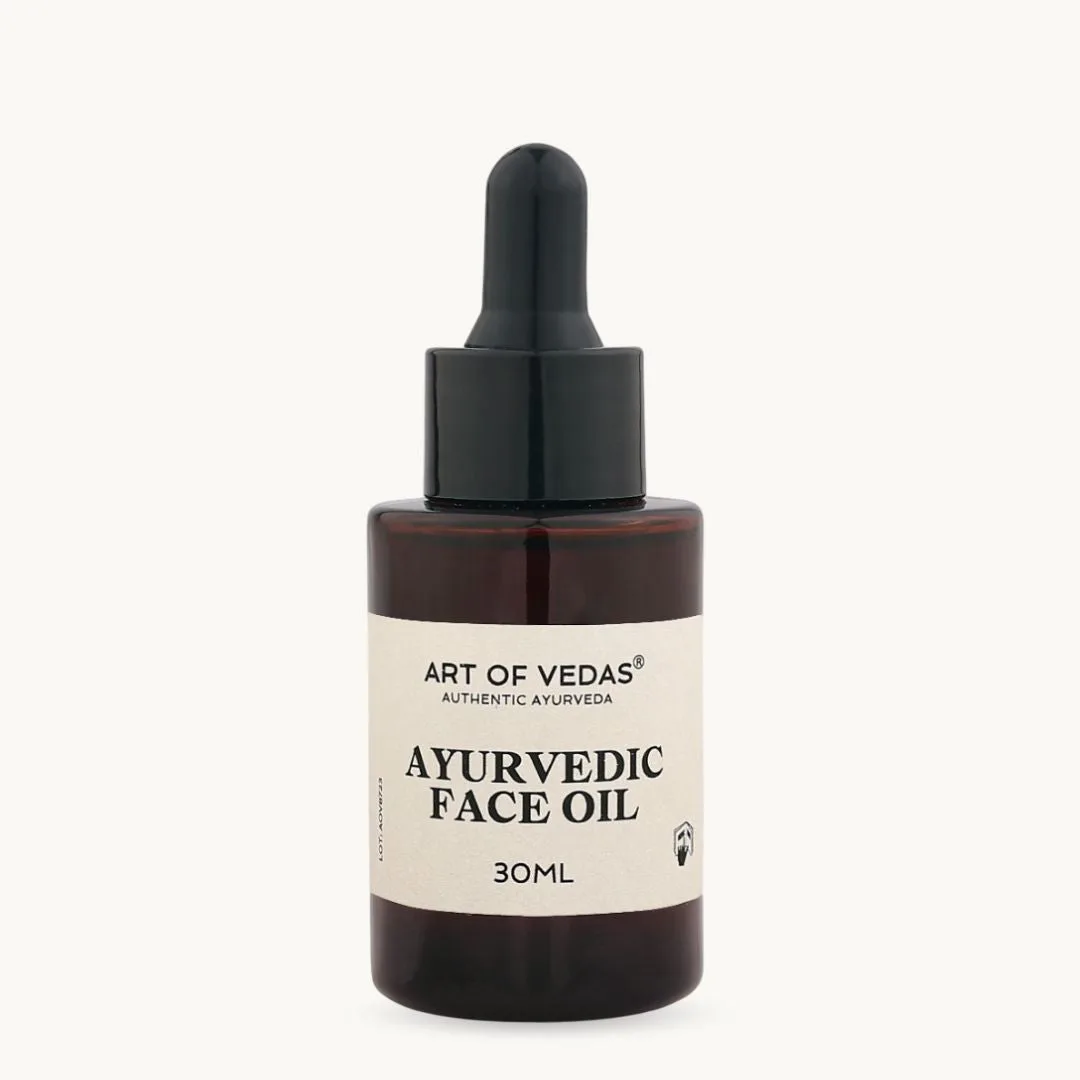
In Sanskrit, Sneha carries two meanings at once: oil, and affection. This category gathers the lighter, faster-absorbing oils that classical Ayurveda places at the heart of facial care, herbal serums and infused oils meant to soften the skin, feed it and let its quiet glow return rather than simply sit on its surface. Each formulation draws on plants long valued in Ayurvedic practice, among them saffron, sandalwood, Manjishtha (Indian madder) and lotus, carried in cold-pressed base oils so a few drops settle in cleanly and leave the skin supple. When you choose within the category, let your Prakriti (constitution) guide you: cooling, brightening oils suit Pitta-leaning skin that runs warm, while a richer, more grounding oil better answers the dryness that Vata skin tends towards. A well-chosen face oil also prepares the skin for a Kansa (bronze) wand massage, helping each stroke glide and giving the ritual its purpose.
Questions about Ayurvedic face serums
What is an Ayurvedic face serum, and how is it different from a regular serum?
In this category a face serum is a herbal oil rooted in classical Ayurvedic formulation, where chosen plants are infused into a cold-pressed base oil so their qualities pass into something the skin can absorb. Unlike many water-based serums, these are oil serums in the tradition the Sanskrit word Sneha describes, oil that both nourishes and carries the care of the herbs into the skin. The aim is not a quick surface finish but a steady softening and the return of the skin's own glow.
How do I use a face serum in a daily Ayurvedic routine?
Apply a few drops after cleansing, when the skin is clean and slightly warm, and press the oil gently into the face and neck rather than rubbing it in. In a Dinacharya (daily routine) this sits naturally at the close of your morning or evening care. If you follow it with a Kansa (bronze) wand massage, the serum lets the wand glide and makes every stroke count, so applying the oil first is part of the ritual rather than a separate step.
How do I choose the right face serum for my skin?
Let your Prakriti (constitution) and how your skin behaves guide you. Skin that runs warm, flushes easily or leans Pitta tends to prefer cooling, brightening oils built around saffron and sandalwood, while drier Vata-leaning skin welcomes a richer, more grounding oil that holds moisture through the day. If you are unsure, begin with a lighter formulation and observe how readily it absorbs over a week before deciding.
Which herbs are used in these serums, and what are they valued for?
You will find plants long held in regard within Ayurveda, among them saffron, sandalwood, Manjishtha (Indian madder) and lotus. Saffron and sandalwood are traditionally valued in Ayurveda for their cooling, brightening qualities, while Manjishtha is classically associated with an even, luminous complexion. These are infused into cold-pressed oils so a small amount carries the herbs rather than only the fragrance.
Will a face oil leave my skin greasy, and how should I store it?
A well-made Ayurvedic face serum is designed to absorb cleanly, so two or three drops settle in within a minute or two and leave the skin soft rather than slick. Begin with a small amount and add only if your skin still feels thirsty; oilier, Kapha-leaning skin needs only a little, used at night. Keep the bottle closed, upright and away from direct sunlight and heat, since warmth and light are what age a cold-pressed oil fastest, and there is no need to refrigerate it.
How does an Ayurvedic face serum fit alongside the rest of Ayurvedic skincare?
Within a classical sequence the serum is the step of nourishment that follows cleansing and any Lepana (herbal paste or mask), settling the skin before a Kansa massage if you keep one in your routine. It pairs naturally with a bronze Kansa wand, which is why many people apply the oil first and let the massage carry it deeper. Used a few times a week, it becomes the part of the ritual where care, in the full sense of Sneha, meets the skin.