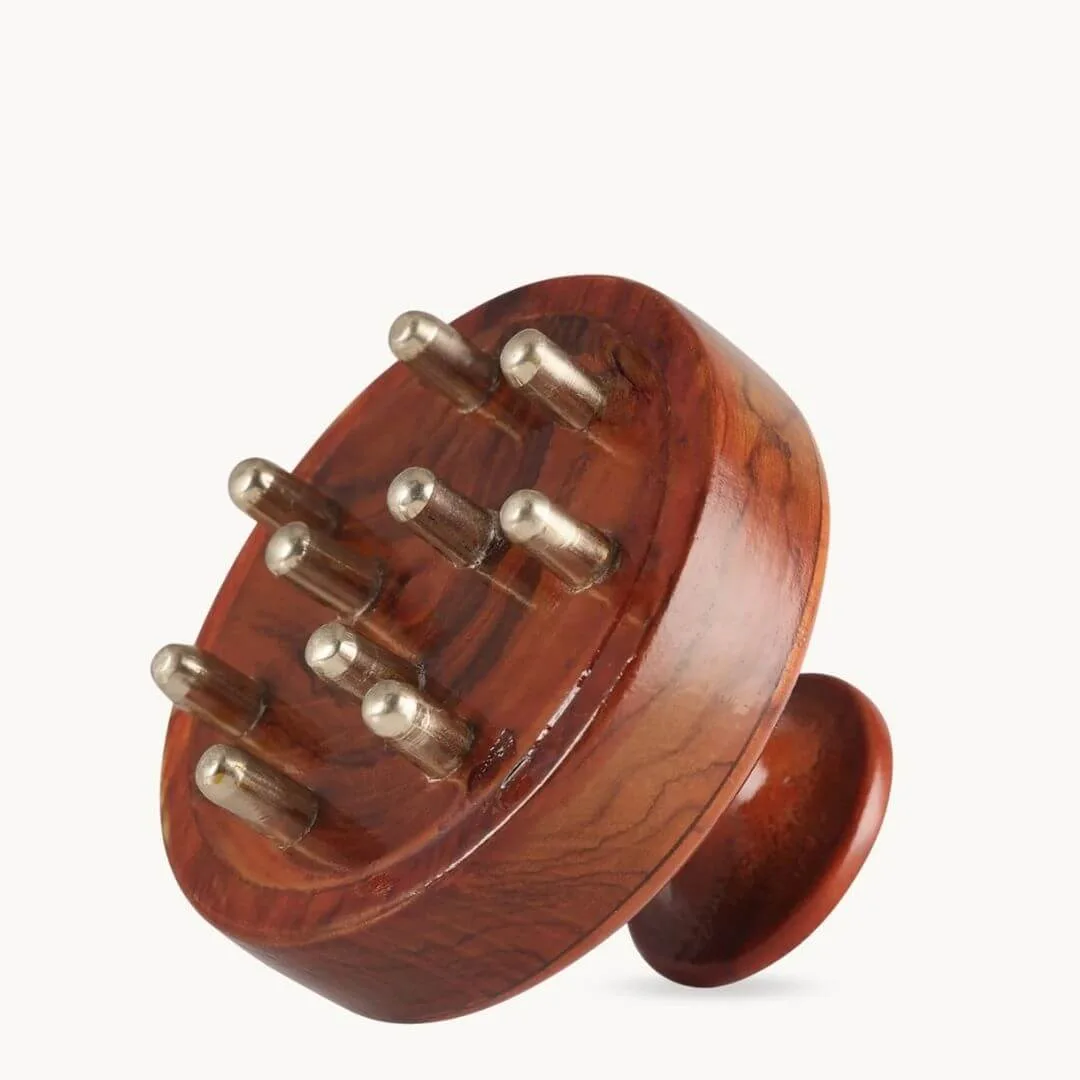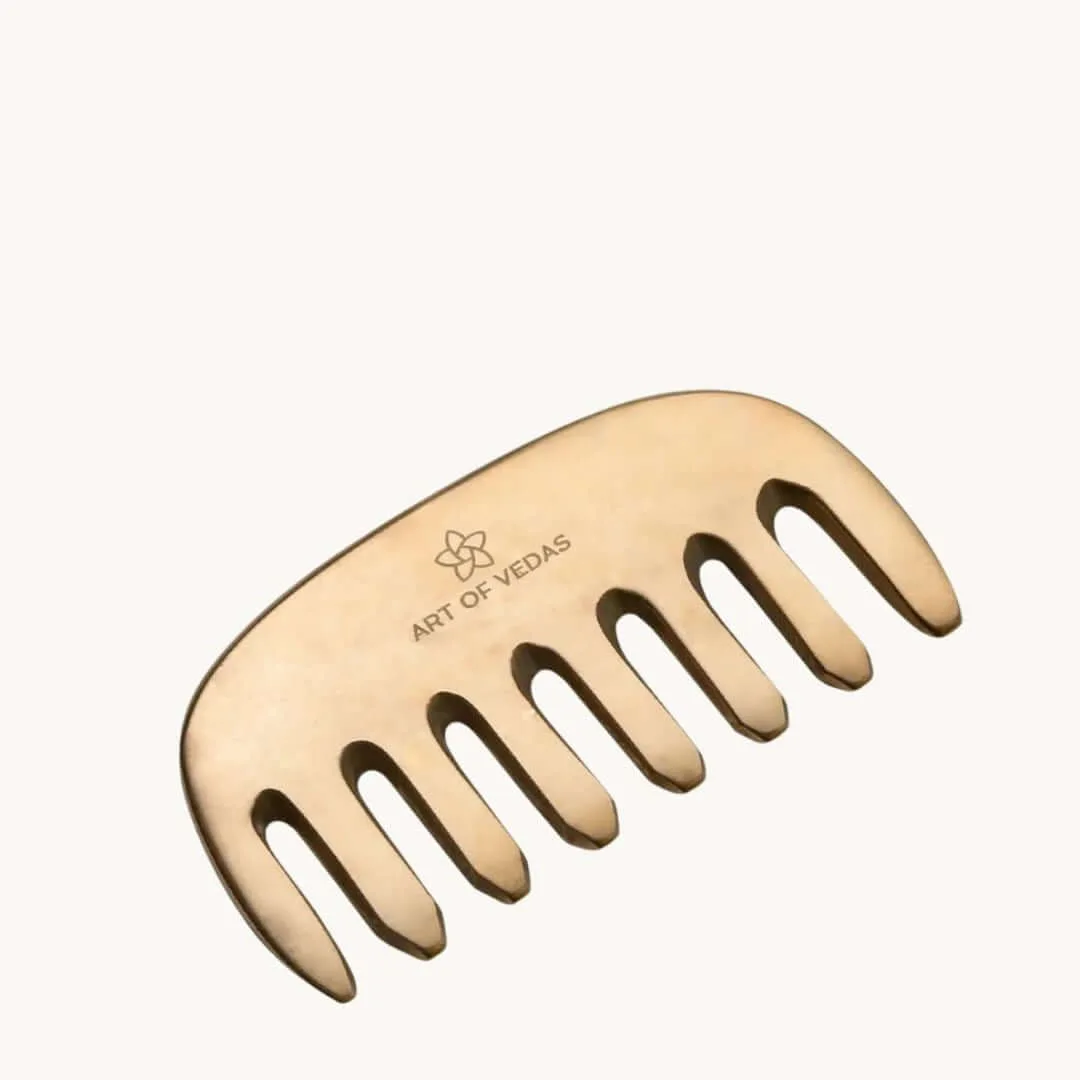

Kansa Face Massage Tools
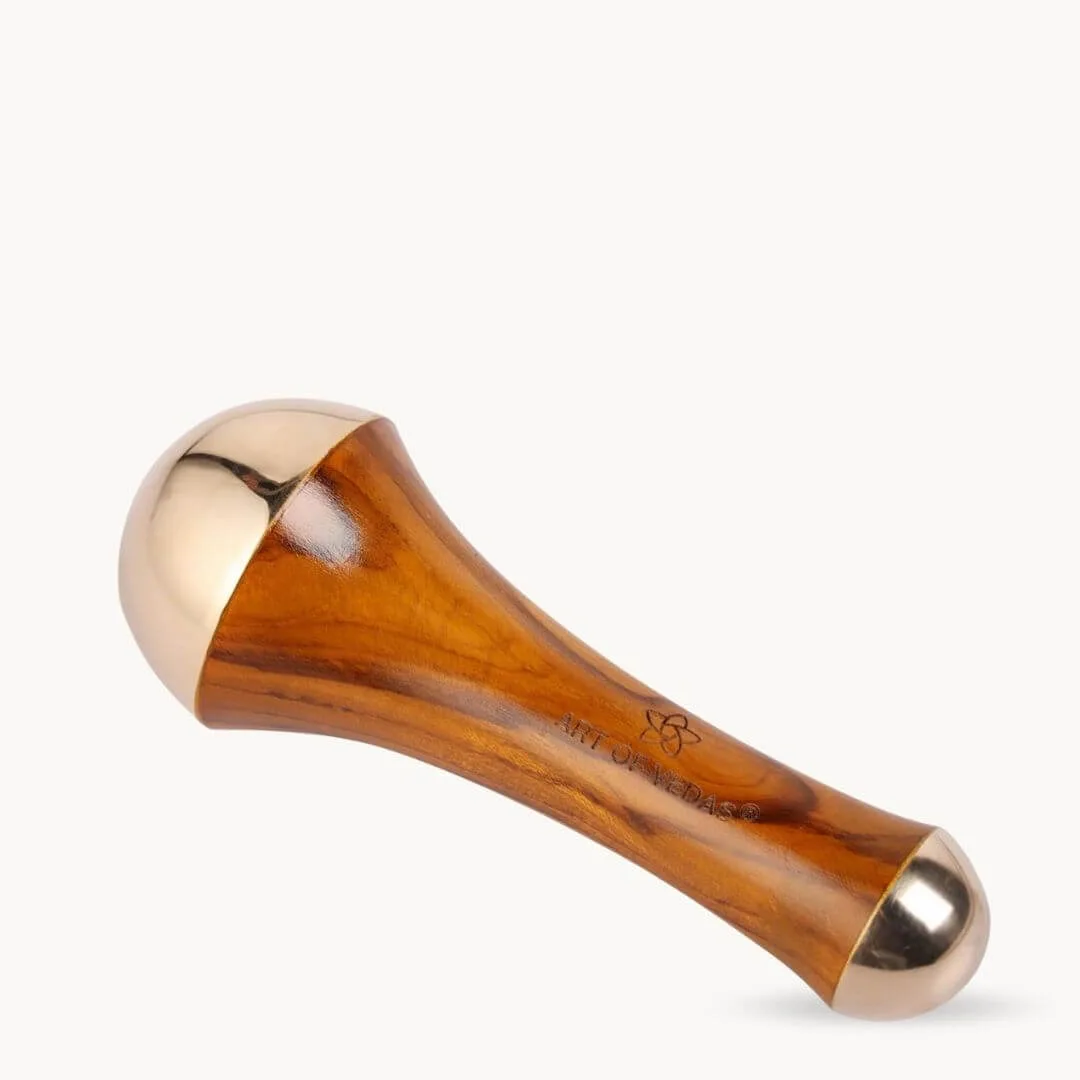
Rooted in the Ayurvedic practice of Abhyanga, our Kansa face tools use the weight and coolness of bronze to follow your facial contours, easing tension across the jaw, temples, and around the eyes. Choose the versatile double-sided Wand for cheeks and brow, the Mini Wand for marma point work, or the Gua Sha for sculpting strokes along the jawline.
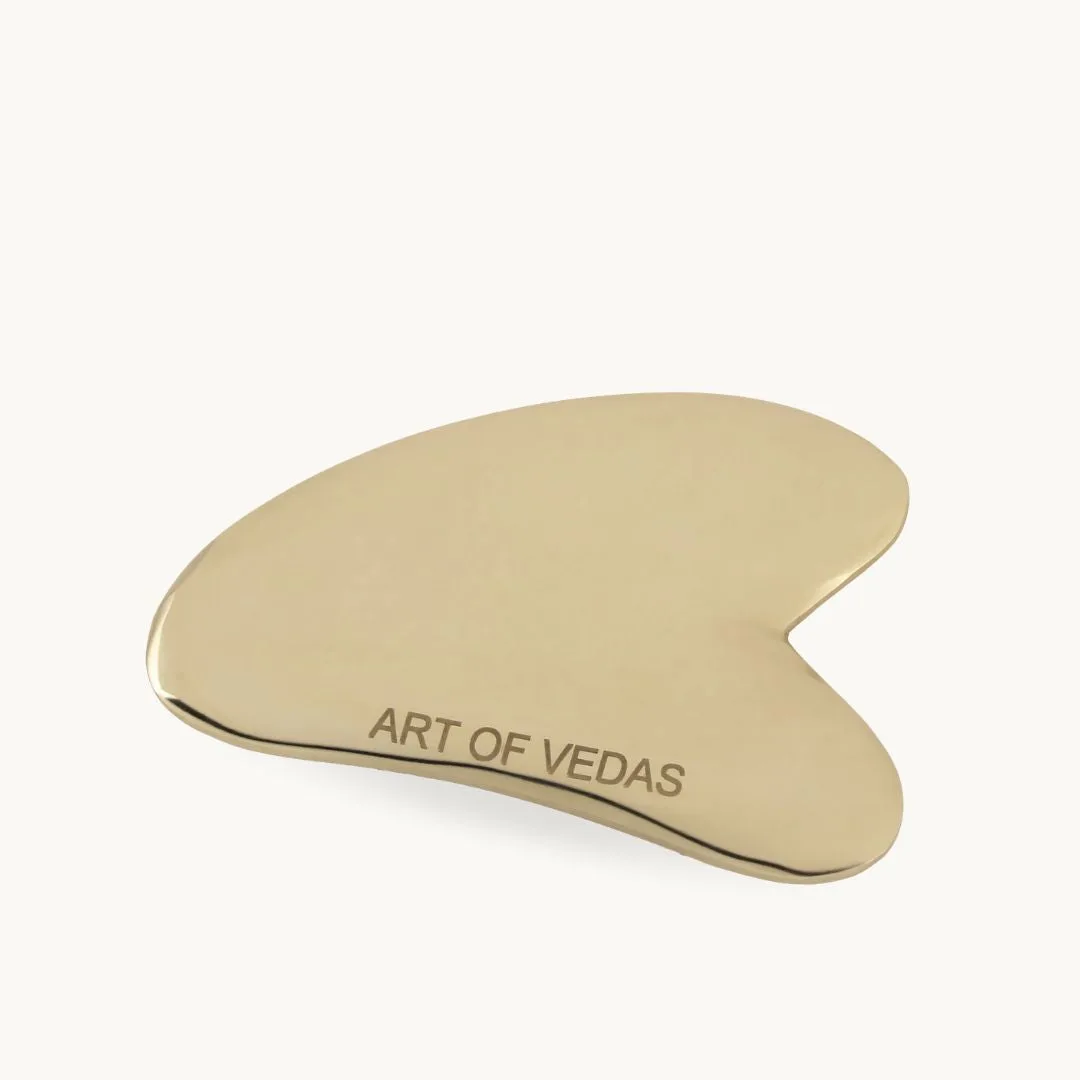
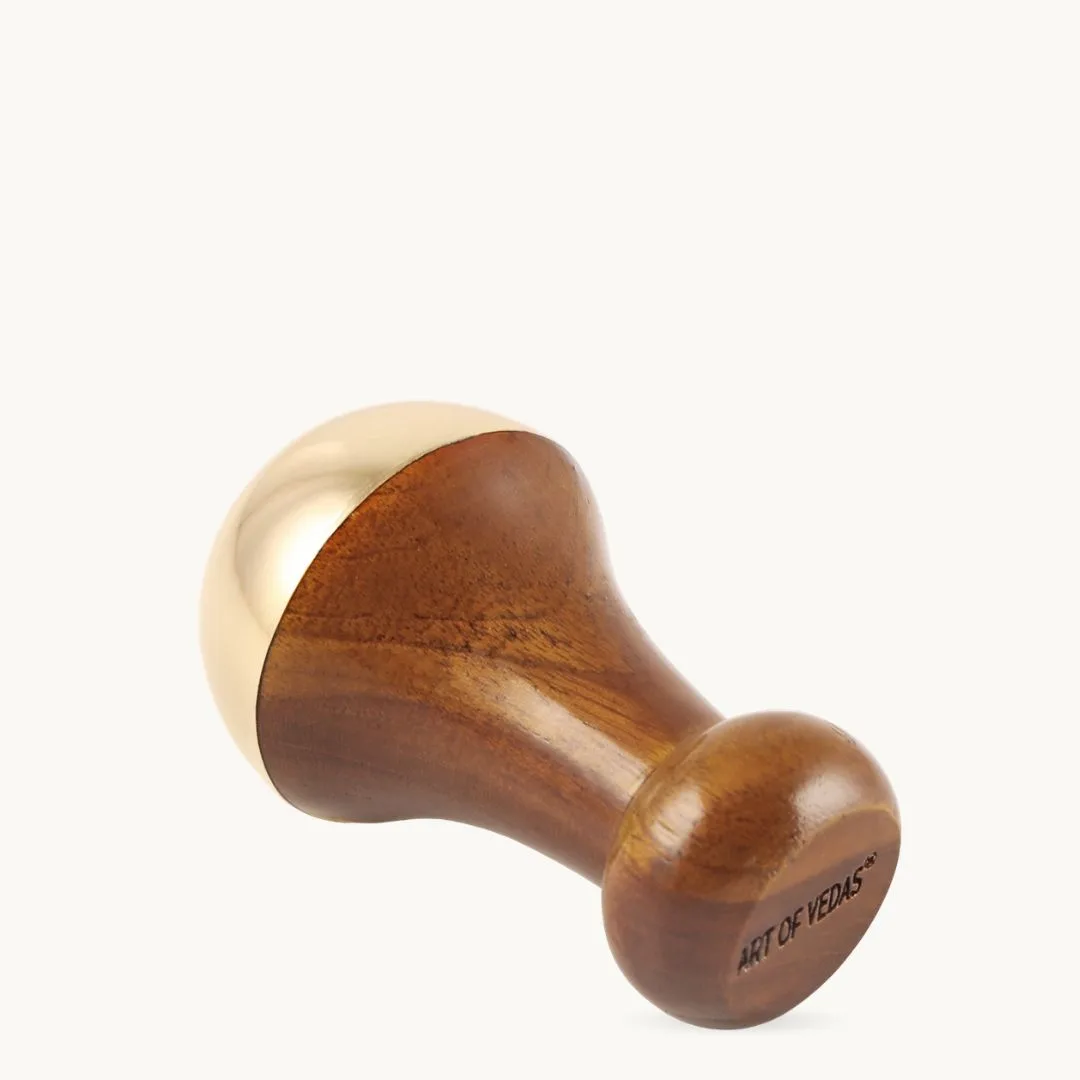
Kansa Tools for the Face
Kansa (a traditional bronze alloy of copper and tin) has long been used in Ayurveda for self-massage, and these tools bring that practice to the face. Drawn slowly over skin that has been prepared with a few drops of facial oil, the cool metal meets warm, oiled skin in a way that feels grounding and quietly restorative, while the gentle contact follows the Marma (subtle energy points) of the face that classical Ayurveda associates with clarity and ease. This is facial Abhyanga (oil massage) in its simplest form, a few unhurried minutes that suit a morning Dinacharya (daily routine) or a calm end to the day. When choosing, consider the shape and weight that fit your hands and your face: a smaller wand offers precision around the brow, jaw and cheekbones, while a fuller tool covers broader areas with steady, even pressure. Whichever you select, always work over oil rather than dry skin, and let slow, light movements do the work.
Questions about Kansa face tools
What is a Kansa tool and why is it used on the face?
Kansa is a traditional bronze alloy of copper and tin that Ayurveda has long valued for self-massage. Used on the face, the smooth metal head glides over oiled skin to support a gentle facial Abhyanga, the Ayurvedic practice of oil massage. Many people find the cool bronze against warm, oiled skin both calming and grounding.
How do I use a Kansa tool for facial massage?
Begin with clean skin and apply a few drops of a facial oil so the tool can move without dragging. Work in slow, light strokes, following the natural lines of the face from the centre outwards and giving a little attention to the jaw, cheekbones and brow. A few unhurried minutes is enough, and the practice sits comfortably within a morning or evening Dinacharya, the Ayurvedic daily routine.
Do I need to use oil, or can I use the tool on dry skin?
Always use the tool over oil rather than dry skin. The oil lets the bronze head glide smoothly and keeps the massage gentle and comfortable, which is how facial Abhyanga is traditionally practised in Ayurveda. A light facial oil suited to your skin works well; you need only a few drops.
Which Kansa tool should I choose for the face?
Let the shape and size guide you. A smaller, lighter wand gives you precision around the brow, jaw and cheekbones and is easy to control on the contours of the face, while a fuller tool covers broader areas with steady, even pressure and can move on to the neck and shoulders. If you would like one tool for both face and body, choose the larger format; for focused facial work, the smaller wand is the natural choice.
Who are these tools suited to, and how do they relate to Dosha?
Kansa face tools suit most people who enjoy a slow, mindful skincare ritual and want to add gentle massage to their routine. The cooling, grounding quality of the bronze is traditionally welcomed by those of a warmer, more active disposition, which Ayurveda would describe as Pitta or Vata in nature, though the practice is calming for any Prakriti (individual constitution). If your skin is sensitive or reactive, keep the pressure especially light and the strokes slow.
How do I care for and store my Kansa tool?
Wipe the bronze head clean with a soft cloth after each use to remove any oil residue, and keep the tool dry between sessions. Bronze naturally darkens over time as it reacts with oil and air, which is normal and does not affect how the tool performs; a little natural tarnish can be eased away with a cloth if you prefer the brighter finish. Store it somewhere dry, away from prolonged damp, and keep any wooden handle out of standing water.