Thailam
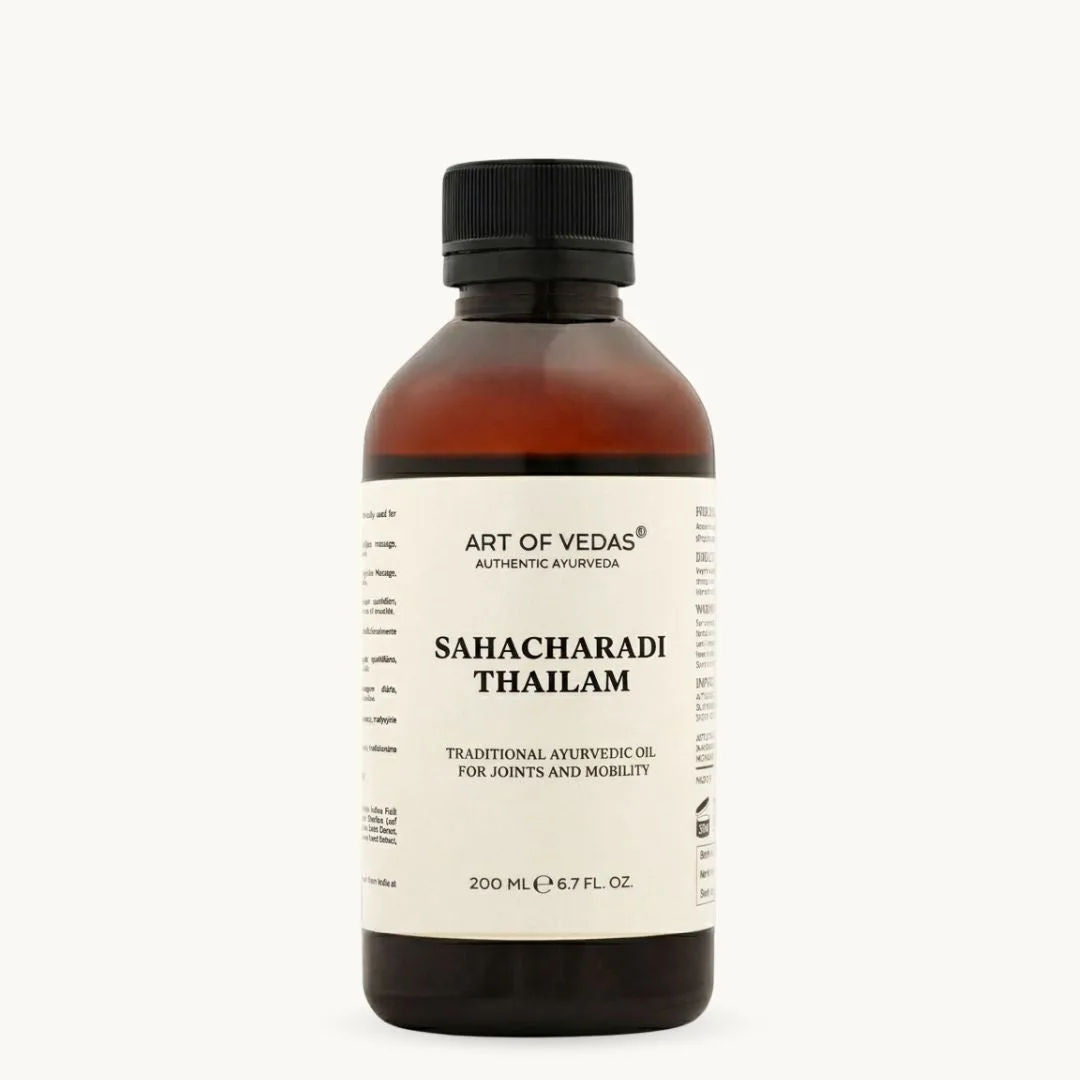
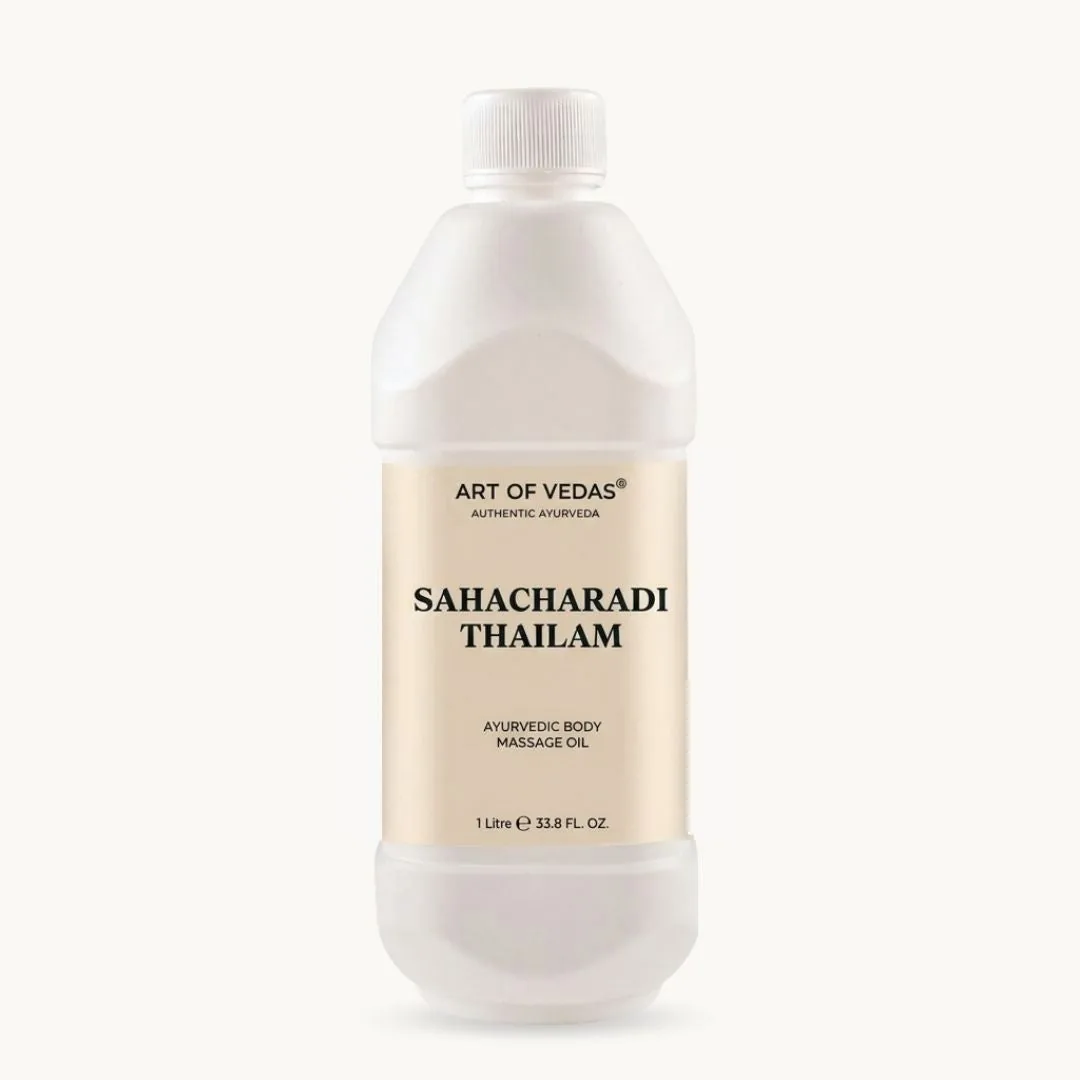
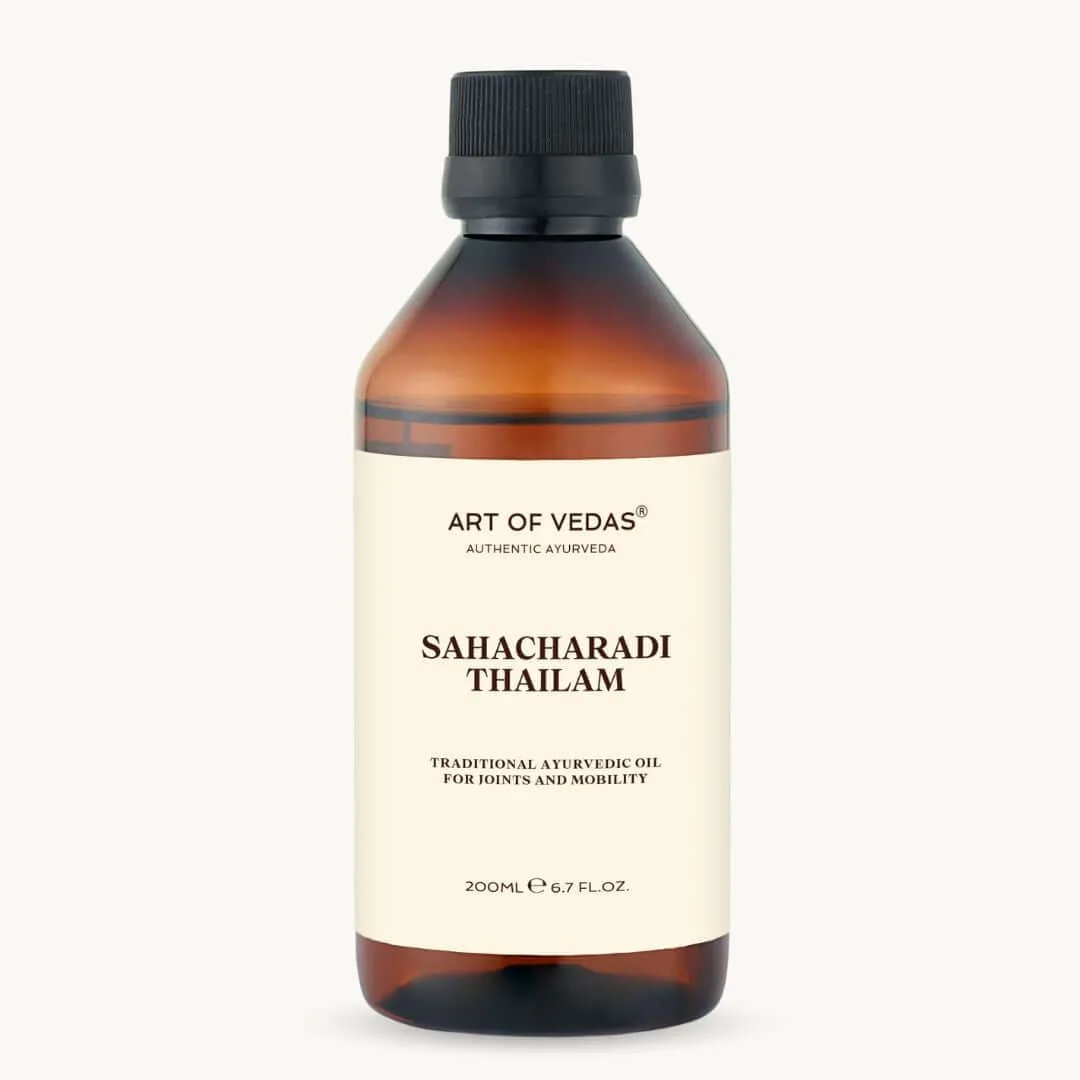
Sahacharadi Thailam
Classical Ayurvedic Massage Oil
Sahacharadi Thailam is a classical Ayurvedic medicated oil devoted to the lower body, governing Apana Vayu and the regions from the navel downward.
Sign up to Shop Ayurveda EU
Ingredients
Sesamum Indicum (Sesame) Seed Oil, Barleria Prionitis Extract, Aegle Marmelos Fruit Extract, Premna Corymbosa Leaf Extract, Oroxylum Indicum Bark Extract, Gmelina Arborea Root Extract, Stereospermum Colais Bark Extract, Tribulus Terrestris Extract, Desmodium Gangeticum Extract, Pseudarthria Viscida Extract, Solanum Indicum Fruit Extract, Solanum Xanthocarpum Extract, Asparagus Racemosus Root Extract, Vetiveria Zizanioides Root Oil, Capparis Horrida Extract, Elettaria Cardamomum Oil, Anisomeles Malabarica Extract, Callicarpa Macrophylla Leaf Extract, Pergularia Daemia Leaf Extract, Coleus Vettiveroides Root Extract, Parmelia Perlata Extract, Rubia Cordifolia Root Extract, Cedrus Deodara Wood Oil, Foeniculum Vulgare (Fennel) Oil, Liquidambar Orientalis Resin Extract
Why Choose Sahacharadi Thailam
Warming in character and Vata-pacifying by nature, it is traditionally used to nourish the lower back, hips, thighs and legs, and to support ease of movement.
Traditionally suited for:
- Daily Abhyanga of the lower body
- Vata-predominant constitution
- Supporting comfort and mobility in the legs
- Cooler seasons and ageing
How to use
For Abhyanga (full body massage)
- Warm the oil by standing the bottle in warm water for a few minutes.
- Apply generously to the whole body.
- Use long strokes along the limbs and circular motions around the joints.
- Massage the abdomen gently in a clockwise direction.
- Include the scalp, ears and soles of the feet.
- Allow 15 to 20 minutes for the oil to absorb.
- Follow with a warm shower or bath.
For targeted use
Apply a small amount to the chosen area and massage gently until absorbed.
Recommended frequency
Daily use is the traditional practice. For maintenance, use two to three times a week.
Important
- For external use only.
- Warm gently, do not microwave.
- Take care in the shower, as oil can make surfaces slippery.
Classical reference
Sahacharadi Thailam is documented in foundational Ayurvedic texts, reflecting its importance in classical therapy for the lower body and circulation.
Textual Sources
The primary reference for this formulation appears in Ashtanga Hridayam, Chikitsa Sthana (Therapeutics Section), Chapter 21, Verses 67 to 69. This text was composed by Acharya Vagbhata in the 7th century CE and remains one of the most authoritative sources in Ayurvedic medicine. Additional references appear in Sahasrayogam (Taila Prakarana section), the classical compendium of classical formulations, and Kashyapa Samhita (Chikitsa Sthana, Chapter 24), which mentions Sahachara Taila for Basti and Abhyanga applications.
Sanskrit Name and Etymology
The Sanskrit name is Sahacharadi Tailam, written as सहचरादि तैलम् in Devanagari script.
The name components are Sahachara meaning "companion" or "that which accompanies movement," Adi meaning "and others" or "beginning with," and Tailam meaning "oil." The complete meaning, "The Oil Beginning with Sahachara", indicates a formulation centered on this unique lower body specialist herb.
Historical Development
Ayurvedic Pharmacology
The complete pharmacological profile according to classical texts is as follows.
Rasa (Taste): Madhura (sweet), Tikta (bitter), Kashaya (astringent)
Guna (Quality): Snigdha (unctuous), Guru (heavy), Sukshma (subtle, penetrating)
Virya (Potency): Ushna (warming)
Vipaka (Post-digestive effect): Katu (pungent)
Dosha Action: Primarily pacifies Vata, balances Kapha, may increase Pitta if used excessively
Primary Karma (Actions): Vatahara, Shothahara, Vedana-sthapana (promotes comfort), Sira-shodhana (supports vein health), Balya
Dhatu Affinity: Mamsa (muscle tissue), Asthi (bone tissue), Majja (nerve and marrow tissue), Rakta (blood tissue)
Srotas (Channel Systems): Mamsavaha, Asthivaha, Majjavaha, Raktavaha
Vayu Focus: Apana Vayu, the subdosha of Vata governing the lower body, elimination and downward movement
The Apana Vayu Connection
What makes Sahacharadi unique among Thailams is its specific action on Apana Vayu. While Mahanarayana addresses Vata comprehensively throughout the body, Ksheerabala focuses on nerve tissue with cooling action, and Mahamasha combines nerve and muscle support, Sahacharadi specifically targets the downward-moving energy center. This makes it the classical choice when Vata imbalance manifests primarily in the lower back, hips, thighs, legs and circulatory system of the lower extremities.
Preparation Method
The classical preparation follows Taila Paka Vidhi in three stages. First, a Kashaya (decoction) is prepared from Sahachara, the complete Dashamoola and Shatavari, boiled in water and reduced to one quarter of the original volume. Second, a fine Kalka (paste) is prepared from 18 aromatic herbs. Third, sesame oil is combined with the decoction, paste and fresh, then heated over mild flame until Sneha Siddhi Lakshana (completion signs) appear, the paste rolls into a wick when tested, crackling sound ceases, characteristic aroma develops, and the oil achieves its distinctive reddish-brown color.
Learn more about Sahacharadi Thailam
What is Sahacharadi Thailam?
Sahacharadi Thailam is a classical Ayurvedic oil built on Sahachara in a sesame oil base, documented in the Ashtanga Hridayam. Art of Vedas offers Sahacharadi Thailam as a warming oil for Abhyanga of the lower back, hips and legs.
What is Sahacharadi Thailam used for?
Sahacharadi Thailam is traditionally used for massage of the lower back, hips and legs. It is valued in Ayurveda for balancing Vata and for supporting comfort and circulation through the lower body.
How do I use Sahacharadi Thailam for the lower back and legs?
Warm the Sahacharadi Thailam and massage it into the lower back, hips and legs with long strokes, working gently toward the feet. Allow it to absorb before a warm bath. For external use.
Which Dosha is Sahacharadi Thailam best for?
Sahacharadi Thailam is traditionally considered best for Vata, the Dosha most associated with the lower body and movement. Its warm sesame base suits the Vata season.
Can I use Sahacharadi Thailam every day?
Yes. A daily massage with Sahacharadi Thailam fits naturally into Dinacharya, the classical daily routine, and is especially welcome for the legs and lower back after an active day.
Is Sahacharadi Thailam good for the legs and lower back?
Sahacharadi Thailam is the classical oil traditionally chosen for the comfort of the lower back, hips and legs. A regular warm massage is a grounding way to care for the lower body. For external use.
Can Sahacharadi Thailam be used for a full-body massage?
Yes. While Sahacharadi Thailam is traditionally focused on the lower body, it can be used for a full-body Abhyanga, then allowed to absorb before bathing.
How is Sahacharadi Thailam different from Dhanwantharam Thailam?
Both are classical Vata oils for Abhyanga. Sahacharadi Thailam is traditionally directed at the lower back, hips and legs, while Dhanwantharam Thailam is a gentler oil for everyday full-body massage.
What are the ingredients in Sahacharadi Thailam, and how should it be stored?
Sahacharadi Thailam is prepared in a sesame oil base with Sahachara and a classical blend of supporting herbs, without synthetic fragrance or colour. Store in a cool, dry place away from sunlight, and warm gently before use if it thickens.
Related guides
- Sahacharadi Thailam: quality and testing
- Sahacharadi Kuzhambu: what it is, how it differs from the Thailam and how to use it
- Chinchadi Thailam: the classical tamarind oil, its tradition and the nearest oils in our range
- Pizhichil: The Classical Ayurvedic Oil Bath Treatment
- Murivenna: A Traditional Ayurvedic Body Oil Guide
- Wholesale Ayurvedic Oils in Europe: What to Check Before You Order
- Sahacharadi Thailam: The Classical Ayurvedic Oil for the Lower Body
- Ayurvedic Professional Oils: A Practitioner's Guide