

Ayurvedic Hair Oils
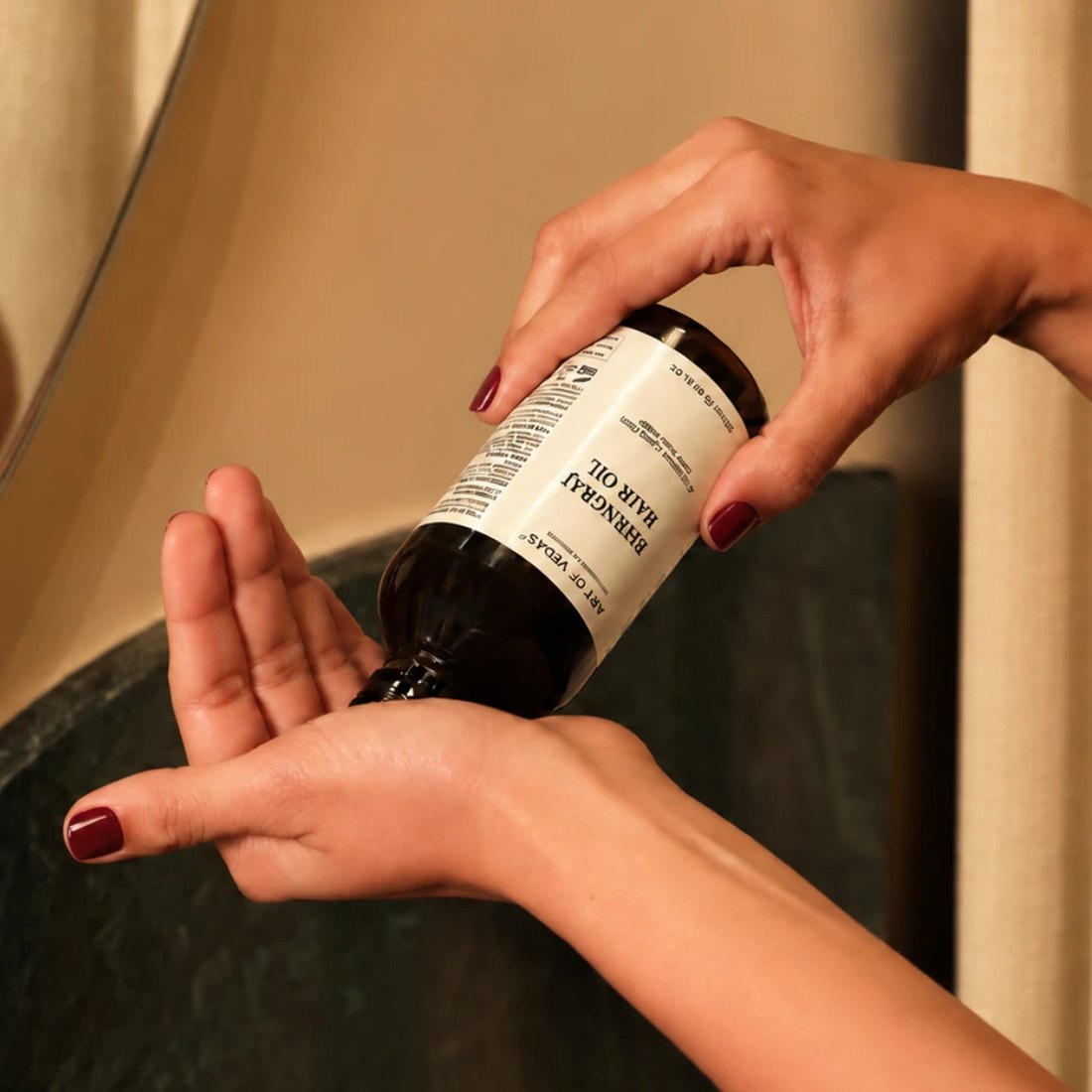
Drawing on the Vedic practice of Shiro Abhyanga, our traditional hair oils are slow-cooked by the Sneha Paka Vidhi method, allowing the herbs to release their full essence for a rich, nourishing oil. Warm a little in your palms, massage into the scalp, and let it rest for at least 20 minutes before washing.


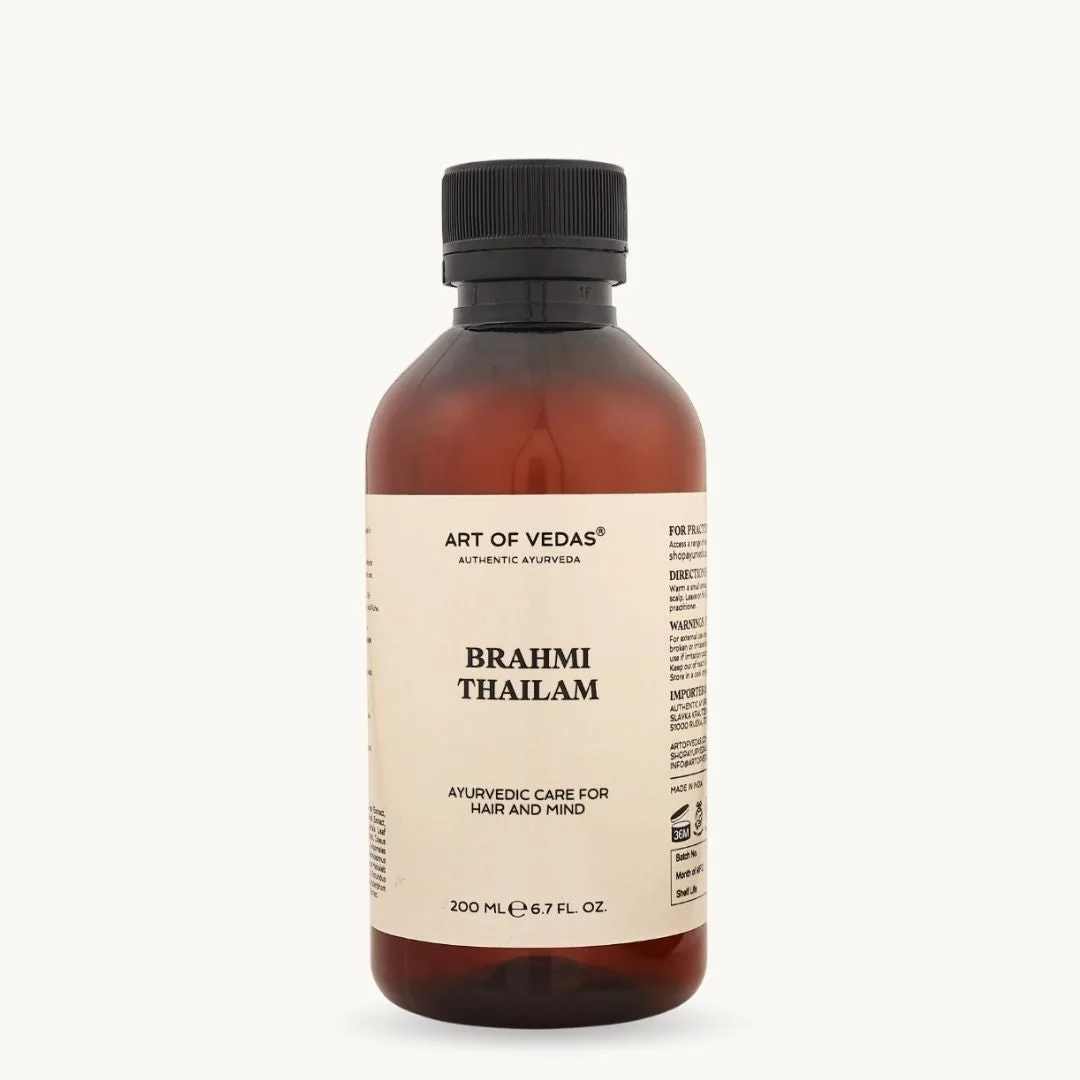
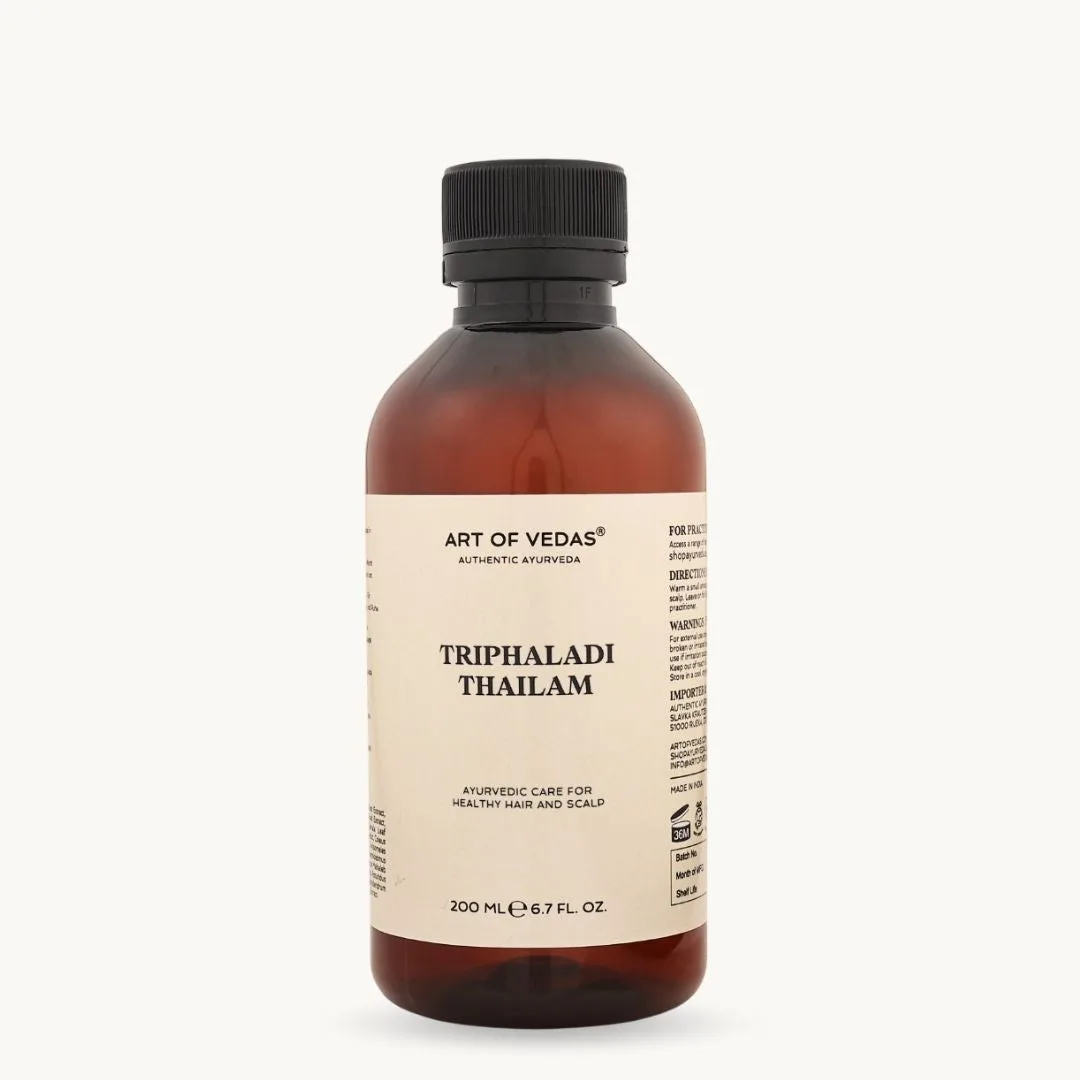
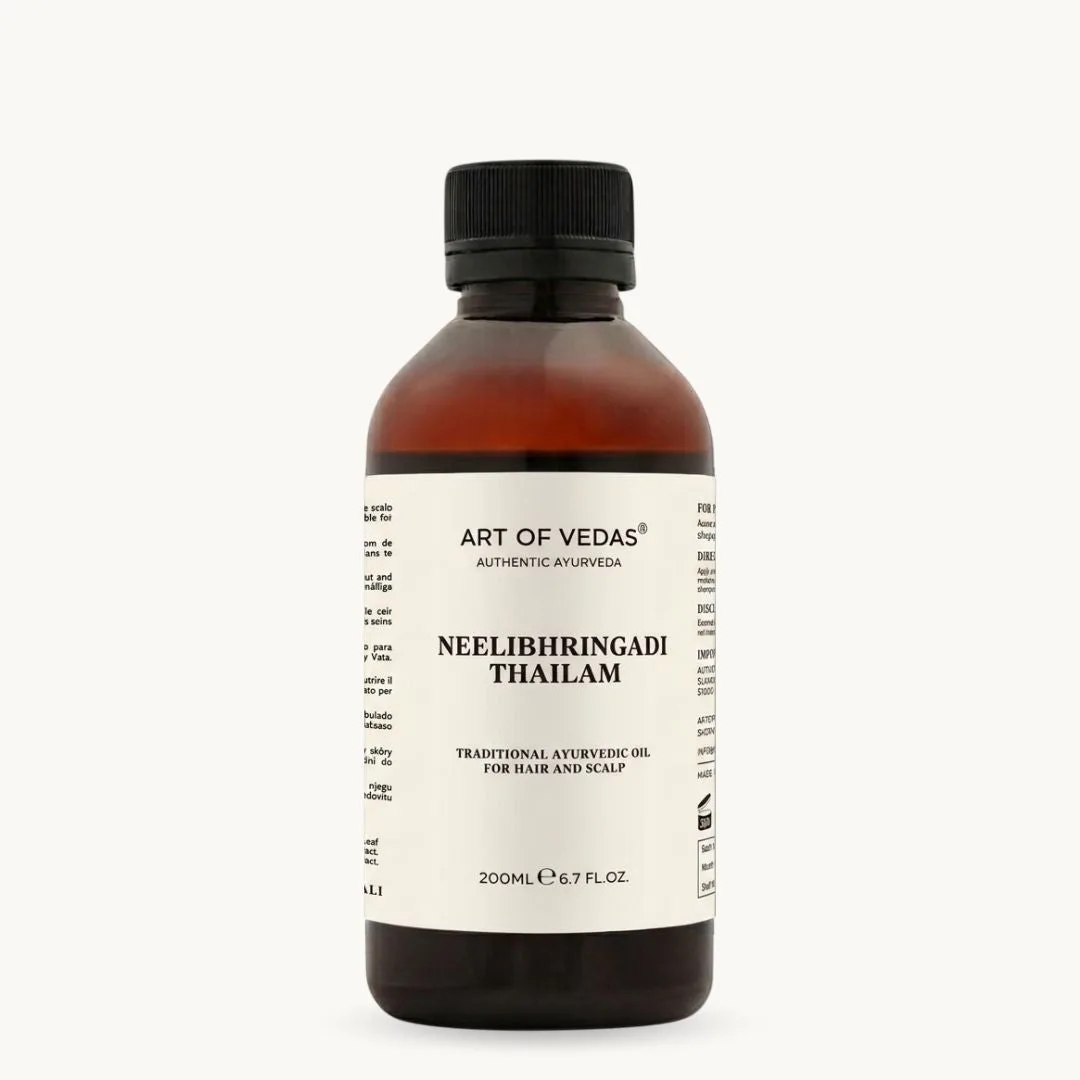
Hair Oils for Shiro Abhyanga, the Daily Oiling of the Head
In classical Ayurveda, anointing the scalp with warm herbal oil is among the oldest of daily practices, named Shiro Abhyanga (head and scalp massage), and the texts treat it as care for the whole head rather than the hair alone. The oils in this category are prepared by Sneha Paka Vidhi, the slow method in which herbs are cooked into a base oil over many hours so that the finished Thailam (medicated oil) carries the qualities of every plant within it. Each is suited to a different temperament: a cooling, settling oil for a heated, restless Pitta-leaning scalp, a grounding, steadying one where dry, light Vata predominates, and a clarifying oil where Kapha tends to make the scalp feel heavy or oily. To choose well, begin from how your scalp behaves rather than your hair length, and if you are unsure, a calming all-rounder massaged in two or three evenings a week is a sound place to start.
Questions about Ayurvedic hair oils
What makes an Ayurvedic hair oil different from an ordinary one?
An ordinary hair oil is usually a plain carrier oil, sometimes lightly scented, that coats the hair from the outside. An Ayurvedic hair oil is a Thailam, a medicated oil in which herbs have been slow-cooked into the base by the Sneha Paka Vidhi method so the oil itself carries the qualities of the plants. The intention is care for the scalp and roots through Shiro Abhyanga, the traditional oiling of the head, rather than surface shine alone.
How do I apply a hair oil the traditional way?
Warm a small amount between your palms until it feels comfortable to the touch, then part the hair and work the oil into the scalp with your fingertips in slow, circular movements, drawing it down the lengths afterwards. Let it rest for at least twenty minutes, or leave it overnight for a deeper soak, before washing it out. In classical practice this unhurried evening ritual matters as much as the oil you choose.
How do I choose between the hair oils in this collection?
Begin from how your scalp behaves rather than from your hair length or type. A cooling, settling oil suits a warm, easily irritated scalp where Pitta predominates, a grounding and steadying oil suits a dry, light Vata tendency, and a clarifying oil suits a Kapha scalp that feels heavy or quick to look oily. If you are still unsure, a calming all-rounder used two or three times a week is a reliable starting point, and you can refine your choice from there.
How often should I oil my hair and scalp?
Classical Ayurveda places Shiro Abhyanga within Dinacharya, the rhythm of daily and weekly self-care, so even a brief oiling a few evenings each week brings benefit. Two or three times weekly suits most people, while a drier scalp may welcome it more often and an oilier one rather less. Consistency over time tends to matter more than the amount used in any single session.
What is a Thailam, and why is it cooked so slowly?
A Thailam is a medicated oil in which selected herbs are simmered into a base oil until the oil takes on their character, a preparation the texts call Sneha Paka Vidhi. The slow cooking over many hours allows the water-soluble and oil-soluble qualities of each herb to pass into the oil, which is why a well-made Thailam is richer and more aromatic than a simply infused oil. It is this method, described in the classical sources, that distinguishes a traditional hair oil from a modern blend.
How should I store my hair oil, and does it need anything special?
Keep the bottle closed, away from direct sunlight and away from heat, where the oil stays at a steady room temperature. A herbal oil that has been cooked with many plants will have its own natural aroma and may settle or thicken slightly when the room is cool, which is normal and no cause for concern. Pour or warm only what you need for each use, and the oil will keep its character well throughout its life.