This article is part of our Dinacharya: The Complete Ayurvedic Daily Routine - Every Step, in Order guide series.
Dinacharya - from Dina (day) and Charya (routine, conduct) - is the Ayurvedic daily routine. It is described in all three major classical texts: the Charaka Samhita, the Sushruta Samhita, and the Ashtanga Hridayam. Of all the concepts in Ayurveda, Dinacharya is perhaps the most practical and immediately applicable. It requires no diagnosis, no herbal prescriptions, no specialised knowledge. It is a sequence of simple morning practices - performed in a specific order for specific classical reasons - that prepares the body and mind for the day.
The classical reasoning behind Dinacharya is straightforward: the body accumulates metabolic residue (Ama) during sleep, as the overnight metabolic processes shift from active digestion to tissue repair and detoxification. The Dinacharya sequence systematically clears this residue, activates the digestive fire (Agni), nourishes the sense organs, and establishes the physiological and psychological conditions for a well-functioning day. Done consistently, these simple practices accumulate into one of the most powerful preventive routines in the classical Ayurvedic system.
The Classical Dinacharya Sequence
1. Wake Before Sunrise - Brahma Muhurta
Classical texts describe the ideal waking time as Brahma Muhurta - approximately 96 minutes before sunrise, which varies with the season. In practical European terms, this translates to approximately 5:30-6:30 AM depending on the time of year. The classical reasoning is that this early-morning period corresponds to a Vata-dominant time - Vata governs movement, including the body's transition from sleep to wakefulness. Rising during the Vata period aligns with the natural biological rhythm.
For most modern European lifestyles, the practical instruction is simpler: wake before 7:00 AM and, once awake, do not linger in bed. The transition from sleep to activity should be prompt and smooth.
2. Elimination
Before anything enters the body, the body should empty what it has processed overnight. Classical texts describe morning elimination as a natural consequence of a well-functioning system - the colon, governed by Apana Vayu (the downward-moving aspect of Vata), should produce a bowel movement within the first hour of waking. If elimination is irregular, this itself is a signal of Vata imbalance in the digestive system - and the subsequent Dinacharya practices help address it.
Drinking warm water immediately upon waking - before elimination, before brushing teeth, before anything else - is described in classical texts as the single simplest practice for supporting regular morning elimination. The warmth activates peristalsis, softens the stool, and begins the day's Agni activation.
3. Tongue Scraping - Jihva Nirlekhana
After elimination, the classical sequence begins with tongue scraping - the removal of the overnight coating that accumulates on the tongue's surface. In classical reasoning, this coating is externalised Ama - metabolic residue pushed to the surface during the overnight detoxification process. Its colour and thickness provide daily diagnostic information about the state of Agni:
A thin, clear coating indicates well-functioning Agni. A thick white coating indicates Kapha-type Ama - sluggish, heavy digestion. A yellow or greenish coating indicates Pitta involvement - excess heat in the digestive system. A dark, grey, or brownish coating indicates Vata-driven Ama.
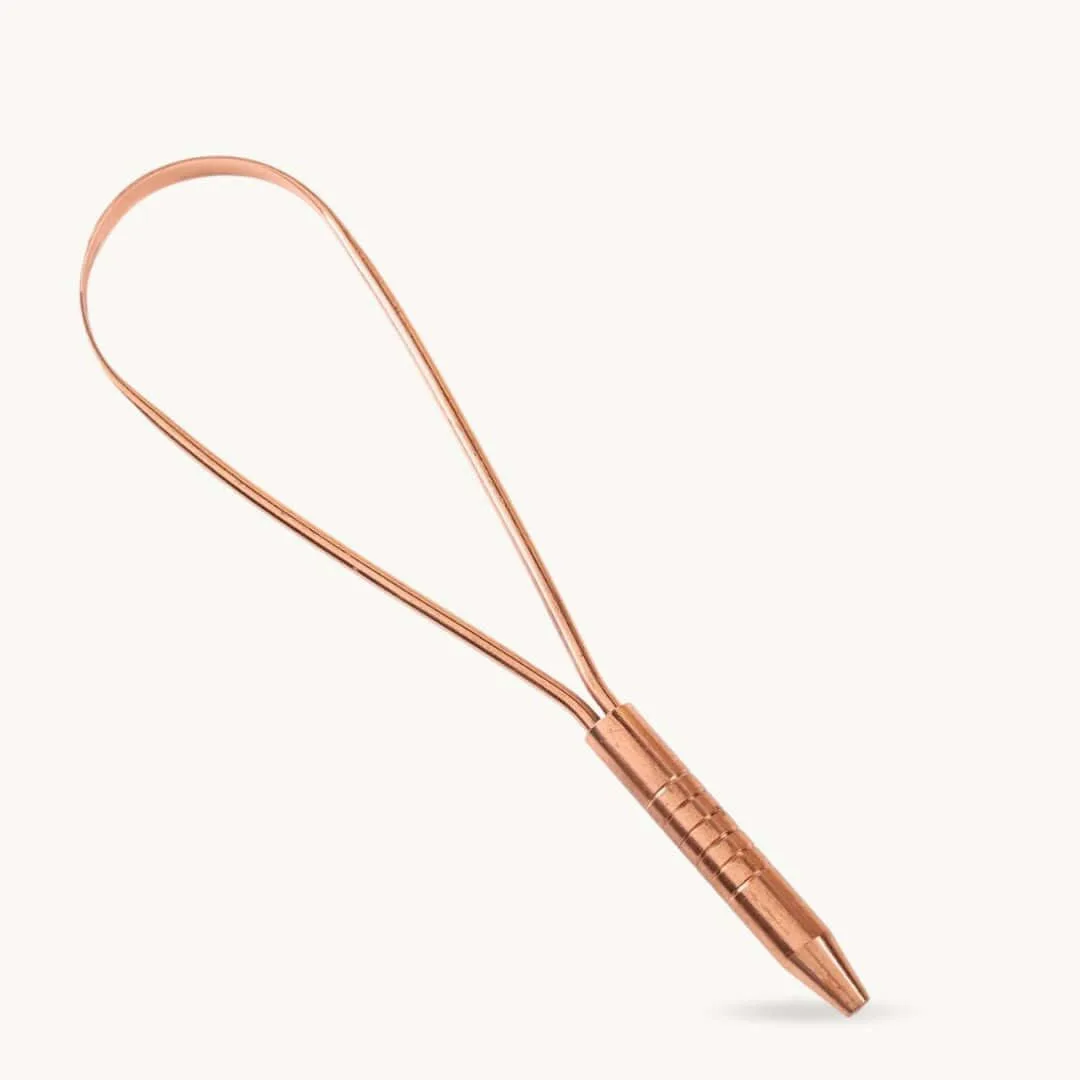
The classical instrument for tongue scraping is a curved metal scraper - copper in the Ayurvedic tradition, which adds the antimicrobial and enzymatic properties of copper to the mechanical cleaning action. The scraper is drawn gently from back to front, 5-7 times, removing the coating and with it the overnight Ama.
This practice is not a substitute for brushing teeth - it is a separate, additional step that classical texts specifically distinguish from dental hygiene. The copper tongue scraper guide covers the practice, the instrument, and the daily diagnostic use in full detail.
4. Oil Pulling - Kavala / Gandusha
After tongue scraping, classical Dinacharya includes oil pulling - Kavala (swishing oil in the mouth) or Gandusha (holding oil in the mouth without swishing). The oil pulling guide covers both techniques, their classical differences, and the oils traditionally used.
In brief: one tablespoon of sesame oil (the classical standard) or coconut oil is held and swished in the mouth for approximately 5-15 minutes. The classical actions described are cleansing of the oral cavity, strengthening of the jaw and gums, support for the voice, and - significantly - support for the digestive system through the vagal and oral-digestive connections that classical texts describe between the mouth and the stomach.
Oil pulling is performed before eating or drinking anything (warm water for elimination is the exception in some lineages, though others place it before warm water). The oil is always spit out after use - it is not swallowed.
5. Dental Care - Danta Dhavana
Brushing teeth and caring for the gums follows oil pulling. Classical texts describe chewing sticks (Danta Kastha) from specific trees (neem, licorice, and others) - modern toothbrushing serves the same essential purpose. The classical emphasis is on gum health as much as tooth cleanliness - gums are described as the seat of local Kapha and are nourished by the oiling practices (oil pulling, gum massage) that precede brushing.
6. Nasya - Nasal Oiling
Nasya - the application of oil to the nasal passages - is described in classical texts as one of the most important Dinacharya practices. The classical statement "Nasa hi shiraso dwaram" - "the nose is the gateway to the head" - establishes the reasoning: the nasal passages provide direct access to the sinus cavities, to the respiratory system, and, in classical reasoning, to the Manovaha Srotas (the channels of mental function).
The daily Nasya practice (Pratimarsha Nasya) is simple: one to two drops of Anu Taila (the classical Nasya oil) or plain sesame oil are applied to each nostril using the little finger, then gently inhaled. The practice lubricates the nasal passages (preventing the dryness that cold European climates produce), supports the function of the upper respiratory system, and - in classical description - promotes clarity of the senses, particularly smell, sight, and hearing.
7. Abhyanga - Self-Massage with Oil
Abhyanga - warm oil self-massage - is the practice most frequently associated with Dinacharya in the West, and with good reason. The Charaka Samhita and Ashtanga Hridayam both devote extensive description to Abhyanga's benefits, which are summarised in a classical verse: Abhyanga performed daily provides nourishment to the tissues, longevity, good sleep, healthy skin, and resistance to Vata.
The practice involves warming an appropriate oil - sesame oil for Vata constitutions, coconut oil for Pitta, lighter oils like sunflower or mustard for Kapha - and massaging the entire body from head to feet in a systematic sequence. The oil is left to soak for a minimum of 15-20 minutes (classical texts recommend longer), then washed off with warm water and gentle soap.
Daily full-body Abhyanga is the classical ideal. Practically, even a shortened version - oiling the head, ears, and soles of the feet - carries significant benefit and can be performed in 5 minutes. The Abhyanga guide covers the complete technique, the shortened versions, and the classical oil selection framework.
8. Bathing - Snana
After Abhyanga, bathing in warm (not excessively hot) water. Classical texts describe the bath as completing the Abhyanga process - the warm water opens the pores, drives the oil deeper into the tissues, and washes away any excess along with the Ama that Abhyanga has mobilised from the surface tissues.
9. Morning Rasayana
After bathing and dressing, classical texts describe the morning Rasayana step - the intake of rejuvenating substances that nourish the tissues and support Ojas production. Chyavanprash is the classical standard - one to two teaspoons taken with warm water. Other Rasayana preparations may be substituted based on individual constitution and the guidance of a practitioner.
10. Breakfast and the Day Ahead
Breakfast is taken after the complete morning sequence. Classical texts describe the ideal morning meal as light, warm, and easy to digest - porridge, warm grain preparations, stewed fruit, or other gentle foods that support the now-kindled Agni without overwhelming it. The heaviest meal of the day should be lunch, when the sun is at its peak and Pitta's digestive fire is strongest.