In brief: Kapha is the Dosha of structure and stability in Ayurveda, made of earth and water and described in the classical texts as heavy, slow, cool, oily, smooth and steady. It gives the body its strength, its lubrication and its endurance, and it is strongest in late winter and spring, in the morning and in childhood. A Kapha type is often solidly built, calm and loyal, with good stamina. Ayurveda keeps Kapha in balance with lightness and stimulation: warm, light, spiced food, early rising, daily exercise and dry powder massage (Udvartana) before a light oil massage.
This article is part of our Kapha Type in Ayurveda: The Complete Guide guide series.
Kapha is the Dosha of structure and cohesion. Composed of Earth (Prithvi) and Water (Jala) - the two heaviest and most stable of the five classical elements - Kapha provides everything that holds the body together: the structural integrity of bones and muscles, the lubrication of joints, the moisture of mucous membranes, the protective lining of the stomach, the fluid that cushions the brain and spinal cord, the resilience the classical texts call Vyadhikshamatva, and the emotional qualities of love, patience, and steadfast loyalty. Where Vata moves and Pitta transforms, Kapha sustains.
The Ashtanga Hridayam describes Kapha as the Dosha of Bala - strength in every sense. Physical endurance, structural resilience, steadiness, emotional stability, and the capacity to persist through difficulty - all are expressions of Kapha's stabilising, nourishing force. In balance, Kapha produces the strongest, most resilient, and most enduring of all constitutional types. Out of balance, the same qualities that provide strength become stagnation - heaviness, lethargy, congestion, and the stubborn resistance to change that is Kapha's characteristic imbalance pattern.
Kapha in Ayurveda: elements and qualities
Guru (heavy) - Kapha's heaviness provides substance, density, and mass. It manifests as a sturdy body frame, dense bones, full features, and a grounded physical presence. In excess, heaviness becomes lethargy, difficulty waking, a sense of being weighted down, and a tendency toward weight accumulation.
Manda (slow) - Kapha's slowness is stability. Slow, steady digestion. Slow, deliberate speech. Slow, methodical thinking. Excellent long-term memory (slow to learn, slow to forget). In excess, slowness becomes sluggishness - slow metabolism, slow bowel function, slow response to change, procrastination, and mental dullness.
Sheeta (cold) - like Vata, Kapha is cold - but where Vata's cold is the cold of wind and exposure, Kapha's cold is the cold of damp and density. It manifests as low body temperature, sensitivity to cold damp weather, cold clammy skin, and a tendency toward congestion and mucous production in cold conditions.
Snigdha (oily) - Kapha's oiliness is its lubricating quality. Smooth, well-moisturised skin. Glossy hair. Well-lubricated joints. In excess, oiliness becomes congestion - oily skin, excessive mucous, the clogging of channels that classical texts describe as the hallmark of Kapha accumulation.
Shlakshna (smooth) - smooth skin, smooth features, smooth voice, smooth movements. The aesthetic quality that makes Kapha constitutions often the most physically attractive and graceful.
Sandra (dense) - density of tissue, density of structure, density of substance. Kapha builds solidly.
Mridu (soft) - softness of skin, softness of voice, softness of temperament. Gentleness and compassion.
Sthira (stable) - the most important quality for understanding Kapha in daily life. Stability is Kapha's gift and its challenge. In balance, stability is steadiness, reliability, groundedness. In excess, stability becomes rigidity - the inability to change, to adapt, to let go.
The Five Sub-Doshas of Kapha
Avalambaka Kapha - The Supporting Kapha
Seated in the chest, lungs, and heart. Provides the structural support for the thorax and the lubrication that allows the lungs to expand and contract smoothly. Avalambaka Kapha is the foundation from which all other Kapha sub-Doshas are sustained - it governs the primary Kapha function of structural support. Disturbed Avalambaka Kapha manifests as chest heaviness, respiratory congestion, and a sluggish, heavy quality in the upper body.
Kledaka Kapha - The Moistening Kapha
Seated in the stomach. Provides the alkaline, mucous lining that protects the stomach wall from the sharp, hot action of Pachaka Pitta (digestive fire). Kledaka Kapha and Pachaka Pitta exist in direct relationship - too little Kledaka allows Pitta's acid to damage the stomach lining; too much Kledaka smothers the digestive fire. The Agni guide describes the Manda Agni (sluggish digestion) that results when Kledaka Kapha overwhelms Pachaka Pitta - heavy, slow digestion with fullness and a sense that food sits unprocessed.
Bodhaka Kapha - The Perceiving Kapha
Seated in the tongue and oral cavity. Governs the perception of taste - the saliva that dissolves food particles and brings them into contact with the taste receptors. In the Ayurvedic framework, taste (Rasa) initiates the entire digestive and metabolic response - the correct perception of taste is not merely sensory pleasure but a physiological prerequisite for proper digestion. A thick morning tongue coating - the Ama that tongue scraping removes - is primarily Kapha-generated residue that, when present, dulls taste perception and impairs the Agni-stimulating cascade that taste initiates.
Tarpaka Kapha - The Nourishing Kapha
Seated in the head. Provides the nourishment and lubrication for the brain, the cerebrospinal fluid, and the sensory organs. Tarpaka Kapha protects and sustains the nervous system that Vata activates - without adequate Tarpaka Kapha, the nervous system becomes dry, depleted, and prone to Vata-type disturbances (light sleep, worry, sensitivity to stimulation). This is the classical basis for the Kapha-Vata relationship in the head.
Shleshaka Kapha - The Lubricating Kapha
Seated in the joints. Provides the synovial lubrication that allows smooth, pain-free joint movement. Shleshaka Kapha is the functional fluid of every joint in the body. Its depletion - typically through excessive Vata - results in dry, cracking, uncomfortable joints. Its excess - typically through Kapha accumulation - results in swollen, waterlogged, heavy joints.
Recognising Kapha Imbalance
Kapha imbalance tends to develop slowly - matching Kapha's inherent nature. Where Vata produces rapid, changeable signs and Pitta produces sudden, intense signs, Kapha builds gradually, often unnoticed until the accumulation is significant:
Physical signs: Weight gain despite moderate eating, water retention, heaviness particularly in the morning, excessive mucous production, sinus congestion, sluggish elimination, cold clammy skin, lethargy and low motivation, excessive sleep without feeling refreshed, swollen or puffy features, pale complexion.
Digestive signs: Manda Agni - slow, heavy, sluggish digestion. A sense of fullness that persists long after eating. Reduced appetite, particularly in the morning. Heaviness after heavy or oily meals. Thick white tongue coating, heaviest upon waking. A preference for skipping meals (which the body actually needs - Kapha's slow Agni benefits from gaps between meals).
Mental and emotional signs: Lethargy, lack of motivation, procrastination, attachment and possessiveness, difficulty letting go of things, people, or habits, emotional eating, avoidance of change, low mood that shows as heaviness and withdrawal rather than the restless low mood of Vata or the irritable low mood of Pitta.
Seasonal pattern: Kapha accumulates during late winter and spring - the cold, damp, heavy season. Most Kapha-prone individuals notice increased congestion, heaviness, lethargy, and weight gain between February and May. Morning (the Kapha time of day, approximately 6, 10 AM) is when Kapha signs are strongest.
The Kapha-Pacifying Lifestyle
Movement and Stimulation
Where Vata needs calming and Pitta needs cooling, Kapha needs activating. The single most important practice for Kapha is movement - physical activity that generates warmth, lightness, and flow. Classical texts describe Vyayama (exercise) as particularly indicated for Kapha constitutions and specifically describe exercise as the primary practice for excess Kapha. Brisk walking, vigorous yoga, swimming, dancing - activities that generate sweat and raise the heart rate counteract Kapha's heaviness and stagnation directly.
Diet
The Ayurvedic diet guide covers Kapha nutrition in detail. The essentials: pungent, bitter, and astringent tastes predominating. Lighter grains (millet, barley, buckwheat), legumes, leafy greens, warming spices (ginger, black pepper, mustard, turmeric, fenugreek). Small portions eaten only when genuinely hungry. Avoid heavy dairy, wheat, sugar, fried foods, and excessive oil. Raw honey (not heated) is the classical sweetener for Kapha - the only sweet substance that reduces rather than increases Kapha.
Abhyanga Adapted for Kapha
Abhyanga for Kapha is lighter than for Vata or Pitta. Classical texts describe Garshana - dry brushing with a silk or wool glove - as a Kapha-specific practice that precedes oil application. Less oil, applied more vigorously, with warming herbal oils (mustard-based or light sesame with warming herbs like Dashamula). The purpose shifts from the deep tissue nourishment that Vata needs to the stimulation and circulation-promotion that Kapha benefits from.
Herbal Support
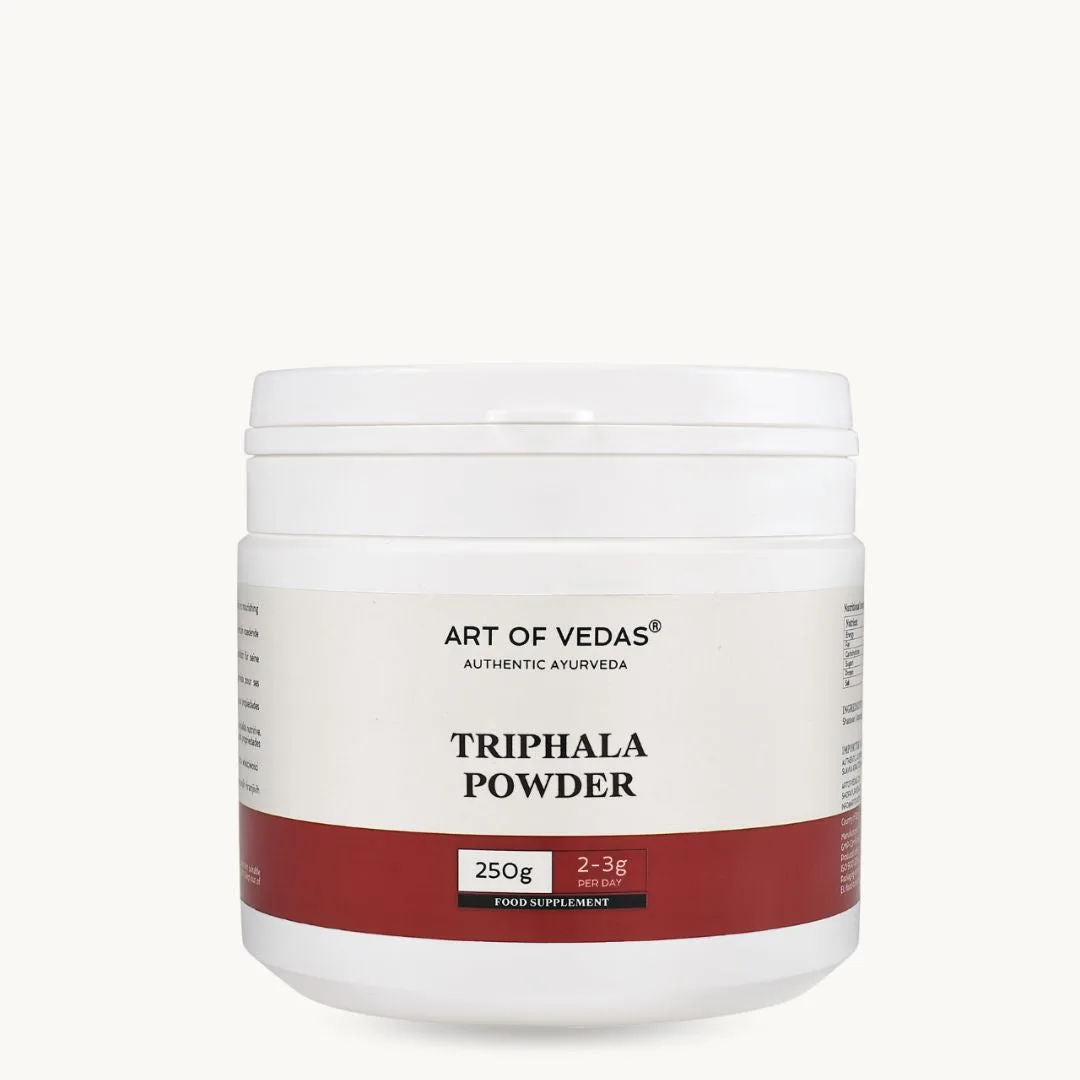
Triphala is the premier daily supplement for Kapha - its astringent, bitter, and mildly warming qualities directly counteract Kapha accumulation while supporting the sluggish Agni that is Kapha's characteristic digestive pattern. Trikatu (ginger, black pepper, long pepper) is the classical Agni-kindling combination specifically for Manda Agni. Guggulu resin is used in classical practice as a Kapha-dissolving, channel-clearing agent.
Morning Discipline
Kapha's heaviest time is morning. Classical texts are specific: Kapha individuals should rise before 6 AM (before the Kapha period of the day begins), avoid sleeping in, avoid heavy breakfast, and begin the day with movement rather than rest. The Dinacharya morning sequence is particularly important for Kapha - tongue scraping removes the heavy Kapha Ama coating, warm water stimulates the sluggish morning Agni, and Garshana or Abhyanga with vigorous technique promotes circulation and warmth.
Variety and Change
Kapha's stability resists change - which is precisely why deliberate variety is therapeutic. New activities, new foods, new routes, new experiences - anything that keeps Kapha's tendency toward routine from becoming stagnation. This is the opposite of Vata advice (which emphasises routine and regularity) and illustrates why constitutional awareness matters: the same practice that balances one Dosha aggravates another.
Kapha in Balance: The Gift of Earth and Water
Balanced Kapha is extraordinary. Strong resilience, excellent physical endurance, calm and steady temperament, deep compassion, unwavering loyalty, a voice that is soothing and a presence that is grounding. Classical texts describe balanced Kapha as Bala - strength itself - and the constitutions that live longest and most resiliently in the Ayurvedic model are those with strong Kapha well-managed.
The key is avoiding accumulation through consistent lightening practices - movement, stimulating food, appropriate fasting, Garshana, warmth - while honouring Kapha's genuine gifts of stability, patience, and depth. The goal is not to make Kapha behave like Vata - quick, light, changeable - but to keep Kapha flowing, warm, and vital within its own nature.
Explore your constitutional tendencies with our free Dosha test. For a complete clinical assessment and personalised Kapha-management programme, an Ayurvedic consultation provides the individualised guidance that matches your specific Prakriti and Vikriti pattern.
This guide presents classical Ayurvedic knowledge about Kapha Dosha for educational purposes. The information is not medical advice and is not intended to diagnose, treat, cure or prevent any disease. For personalised guidance, consult a qualified Ayurvedic practitioner or healthcare professional.
Frequently asked questions about Kapha
What is Kapha in Ayurveda? Kapha is one of the three Doshas, the principle of structure and cohesion. It combines earth and water and is heavy, slow, cool, oily and stable. Classical Ayurveda attributes the body's mass, the lubrication of the joints, the moisture of the tissues and steady strength and patience to Kapha.
What are the signs of a Kapha imbalance? Classical Ayurveda describes increased Kapha through heaviness: sluggish mornings, a slow digestion, a feeling of heaviness after meals, weight that settles easily, low motivation and a tendency to hold on. It tends to rise in late winter and spring. Persistent complaints always belong with a doctor.
How do you balance Kapha? With the opposite qualities: lightness, warmth and movement. Ayurveda recommends warm, light, well spiced food with pungent, bitter and astringent tastes, no heavy meals in the evening, rising before six, daily vigorous exercise and Udvartana, the dry herbal powder massage, for example with Kolakulathadi Powder.