The information in this article is provided for educational purposes and reflects traditional Ayurvedic knowledge. It is not intended as medical advice and should not replace consultation with a qualified healthcare professional.
In brief: Dinacharya - the classical Ayurvedic daily routine - is described in the Charaka Samhita and Ashtanga Hridayam as the single most important preventive health practice. It is a carefully sequenced set of morning and daily practices designed to align the body with natural rhythms, clear accumulated overnight waste, stimulate Agni, and prepare the system for optimal function throughout the day. This guide covers every step in classical order with the reasoning behind each.
Dinacharya: The Complete Ayurvedic Daily Routine - Every Step, in Order
The Ashtanga Hridayam's Sutrasthana devotes an entire chapter to Dinacharya - the Ayurvedic daily routine. The chapter's opening establishes its importance clearly: those who follow the prescribed daily routine are promised freedom from disease, long life, and sustained vitality; those who ignore it are described as prone to premature deterioration regardless of their other health efforts.
This is not hyperbole in the classical framework. The Charaka Samhita's understanding of health is fundamentally about maintaining alignment - between the individual and the natural rhythms of day and night, between the body's needs and the practices that serve them, between the accumulated metabolic residue of each day and the body's capacity to clear it. Dinacharya is the classical answer to how that alignment is maintained, not through dramatic interventions but through consistent daily practice that never allows imbalance to accumulate beyond the body's self-correcting capacity.
What follows is the classical Dinacharya sequence in order, with the reasoning the classical texts provide for each step.
Before Sunrise: Waking at Brahma Muhurta
The Ashtanga Hridayam specifies waking during Brahma Muhurta - approximately ninety minutes before sunrise, roughly four to six in the morning depending on the season and location. This timing is not arbitrary: classical Ayurveda describes the pre-sunrise period as Vata-dominant, when the atmosphere is light, clear, and particularly supportive of mental clarity. The classical texts describe those who wake at this time as having sharper intellect, better memory retention, and a more stable emotional baseline throughout the day compared to those who wake later.
After waking, the first act described in classical texts is briefly contemplating the day ahead - a moment of conscious orientation before the day begins. The classical texts also describe a brief body check: becoming aware of how the body feels before rising, noting any areas of heaviness, pain, or unusual sensation that may require attention.
Oral Hygiene: Tongue Scraping and Teeth Cleaning
The Charaka Samhita and Ashtanga Hridayam both place tongue cleaning (Jihwa Nirlekhana) as the first physical act of the Dinacharya after rising. The classical rationale is specific: the tongue accumulates a coating during sleep that represents the Ama and metabolic residue cleared from the digestive system overnight. Scraping the tongue removes this Ama before it can be reabsorbed and also stimulates the digestive system - the tongue's surface contains reflex points corresponding to the digestive organs, and gentle daily scraping activates these points.
Copper is the classical material for tongue scrapers in the Ayurvedic tradition - the metal is described as having antimicrobial and Kapha-reducing properties appropriate for the morning removal of accumulated residue. See the Art of Vedas oral care collection for copper tongue scrapers.
Teeth cleaning follows, using preparations that support gum health and oral Agni. Classical Ayurvedic tooth powders (Danta Churna) use astringent and bitter herbs - Triphala, neem, and similar preparations - that the classical texts describe as strengthening the gums, reducing bacterial accumulation, and maintaining the oral environment.
Oil Pulling: Kavala and Gandusha
Oil pulling - swishing oil in the mouth - is described in two forms in classical texts. Kavala involves swishing a comfortable mouthful of oil for several minutes before spitting. Gandusha involves holding a larger quantity of oil in the mouth without swishing for an extended period. The Charaka Samhita describes both as supporting gum health, strengthening the jaw and facial muscles, improving voice quality, and maintaining the health of the sense organs of the head.
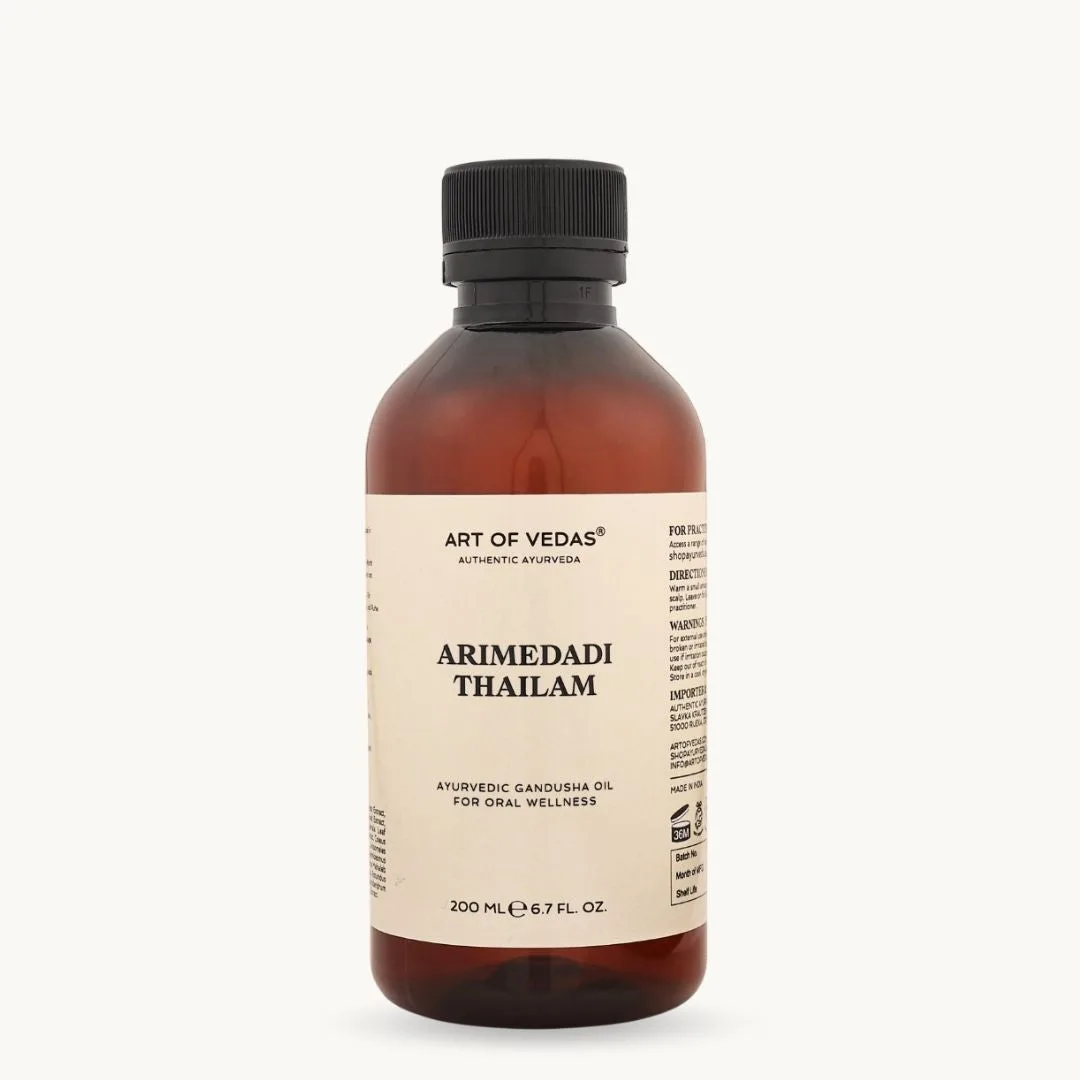
Arimedadi Thailam is the classical oil preparation specifically formulated for oral Gandusha in the Sahasrayogam - a sesame oil processed with herbs particularly relevant to oral health. Plain sesame or coconut oil is the most accessible starting point for a daily Kavala practice. See our complete guide to oil pulling.
Nasal Oil: Nasya
Pratimarsha Nasya - the daily application of two drops of medicated oil to each nostril - follows oral hygiene in the classical Dinacharya sequence. The Ashtanga Hridayam's rationale: the nasal passages are the gateway to the head, and daily oiling maintains their lubrication, reduces excess Vata in the head region, supports the sense organs, and prepares the respiratory system for the day. Anu Thailam is the classical preparation for daily Nasya. See our complete guide to Nasya.
Abhyanga: Warm Oil Self-Massage
The Charaka Samhita describes Abhyanga as perhaps the single most beneficial daily practice for long-term physical health. The classical text states that daily Abhyanga produces soft, strong, and youthful-feeling skin; supports the musculoskeletal tissues; reduces excess Vata in the nervous system; delays the appearance of ageing; promotes sound sleep; and increases the body's resilience to physical strain. For Vata constitution in particular, daily Abhyanga is described as indispensable.
The classical sequence begins at the scalp and moves downward. Long strokes on the limbs, circular strokes on the joints, and sustained attention to the soles of the feet - which classical texts describe as containing important marma (vital point) connections to the whole system. Allow fifteen to thirty minutes for absorption before bathing with warm water. See our complete guide to Abhyanga at home and our sesame oil guide.
Exercise: Vyayama
The Ashtanga Hridayam's Dinacharya chapter includes Vyayama (physical exercise) as a morning practice, specifying that exercise should be at half capacity - enough to produce warmth and mild perspiration but not exhaustion. The classical measure is the appearance of perspiration at the forehead, armpits, and nose. Exercise beyond this point is described as depleting Ojas and Prana. The classical texts emphasise consistency over intensity: daily moderate exercise is described as far more beneficial than occasional extreme exertion.
Bathing
Bathing with warm water follows Abhyanga - after allowing adequate time for the oil to absorb. The Ashtanga Hridayam specifies that warm water should be used for the body while the water applied to the head should be cooler, as excessive heat on the head is described as damaging to the sense organs and the eyes. Classical guidance consistently emphasises warm (not hot) bathing water to preserve the oil's benefits without stripping it completely from the skin.
Meals: The Classical Timing
The Charaka Samhita's dietary timing guidance places the main meal at midday - when Agni is at its natural peak - and describes the evening meal as lighter. No meal is described before the previous one is fully digested. Breakfast in the classical framework is small or absent; the major caloric intake comes at midday when the digestive system is best equipped to handle it. This classical timing contrasts significantly with the Western pattern of a large evening meal, which classical texts describe as a primary contributor to Ama accumulation over time.
Frequently Asked Questions
What is Dinacharya in Ayurveda?
Dinacharya is the classical Ayurvedic daily routine - a carefully sequenced set of morning practices described in the Charaka Samhita and Ashtanga Hridayam as the most important preventive health practice. Sequence: waking at Brahma Muhurta (before sunrise), tongue scraping, teeth cleaning, oil pulling, Nasya (nasal oil), Abhyanga (warm oil massage), exercise at half capacity, bathing, and the main meal at midday. Consistent daily practice prevents accumulation of imbalance and aligns the body with its natural rhythms.
Do I need to do the full Dinacharya every day?
Classical texts describe the full sequence as ideal. In practice, beginning with the highest-impact practices and building gradually is sustainable. For most people: tongue scraping (two minutes), Nasya (one minute), and Abhyanga (twenty minutes) before bathing form the core with the most significant cumulative benefit. The key classical principle: consistency matters more than completeness - a modest daily practice sustained for years outperforms an intensive but intermittent one.
What is the best oil for Abhyanga in Dinacharya?
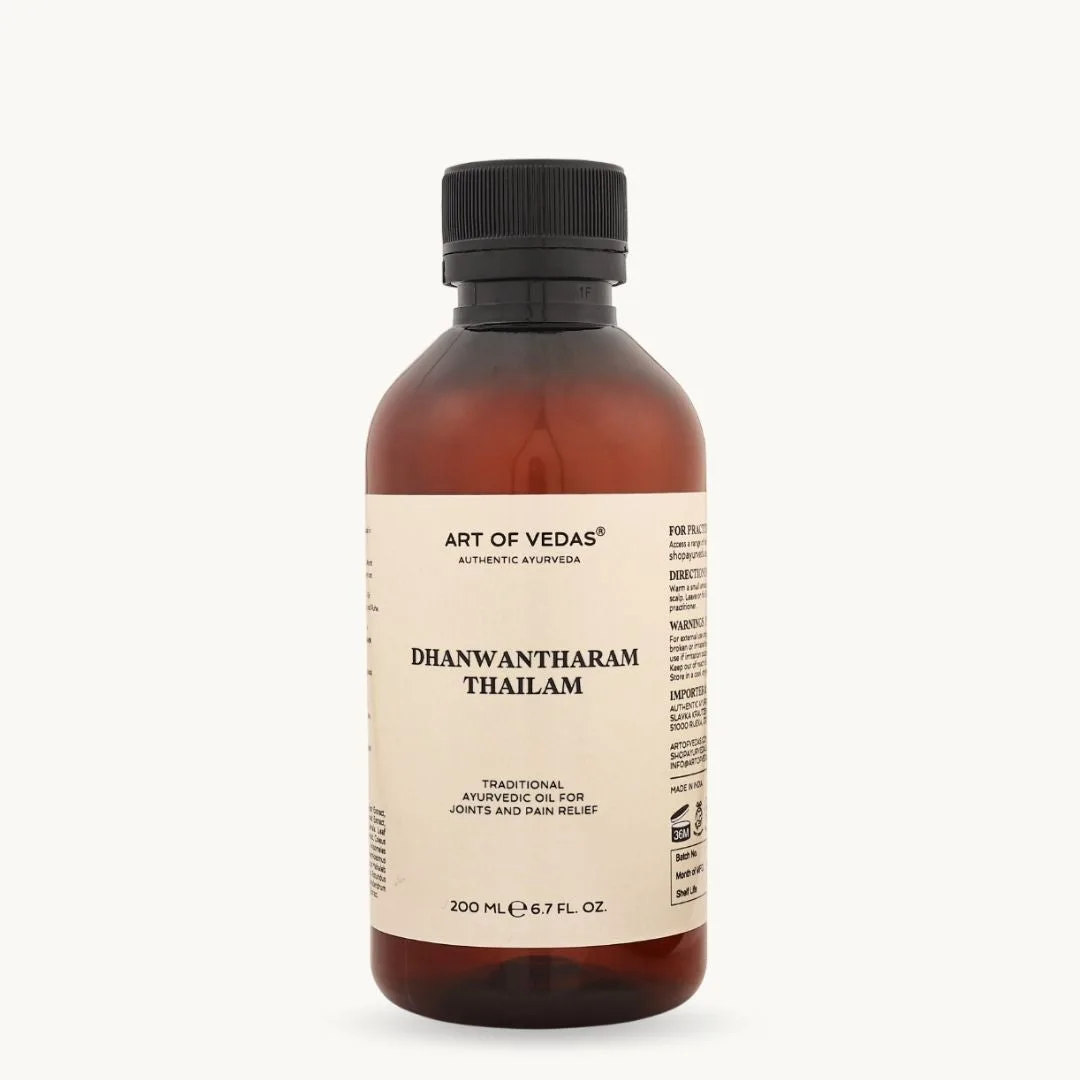
The Charaka Samhita describes sesame oil as the best base for Abhyanga, particularly for Vata constitution and in the Vata season. Classical medicated Thailams - especially Dhanwantharam Thailam for general Vata-balancing - are more complete than plain sesame because the processed herbs add specific properties to the base oil's benefits. Cooler preparations suit Pitta; lighter, more stimulating application suits Kapha.
Why does classical Ayurveda recommend waking before sunrise?
The Ashtanga Hridayam describes the period ninety minutes before sunrise (Brahma Muhurta) as Vata-dominant - light, clear, and particularly supportive of mental clarity and knowledge retention. Waking then produces a more stable, clear mental state throughout the day compared to waking later into the Kapha-dominant mid-morning heaviness. Not a rigid requirement, but consistently presented as the optimal time for practices requiring mental alertness.
Build Your Dinacharya with Art of Vedas
Find tongue scrapers, Nasya oils, and Abhyanga Thailams in the Art of Vedas oral care and Thailams collections. Related reading: Abhyanga at home, Nasya guide, oil pulling guide, and Ayurvedic morning routine.
For personalised guidance, consult a qualified Ayurvedic practitioner.
Explore more in this series