Kuzhambu is the semi-solid classical preparation of Ayurveda: a soft, dense composition built on three fats and finished so that it holds its body rather than pouring. The meaning of Kuzhambu in Ayurveda is often reduced to "a thicker oil", and that is precisely what it is not. This guide from Art of Vedas explains what a Kuzhambu is, how it is made, how it is used, and which preparations we carry.
Kuzhambu Meaning in Ayurveda
A Kuzhambu is not an oil. It is a semi-solid preparation, soft enough to yield under warm fingers yet firm enough to stay exactly where it is placed. That behaviour defines its use: applied to a chosen area, a Kuzhambu remains on that area and absorbs slowly, extending the working time of a focused application. A Thailam, by contrast, is a liquid preparation that spreads readily and suits long strokes over the whole body. The two formats are siblings, not rivals, and the full comparison is drawn in our guide to the difference between Thailam and Kuzhambu. Tradition reaches for the Kuzhambu when it wants targeted, local work rather than broad coverage.
How a Kuzhambu Is Made
The classical method brings three elements together: Kashayam, the herbal decoction; Kalka, the fresh herb paste; and a base of three fats, sesame, coconut and castor, each contributing its own character. The composition is reduced slowly over regulated heat until the moisture has left and the preparation settles into its semi-solid body. No thickening agents are added; the consistency comes from the fats themselves and the degree of reduction. The full method, step by step, is described in how a Kuzhambu is made.
The Kuzhambu Range at Art of Vedas
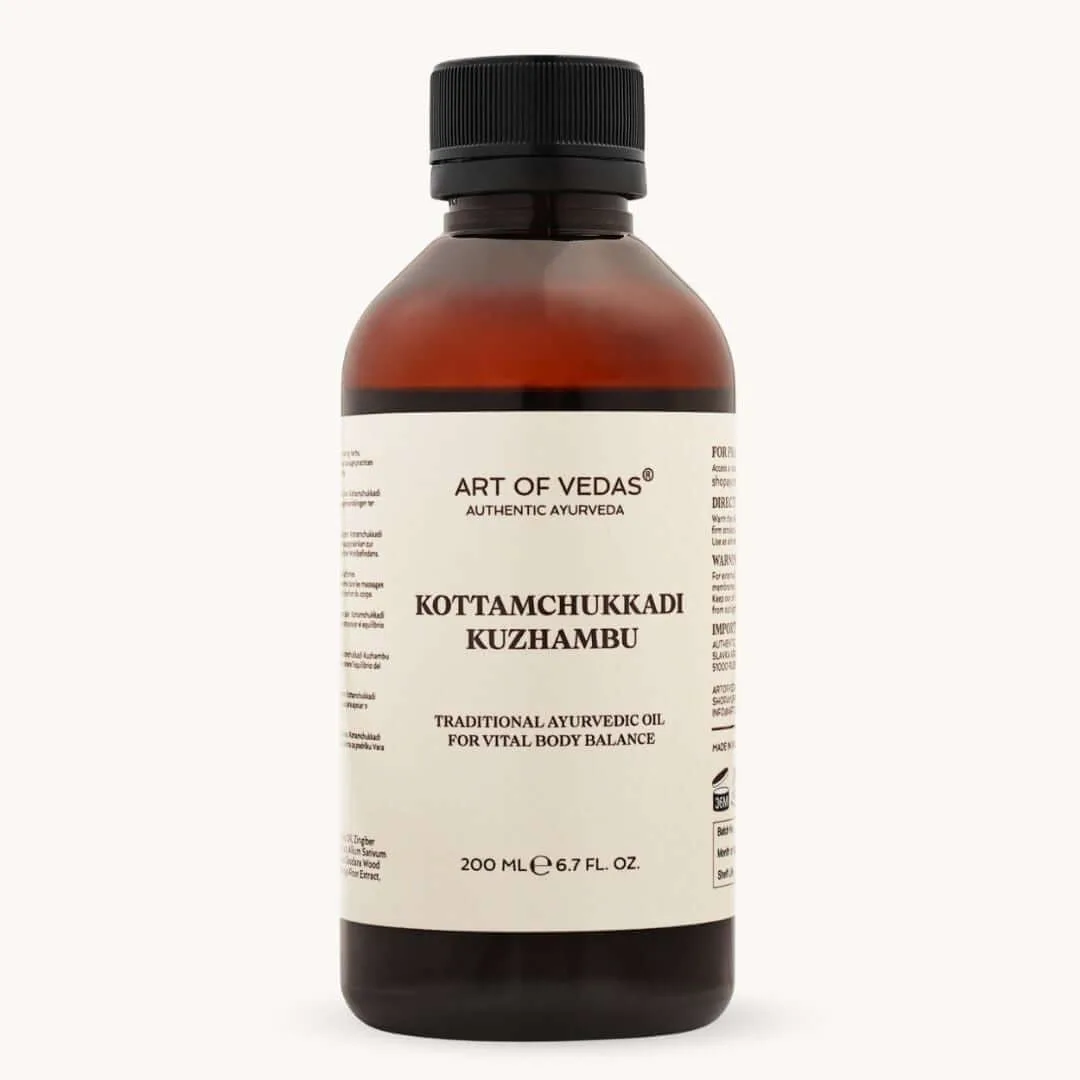
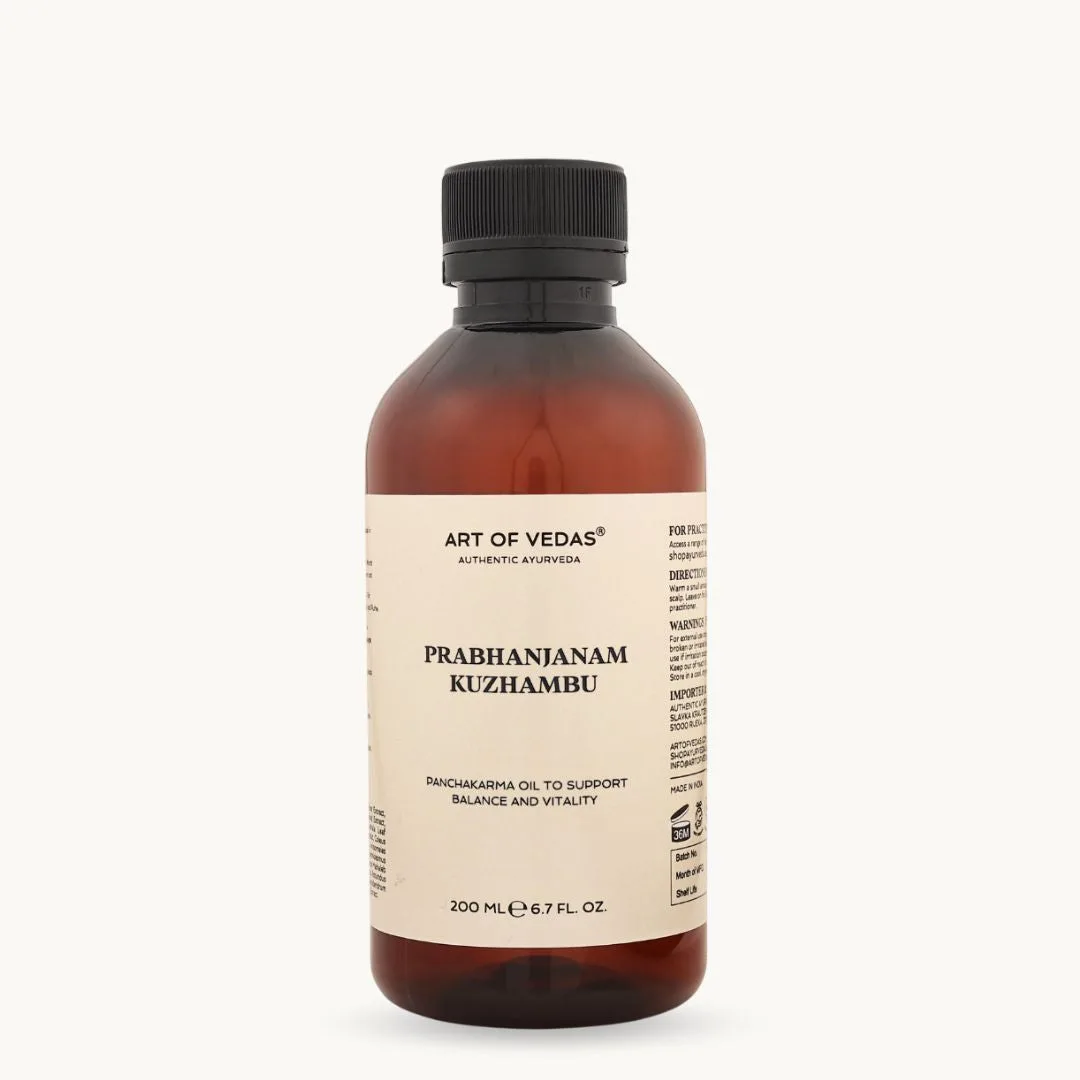
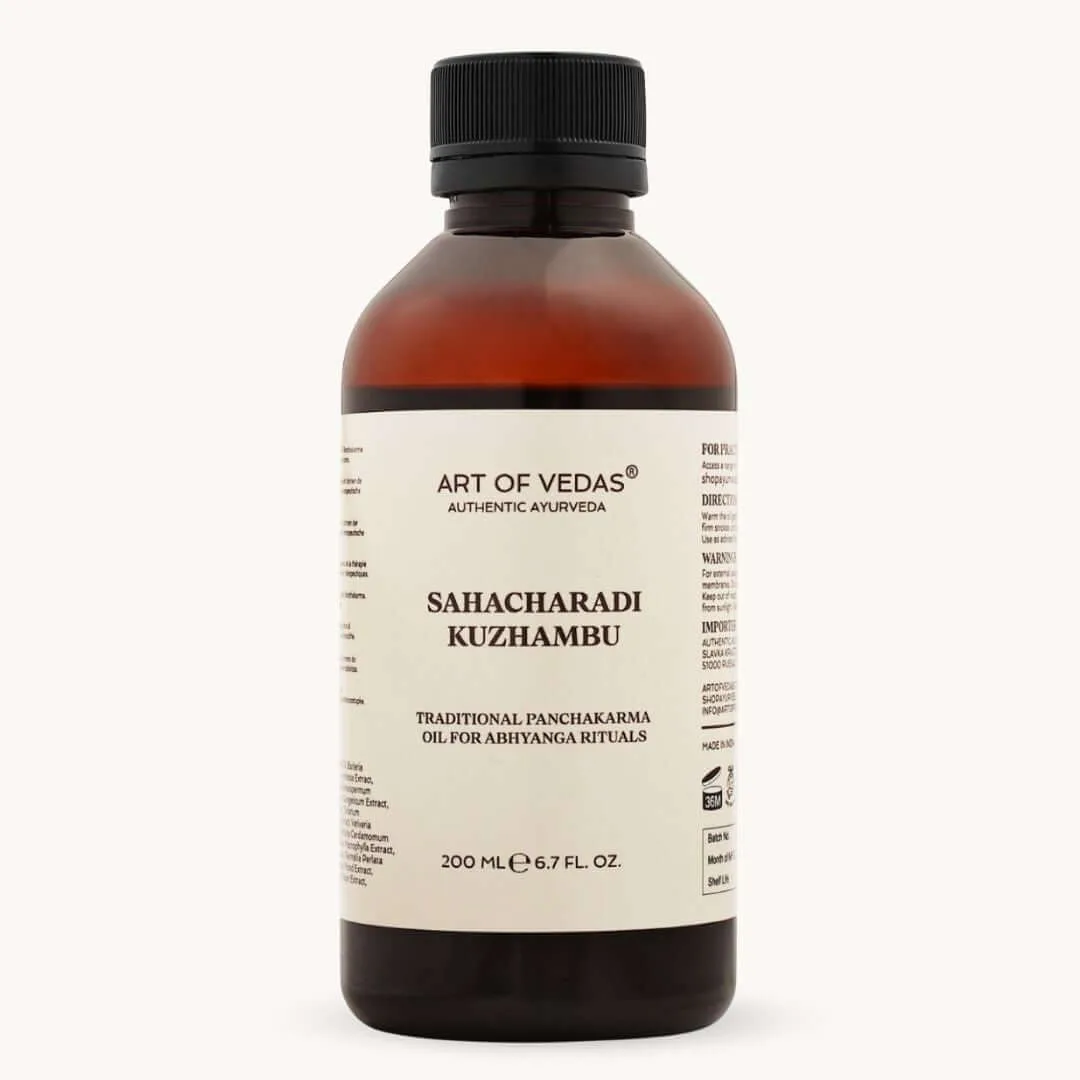
Our range follows the classical repertoire. Dhanwantharam Kuzhambu is the flagship, the semi-solid form of the great Bala-based Vata formula. Sahacharadi Kuzhambu carries the classical lower-body composition. Kottamchukkadi Kuzhambu brings the warming, stimulating register of its namesake formula, and Prabhanjanam Kuzhambu the Vata-comfort classic of the same name. Balaswagandhadi and Karparastyadi complete the family. Each product page lists the complete composition of its preparation.
How to Use a Kuzhambu
Warm a small quantity gently in a water bath until it softens, then work it into the chosen area with slow, sustained strokes. Because the preparation stays on the applied area and absorbs gradually, allow it unhurried time before a warm shower. A little goes far; the density that makes a Kuzhambu different also makes it economical. Readers coming from the liquid classics will find the wider context in our complete guide to traditional Ayurvedic Thailams.
- Stays on the applied area rather than running
- Absorbs slowly, extending the working time of focused application
- Dense, soft body suited to sustained local strokes
- Three-fat base uniting warming, cooling and penetrating characters
- Economical: a small quantity serves a full application
Frequently Asked Questions
Is a Kuzhambu an oil?
No. A Kuzhambu is a semi-solid preparation. It is built partly on oils, but the finished composition holds a soft, dense body and does not pour.
Can I use a Kuzhambu for full-body Abhyanga?
Tradition reserves the Kuzhambu for targeted, local application. For a full-body Abhyanga, a liquid Thailam remains the classical choice; many combine the two in one routine.
Why is a Kuzhambu semi-solid?
The consistency comes from its three-fat base and the slow reduction of the classical method. Nothing is added to thicken it.
Which Kuzhambu should I begin with?
Dhanwantharam Kuzhambu is the most versatile starting point for Vata-leaning routines. For a considered choice by constitution, area and season, the guidance of a qualified practitioner is best.
How should a Kuzhambu be stored?
Closed, cool and away from direct sunlight. Its body will be softer in a warm room and firmer in a cool one; both are normal.
Does a Kuzhambu replace a Thailam?
No. The formats do different work: the Thailam covers, the Kuzhambu concentrates. A complete routine often has a place for each.
This article describes traditional Ayurvedic practices for external use and is intended for general information only. It does not constitute medical advice. Please consult a qualified Ayurvedic practitioner or your medical professional before beginning a new routine, and perform a patch test before first use.