This article is educational and describes traditional Ayurvedic concepts and self-care practices. It is not medical advice and is not intended to diagnose, treat, cure or prevent disease. If you are pregnant, taking medication, managing a health condition, or unsure whether a practice is appropriate for you, speak with a qualified healthcare professional or Ayurvedic practitioner.
In brief: Abhyanga at home (the Ayurvedic practice of massaging the body with warm oil) is done before bathing, and it asks for very little: a warm room, an oil that suits your skin and the season, around twenty minutes, and a towel you do not mind marking. This guide sets out the method, the oil choice, the timing, the seasonal adjustments and the situations in which the practice should be paused.
What Abhyanga means in classical Ayurveda
Abhyanga is usually translated as oil massage. The translation is correct but narrow. In the classical sources the word describes an unhurried, whole-body application of warm oil, performed with attention rather than pressure, and understood as ordinary daily care.
Two things set it apart from a conventional massage. The oil is regarded as the substantive part of the practice rather than a lubricant, and the practice is traditionally carried out by the person on themselves, at home.
Abhyanga within Dinacharya
Dinacharya (the daily routine described in classical Ayurveda) organises the day into a sequence of small, repeatable acts: rising at a consistent hour, cleaning the mouth and tongue, applying oil, bathing, and eating at settled times. Classical compendia including the Charaka Samhita and the Ashtanga Hridayam place Abhyanga firmly inside this routine.
That placement matters. Abhyanga is described as something done regularly and briefly, not rarely and elaborately. Our guide to Dinacharya and the Ayurvedic daily routine sets out where the oil step sits among the others.
Snehana and the idea of oleation
Abhyanga belongs to a wider classical category called Snehana (oleation, the external application or internal use of oil and fat), and it is the external form suited to home practice. The internal and clinical forms belong to Panchakarma (the supervised classical cleansing programme) and are carried out by trained practitioners over a defined course.
How to do Abhyanga at home, step by step
The method below is the plain domestic version. Read it through once before starting.
What you need
- An oil suited to your skin and the season, in a bottle you can open with oily hands.
- A bowl or jug of hot water, for warming the oil indirectly.
- An old towel for the floor and a second one for drying.
- A non-slip mat for the bathroom.
- A warm, draught-free room and roughly twenty minutes.
- Old clothing or a robe to wear during the pause before bathing.
The sequence
- Warm the room first. Oil on cold skin in a cold room is unpleasant, and an unpleasant practice will not last.
- Decant a small quantity of oil, roughly two to four tablespoons for a whole body, into a small heat-safe container.
- Stand that container in hot water for a few minutes. Test the oil on the inside of your wrist. It should feel comfortably warm and never hot.
- Begin at the scalp if you intend to include it, using a modest amount and working with the fingertips rather than the nails.
- Move to the face and the ears, using very little oil and a light touch.
- Work down each arm with long strokes along the upper arm and forearm, and slow circles at the shoulder, elbow and wrist.
- Apply to the chest and abdomen with gentle, unhurried circles, keeping the pressure light over the abdomen.
- Reach as much of the back as you comfortably can, then work down each leg with long strokes and circles at the hip, knee and ankle.
- Finish at the feet, which classical practice regards as an important place to end, and give them a little more time.
- Let the oil rest on the skin for ten to twenty minutes, then bathe.
The direction of the strokes
Use long strokes along the long sections of the limbs, following the line of the bone, and circular strokes over the joints. On the abdomen and the chest, keep to gentle circles and light pressure.
Speed is worth watching, because most people work far too quickly at first. The practice should be slow enough that you notice the skin you are working on. Around Marma (the classically described sensitive points of the body, many of which sit at joints and junctions) the traditional instruction is to lighten the pressure rather than press harder.
Choosing an oil for Abhyanga
Oil choice is where most of the questions arise, and where most of the marketing noise sits. The base oil decides how the practice feels, and the herbs processed into it give the preparation its character. Compare them in our oil-selection guide rather than choosing from a bold claim.
Sesame based oils
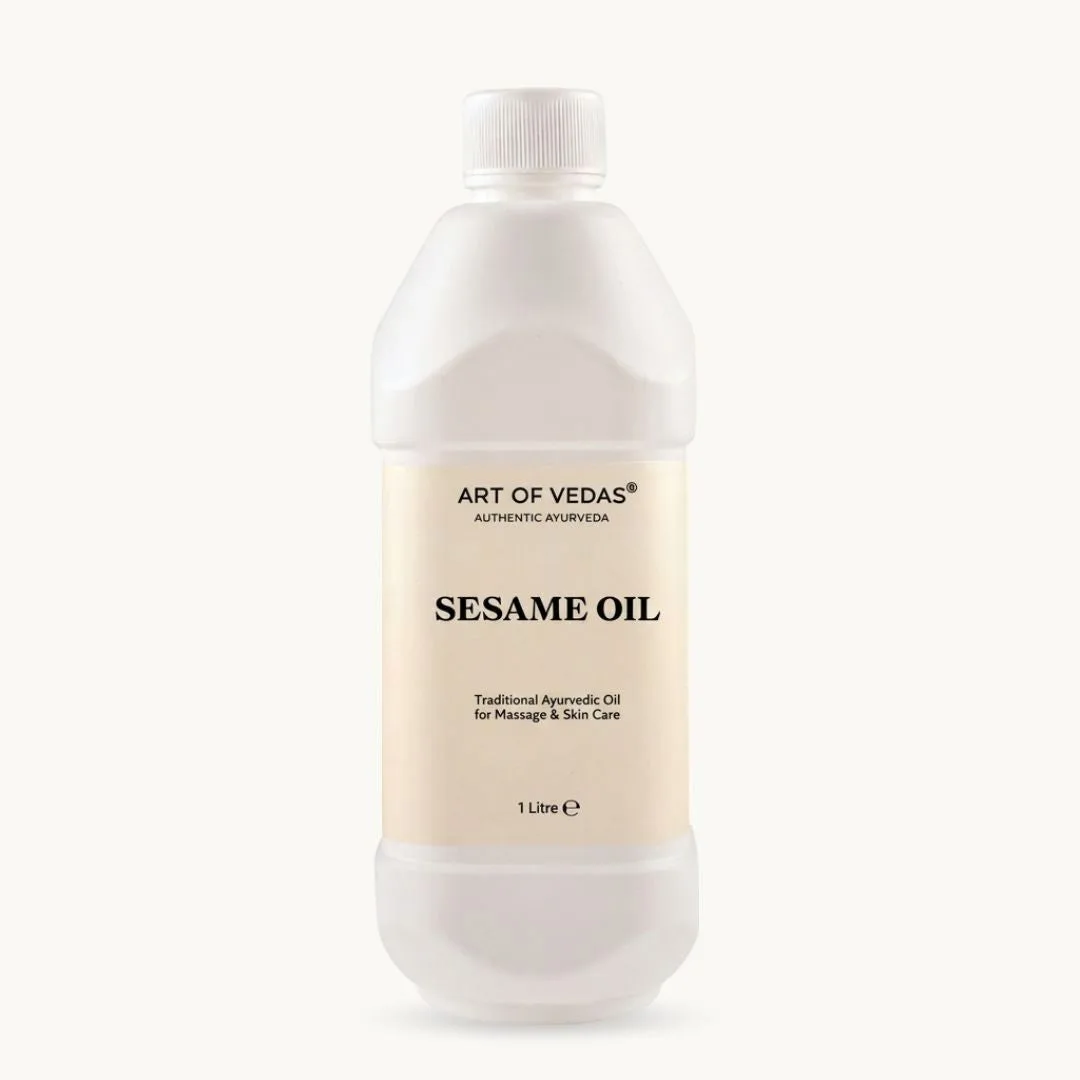
Sesame is the classical default base for Abhyanga. It is known in classical Ayurveda for its warming qualities, and it has a heavier, more clinging texture than most alternatives, which suits a slow practice. Our guide to sesame oil in Ayurveda covers the grades, the scent, and why refined and unrefined versions behave differently on the skin.
Coconut based oils
Coconut is the usual counterpart, classically described as cooling, and it feels noticeably lighter. It absorbs faster and leaves less residue, which makes it the easier option in warm weather. In a cool room it solidifies, so it needs warming before use in winter.
Classical Thailam and Kuzhambu preparations
A Thailam (a classical oil preparation in which herbs are processed into a base oil) is not simply oil with herbs stirred into it. The traditional method cooks herb decoctions and pastes into the oil over a long period, until the water content has been driven off. A Kuzhambu (a thicker classical oil preparation) is produced by a related method.
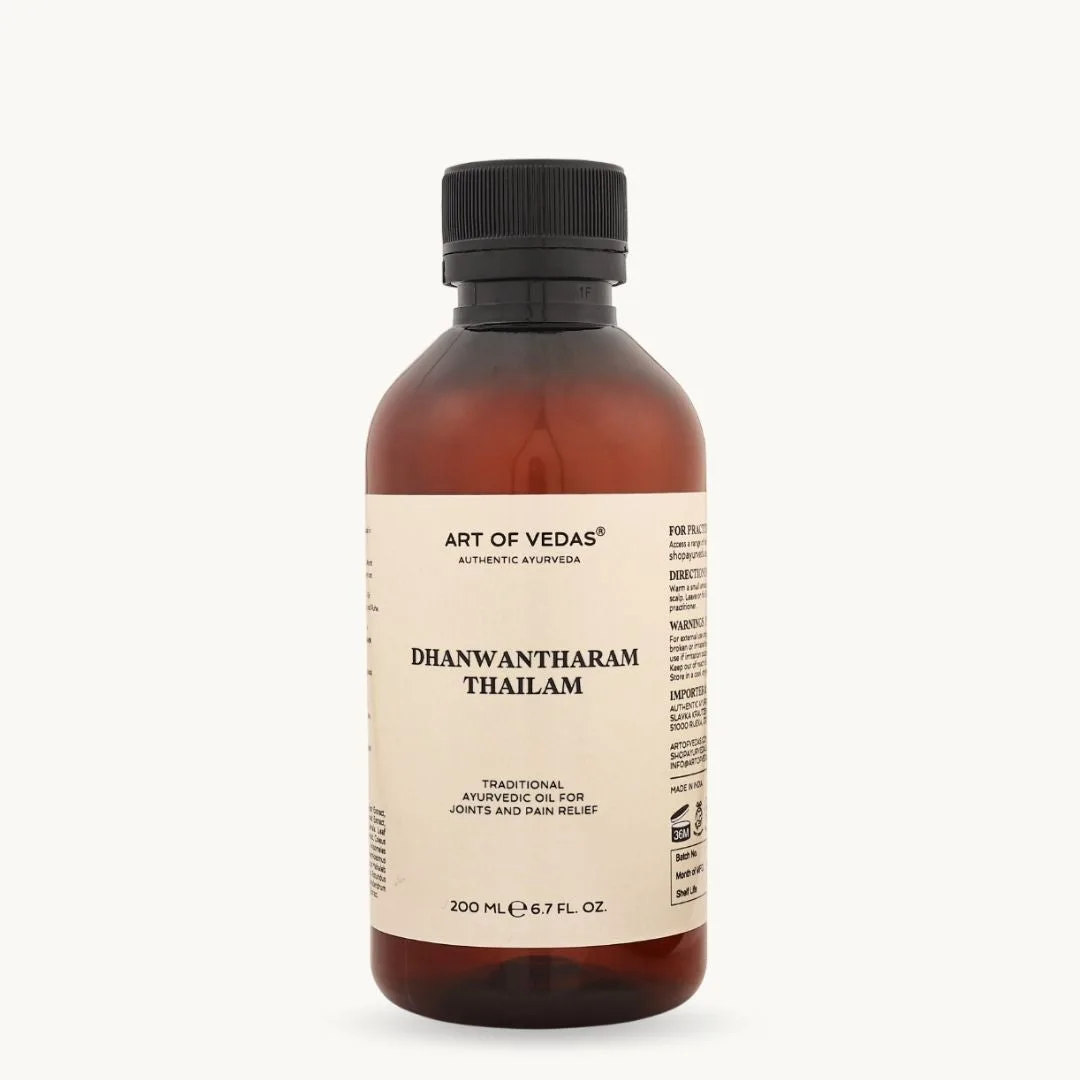
These preparations are formulated for particular uses and carry their own directions. Read them rather than assuming they behave like a plain base oil. Our explainer on what a Thailam actually is covers how they are made, and Dhanwantharam Thailam is a widely used classical example if you want to see how such a preparation is described and labelled.
Matching the oil to your constitution and the season
Classical practice matches the oil to the person and to the moment rather than to one fixed rule. The three Doshas (Vata, Pitta and Kapha, the functional principles classical Ayurveda uses to describe constitution and change) give the usual shorthand: drier, lighter, more mobile Vata tendencies are traditionally matched with heavier warming bases, warmer Pitta tendencies with cooler and lighter ones, and denser Kapha tendencies with lighter oils used sparingly.
Use this as a starting orientation rather than a rule. Your Prakriti (the constitution a person is born with) is only one input, and the season, the room temperature and the way your skin responds all matter. Our guide to Vata, Pitta and Kapha explains the categories properly.
How warm, how much and how long
Warming the oil safely
Warm the oil indirectly. A small container stood in a bowl of hot water reaches a comfortable temperature with no risk of overheating. Direct heat on a hob, and a microwave in particular, heats unevenly and produces pockets far hotter than the surface suggests. Test on the inside of the wrist every time.
How much oil to use
Two to four tablespoons is enough for a whole body for most adults. Beginners routinely use two or three times that, which produces a mess and a great deal of laundry without improving anything. Less oil applied slowly works better than more oil applied quickly.
The scalp and the face need far less than the limbs. A teaspoon or so is usually ample for the scalp, and the face needs only a few drops.
How long to leave the oil on
Ten to twenty minutes is the usual range. Some people sit wrapped in an old robe during the pause, others use the time for something quiet. Longer is not automatically better, and leaving oil on for hours mostly means more washing.
Bathe afterwards in warm water. A mild cleanser removes most of the oil from the body, while the scalp usually needs a proper wash. Step out of the bath or shower carefully, because the floor will be slippery.
When to practise Abhyanga during the day
The classical placement is the morning, before bathing, as part of Dinacharya: the oil goes on, the bath follows, and the day begins.
An evening practice is also common in modern households, particularly a shortened version limited to the feet and the scalp. If mornings are rushed, an evening practice you actually keep is more useful than a morning one you keep skipping. Traditional guidance is to leave a reasonable gap after a full meal, and the practice is set aside during acute illness, as covered below.
Adapting Abhyanga to the season
Ritucharya (the classical Ayurvedic practice of adjusting the routine to the season) applies directly here. The same oil rarely feels right in February and in July.
- In cold, dry months a heavier warming base is generally more comfortable, and the room needs to be genuinely warm before you start.
- In hot months a lighter base, used sparingly, is usually the easier choice, and a shorter pause before bathing is often preferred.
- In changeable spring and autumn weeks, many people alternate between two oils rather than committing to one.
Let your skin and the room decide: if an oil feels heavy on a given morning, that is useful information.
Focused variations: scalp, face and feet
A full-body practice is not always realistic. Three shortened versions are widely used, and each takes five to ten minutes.
Scalp
Work a small quantity of oil into the scalp with the fingertips, in slow circles, rather than through the length of the hair. Expect to wash it out properly afterwards. This is quite different from Shirodhara (the classical procedure in which warm oil is poured in a steady stream over the forehead), which is carried out by a trained practitioner and is not a home practice.
Face
Use a few drops and a light touch, and choose a preparation intended for the face rather than a heavy body oil. Avoid the immediate eye area unless the product directions say otherwise.
Feet
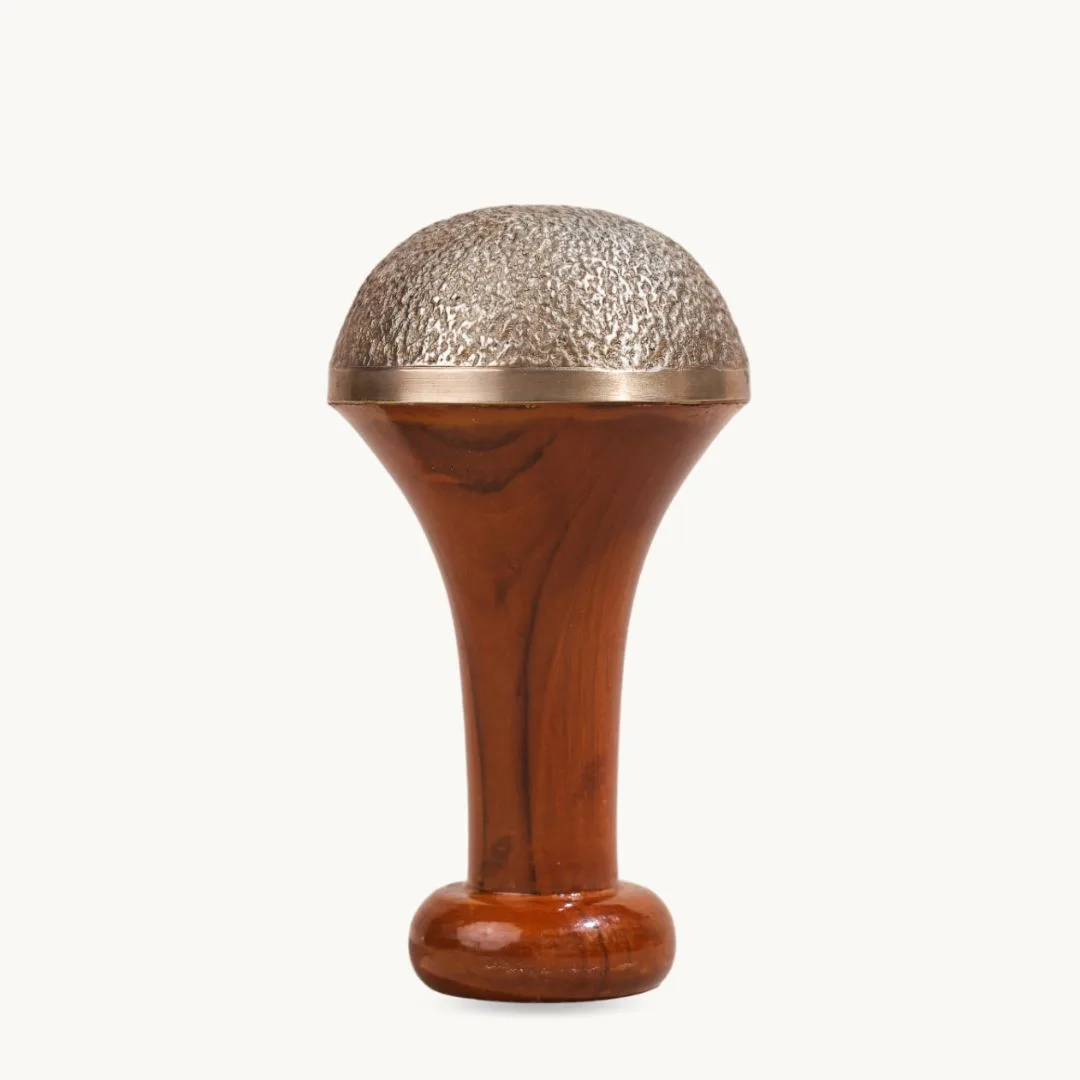
Foot massage is the shortened version most people keep up, because it is quick and can be done sitting down in the evening. Some households use a Kansa bowl or wand rather than the hands. Put socks on afterwards and stay off tiled floors.
Safety, housekeeping and common mistakes
When to pause Abhyanga
Traditional practice sets out clear situations in which oil massage is not appropriate. Do not perform Abhyanga:
- over broken, irritated, inflamed or sunburnt skin, or over any rash;
- during fever or acute illness;
- over a recent injury, a fracture site, or a surgical scar that has not fully closed;
- over any area with reduced or absent sensation, since you cannot judge temperature or pressure there;
- immediately after a large meal;
- with any product you have not patch tested, if you have known sensitivities.
Speak with a qualified healthcare professional or a qualified Ayurvedic practitioner before starting if you are pregnant, if the practice is intended for a child or a frail older adult, if you take medication, or if you are managing any health condition. Patch test a new oil on a small area and wait a day before using it over the whole body.
Towels, drains and laundry
Oil marks fabric permanently and accumulates in drains. Keep one old towel for Abhyanga and accept that it will never look clean again. Wipe the bath or shower base after each practice rather than once a week, and wash oiled towels separately at a warmer temperature than usual.
Common mistakes
- Using far too much oil, which turns the practice into a chore.
- Overheating the oil, a microwave being the most common culprit.
- Working too fast, which reduces the practice to a rushed application.
- Choosing a preparation on the strength of a label claim rather than its directions. If labels are difficult to interpret, our guide on how to read an Ayurvedic product label is a sensible starting point.
- Attempting a daily full-body practice in the first week and abandoning it in the second.
Frequently asked questions
How long should Abhyanga take?
A simple home practice takes ten to twenty minutes of application, followed by a similar pause before bathing. Consistency matters more than duration: a regular ten minute practice is worth more than an occasional hour. If time is short, shorten the practice rather than abandoning it.
Should the oil be hot?
No. Warm it gently by standing the container in hot water, and test it on the inside of the wrist before applying. Oil heated directly, and particularly in a microwave, develops hot pockets that the surface temperature does not reveal. Slightly too cool is always preferable to slightly too hot.
Can I do Abhyanga every day?
Classical sources describe daily practice, but the workable frequency in a real household depends on the person, the oil, the season and the time available. Starting two or three times a week and observing how your skin responds is more sustainable than committing to a daily practice at once. Many people settle on a daily foot and scalp practice while reserving the full-body version for the weekend.
Which oil should I start with?
A plain sesame or coconut base is the straightforward starting point, since both are simple, widely available and easy to judge. Sesame is heavier and is classically described as warming, coconut is lighter and classically described as cooling. Once you know which texture you prefer, a classical Thailam chosen for your purpose is a reasonable next step. Read the directions on the specific preparation.
What should I do after Abhyanga?
Allow a pause of ten to twenty minutes, then bathe in warm water with a mild cleanser. Dry off and dress warmly. Clean the floor and the bath afterwards, because oil makes surfaces genuinely slippery and the residue builds up quickly.
For external use only. Not a substitute for professional medical advice.