Vata Type in Ayurveda: The Complete Guide
In Ayurveda, every person carries a unique combination of the three Doshas - Vata, Pitta, and Kapha. These are biological forces, rooted in the five elements, that govern all physiological and psychological processes. Vata, composed of the elements air (Vayu) and ether (Akasha), is the force of movement. It governs circulation, respiration, the nervous system, elimination, and all forms of motion in the body and mind. The classical texts describe Vata as the leader of the Doshas: without movement, neither Pitta nor Kapha can function.
This guide explains what defines the Vata constitution, how to recognise a Vata type, what the signs of Vata imbalance are, and how to support Vata balance through daily care, diet, and the use of classical Ayurvedic preparations.
Characteristics of the Vata type
People with a dominant Vata constitution (Vata Prakriti) tend to display a distinctive set of physical and psychological characteristics. The Charaka Samhita and Ashtanga Hridayam describe the Vata type in considerable detail:
Physical traits
- Slender frame - often with a lean, light build and difficulty gaining weight
- Dry skin that is prone to roughness, especially in cooler and drier seasons
- Fine, dry, or curly hair
- Cool skin - Vata types tend to feel cold more easily than other constitutions
- Light, irregular appetite - hunger comes and goes unpredictably
- Variable digestion - sometimes strong, sometimes weak, often accompanied by gas or bloating
- Light and potentially irregular sleep patterns
- Quick, light movements - Vata types often walk and speak rapidly
Psychological traits
- Creative, quick-thinking, and imaginative - Vata types often have an abundance of ideas
- Enthusiastic and adaptable, though sometimes scattered or hard to focus
- A tendency towards anxiety or worry when out of balance
- Variable memory - learns quickly but may not retain long
- Sensitive nervous system - responds strongly to stimulation, change, and noise
Signs of Vata imbalance
When Vata accumulates beyond its balanced state, Ayurveda describes a range of characteristic signs. These are not medical diagnoses but traditional observations about how excess Vata expresses itself:
- Increased dryness - dry skin, dry eyes, dry lips, dry or rough hair
- Physical restlessness or difficulty staying still
- Mental anxiety, worry, or racing thoughts
- Irregular or disturbed sleep
- Variable appetite and digestive irregularity
- Feeling of cold - in the hands, feet, or body generally
- A sense of being scattered, overwhelmed, or ungrounded
- Joint stiffness or cracking (Vata governs joint mobility)
In Ayurveda, Vata aggravates easily through cold, dry, and irregular habits: travelling frequently, irregular eating times, insufficient sleep, excessive stimulation, and late nights. Autumn and early winter are classically considered Vata seasons in many European climates.
What balances Vata: the classical approach
The foundational principle for balancing Vata is the use of its opposites: warmth, moisture, regularity, heaviness, and stability. Classical Ayurvedic Vata management (Vata Shamana) incorporates several key elements:
Oil massage (Abhyanga)
Regular warm oil massage is the single most important Vata-balancing practice in classical Ayurveda. The Charaka Samhita states that Abhyanga - daily self-massage with warm medicated oil - is directly Vata-pacifying. Oil is unctuous (Snigdha), warm, and heavy - precisely the qualities that counteract the dry, cold, and light nature of Vata. For the Vata type, Abhyanga is ideally practised every morning as part of the Dinacharya (daily routine).
The classical Ayurvedic oils recommended for Vata are:
-
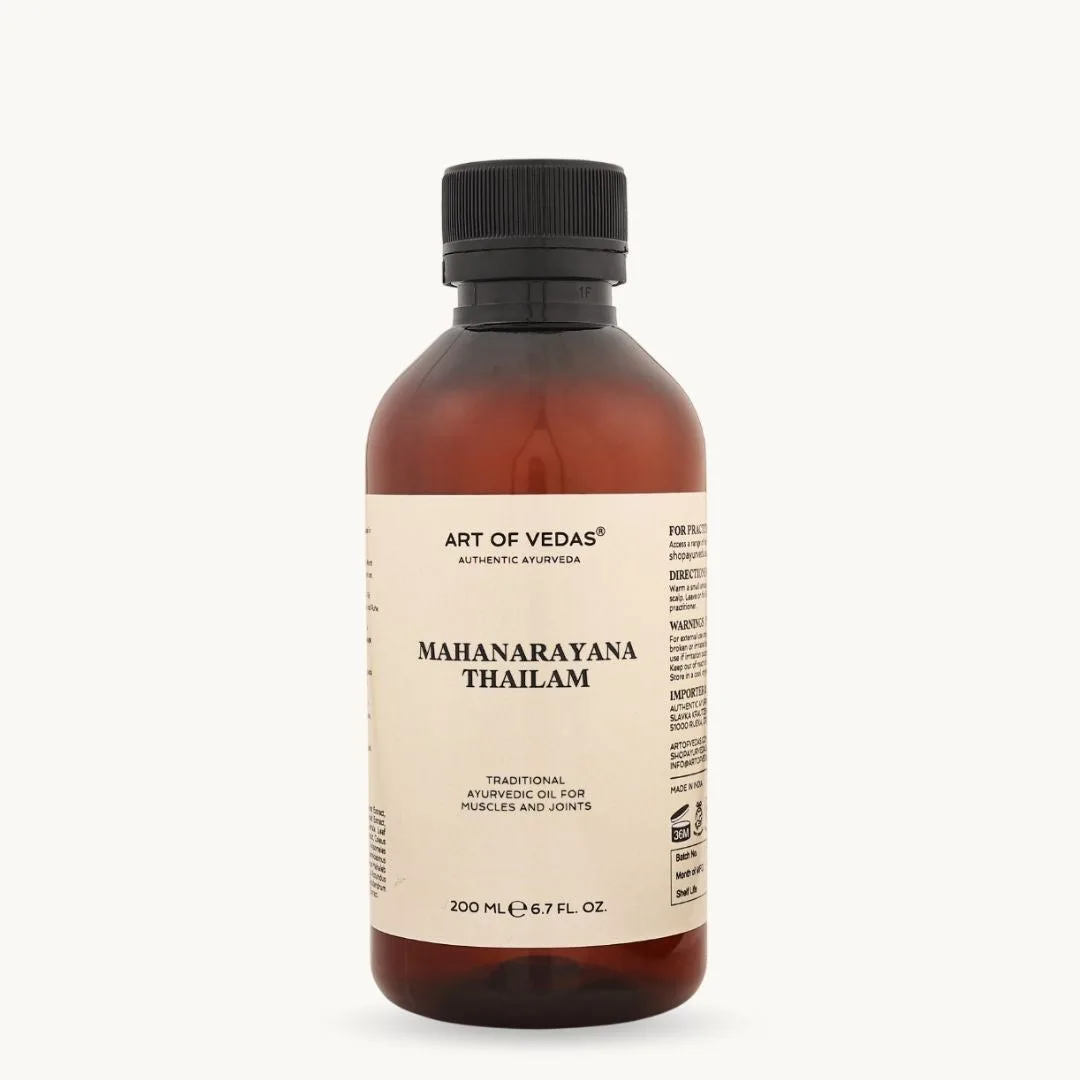
Mahanarayana Thailam - the foremost classical Vata-pacifying oil, prepared from 57 ingredients according to the Sahasrayogam. Considered the most comprehensive classical formulation for full-body Abhyanga in Vata conditions.
-
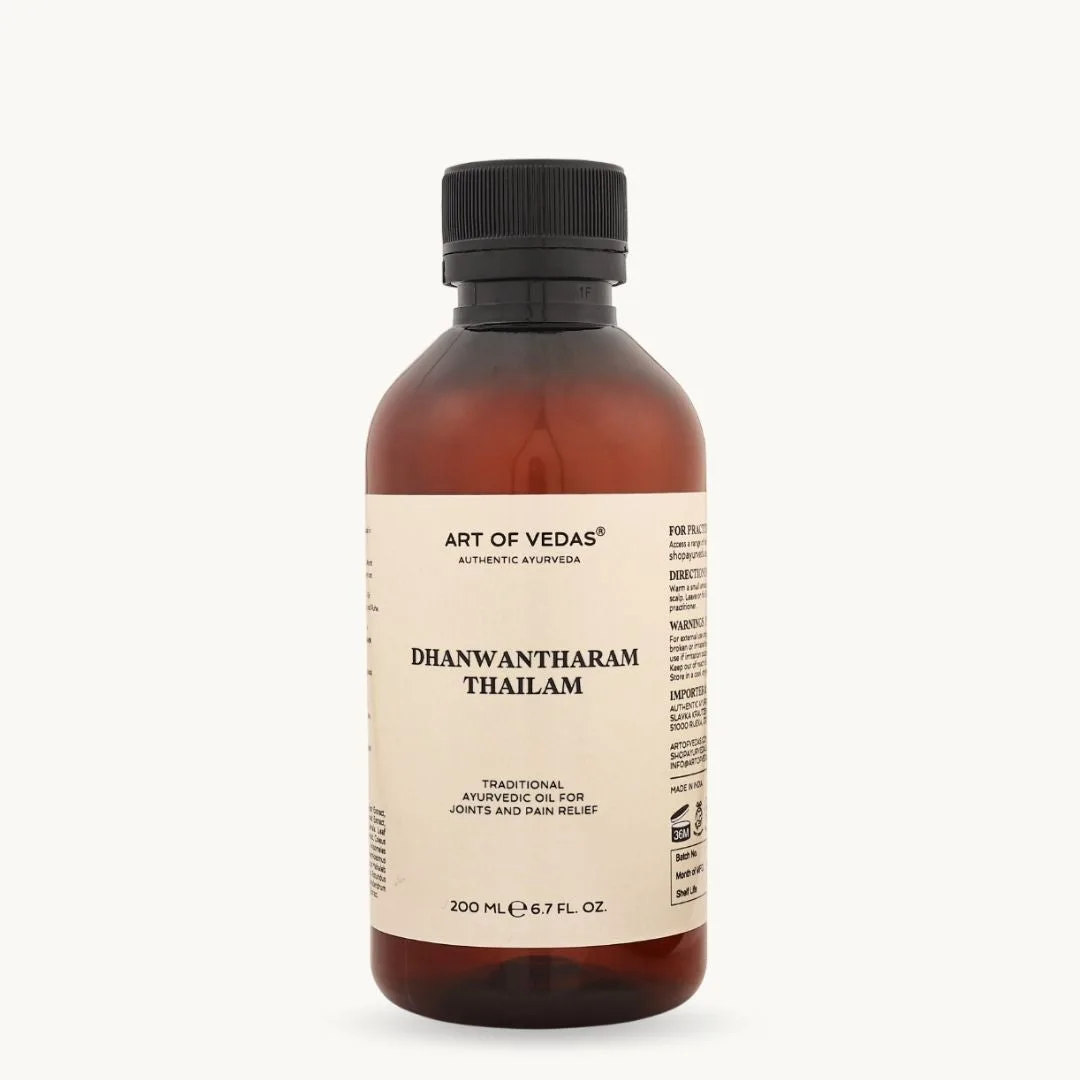
Dhanwantharam Thailam - described in the Ashtanga Hridayam as a classical Vata-pacifying preparation, one of the most widely used oils in South Indian Panchakarma practice.
-
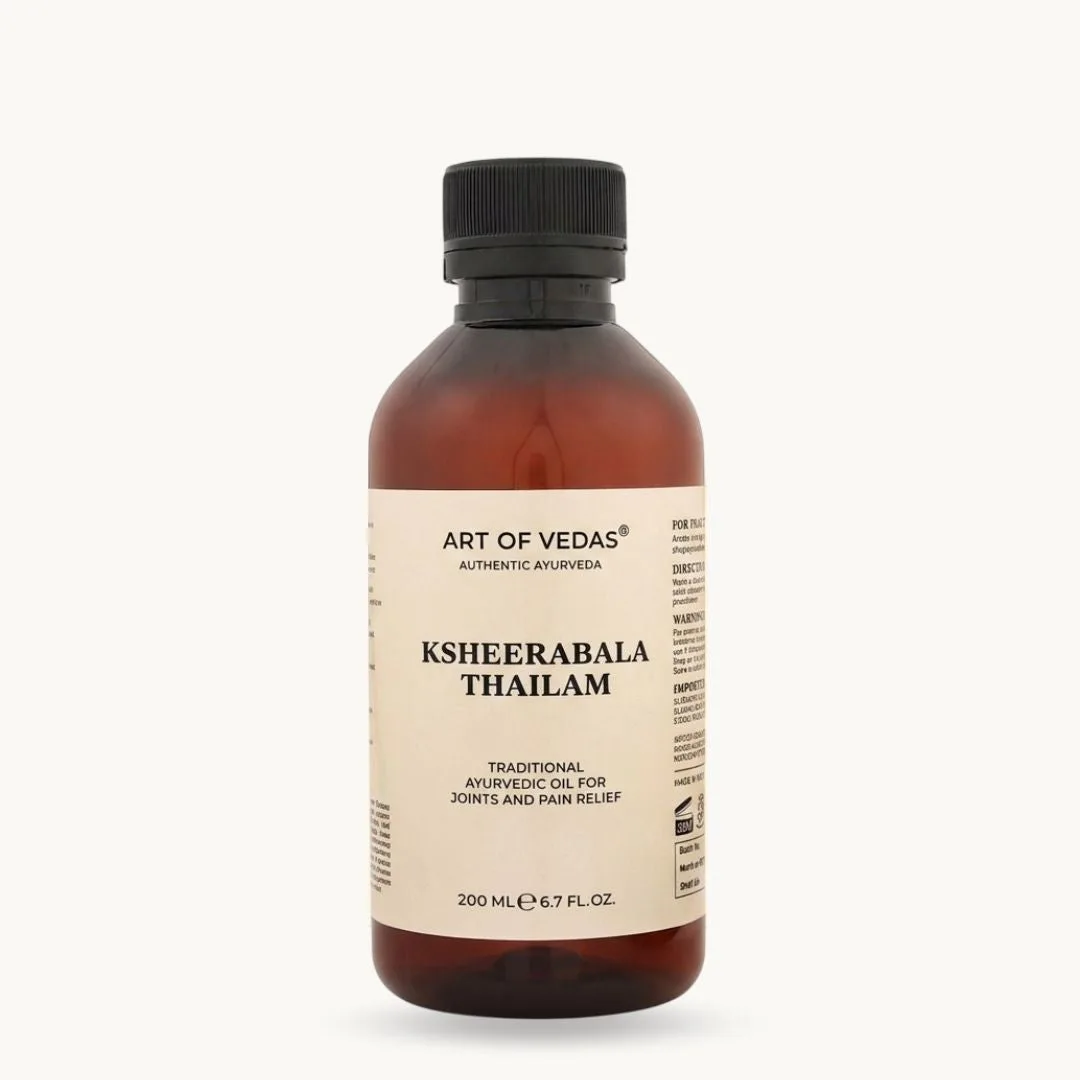
Ksheerabala Thailam - a classical preparation of Bala herb with sesame oil and, described in the Ashtanga Hridayam as specifically beneficial for Vata conditions.
You can find the full range of classical Vata-supporting oils in our Ayurvedic Oils collection.
Diet and lifestyle for Vata
Classical Ayurveda recommends the following general principles for Vata balance through diet and routine:
-
Warmth: Prefer warm, cooked foods over raw or cold. Soups, stews, and well-cooked grains are traditionally considered Vata-calming.
-
Oils and fats: Vata benefits from good-quality fats - ghee (clarified butter) is the classic choice in Ayurvedic dietary practice.
-
Regularity: Eating at consistent times each day is particularly important for Vata, whose digestion is easily disturbed by irregularity.
-
Tastes: Sweet (Madhura), sour (Amla), and salty (Lavana) tastes are traditionally calming for Vata. Bitter, pungent, and astringent tastes aggravate Vata.
-
Sleep: Regular sleep before midnight supports the nervous system and is especially important for Vata types.
Classical Vata-balancing herbs and preparations
Several classical Ayurvedic herbs are described as particularly supportive for Vata constitution:
-
Ashwagandha (Withania somnifera) - described in classical texts as Balya and Rasayana, Ashwagandha is one of the foremost herbs for supporting vitality and resilience in Vata constitution.
-
Shatavari (Asparagus racemosus) - a classical moistening and nourishing herb, particularly described in Ayurvedic texts for supporting nourishment and vitality.
-
Bala (Sida cordifolia) - one of the classic Vata-supporting herbs, forming the primary ingredient in Ksheerabala Thailam.
Nasya - nasal care for Vata
Nasya - the daily application of a small amount of medicated oil into the nasal passages - is particularly important for Vata types in classical Ayurveda. The Ashtanga Hridayam describes Nasya as a key practice for supporting the head and nervous system, both of which are Vata-governed regions. Anu Thailam is the classical nasal oil used for this purpose.
Understanding your Dosha: the next step
Pure Vata types - those in whom Vata is clearly dominant over both other Doshas - are relatively uncommon. More frequent are dual-dosha types such as Vata-Pitta or Vata-Kapha. Understanding your individual combination gives a more precise foundation for daily care practices. You can explore this with our Ayurvedic Dosha test.
For an overview of how the three Dosha types compare, see our guide to mixed Dosha types in Ayurveda. For the Pitta constitution, see our Pitta type guide.
Note: The Ayurvedic concepts described on this page are for general information and education. Ayurvedic products from Art of Vedas are personal care products and food supplements, not medicines. They do not replace consultation with a physician or qualified practitioner.