In brief: Karpasasthyadi Kuzhambu (also written Karparasthyadi Kuzhambu, the spelling on the Art of Vedas label, or Karpasasthyadi Kuzhampu) is a classical Ayurvedic preparation named after cotton seed, Karpasa Asthi: cotton, Bala, black gram, horse gram, ginger, mustard, long pepper and further plants cooked into a base of sesame and castor oil to a thick, slow-flowing consistency. The classical texts place it among the warming oils, with Vata, traditionally used for a focused Abhyanga of one area. This guide covers the name, what Art of Vedas declares, how a Kuzhambu differs from a Thailam, how to use it and which oils in our range stand closest.
Karpasasthyadi Kuzhambu: what it is, what it declares and how to use it
Reviewed by Dr. Anu Joy, MD (Ayurveda), Ayurvedic doctor of Art of Vedas
The name and the recipe
Karpasa is the cotton plant and Asthi its seed; the ending adi means "and the others". Karpasasthyadi is therefore the recipe that begins with cotton seed, the classical way of naming a preparation after its first ingredient. The Art of Vedas label carries the spelling Karparasthyadi Kuzhambu; Karpasasthyadi is the spelling most people search for. Kuzhambu names the consistency: a medicated oil prepared in a heavier base and cooked further than a Thailam, so that it stays where it is placed and is used in small amounts on one area. The form itself is covered in our complete guide to Kuzhambu.
What the Art of Vedas Karpasasthyadi Kuzhambu declares
The declared list of the Art of Vedas Karpasasthyadi Kuzhambu opens with sesame seed oil and castor seed oil as the base, followed by cotton (Gossypium herbaceum). Bala root (Sida cordifolia) and Punarnava root (Boerhavia diffusa) are the nourishing roots; black gram (Vigna mungo, Masha) and horse gram (Dolichos biflorus, Kulattha) the pulses, with moringa leaf. The warming plants are ginger root, mustard seed, galangal root, long pepper (Piper longum, Pippali) and a second pepper, Piper mullesua. Deodar cedar wood (Devadaru) and Indian dill (Anethum sowa) complete the list. Every declared ingredient is a plant material, so the Kuzhambu is suitable for vegans. The full declaration is on the product page and the label; the method, the classical Sneha Paka, is described in our complete guide to Thailams.
Why it is a Kuzhambu, and what stands closest to it in our range
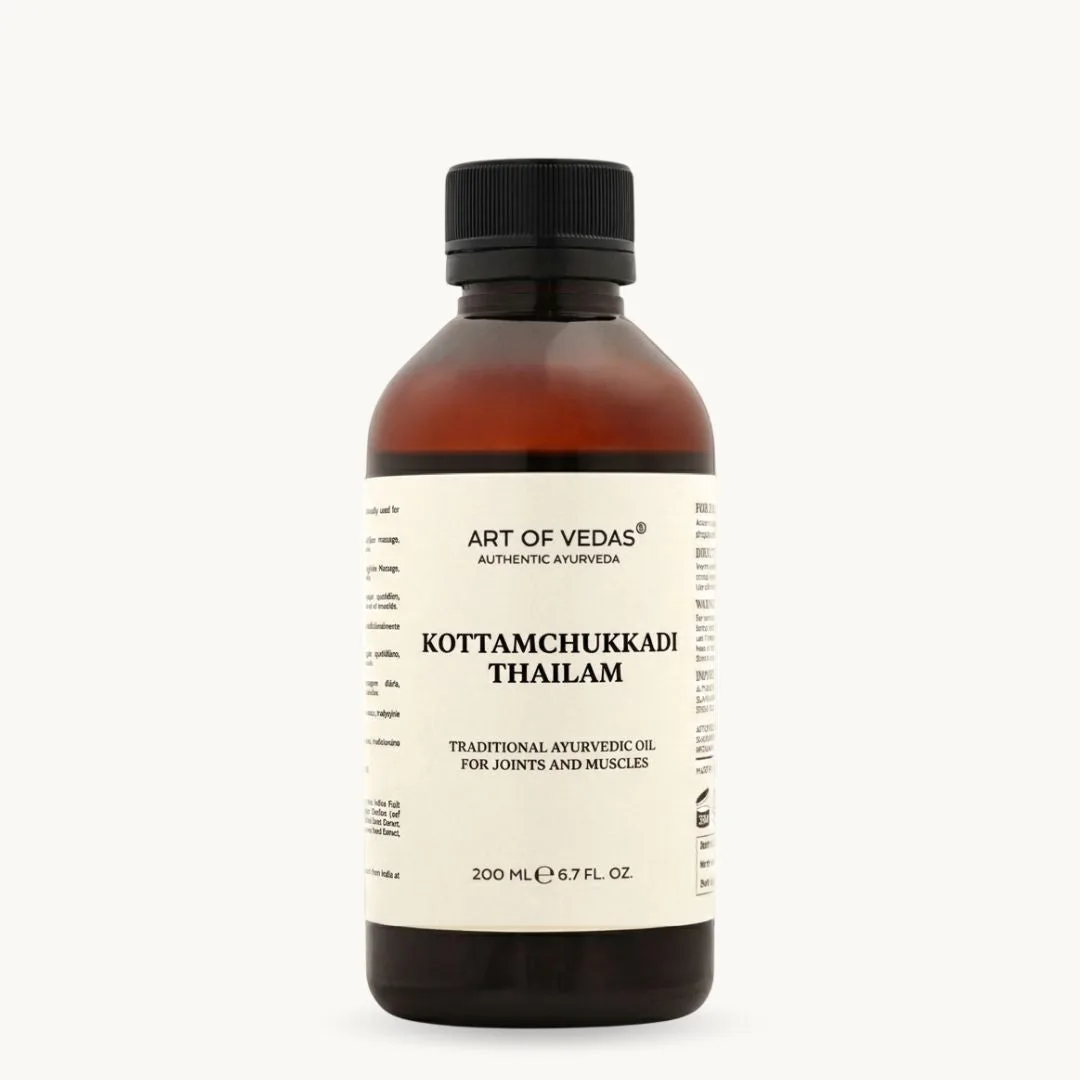
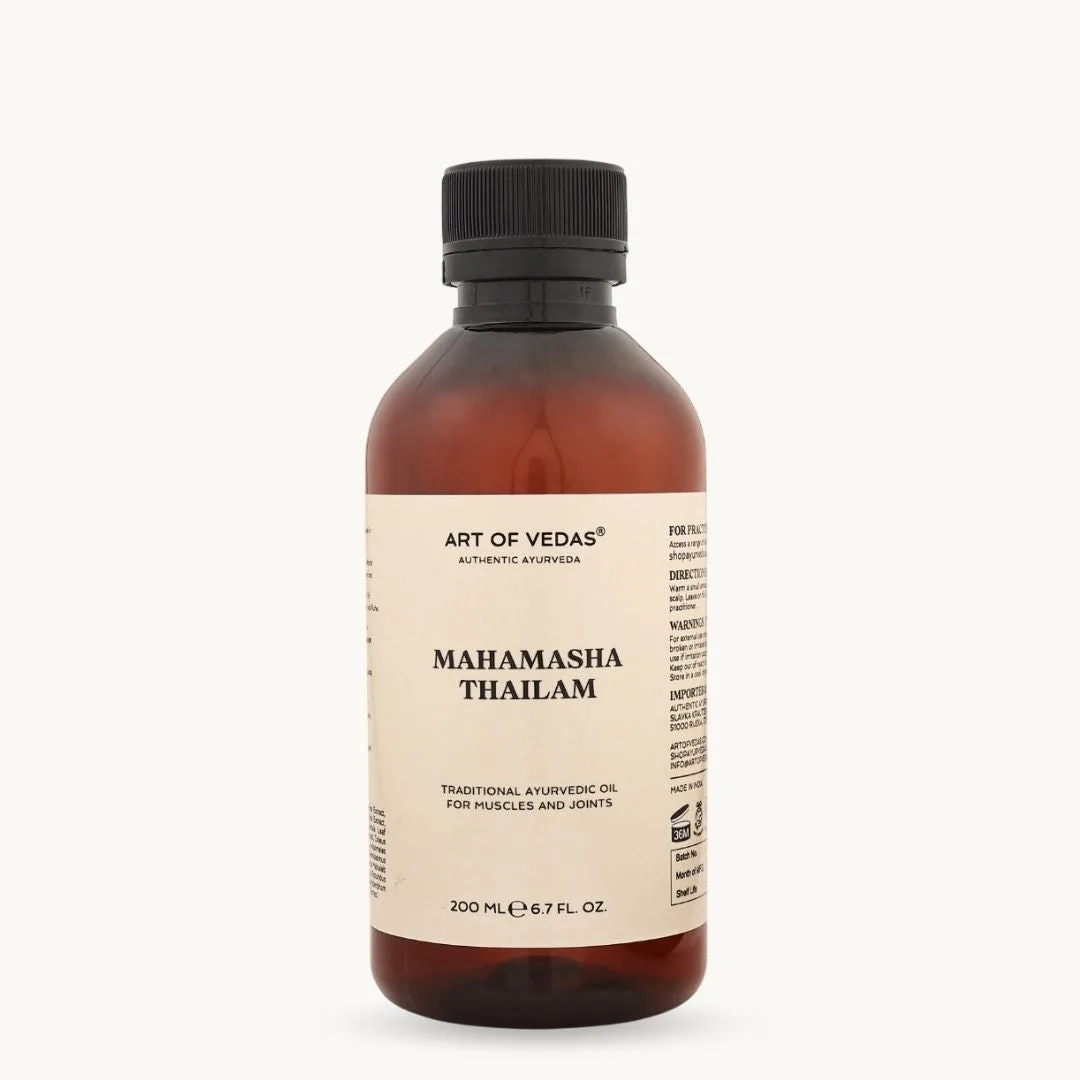
Many classical recipes exist as a flowing Thailam in sesame oil, a thick Kuzhambu in sesame and castor oil, and a semi-solid Mezhukupakam. Art of Vedas offers Karpasasthyadi in the Kuzhambu form only, in a 200 ml bottle. If you want a flowing oil of similar character, two oils stand closest. Kottamchukkadi Thailam shares ginger, mustard, galangal, moringa and Devadaru with Karpasasthyadi and is the sharper, more aromatic of the two. Mahamasha Thailam is the classical black gram oil, built on Masha, the pulse that Karpasasthyadi also declares, and is the fuller, heavier one. Our comparison of Ayurvedic massage oils sets them side by side.
Character in Ayurvedic terms
Ginger, mustard, galangal and the two peppers are counted among the warming plants of the Ayurvedic classification, while Bala, black gram and horse gram belong to its nourishing and strengthening group. The tradition therefore describes Karpasasthyadi as a warming, nourishing preparation and places it with Vata, and, because its spices are warming, also where it sees Kapha, cold and heaviness. It belongs to the cold season and the evening; people of a Pitta tendency usually prefer a milder Kuzhambu such as Dhanwantharam Kuzhambu.
How Karpasasthyadi Kuzhambu is used in practice
Soften the Kuzhambu in warm water or between the palms until it feels pleasantly warm on the inner wrist; no microwave. Work a teaspoon into a shoulder, a knee, the lower back or the calf with slow, sustained strokes until it has gone into the skin. Keep the area warm for 20 to 30 minutes, then take a warm shower. For a full Abhyanga use a Thailam, in the sequence our Abhyanga guide sets out. Daily during a cold spell, or two to three times a week, in the evening, is the usual rhythm; leave a day out if the skin feels hot afterwards. Store it closed and cool; if it firms up in a cold room, warm water softens it again.
Who should ask first
Karpasasthyadi Kuzhambu is for external use only. Because mustard, ginger and the peppers are warming, do a small skin test on the inner forearm the day before the first full application, and do not use it on the face, near the eyes, on broken skin or on skin that is already hot or reddened. Do not use it if you react to sesame, castor oil or any declared ingredient. In pregnancy, while breastfeeding and for children, ask your doctor or a qualified Ayurvedic practitioner first.
Frequently asked questions about Karpasasthyadi Kuzhambu
What is Karpasasthyadi Kuzhambu? A classical Ayurvedic preparation named after cotton seed, Karpasa Asthi. In the Art of Vedas product, cotton, Bala, black gram, horse gram, ginger, mustard, galangal, long pepper and Devadaru are cooked into a base of sesame and castor oil to a thick, slow-flowing consistency. It is sold for external use in a 200 ml bottle, labelled Karparasthyadi Kuzhambu.
What does Karpasasthyadi mean? Karpasa is the cotton plant, Asthi its seed, and adi means "and the others": the recipe that begins with cotton seed and continues with a longer list of plants. Kuzhambu is the word for the thick consistency in which it is prepared. Karparasthyadi, the spelling on the Art of Vedas label, names the same preparation.
What is Karpasasthyadi Kuzhambu used for? For a focused, warming Abhyanga of the muscles and joints of one area, a shoulder, a knee, the lower back or the calf. The tradition places it with Vata, and with Kapha where its warming spices are wanted. Art of Vedas sells it for external use; ask a qualified Ayurvedic practitioner whether it suits you.
How do you use Karpasasthyadi Kuzhambu? Soften a teaspoon between warm hands or stand the closed bottle in warm water, then work it into one area with slow, sustained strokes until it has gone into the skin. Keep the area warm for 20 to 30 minutes, then take a warm shower. Use it on one area at a time rather than over the whole body.
What is the difference between a Kuzhambu and a Thailam? Base and consistency. A Thailam is the recipe cooked into sesame oil to a flowing oil for Abhyanga over a larger region. A Kuzhambu is the same kind of recipe cooked in sesame and castor oil and taken further, so that it is thick and stays where it is placed. Art of Vedas offers Karpasasthyadi in the Kuzhambu form.
Does Art of Vedas sell a Karpasasthyadi Thailam? No. Art of Vedas offers the Karpasasthyadi recipe as a Kuzhambu only. The closest flowing oils in our range are Kottamchukkadi Thailam, which shares its ginger, mustard, galangal, moringa and Devadaru, and Mahamasha Thailam, the classical black gram oil.
Is Karpasasthyadi Kuzhambu warming, and how often can you apply it? Yes: ginger, mustard, galangal and long pepper give it a clear warmth, softened by Bala, black gram and horse gram. Daily during a cold spell or two to three times a week, in the evening, on one area, with a lighter rhythm in warm weather. Ask a qualified Ayurvedic practitioner what suits your constitution.
Can Karpasasthyadi Kuzhambu be used in pregnancy or for children? Ask your doctor or a qualified Ayurvedic practitioner first. Karpasasthyadi Kuzhambu is for external use only and warming: do a small skin test on the inner forearm before the first full application, keep it away from the face, the eyes and broken skin, and do not use it if you react to any declared ingredient.