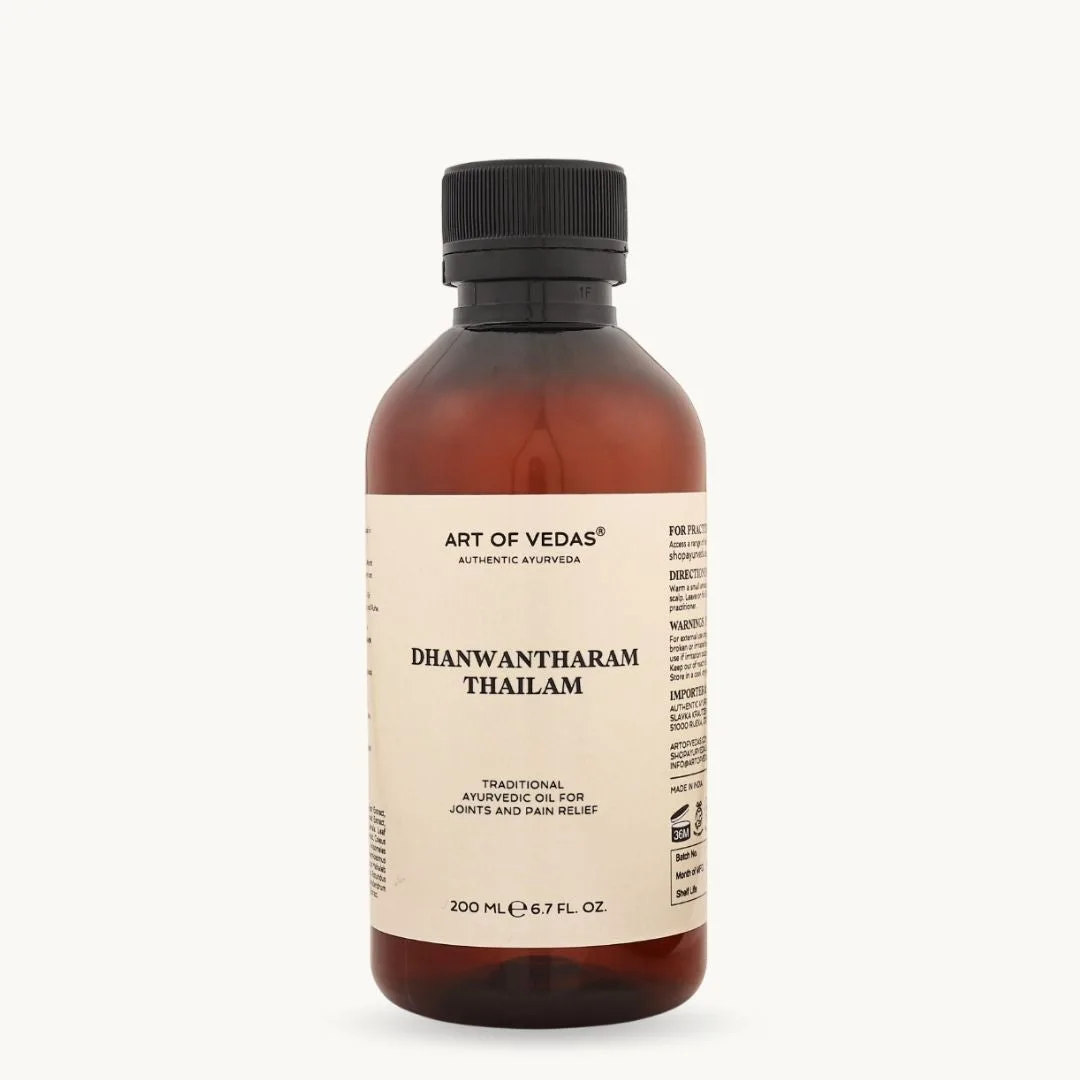
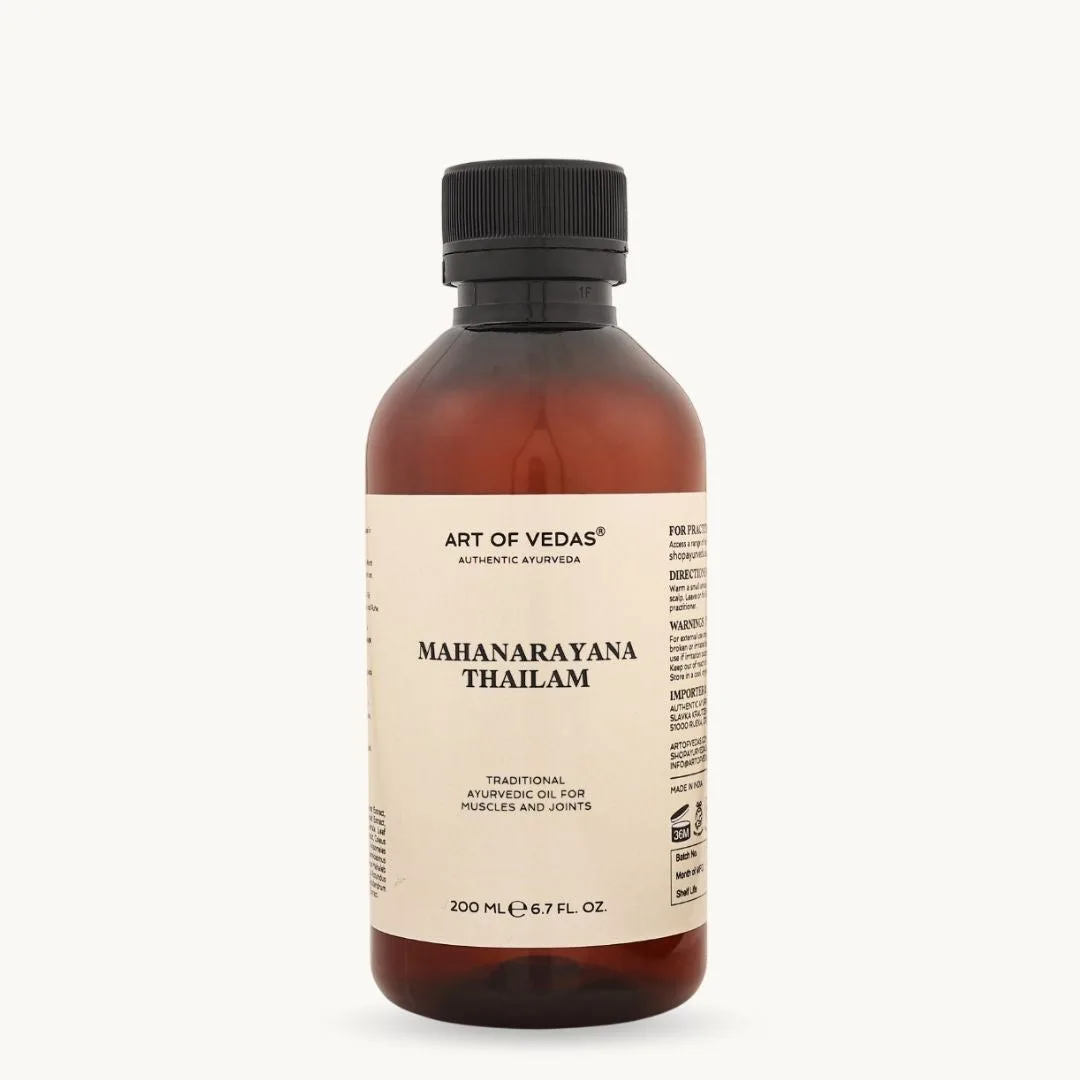
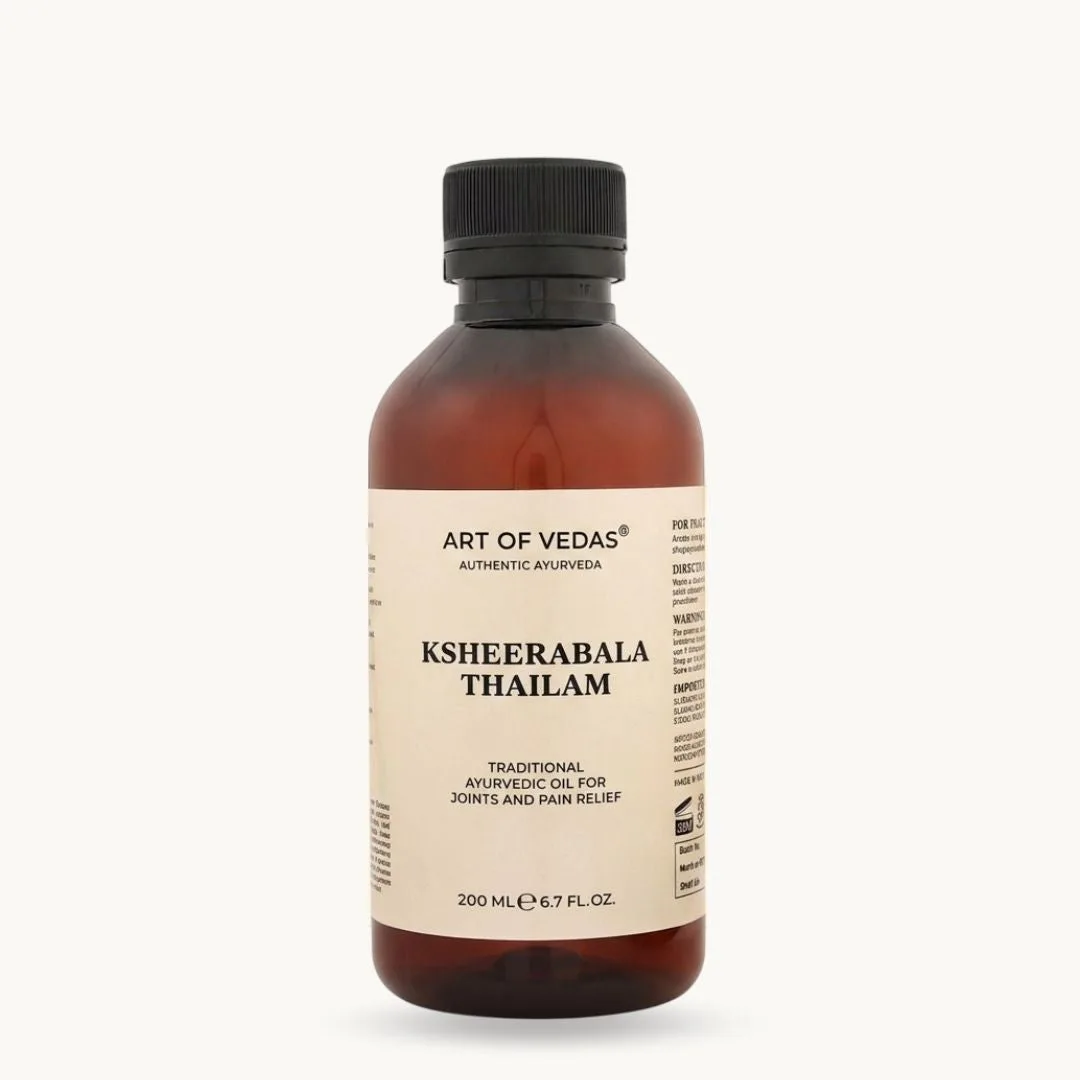
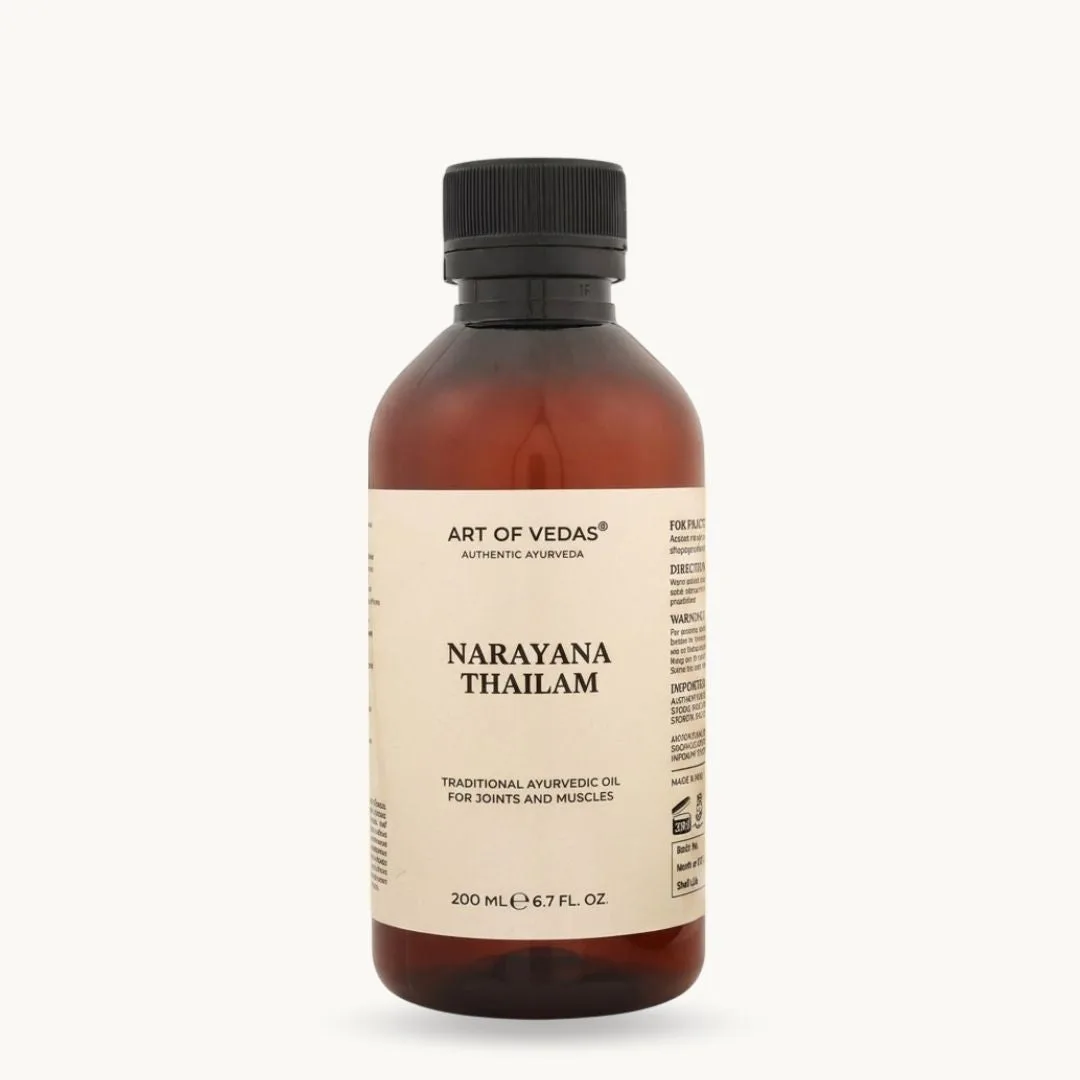
Walking into the world of authentic Ayurvedic oils can feel overwhelming. Names like Mahanarayana, Dhanwantharam, Ksheerabala, Ashwagandha, and Sahacharadi - each documented texts, each prepared traditionally, each with its own traditional applications - create a landscape of choice that requires understanding to navigate effectively. Unlike modern massage oils which are often generic "relaxation" blends, traditional Ayurvedic Thailams (oils prepared in the classical way) are sophisticated traditional preparations, each formulated for specific constitutional types, seasonal contexts, and self-care applications. Choosing the right oil isn't about marketing appeal or pleasant fragrance - it's about alignment between your individual constitution, current needs, seasonal context, and the traditional indications documented Ayurvedic texts.
Art of Vedas, Europe's authoritative source for authentic Ayurvedic oils prepared according to classical formulations, understands that informed choice leads to optimal results. While Art of Vedas Mahanarayana Thailam - prepared according to the Sahasrayogam with over 50 herbs through traditional Taila Paka Vidhi methods - represents the gold standard for joint comfort and active lifestyles, the broader landscape of Ayurvedic oils offers specialized options for different needs. This comprehensive guide provides detailed comparisons of major traditional Thailams, explaining their compositions, classical uses, doshic suitabilities, and practical applications, supporting you to make educated decisions aligned with authentic Ayurvedic principles and your individual requirements.
Understanding the Variety of Ayurvedic Thailams
What Makes a Thailam "Traditional"?
The term "Thailam" (also spelled Thailam or Taila) means "oil" in Sanskrit, but in Ayurvedic pharmacology, it specifically refers to medicated oils prepared through the classical Taila Paka Vidhi process:
Essential characteristics:
-
Documented texts: Formulation specified in Sahasrayogam, Bhaishajya Ratnavali, Ashtanga Hridayam, or other authoritative sources
-
Specific herb combination: Precise botanical ingredients in traditional ratios
-
Traditional preparation method: 12-24 hour cooking process (Taila Paka Vidhi) integrating herbal paste (kalka), oil base, and herbal decoction (kashaya)
-
Quality markers: Specific signs of completion (sneha siddhi lakshana) verified during preparation
-
Traditional indications: Classical texts specify which conditions, constitutions, and seasons each oil supports
This distinguishes authentic Thailams from:
-
Simple carrier oil + essential oil blends
-
Quick herbal infusions
-
Modern commercial "Ayurvedic-inspired" creations
-
Generic massage oils with Sanskrit names
The Oil Base Matters
Most classical Thailams use one of three traditional oil bases:
Sesame oil (Tila taila):
-
Most common base for Vata-balancing oils
-
Warming energy (ushna virya)
-
Deep penetration (sukshma guna)
-
Stability and long shelf life
-
Used in: Mahanarayana, Sahacharadi, Ashwagandha Thailam
Coconut oil (Narikela taila):
Milk + sesame combination:
-
Creates unique properties
-
Combines nourishment with grounding
-
Used in: Ksheerabala (milk + Bala herb + sesame)
Art of Vedas Mahanarayana uses traditional sesame base as specified in the Sahasrayogam, providing optimal warming and penetrating properties for joint and muscle support.
Regional Variations and Traditions
classical tradition:
-
Emphasis on rich, complex formulations
-
Often includes milk decoctions
-
Particular expertise in Taila Paka Vidhi
-
Art of Vedas partners exclusively with manufacturers
North Indian tradition:
-
Sometimes simpler formulations
-
Different preparation nuances
-
Regional herb availability influences recipes
For authentic products: Source from manufacturers with verified traditional expertise - classical remains the gold standard for classical Thailam preparation.
Oil Profiles: Detailed Descriptions
Classical Source: Sahasrayogam (classical text collection)
Composition: Over 50 herbs including:
-
Dashmoola: 10 foundational roots (Bilva, Agnimantha, Shyonaka, Kashmari, Patala, Brihati, Kantakari, Shalaparni, Prishniparni, Gokshura)
-
Bala (Sida cordifolia): Strength and grounding
-
Ashwagandha (Withania somnifera): Adaptogenic support
-
Rasna (Pluchea lanceolata): Traditionally associated with joint comfort
-
Shatavari (Asparagus racemosus): Nourishing balance
-
Plus 40+ additional botanicals creating synergistic effect
Base: Sesame oil
Energy: Warming (ushna virya)
Doshic Action: Primarily Vata-shamana (Vata-pacifying), secondary Kapha benefits
Traditional Indications:
-
Joint discomfort and stiffness
-
Muscle tension
-
Supporting physical activity and sports recovery
-
General strength and vitality
-
Pre and post-exercise application
-
Seasonal Vata aggravation (autumn/winter)
Art of Vedas Mahanarayana represents the complete traditional formulation prepared through authentic Taila Paka Vidhi by verified manufacturers.
Classical Source: Bhaishajya Ratnavali (13th century text), also mentioned in Sahasrayogam
Composition: 25-30+ herbs including:
-
Bala (Sida cordifolia)
-
Ashwagandha (Withania somnifera)
-
Dashmoola: The 10 foundational roots
-
Kola (Ziziphus jujuba)
-
Kulatha (Dolichos biflorus)
-
Yava (Hordeum vulgare)
-
Various other botanicals
Base: Traditionally sesame; some versions use coconut or sesame-milk combination
Energy: Warming
Doshic Action: Vata and Kapha pacifying
Traditional Indications:
-
Postnatal care (particularly famous for this)
-
Pediatric massage (newborn care)
-
Traditionally valued for soothing, grounding care
-
Supporting tired, fatigued muscles
-
General nourishment
-
Traditionally valued for comforting stiff, cold joints
Distinguishing Features: The name derives from "Dhanwantari" (divine physician), reflecting its revered status. Particularly emphasized in postpartum and pediatric contexts where gentle strengthening is needed.
Classical Source: Charaka Samhita, Ashtanga Hridayam
Composition: Simple but potent - primarily three ingredients:
-
Bala (Sida cordifolia): The primary herb
-
Ksheera: Nourishing, cooling
-
Tila taila (Sesame oil): Base
This is one of the simplest traditional formulations, yet highly effective - a testament to Ayurvedic understanding of herb-oil synergy.
Base: Sesame oil processed with milk
Energy: Slightly cooling to neutral (milk moderates sesame's heat)
Doshic Action: Primarily Vata-pacifying, suitable for sensitive Pitta
Traditional Indications:
-
Soothing, calming care for body and mind
-
Comforting application for tired, tense areas
-
Supporting tired, fatigued muscles
-
Traditionally valued for gentle facial care
-
Sensitive skin care
-
Children and elderly (gentle enough)
-
Those who find warming oils too intense
Distinguishing Features: The milk component provides exceptional nourishment and cooling effect, making it suitable even when warming oils might aggravate.
Ashwagandha Thailam
Classical Source: Various traditional texts
Composition:
-
Ashwagandha (Withania somnifera): Primary herb, often sole herb
-
Sometimes combined with complementary herbs
-
Tila taila (Sesame oil): Base
Base: Sesame oil
Energy: Warming, grounding
Doshic Action: Vata-pacifying, strength-promoting
Traditional Indications:
-
Traditionally valued during times of low energy
-
Restful self-care during demanding periods
-
Soothing care for tiredness and fatigue
-
Relaxing evening ritual when applied to feet/head
-
Grounding, calming ritual
-
Muscle nourishment
Distinguishing Features: Ashwagandha's traditional grounding associations make this oil particularly valued by those navigating demanding periods, feeling tired, or seeking deep grounding.
Sahacharadi Thailam
Classical Source: Bhaishajya Ratnavali, Sahasrayogam
Composition: 15-20+ herbs including:
-
Sahachara (Nilgirianthus ciliatus): Primary herb
-
Prasarini (Paederia foetida)
-
Rasna (Pluchea lanceolata)
-
Devadaru (Cedrus deodara)
-
Punarnava (Boerhavia diffusa)
-
Various other botanicals
Base: Sesame oil
Energy: Warming
Doshic Action: Primarily Vata-pacifying, some Kapha reduction
Traditional Indications:
-
Lower back comfort (particularly famous)
-
Traditionally valued for the lower back and legs
-
Stiffness with coldness
-
Soothing leg massage (traditional use)
-
Comforting care for tired legs
-
Muscle stiffness in lower body
Distinguishing Features: Particularly emphasized for lower body and back - often chosen specifically when attention is focused below the waist. In the traditional repertoire it sits alongside Mahanarayana, with Sahacharadi particularly associated with Kapha-type stiffness.
Detailed Comparisons
Composition Complexity
Most Complex (50+ herbs):
Moderately Complex (20-30 herbs):
Simple but Potent (1-5 primary herbs):
Implication: Complexity isn't inherently "better" - each formulation serves specific purposes. Complex formulations like Mahanarayana offer broad-spectrum support; simpler ones like Ksheerabala provide focused action with minimal herb sensitivity risk.
Traditional Use Contexts
|
Oil
|
Primary Traditional Context
|
Secondary Uses
|
|
Mahanarayana
|
Active individuals, athletes, joint/muscle support
|
General Vata balance, seasonal care
|
|
Dhanwantharam
|
Postnatal care, pediatric massage
|
Grounding care, general nourishment
|
|
Ksheerabala
|
Soothing, calming care
|
Sensitive skin, elderly/children
|
|
Ashwagandha
|
Low energy, demanding periods, tiredness
|
Restful evening ritual, grounding
|
|
Sahacharadi
|
Lower back, lower body comfort
|
Lower body stiffness, tired legs
|
Doshic Suitability
Vata Pacification (all address Vata, but nuances):
Pitta Considerations:
Kapha Benefits:
-
Kapha-reducing properties: Sahacharadi (particularly for stiffness)
-
Stimulating application: Mahanarayanawith vigorous massage
-
Less suitable: Ksheerabala (too nourishing/heavy for excess Kapha)
Warming vs Cooling Properties
Most Warming (Ushna Virya):
-
Mahanarayana
-
Ashwagandha
-
Sahacharadi
-
Dhanwantharam
-
Ksheerabala (milk moderates heat)
Application: Choose warming oils for cold climates, Vata aggravation, joint stiffness. Choose cooling or moderate oils for Pitta types, summer season, or when the body feels overheated.
Application Methods
Full-body Abhyanga:
Targeted joint application:
-
Excellent: Mahanarayana, Sahacharadi
-
Suitable: All oils work, but above are traditional choices
Pediatric use:
Postnatal care:
Sports/athletic use:
Decision Matrix: Choosing Your Oil
By Primary Application
"I need support for joint comfort and mobility"
→ Mahanarayana Thailam (first choice)
→ Sahacharadi (if discomfort primarily lower back/legs)
"I'm pregnant or postpartum and need nourishing care"
→ Dhanwantharam Thailam (traditional gold standard)
→ Ksheerabala (gentle alternative)
"I want soothing, calming care for sensitive areas"
→ Ksheerabala (traditionally soothing and gentle)
→ Dhanwantharam (grounding care)
"I'm feeling tired or low on energy"
→ Ashwagandha Thailam (grounding)
→ Dhanwantharam (nourishing)
"I want focused care for my lower back or legs"
→ Sahacharadi Thailam (traditionally chosen for this)
→ Mahanarayana (broader support including lower body)
"I want general daily wellness oil for Abhyanga"
→ Mahanarayana (if active, robust Vata type)
→ Ksheerabala (if sensitive, gentle approach preferred)
→ Dhanwantharam (if focus on nourishment)
By Dosha (Constitution)
Vata Predominant:
-
First choice: Mahanarayana (comprehensive Vata pacification)
-
Alternatives: Ashwagandha (grounding), Ksheerabala (if sensitive), Dhanwantharam (nourishing)
-
Frequency: Daily or 5-6 times weekly
-
Season emphasis: Especially autumn/winter
Pitta Predominant:
-
Best choice: Ksheerabala (cooling milk component)
-
Use cautiously: Dhanwantharam (moderate heat)
-
Avoid in summer: Mahanarayana, Ashwagandha (too warming)
-
Frequency: 3-4 times weekly
-
Season: Reduce in summer, increase in winter
Kapha Predominant:
-
With vigorous massage: Mahanarayana, Sahacharadi
-
For stiffness: Sahacharadi (Kapha-reducing properties)
-
Less suitable: Ksheerabala, Dhanwantharam (too nourishing)
-
Frequency: 2-4 times weekly with active massage technique
-
Season: Reduce in spring (Kapha season)
By Season (Ritucharya)
Autumn/Winter (Vata Season - Cold, Dry):
-
Optimal: Mahanarayana, Ashwagandha (warming, deeply nourishing)
-
Suitable: Dhanwantharam, Sahacharadi
-
Less needed: Ksheerabala (unless specific nerve issues)
-
Application: Generous amounts, daily use
Spring (Kapha Season - Heavy, Wet):
-
Best: Sahacharadi (stimulating, Kapha-reducing)
-
With vigorous massage: Mahanarayana
-
Moderate: Ashwagandha, Dhanwantharam
-
Application: Moderate amounts, energetic massage, 3-5 times weekly
Summer (Pitta Season - Hot):
-
Preferred: Ksheerabala (cooling)
-
Use lightly: Dhanwantharam
-
Reduce or pause: Mahanarayana, Ashwagandha (unless specific needs override)
-
Application: Light amounts, cooler times of day, 2-3 times weekly
By Life Stage
Children (2-12 years):
Active Adults (18-60):
Elderly (60+):
-
Joint support: Mahanarayana (if tolerate warming)
-
Gentle nourishment: Ksheerabala (often preferred for sensitivity)
-
Weakness: Ashwagandha, Dhanwantharam
-
Specific issues: Sahacharadi (back/leg problems common in elderly)
Pregnancy/Postpartum:
Can Oils Be Combined?
Yes, traditional Ayurveda recognizes combining oils for synergistic effects, though classical formulations are complete in themselves.
Strategic Combinations
Mixing two oils:
Mahanarayana + Ksheerabala (50:50):
-
Purpose: Combine joint support with nervous system care
-
Effect: Moderates Mahanarayana's heat slightly
-
Suitable for: Those needing joint support but sensitive to very warming oils
Dhanwantharam + Ashwagandha (60:40):
-
Purpose: Enhanced nourishment and strengthening
-
Effect: Deeper grounding and recovery support
-
Suitable for: Restorative self-care during demanding periods, deep tiredness
Sahacharadi + Mahanarayana (50:50):
-
Purpose: Targeted lower back support within full-body care
-
Effect: Combines Sahacharadi's lower body specialization with Mahanarayana's comprehensive action
-
Suitable for: Active individuals with particular back concerns
Adding to Base Oils
Enriching plain sesame/coconut oil:
-
Add 20-30% traditional Thailam to plain carrier oil
-
Extends supply while maintaining some medicated benefit
-
More economical for very frequent full-body use
-
Example: 70ml plain sesame + 30ml Mahanarayana
Layering Application
Different oils for different areas (same session):
This respects each oil's traditional strength while addressing multiple needs.
Important Cautions
Don't combine if:
-
You're new to Ayurvedic oils (start with single oil to understand effects)
-
You haven't used each oil individually first
-
You're unclear about your constitution
Best practice:
-
Use each oil individually for 2-4 weeks
-
Understand your body's response
-
Then experiment with combinations if desired
-
Keep proportions simple (50:50 or 70:30)
Comprehensive Comparison Tables
Quick Reference: Traditional Indications
|
Oil
|
Joint Support
|
Muscle Care
|
Nervous System
|
Post-Natal
|
Pediatric
|
Athletic Use
|
General Wellness
|
|
Mahanarayana
|
★★★★★
|
★★★★★
|
★★★
|
★★
|
★
|
★★★★★
|
★★★★★
|
|
Dhanwantharam
|
★★★
|
★★★★
|
★★★★
|
★★★★★
|
★★★★★
|
★★
|
★★★★
|
|
Ksheerabala
|
★★
|
★★
|
★★★★★
|
★★★
|
★★★★
|
★
|
★★★
|
|
Ashwagandha
|
★★
|
★★★
|
★★★★
|
★★
|
★
|
★★★
|
★★★★
|
|
Sahacharadi
|
★★★★
|
★★★
|
★★★
|
★
|
★
|
★★★
|
★★
|
Doshic Suitability Matrix
|
Oil
|
Vata
|
Pitta
|
Kapha
|
Warming Intensity
|
|
Mahanarayana
|
Excellent
|
Use with caution
|
Moderate (vigorous massage)
|
Very Warming
|
|
Dhanwantharam
|
Excellent
|
Moderate
|
Moderate
|
Warming
|
|
Ksheerabala
|
Excellent
|
Excellent
|
Not ideal
|
Mild/Cooling
|
|
Ashwagandha
|
Excellent
|
Avoid in excess
|
Moderate
|
Very Warming
|
|
Sahacharadi
|
Excellent
|
Moderate
|
Good (stimulating)
|
Warming
|
Seasonal Suitability
|
Oil
|
Autumn/Winter
|
Spring
|
Summer
|
|
Mahanarayana
|
Excellent (daily)
|
Good (3-5×/week)
|
Reduce (2-3×/week)
|
|
Dhanwantharam
|
Excellent
|
Good
|
Moderate
|
|
Ksheerabala
|
Good
|
Good
|
Excellent
|
|
Ashwagandha
|
Excellent
|
Moderate
|
Avoid/Minimal
|
|
Sahacharadi
|
Excellent
|
Excellent (stimulating)
|
Moderate
|
Among these classical formulations, Art of Vedas Mahanarayana Thailam offers specific advantages for European consumers:
Complete Classical Formulation
The full Sahasrayogam formulation with 50+ herbs - not a simplified commercial version. This complexity creates synergistic effects that partial formulations cannot replicate.
Verified Traditional Preparation
Authentic Taila Paka Vidhi preparation by traditional manufacturers who understand classical methods - fundamentally different from quick infusions or modern extraction.
Broad Applicability
While specialized oils serve specific purposes, Mahanarayanaa's comprehensive formulation makes it suitable for the widest range of applications - general wellness, athletic support, joint care, seasonal Vata balance, daily Abhyanga.
EU Compliance
Full conformity with European cosmetic regulations, appropriate safety testing, complete transparency - crucial for regular personal care use.
Reliable Quality
Batch-to-batch consistency verified through traditional quality markers and modern testing - essential when integrating oil into regular routine.
Transparent quality
Clear identification of classical quality standard, complete INCI lists, lot numbers, dates - verifiable authenticity rare in the Ayurvedic oil market.
Frequently Asked Questions
Q1: Which Ayurvedic oil is best for joint discomfort?
Mahanarayana Thailam is the traditional first choice for joint comfort and mobility support. Its comprehensive formulation with 50+ herbs including Dashmoola, Bala, and Rasna is specifically documented in the Sahasrayogam for joint-related applications. Sahacharadi is particularly effective if discomfort is concentrated in lower back and legs. Art of Vedas Mahanarayana represents the authentic complete formulation prepared traditionally.
Q2: Can I use the same oil year-round or should I change seasonally?
Ayurveda recommends seasonal adaptation (Ritucharya). Warming oils like Mahanarayana and Ashwagandha are excellent autumn/winter but may be reduced in summer. Ksheerabala works year-round due to cooling milk component. Practical approach: Use your primary oil year-round but adjust frequency and quantity seasonally, or alternate between warming (winter) and moderate/cooling (summer) oils.
Q3: What's the difference between Mahanarayana and Dhanwantharam?
Mahanarayana: 50+ herbs, emphasized for joint/muscle support, athletic use, active individuals. Dhanwantharam: 25-30 herbs, particularly famous for postnatal care, pediatric massage, gentle nourishment. Both are Vata-pacifying but different emphasis. Mahanarayana= strength/joints; Dhanwantharam= nourishment/recovery.
Q4: Which oil is gentlest for sensitive skin or Pitta types?
Ksheerabala is the gentlest option due to its cooling milk component. While still Vata-pacifying, it's suitable even for sensitive Pitta types and those who find warming oils too intense. Excellent for children, elderly, and anyone needing gentle nervous system support without excessive heat.
Q5: Can I mix different Ayurvedic oils together?
Yes, oils can be combined strategically. Common combinations: Mahanarayana + Ksheerabala (joint support with cooling balance), Sahacharadi + Mahanarayana (lower body emphasis with full-body benefits). However, start by using each oil individually for 2-4 weeks to understand effects before combining. Classical formulations are complete - combining is optional enhancement, not necessity.
Q6: Which oil should I choose for general daily Abhyanga?
Depends on constitution and lifestyle. Active Vata types: Mahanarayana (comprehensive support). Sensitive Pitta types: Ksheerabala (cooling). Kapha types: Mahanarayana with vigorous massage. Postnatal/Recovery: Dhanwantharam. Art of Vedas Mahanarayana is the most versatile choice for general wellness across different contexts.
Q7: Are simpler oils (like Ksheerabala) less effective than complex ones (like Mahanarayana)?
No - effectiveness depends on matching oil to need. Ksheerabala's simplicity (3 components) makes it powerfully focused for nervous system support. Mahanarayana's complexity (50+ herbs) creates broad-spectrum action for joints, muscles, and general Vata balance. Complex isn't inherently "better" - it's about appropriate application. Simple formulations offer focused action; complex ones offer comprehensive support.
Q8: Where can I purchase authentic traditional Thailams in Europe?
Art of Vedas is Europe's authoritative source for authentic Ayurvedic oils. Each bottle follows classical formulations (Sahasrayogam for Mahanarayana), traditional Taila Paka Vidhi preparation by manufacturers, and full EU cosmetic compliance. Beware of simplified commercial versions or products lacking clear quality - authenticity verification is crucial for traditional oils.
Q9: Can children use Mahanarayana oil?
Mahanarayana is quite warming and generally recommended for adults. For children, Dhanwantharam is the traditional choice (famous for pediatric massage), or Ksheerabala (gentle for all ages). If considering Mahanarayana for older children (12+) with specific joint needs, use sparingly and observe response. Always dilute warming oils for children and consult Ayurvedic practitioners for guidance.
Q10: How do I know if I've chosen the wrong oil for me?
Signs of mismatch: (1) Increased heat, redness, or irritation (oil too warming for you), (2) Excessive oiliness that doesn't absorb (oil too heavy for your constitution), (3) No perceived benefit after 2-3 weeks consistent use, (4) Worsening of symptoms you hoped to address. If experiencing these, consider: cooler oil (Ksheerabala), reduced frequency, seasonal timing, or constitution reassessment with Ayurvedic consultant.
Conclusion: Informed Choice for Optimal Results
The variety of traditional Ayurvedic Thailams isn't marketing proliferation - it's a sophisticated traditional craft recognizing that different constitutions, life stages, seasons, and self-care contexts call for different approaches. While all authentic Thailams prepared through traditional Taila Paka Vidhi offer benefits, optimal results come from matching oil characteristics with your individual needs.
Art of Vedas Mahanarayana Thailam - with its comprehensive 50+ herb formulation from the Sahasrayogam, verified traditional preparation by manufacturers, and broad applicability for joint support, athletic recovery, and general Vata balance - represents the gold standard for those seeking versatile, authentic Ayurvedic oil for modern active lifestyles. Yet understanding the full landscape of traditional oils supports you to make choices aligned with Ayurvedic wisdom.
Discover authentic traditional Thailams prepared according to classical texts at Art of Vedas - where centuries of Ayurvedic traditional knowledge meets European safety standards and transparency.
Disclaimer: Traditional Ayurvedic oils are body care products for external use. They support general wellbeing as part of self-care routines rooted in Ayurvedic tradition. They are not medicines and do not treat, cure, or prevent diseases. Descriptions of traditional uses reflect historical Ayurvedic perspectives, not medical claims. For health conditions or concerns, consult qualified healthcare professionals. Constitutional assessment by qualified Ayurvedic practitioners enhances personalized oil selection.