In brief: Gandha Thailam (also written Gandha Taila, Gandha Thailam or Gandha oil) is a classical Ayurvedic oil of the Ashtanga Hridaya, in which a group of nourishing roots, among them Bala, Ashwagandha and Shatavari, is cooked into sesame oil together with fragrant substances that give the oil its name. The classical texts place it with Vata and count it among the nourishing oils of the compendia. Art of Vedas does not currently offer Gandha Thailam. This guide covers what the oil is, what the name means, how such an oil is used in practice, how it relates to Bala Ashwagandha Thailam, and which oils in our range come closest to it.
What Gandha Thailam is and what the name means
Gandha is the Sanskrit word for scent. The oil takes its name from the fragrant substances that the classical recipe adds to its nourishing roots, so Gandha Thailam is the scented oil. Thailam, Thailam and Taila are one word for oil. Sugandha Thailam, a name that is sometimes searched alongside it, means "the well-scented oil" and should not be assumed to be the same recipe.
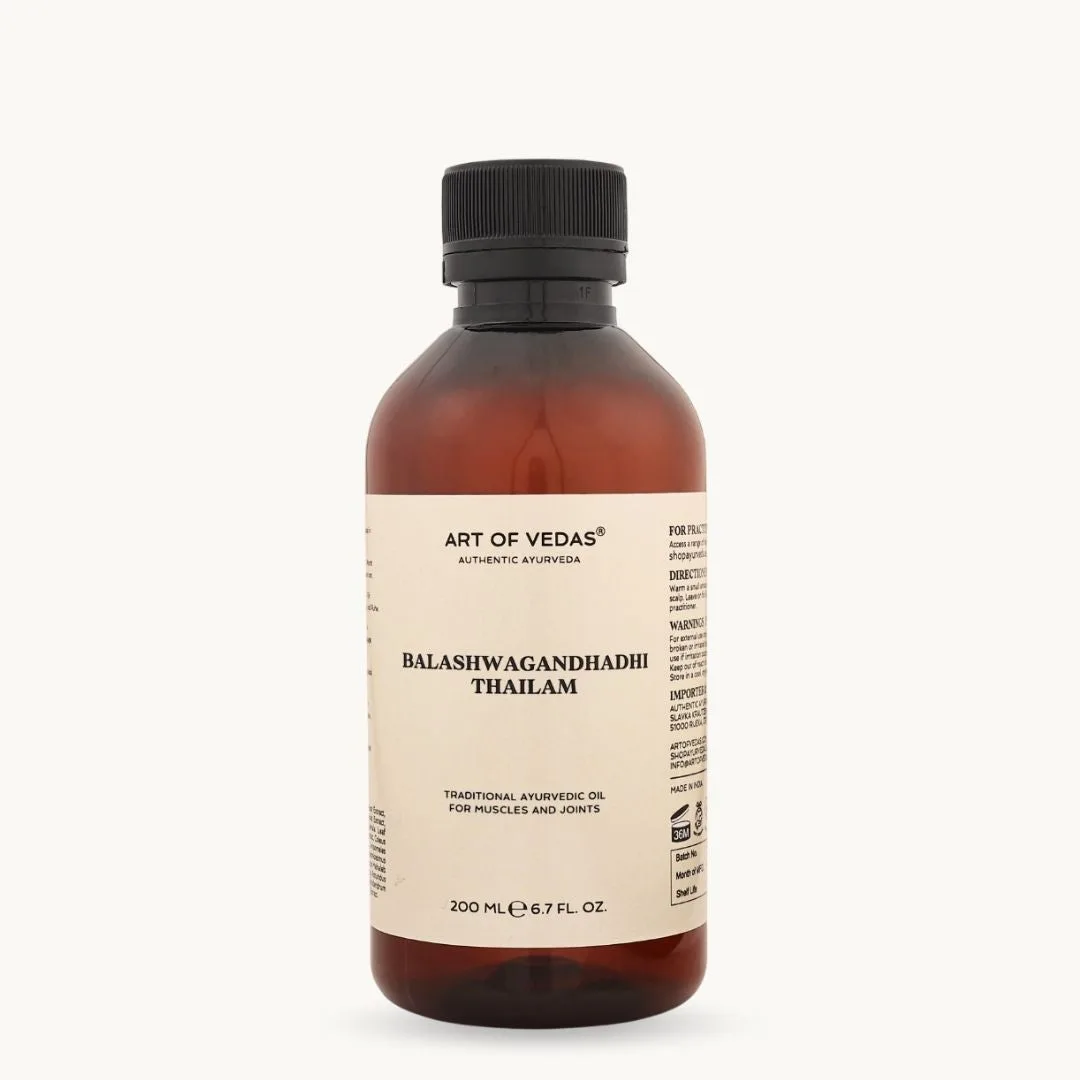
Gandha Thailam is often searched together with Bala Ashwagandha oil, and the two are easily confused because both recipes open with the same nourishing roots. They are, however, different classical preparations. Bala Ashwagandha Thailam, the Balaswagandhadi Thailam of the Sahasrayogam, is the oil that Art of Vedas sells; Gandha Thailam is the oil of the Ashtanga Hridaya described here.
What the classical tradition describes
Gandha Thailam is described in the Uttara Sthana, the final section, of the Ashtanga Hridaya. The classical recipe names, among others, Bala, Ashwagandha, Shatavari, Yashtimadhu (liquorice) and Manjishtha, followed by a group of fragrant substances, all cooked into a sesame oil base. The preparation follows the Sneha Paka method: a decoction of the tougher roots and a paste of the finer plants are cooked slowly into the oil until the water has gone. Our complete guide to traditional Thailams describes the method step by step.
The Ashtanga Hridaya describes Gandha Thailam as an oil that practitioners employ in more than one way, and in contemporary practice it is therefore also prepared in forms that are used under a practitioner's direction. They are not covered here, and Art of Vedas does not offer them.
Character in Ayurvedic terms
The classical texts place Gandha Thailam with Vata and describe it as a nourishing oil: its lead plants, Bala, Ashwagandha and Shatavari, are the sweet, heavy roots that open most of the nourishing Vata recipes, and the fragrant substances are added to them rather than the hot spices of the warming oils. In the tradition it therefore sits with the gentle Vata oils rather than with the hot spice oils.
How such an oil is used in practice
A nourishing Vata oil of this kind is used for Abhyanga, the Ayurvedic oil massage. Stand the closed bottle in a bowl of warm water for a few minutes until a drop feels pleasantly warm on the inner wrist; never use a microwave. Apply a generous amount with long strokes along the limbs and circular strokes around the joints, leave the oil on the skin for 15 to 20 minutes, then take a warm shower or bath. Daily, or two to three times a week, is the usual rhythm. The full sequence is in our Abhyanga guide.
Who should ask first
Gandha Thailam, like every Thailam, is for external use only in the way described here. Do a small skin test on the inner forearm before the first full application, keep the oil away from the eyes and broken skin, and do not use any sesame oil preparation if you react to sesame. If you are pregnant or wish to use any oil on a child, ask your doctor or a qualified Ayurvedic practitioner first.
Art of Vedas does not currently offer Gandha Thailam
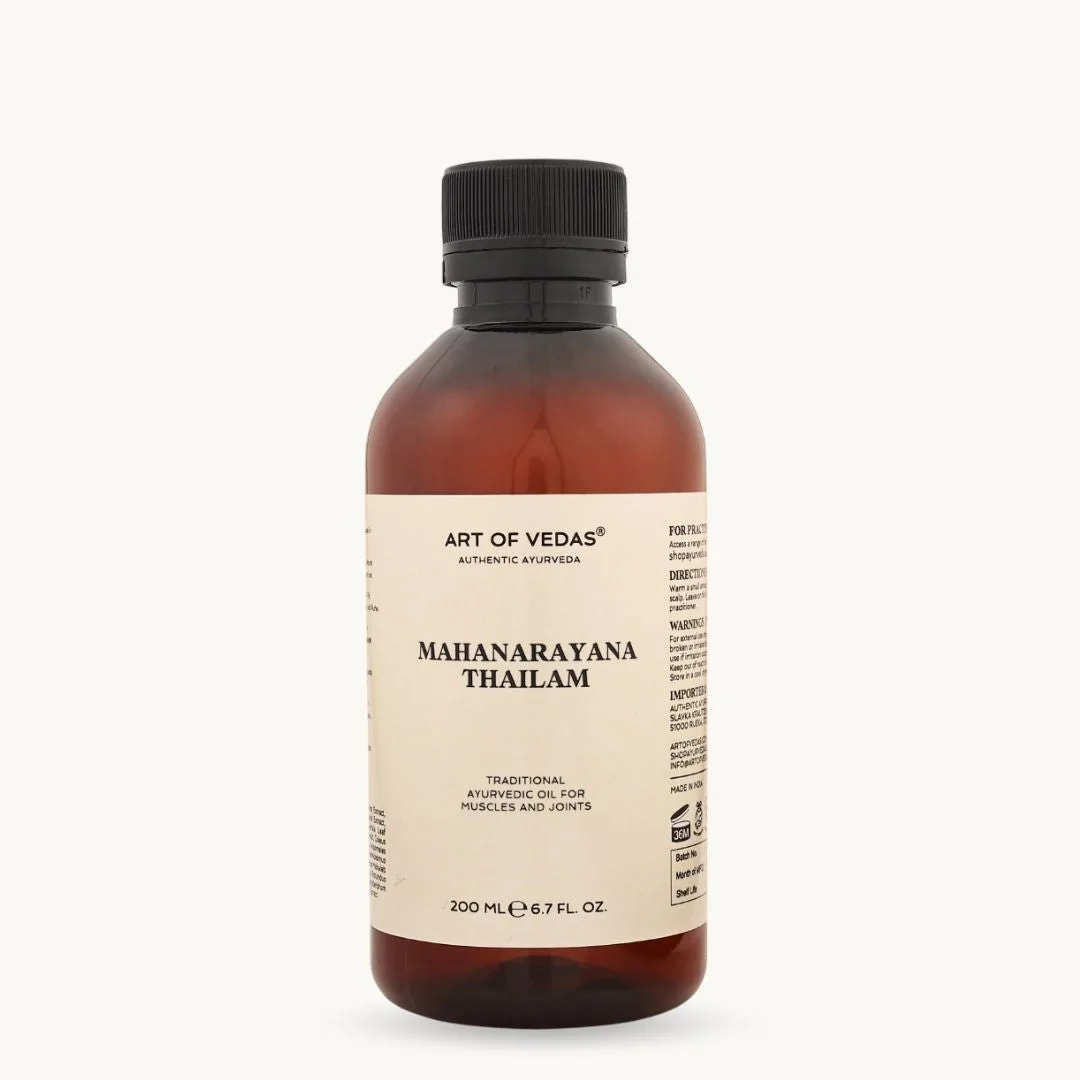
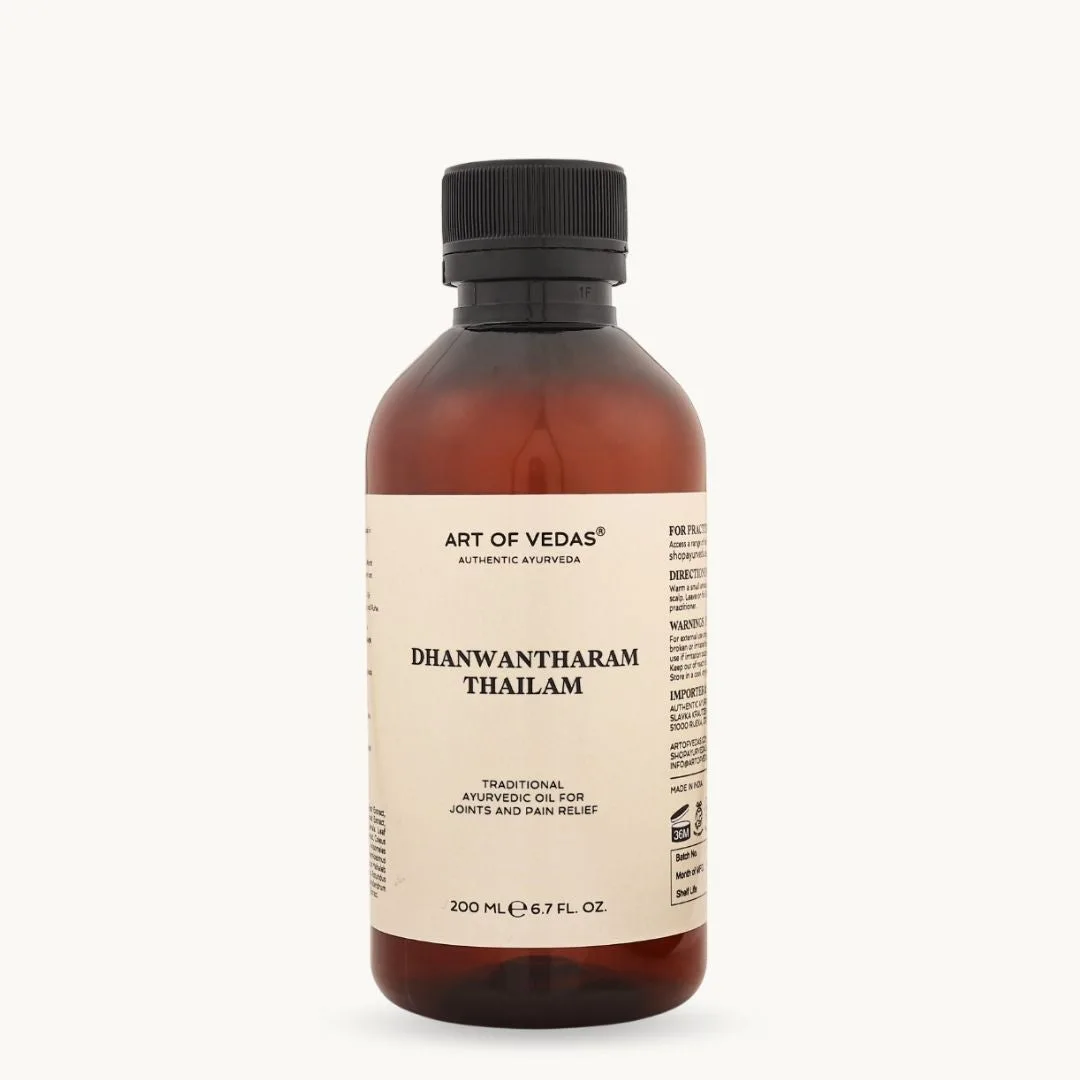
The closest oils in our range are the nourishing and warming Vata oils of the same family. Dhanwantharam Thailam is the mildly warming Bala oil for a gentle, regular daily routine. Mahanarayana Thailam is the warmer and richer oil for a focused Abhyanga of the muscles and joints. Balaswagandhadi Thailam shares the lead roots Bala and Ashwagandha with Gandha Thailam and is the nearest in character.