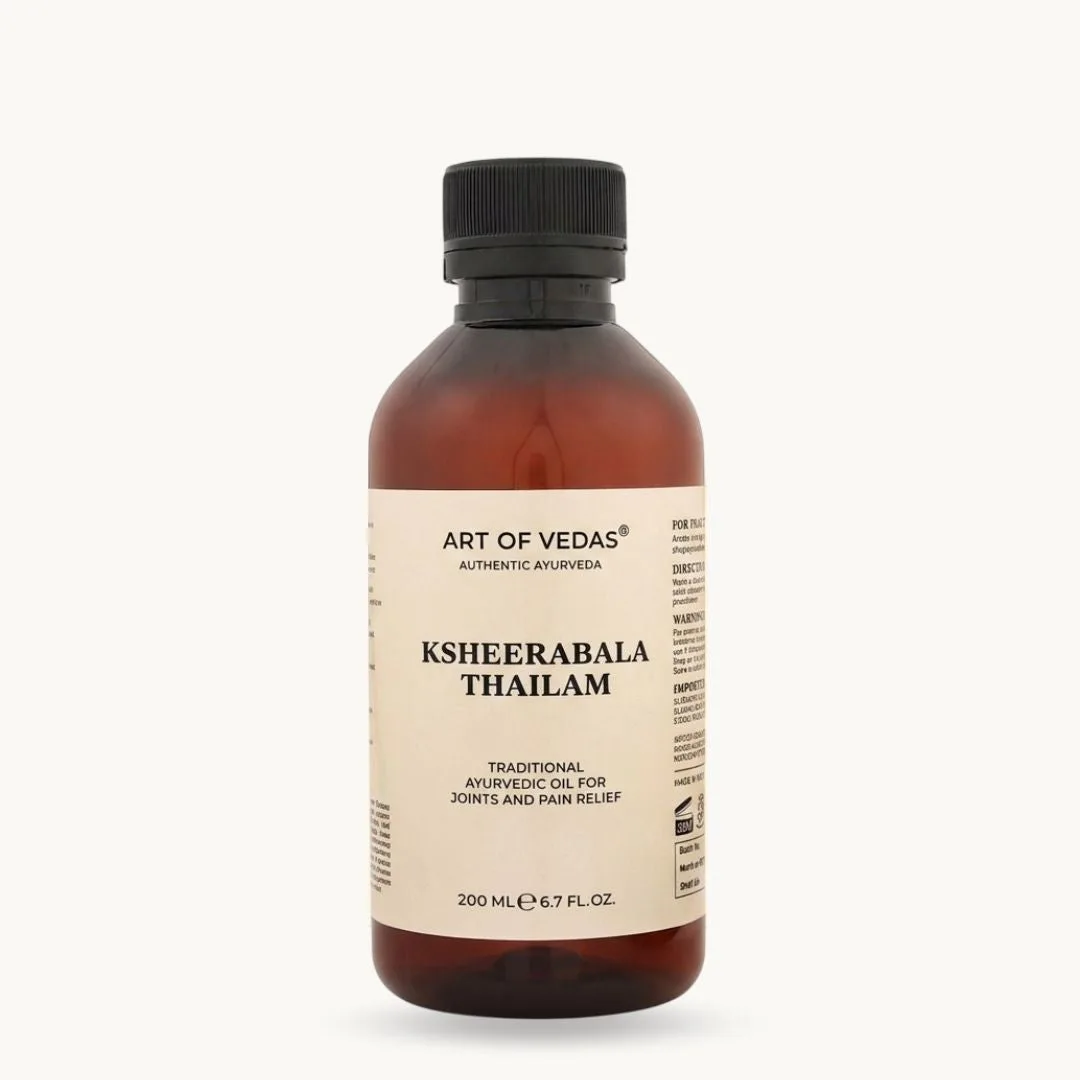
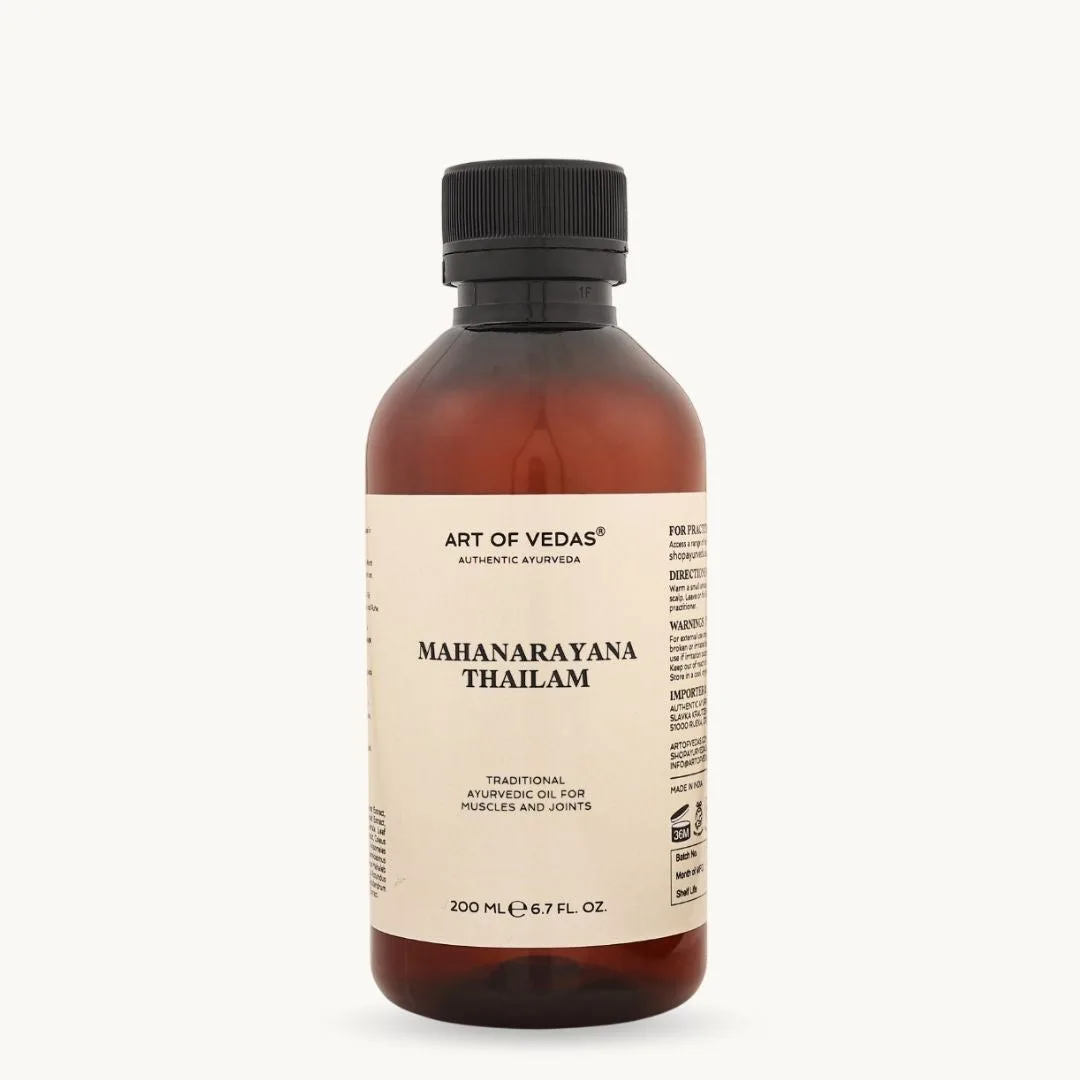
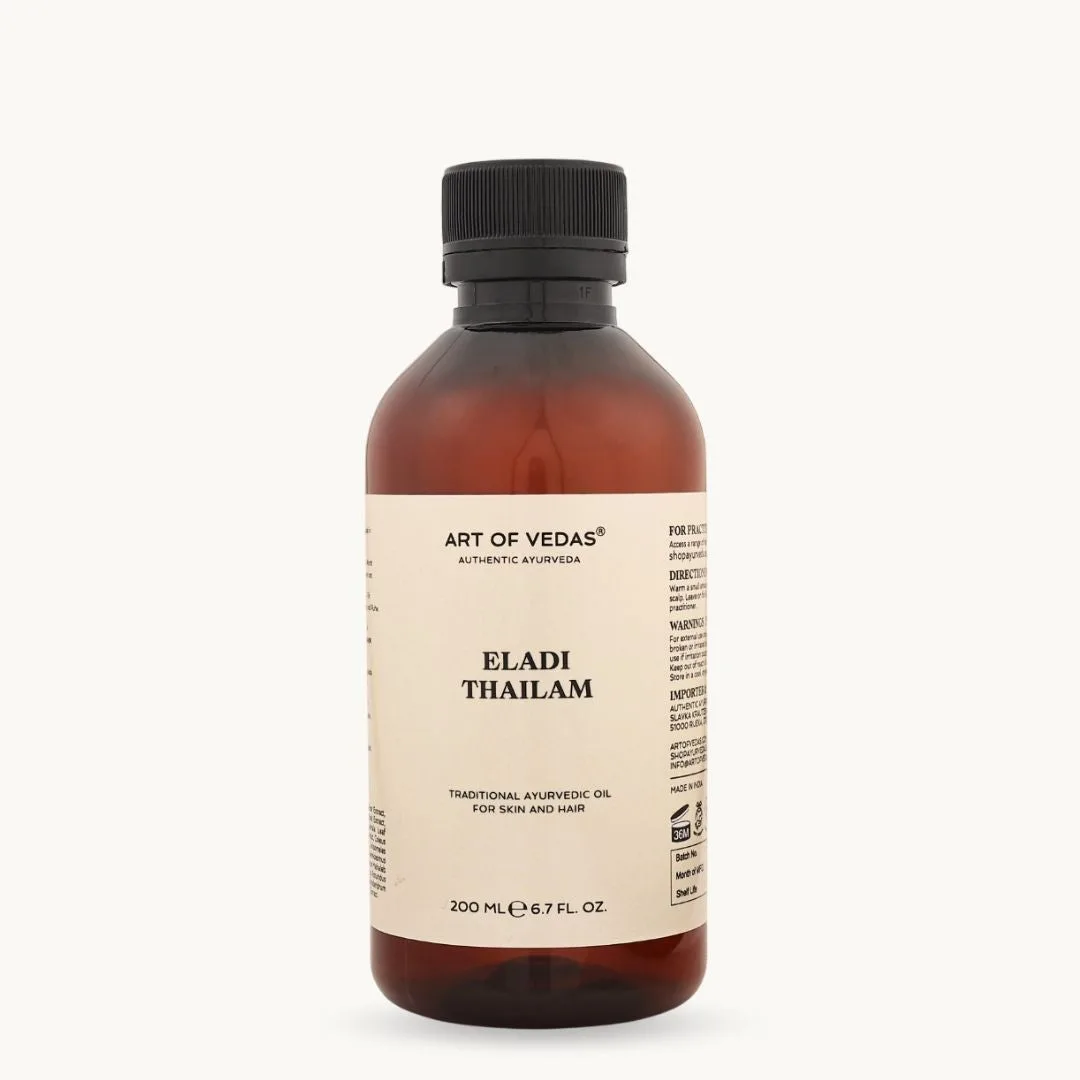
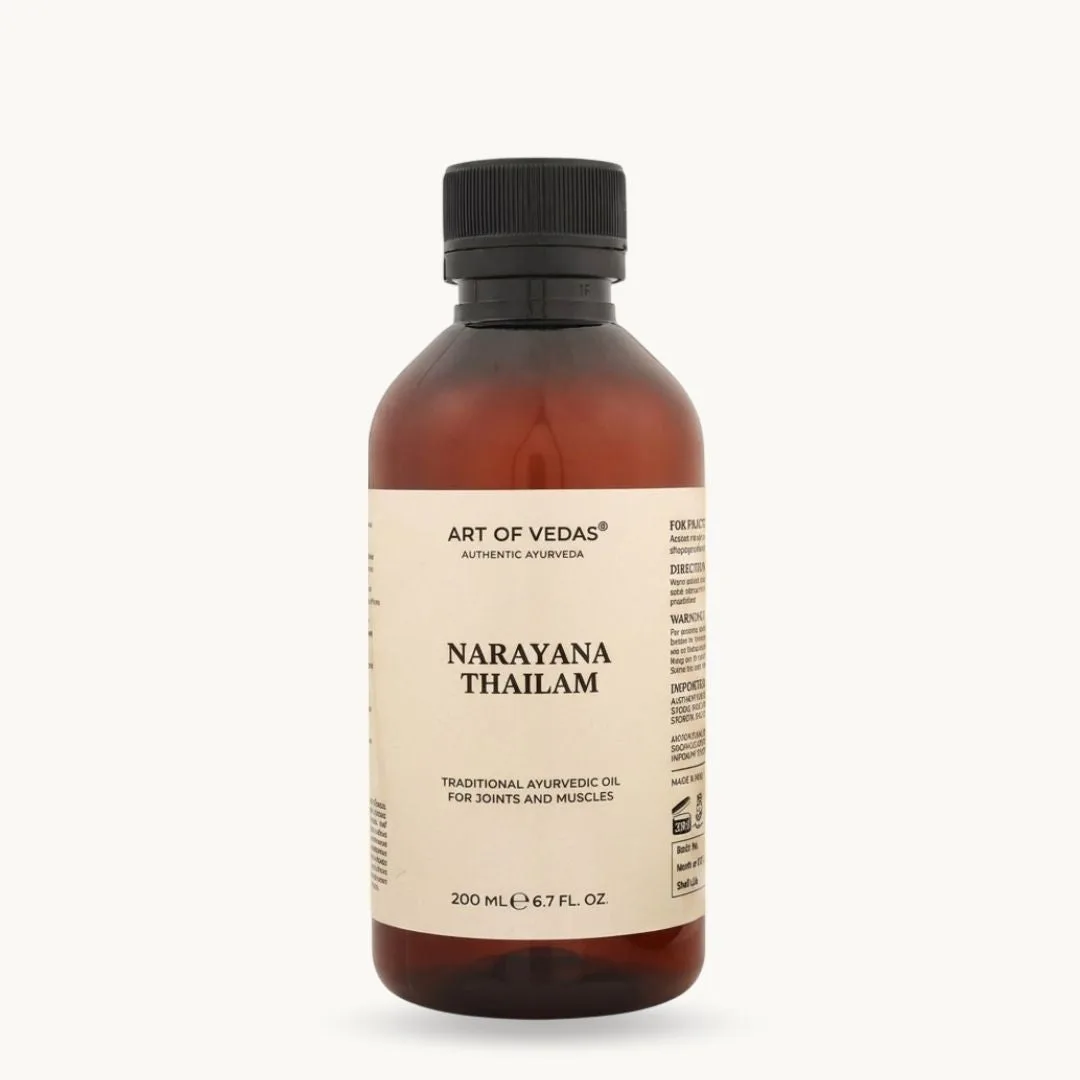
Thailam, also written thailam or taila, is the classical Ayurvedic term for a medicated oil. In English, Thailam translates most closely as "herbal medicated oil": a plant oil that has been cooked, slowly and deliberately, with herbal decoctions and fresh herb pastes according to a written classical recipe. The word reaches back to Sanskrit, and the method it describes has remained recognisably the same for many centuries.
The meaning of Thailam in English
The Sanskrit root is tila, the sesame seed. Taila originally meant "that which comes from sesame", in other words sesame oil, and over time the word widened to cover any oil prepared in the classical manner, whatever its base. This is why cold-pressed sesame oil remains the reference base of the tradition; our guide to Tila Taila, sesame oil in Ayurveda, follows that thread in detail. In South Indian usage the word appears as Thailam, in North Indian and academic writing as taila or thailam. All of them name the same thing: an oil that carries herbs.
How a Thailam differs from a plain oil
A plain oil moisturises; a classical Thailam is a composition. The traditional method, Sneha Paka, brings three elements together in one vessel: the sneha or oil base, a kashaya or water decoction of herbs simmered down over hours, and a kalka, a fresh paste of ground herbs. The mixture is cooked gently until the water has evaporated and the qualities of the plants have passed into the oil. The stage at which the cooking is stopped is judged by classical signs, and it determines the texture and use of the finished oil. Nothing in a supermarket bottle undergoes this. The result is an oil with colour, scent and character drawn from sometimes dozens of plants.
How Thailams are traditionally used
The most familiar use is Abhyanga, the unhurried self-massage with warm oil that classical texts place at the start of the day. Body formulas such as Mahanarayana Thailam are traditionally used in Ayurveda to support joint comfort and ease after exertion, while facial preparations such as Eladi Thailam are applied in the evening to support clear, even-looking skin. Beyond these, Thailams serve the scalp before washing, the soles of the feet before sleep, and the practitioner's table in treatments such as Shirodhara. Our directory of traditional Thailams introduces the principal formulas one by one.
What a well-made Thailam offers
- • The warmth and weight of an oil chosen for your constitution
- • A scent that comes from herbs, not from added fragrance
- • Skin that feels nourished, calm and comfortable after massage
- • A ritual pause, morning or evening, that belongs entirely to you
- • A direct, sensory link to a very old and careful tradition
What goes into the oil
Every formula has its own list, yet the family resemblance is strong. The base is usually sesame oil (Tila Taila, warming and substantial) or coconut oil (Kera, light and cooling). Into this go herbs such as Bala (Sida cordifolia, traditionally linked with strength and steadiness), Dashamoola (a set of ten roots prepared as one grounding decoction), Ela (cardamom, prized for freshness and aroma), Shatavari (Asparagus racemosus, a nourishing root) and Amalaki (Emblica officinalis, the classical Rasayana fruit). The recipe decides the proportions; the method never changes.
Frequently Asked Questions
What does Thailam mean in English?
Thailam means "medicated oil" or "herbal oil". The word derives from tila, Sanskrit for sesame, because sesame oil was the original base of the tradition. Today the term covers any oil prepared by the classical decoction-and-paste method, whether its base is sesame, coconut or another plant oil named in the recipe.
Is there a difference between Thailam, thailam and taila?
No difference in meaning. Thailam reflects South Indian spelling and pronunciation, thailam and taila the Sanskrit forms more common in northern and scholarly usage. On product labels the spellings are used interchangeably, so Ksheerabala Thailam and Ksheerabala thailam name exactly the same classical preparation.
Is a Thailam the same as a Kuzhambu?
They are close relatives but not the same. A Thailam is built on a single oil base, while a Kuzhambu is a preparation that classically combines more than one fat in the same formula. The distinction matters when choosing an oil for massage; our comparison of Thailam and Kuzhambu sets the two side by side.
Are Thailams taken internally?
The Thailams described here are used externally, for massage and skin care. Classical practice does include internal uses of certain oils, but these belong in the hands of an experienced Ayurvedic practitioner who can judge the person, the preparation and the amount. For home use, treat every Thailam as a massage oil unless professionally advised otherwise.
How should a Thailam be stored?
Keep the bottle tightly closed, away from direct sunlight and steam, at ordinary room temperature. Warm only the amount you intend to use, ideally by standing the bottle in hot water rather than heating the oil directly. Handled this way, a classical Thailam keeps its scent and character for a long time.
For external use only. Not a substitute for professional medical advice.