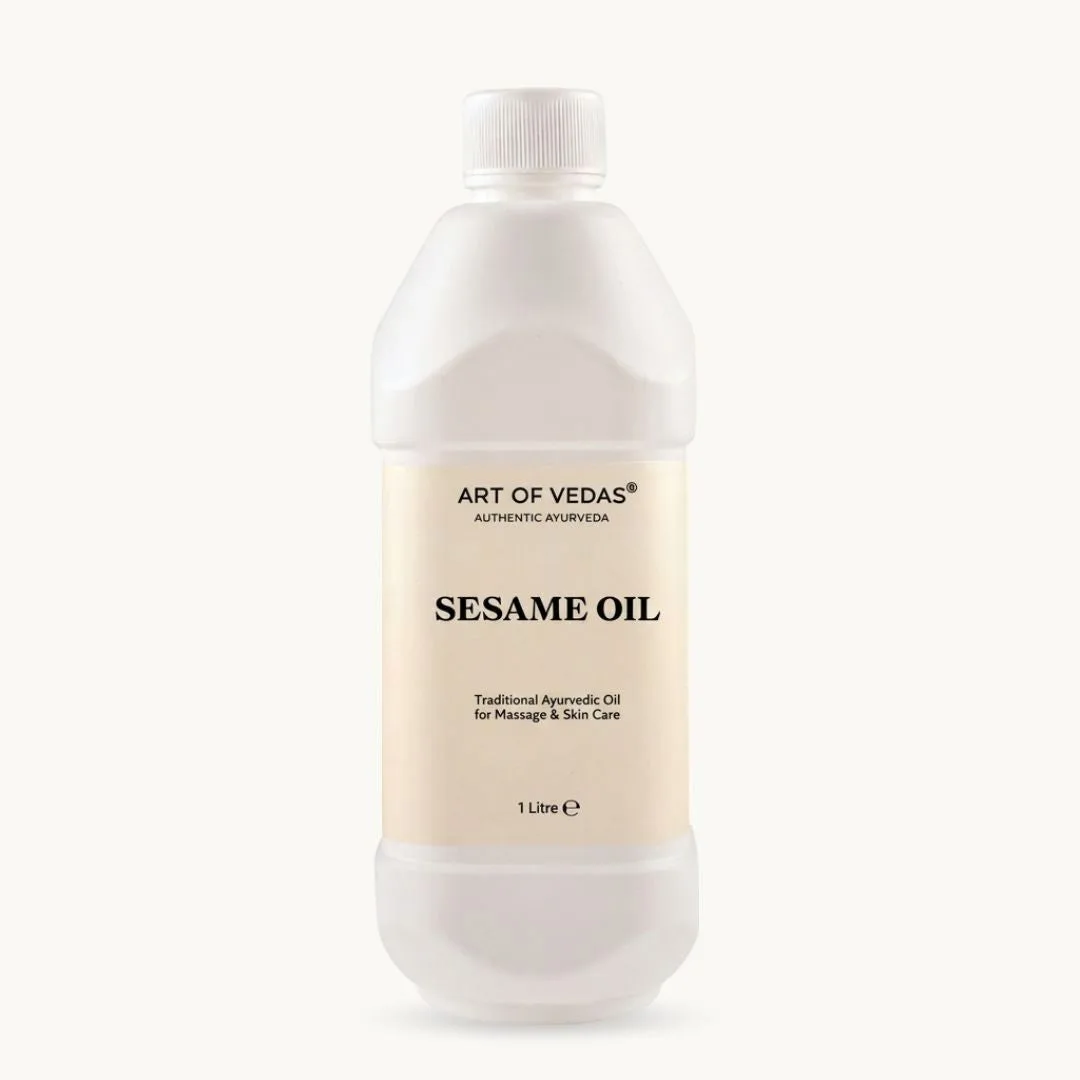
If Ayurveda had to choose a single oil, it would be sesame. The Charaka Samhita elevates sesame oil (Tila Taila) above all other oils - a distinction earned through its unique combination of penetrating quality, warming potency, and affinity for all seven tissue layers. Every classical Thailam formulation uses sesame oil as its primary base, every Abhyanga protocol defaults to sesame, and the oil appears throughout the classical texts in contexts ranging from daily self-massage to oil pulling to cooking to therapeutic enema.
Classical Dravyaguna Profile
Rasa (taste): Madhura (sweet), Tikta (bitter), Kashaya (astringent)
Virya (potency): Ushna (warming)
Vipaka (post-digestive effect): Madhura (sweet)
Guna (qualities): Guru (heavy), Snigdha (unctuous), Sukshma (penetrating), Vyavayi (spreads rapidly through tissues)
The Sukshma (subtle, penetrating) quality is what distinguishes sesame from every other oil in classical Ayurveda. It penetrates the finest channels (Srotas), reaching tissues that heavier oils cannot access. Combined with its warming Virya, this makes sesame uniquely effective at entering cold, dry, depleted tissues - precisely the tissues that Vata imbalance produces.
The Premier Vata Remedy
Sesame oil is Vata's direct antidote. Every quality of Vata - cold, dry, light, rough, mobile - is counteracted by sesame's warm, unctuous, heavy, smooth, penetrating qualities. This is not a theoretical alignment; classical texts prescribe sesame oil more frequently for Vata conditions than any other single substance.
In Abhyanga, daily application of warm sesame oil nourishes the skin (Vata's primary accumulation site), calms the nervous system through sustained touch, protects against environmental dryness and cold, and lubricates the joints where Vata's drying quality produces cracking and stiffness. The cumulative effect of daily sesame oil Abhyanga on tissue quality, nervous system stability, and overall resilience is one of the most well-documented benefits in classical Ayurvedic practice.
Processing: Why Preparation Matters
Classical texts describe a specific preparation process for sesame oil before use. Raw sesame oil is heated gently until water content evaporates and the oil reaches a specific consistency - a process called Tila Taila Murchhana (maturation). This thermal processing enhances penetrating quality, removes natural compounds that may cause skin sensitivity, and produces the characteristic warm, nutty aroma of properly prepared Ayurvedic sesame oil.
For Thailam preparations, this processed sesame oil then undergoes Thailam Paka - slow infusion with herbal decoctions and pastes through multiple heating and cooling cycles. The result is a medicated oil that combines sesame's base properties with the specific therapeutic actions of the infused herbs. Explore the full range of classical Thailam formulations built on this sesame oil foundation.
Beyond Abhyanga: Other Classical Uses
Oil pulling (Kavala and Gandusha): Sesame oil is the classical choice for oral oil pulling - its warming, penetrating quality reaches the tissues of the gums, teeth, and jaw, supporting oral health as part of Dinacharya.
Cooking: In Ayurvedic nutrition, sesame oil is used for cooking Vata-pacifying meals - its warming quality kindled by heat enhances Agni and adds unctuousness to food that supports Vata digestion.
Ear oiling (Karna Purana): A few drops of warm sesame oil in the ears daily - one of the simplest and most effective Vata-pacifying practices in the classical repertoire.
Foot oiling (Padabhyanga): Sesame oil on the soles of the feet before bed - classically described as promoting deep sleep and grounding Vata's upward-moving restless energy.
When to Choose Sesame vs Other Oils
Sesame is the default - but not universal. Coconut oil replaces sesame for Pitta-dominant individuals and in summer heat, where sesame's warming quality would increase Pitta's fire. Mustard oil is preferred for Kapha, where sesame's heaviness might add to Kapha's density. Dual-Dosha constitutions and seasonal transitions may call for alternating between oils. The oil selection guide covers these decisions in detail, and an Ayurvedic consultation provides the clinical precision for your specific pattern.
Classical Ayurvedic knowledge for educational purposes. Not medical advice.