There is a specific type of Vata depletion that other classical oils do not fully address. It is not the dryness of skin, not the stiffness of a joint that needs lubrication, not even the neural sensitivity that Ksheerabala Thailam is formulated for. It is the condition the classical texts call Mamsa Kshaya - the wasting, weakening and progressive loss of muscular tissue - combined with deep neural Vata that has settled so far into the structural body that ordinary massage oils simply do not penetrate deeply enough to address it.
Mahamasha Thailam was formulated for this presentation. The name itself announces its character: Maha means great or large, Masha refers to black gram (Vigna mungo), and Taila means oil. Black gram is the primary ingredient - one of the heaviest, most nourishing substances in the classical Ayurvedic pharmacopoeia, used specifically for rebuilding depleted muscular and neural tissue. This is not a general massage oil. It is one of the most potent classical tools for deep Vata depletion, and understanding when to use it versus other formulations in the Vata range is essential for using it correctly.
Art of Vedas includes Mahamasha Thailam in its Thailam range as part of a complete classical Vata oil spectrum - each formulation with a precisely defined indication. The complete spectrum is available in the Ayurvedic Thailams collection.
Classical Foundation: Where Mahamasha Appears in the Texts
Mahamasha Thailam is described in the Ashtanga Hridayam, Chikitsa Sthana, Chapter 21 - the Vata Vyadhi chapter. It also appears in the Charaka Samhita in the context of conditions involving severe muscular depletion and neural conditions, and in the Sahasrayogam among the foundational Taila preparations classical practice.
Within the Vata Vyadhi chapter of the Ashtanga Hridayam, Mahamasha Thailam is positioned among the formulations for conditions involving significant tissue loss - particularly conditions where Mamsa Dhatu (muscular tissue) and Majja Dhatu (nervous tissue) have been depleted to a degree that lighter, more penetrating oils are not sufficient. The classical logic is straightforward: severe depletion requires heavy, building substances, and Masha (black gram) is among the most Brimhana substances in the classical pharmacopoeia.
The Charaka Samhita references Masha in the Brimhaniya group - substances that nourish and build the body - and specifically notes its affinity for Mamsa and Shukra Dhatu (muscular and reproductive tissue). This pharmacological profile, when processed into a Taila with sesame oil and additional classical Vata herbs, produces an oil with a pronounced nourishing and rebuilding character that distinguishes it from the lighter, more penetrating oils in the same chapter.
Masha: The Classical Pharmacology of Black Gram
Masha (Vigna mungo), black gram or black lentil, is described in the classical texts with a specific and well-documented therapeutic profile that explains its central role in Mahamasha Thailam.
Rasa (Taste): Madhura (sweet) - the nourishing, Vata-pacifying taste that directly supports tissue building. The sweet taste in classical pharmacology indicates substances that nourish the Dhatus and counteract the depleting, drying action of elevated Vata.
Virya (Potency): Ushna (warming). This warming potency is directly relevant to its application context. Deep muscular and neural Vata is characterised by coldness, contraction and reduced function - the warming quality of Masha directly counteracts this. Unlike the cooling Bala in Ksheerabala Thailam, Masha's warming nature means Mahamasha Thailam is specifically indicated for cold, contracted Vata presentations rather than those with any Pitta-inflammatory component.
Guna (Qualities): Guru (heavy), Snigdha (unctuous), Picchila (slightly sticky) - the heaviest quality profile of any primary ingredient in the classical Vata oil range. These qualities indicate the deepest nourishing action on depleted tissues.
Vipaka (Post-digestive effect): Madhura - sweet, building and sustaining post-digestive action that supports the gradual restoration of Dhatu quality over time.
Dosha Effect: Vata pacifying, with secondary Kapha nourishing. The heavy, unctuous nature means Mahamasha Thailam is not appropriate for those with significant Kapha excess - its Brimhana action can aggravate already elevated Kapha. It is specifically indicated for Vata depletion, not for Vata conditions in a Kapha-excess body type.
The Full Composition: More Than Just Masha
While Masha is the defining ingredient, Mahamasha Thailam is a multi-herb formulation. The classical composition includes a range of Vata-pacifying herbs that each contribute specific dimensions to the overall action:
Ashwagandha (Withania somnifera) provides the Balya and Rasayana dimension - addressing the depletion at the level of Ojas as well as the individual tissue layers. Ashwagandha's classical affinity for the nervous system makes it a logical complement to Masha in a neural and muscular Vata formula.
Dashamula - the classical ten-root combination - is included in most classical Vata Taila preparations and provides a broad-spectrum Vata-pacifying foundation. The Dashamula herbs address Vata across multiple Srotas (channels) simultaneously, providing a systemic Vata-balancing base within which the more targeted ingredients operate.
Devadaru (Cedrus deodara) contributes its classical Tikshna (penetrating) and Ushna (warming) properties, which enhance the deep-tissue penetration of the formulation. Devadaru is specifically described in the classical texts for its ability to reach Asthi Dhatu (bone) and Majja Dhatu, which is directly relevant to the neural and structural conditions Mahamasha addresses.
Bala (Sida cordifolia) - which is also the primary herb in Ksheerabala Thailam - appears in Mahamasha Thailam as a supporting ingredient, adding the Majja Dhatu nourishing dimension to Masha's primarily Mamsa-focused action.
The sesame oil base is standard for classical Vata Taila preparations, providing the Sukshma (penetrating), Snigdha (unctuous) and warming foundation that allows the herbs to be carried into the deeper tissue layers through the skin and joints.
Classical Indications: What Mahamasha Thailam Is Used For
The Ashtanga Hridayam and supporting classical texts describe the following as the primary indications for Mahamasha Thailam:
Mamsa Kshaya (Muscular wasting and depletion): The foundational indication. When muscular tissue has been depleted - through prolonged illness, excessive exertion, severe weight loss, post-surgical recovery or the progressive effects of ageing - Mahamasha Thailam's Brimhana action directly nourishes the depleted Mamsa Dhatu. The classical texts describe it specifically for presentations where muscles appear thin, weak or unable to sustain effort, and where the depletion has a cold, contracted quality.
Gridhrasi (Sciatic nerve pathway conditions): The classical condition describing pain, numbness or altered sensation along the path of the sciatic nerve. The classical understanding is that Vata has accumulated in the lumbar Srotas and is affecting the neural channels downward through the leg. Mahamasha Thailam is specifically listed for Gridhrasi in the Ashtanga Hridayam - its combination of warming, heavy, nourishing ingredients addresses both the neural Vata and the muscular component that often accompanies chronic sciatic presentations.
Ardita (Facial palsy): The classical description of Vata affecting the facial neural pathways. The penetrating and nourishing combination in Mahamasha Thailam, applied locally to the affected side of the face, is described in classical texts as supporting restoration of neural function. This is an application context where professional Ayurvedic guidance on application technique and duration is strongly recommended.
Paksha Ghata (Hemiplegia): Among the most severe Vata Vyadhi presentations. Mahamasha Thailam is listed in the classical texts for this condition alongside full Panchakarma protocols. Its use in this context is supervised clinical practice rather than home self-care.
General deep Vata depletion: The presentation that most Art of Vedas customers encounter Mahamasha Thailam for is less dramatic but no less valid classically: the sense of deep structural depletion - thin muscles, poor physical stamina, persistent weakness that does not improve with rest alone - in those whose lifestyle or constitution has produced a significant Vata-Mamsa deficit over time.
Athletic recovery and muscle rehabilitation: While not a classical category in the modern sense, the classical indication of Mamsa Kshaya directly applies to muscle tissue that has been worked intensively and needs deep nourishment for full recovery. For those engaged in physically demanding practices, Mahamasha Thailam as a post-exertion oil on major muscle groups addresses the Vata-Mamsa dimension of recovery that standard sports recovery oils do not.
How Mahamasha Compares to Other Classical Vata Oils
Understanding Mahamasha Thailam's position in the classical Vata oil spectrum helps clarify when it is the appropriate choice:
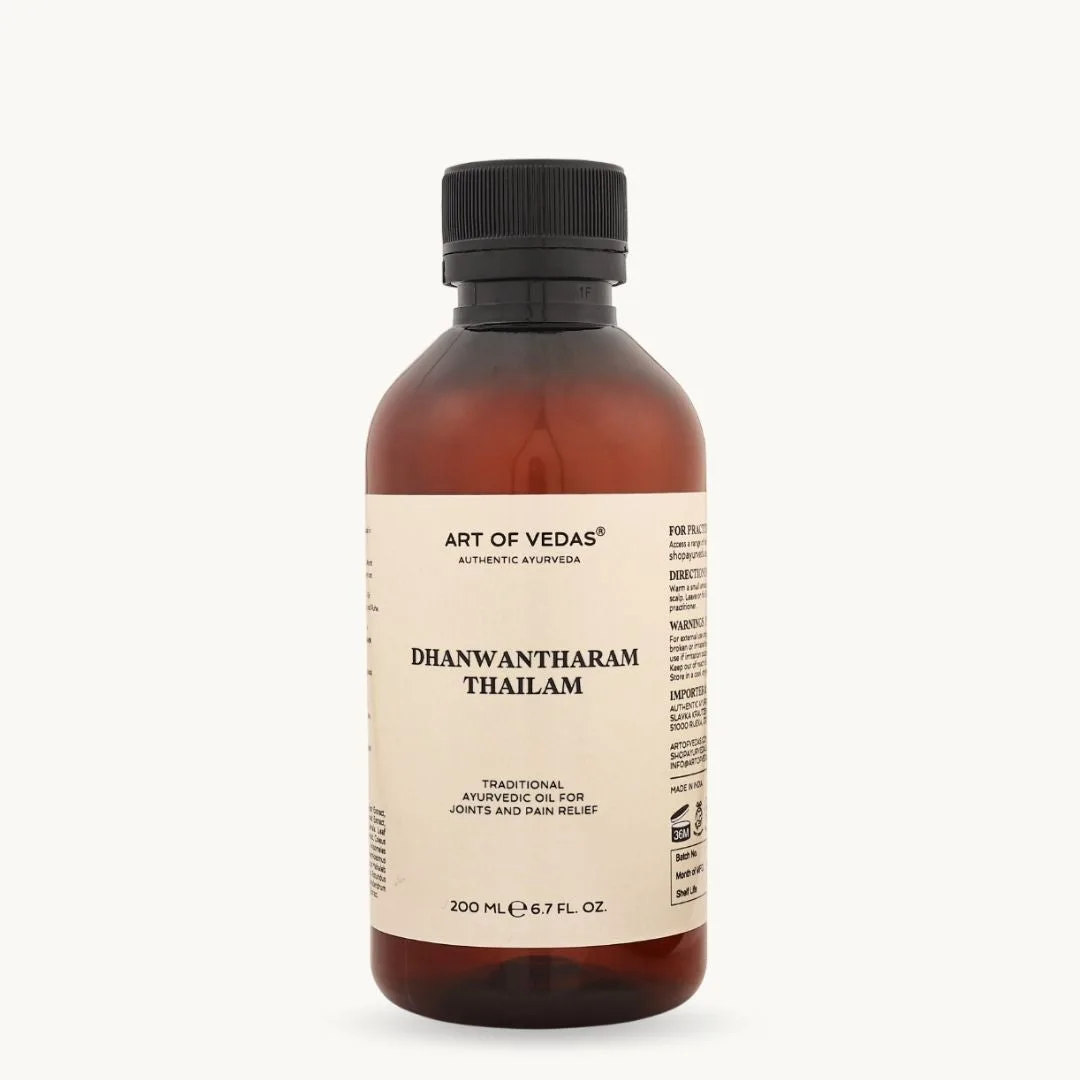
Dhanwantharam Thailam is the foundational Vata oil - broadly nourishing, balanced, appropriate for daily Abhyanga for most Vata presentations. If Mahamasha is a specialised tool, Dhanwantharam is the general practitioner's first recommendation.
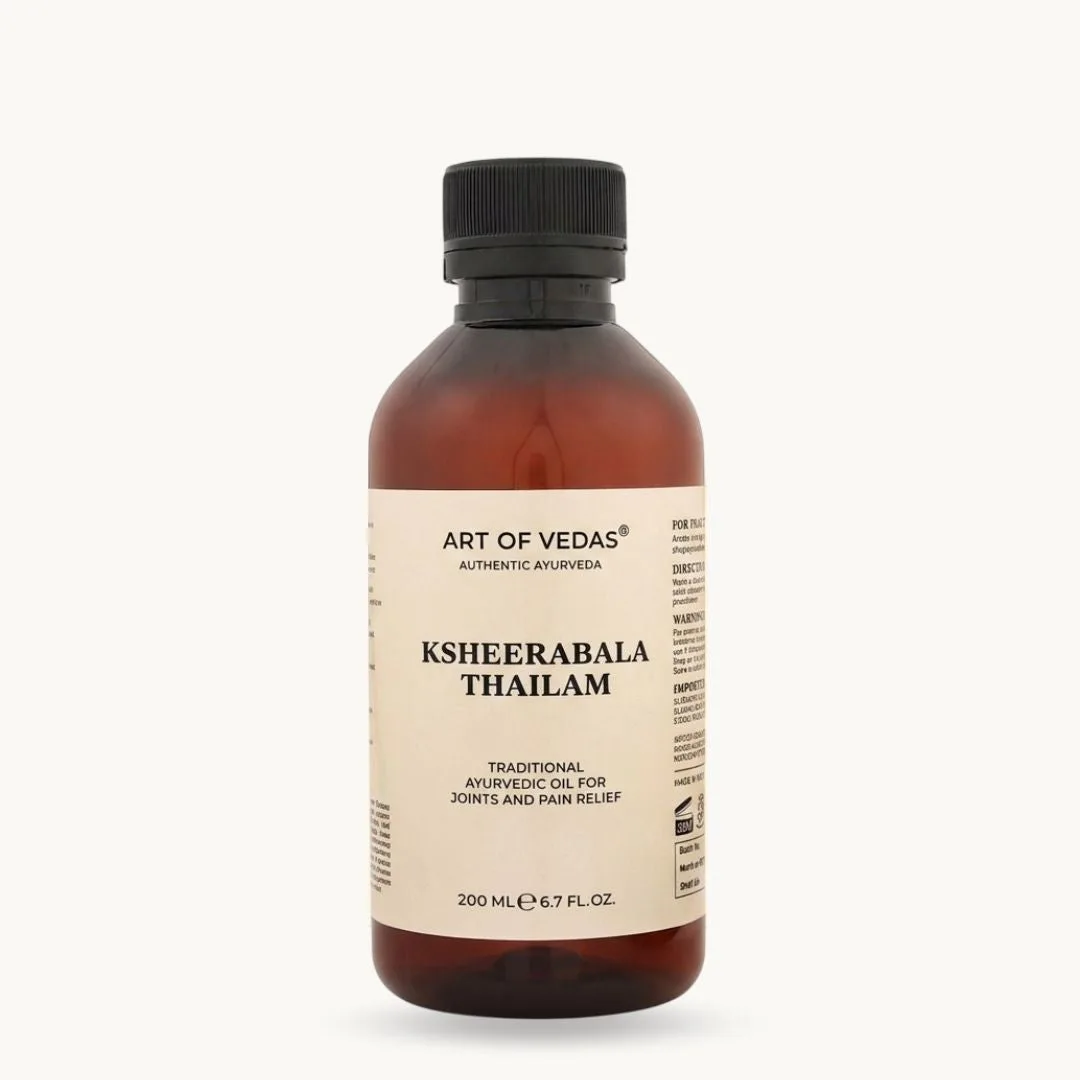
Ksheerabala Thailam addresses neural depletion through the Ksheerapaka milk-processing method - it is cooling where Mahamasha is warming, and is appropriate for Vata-neural conditions with a Pitta or inflammatory dimension alongside the depletion.
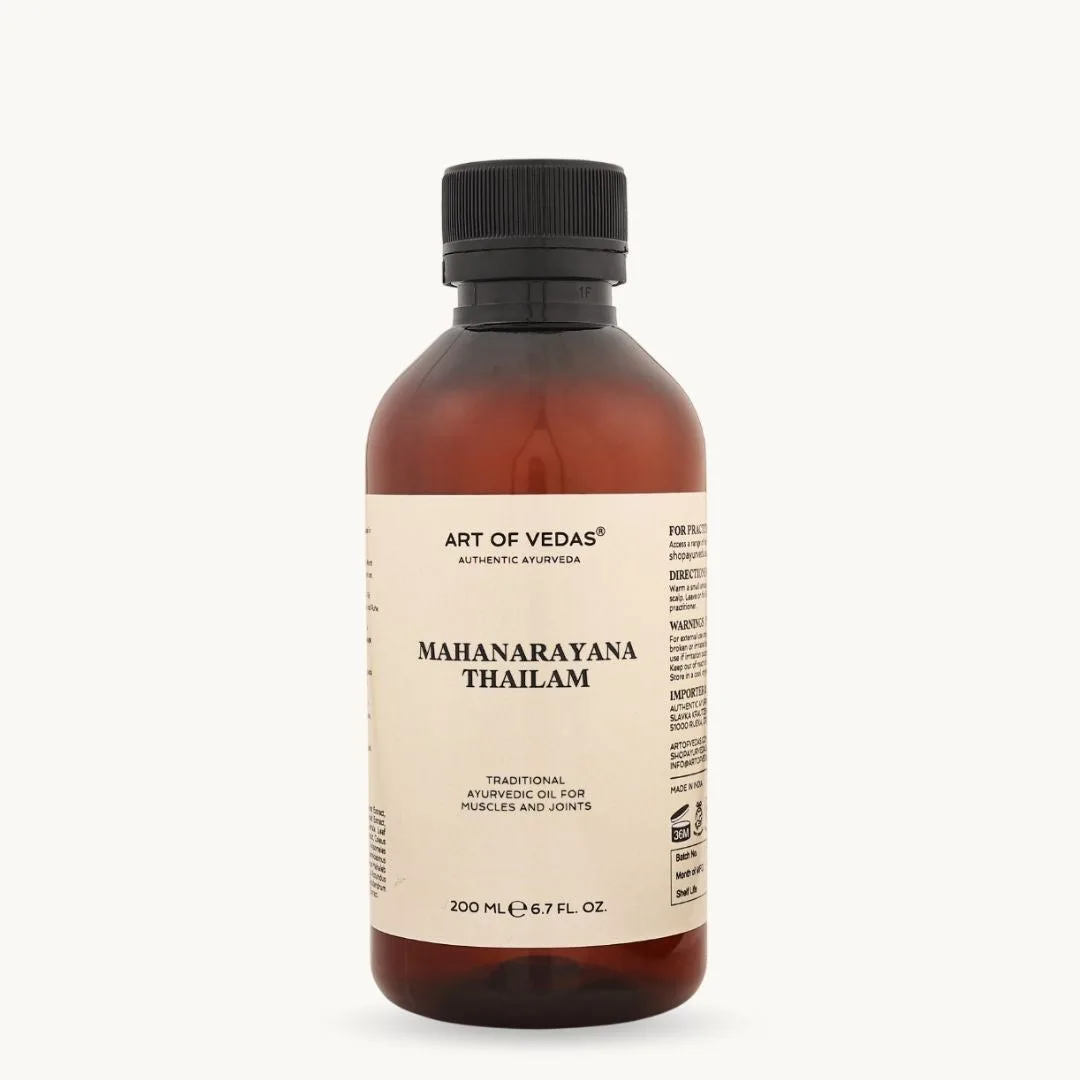
Mahanarayana Thailam is the broadest-spectrum Vata oil - Sarva Vata Hara - and is appropriate when Vata aggravation is diffuse across multiple areas without a single dominant presentation of depletion or penetration need.
Narayana Thailam is also Sarva Vata Hara but with a different composition emphasis. It overlaps with Mahanarayana in scope while Mahamasha remains more specifically targeted to Mamsa and deep neural presentations.
Mahamasha Thailam is chosen when the presentation is specifically muscular and neural depletion with a cold, dry, contracted character - when the body needs rebuilding at depth rather than simply warming or channel-clearing. The full comparison framework is available in the guide to comparing classical Ayurvedic massage oils.
How to Apply Mahamasha Thailam
For home Abhyanga, Mahamasha Thailam is applied with the standard classical technique - warmed in the palms or by placing the bottle in warm water, then worked into the skin with sustained strokes following the direction of the hair follicles (downward on the limbs, circular on the joints). Because of the heavy, unctuous nature of the formulation, slightly less oil is required per application compared to lighter oils - a small amount spread with thorough massage technique reaches the tissues effectively.
For localised muscular application - the lower back, legs, shoulders - firm, sustained strokes that work with the muscle belly rather than superficially over the skin provide the most effective classical application. The oil should remain on the skin for a minimum of 30 to 45 minutes before bathing. Following application with gentle warmth - a warm compress or warm bath - is described in the classical texts as supporting deeper penetration of the heavier oil formulation.
Because of its warming, heavy nature, Mahamasha Thailam is most appropriate for use in cooler seasons and in the morning rather than evening. In summer heat, its warming Virya can feel excessive for full-body application - localised use on depleted areas is appropriate year-round.
For the complete classical Abhyanga technique, the Art of Vedas Abhyanga guide provides the full framework. The complete Vata oil range, including Mahamasha Thailam, is available in the Ayurvedic Thailams collection.
Frequently Asked Questions
What is the main difference between Mahamasha Thailam and Dhanwantharam Thailam?
Dhanwantharam Thailam is the foundational broad-spectrum Vata oil - nourishing, warming and appropriate for general Vata constitutions, joint support and daily Abhyanga. Mahamasha Thailam is more specifically targeted to presentations of muscular and neural depletion where the Brimhana action needs to be stronger and heavier than Dhanwantharam provides. If Dhanwantharam is the everyday Vata oil, Mahamasha is the more intensive option for presentations involving visible muscular weakness, wasting or deep structural depletion.
Is Mahamasha Thailam suitable for Pitta constitutions?
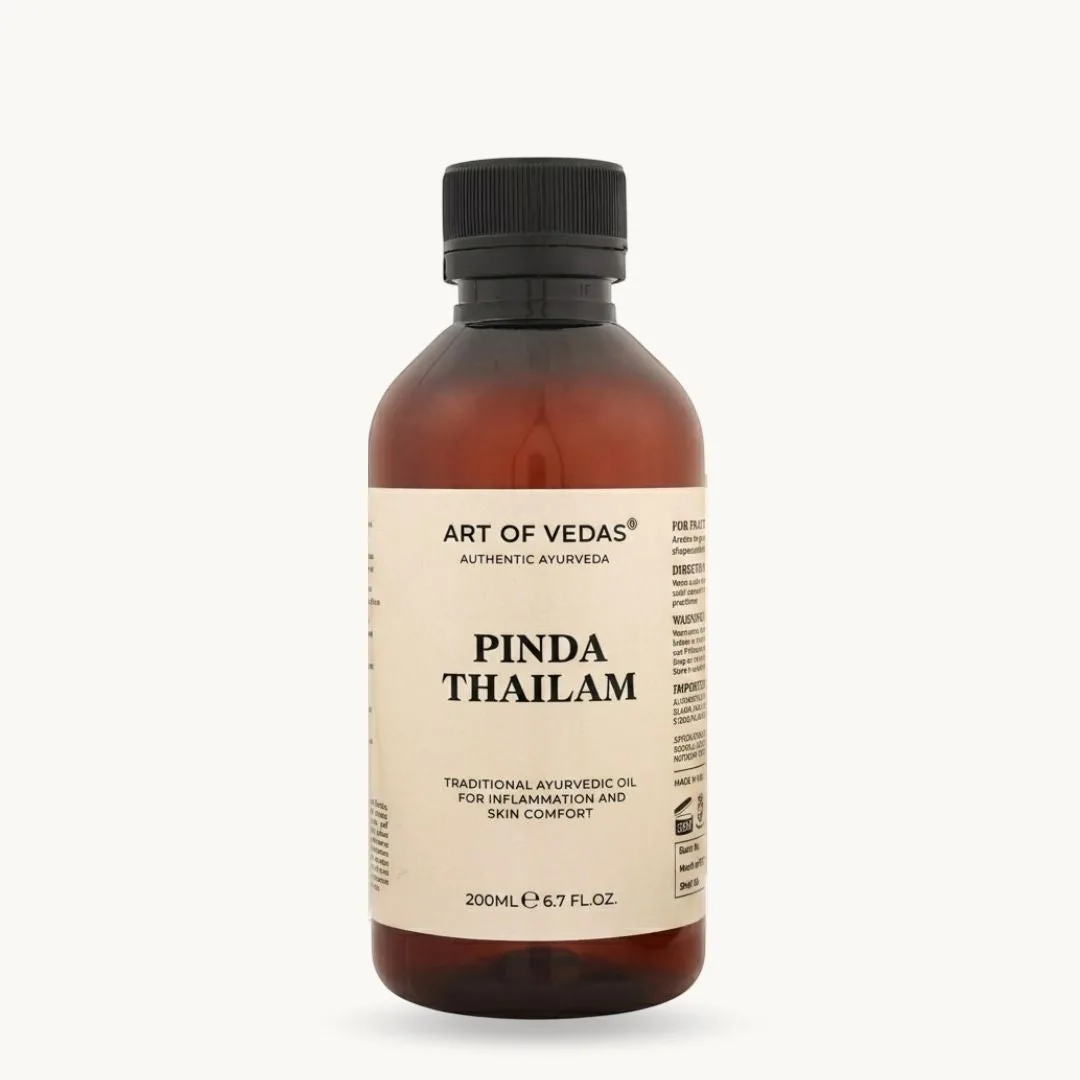
Mahamasha Thailam has a warming Virya (potency) from its primary ingredient Masha (black gram). For Pitta-dominant constitutions or those experiencing acute inflammatory conditions with heat and redness, this warming quality can be aggravating. The oil is specifically indicated for cold, contracted, depleted Vata presentations. Those with strong Pitta would be better served by the cooling Ksheerabala Thailam or Pinda Thailam for any joint or muscular conditions with an inflammatory component. If you are unsure of your constitution, the Art of Vedas Dosha assessment provides a starting point.
Can Mahamasha Thailam be used for facial massage?
The classical texts do describe Mahamasha Thailam for conditions affecting the facial neural pathways (such as Ardita), but this is a clinical application involving specific marma-point technique under practitioner guidance - not a general facial massage context. For daily facial massage and skin nourishment, Art of Vedas offers dedicated face care oils formulated for the facial skin environment, available in the face care collection. Mahamasha Thailam is too heavy and potent for routine facial use.
How does Mahamasha Thailam smell?
The aroma of Mahamasha Thailam is distinctive - earthy, warm and substantially herbal, reflecting its heavy multi-herb composition with Masha, Ashwagandha, Dashamula and Devadaru all contributing to the scent profile. It is a characteristic classical herbal oil aroma, quite different from modern cosmetic oils. As with all classical Ayurvedic medicated oils, the strong herbal aroma is an indicator of authentic traditional preparation rather than a defect.
Is Mahamasha Thailam suitable for daily Abhyanga?
For those with a clearly Vata-depleted constitution with a cold, dry, muscular weakness pattern, Mahamasha Thailam can be used for regular Abhyanga. However, because of its heavy, warming character, it is more commonly used as a targeted therapeutic oil during periods of specific depletion rather than as an everyday oil throughout the year. A qualified Ayurvedic practitioner can advise on whether daily use is appropriate for your specific constitution and condition, or whether alternating with a lighter formulation like Dhanwantharam Thailam on other days is more appropriate.
Where in the classical texts is Mahamasha Thailam described?
The primary classical reference is the Ashtanga Hridayam, Chikitsa Sthana, Chapter 21 (Vata Vyadhi Chikitsa). The Charaka Samhita describes Masha (black gram) and its Brimhaniya properties that underpin the formulation's therapeutic logic. The Sahasrayogam includes Mahamasha Thailam in its classical formulations, reflecting its continued use in the most active surviving lineage of classical Ayurvedic practice. Together these texts provide consistent classical documentation across multiple centuries.
For external use only. Mahamasha Thailam is a traditional Ayurvedic medicated oil preparation. It is not intended to diagnose, treat, cure or prevent any disease and is not a substitute for professional medical advice. Consult a qualified Ayurvedic practitioner for conditions involving muscular depletion or neural pathways.