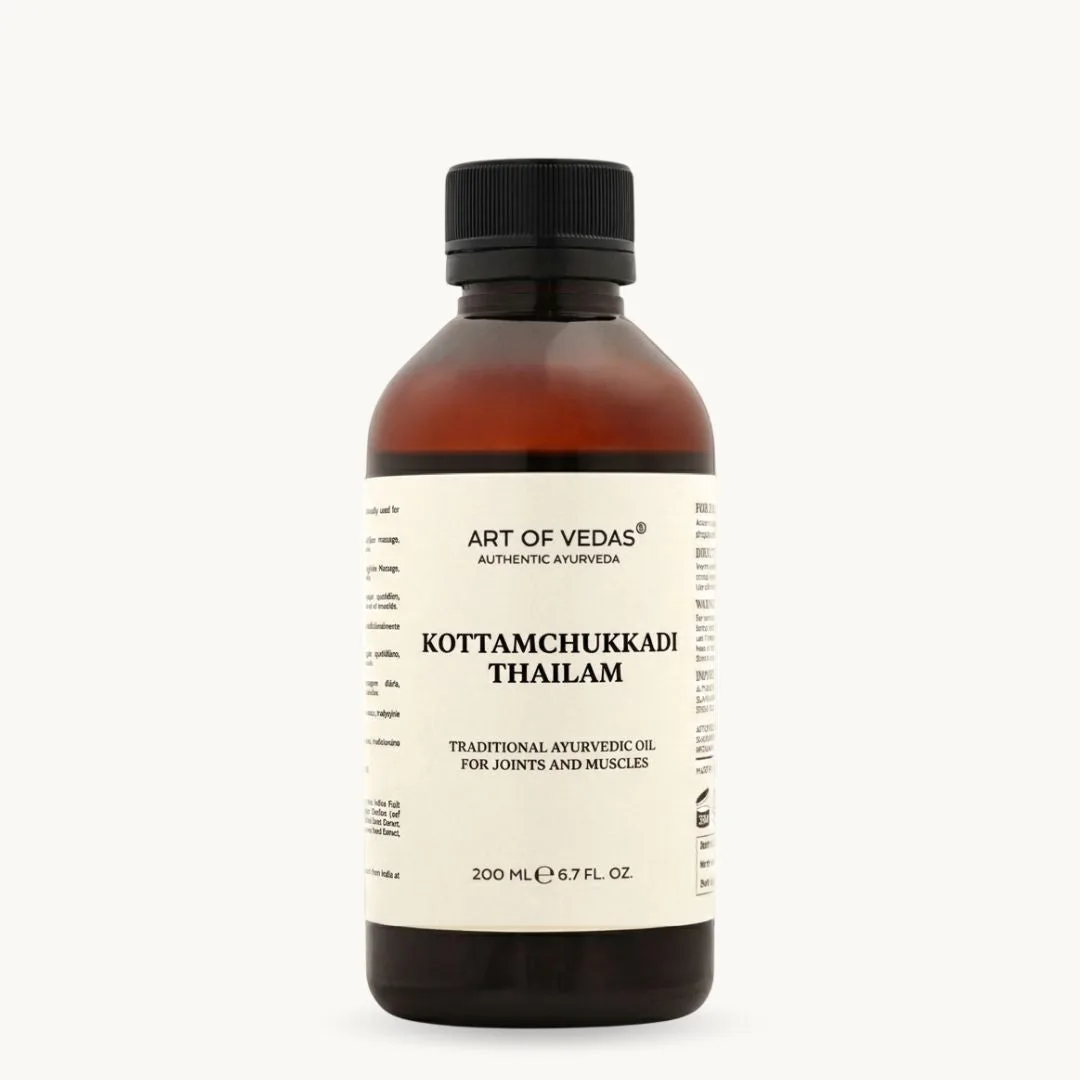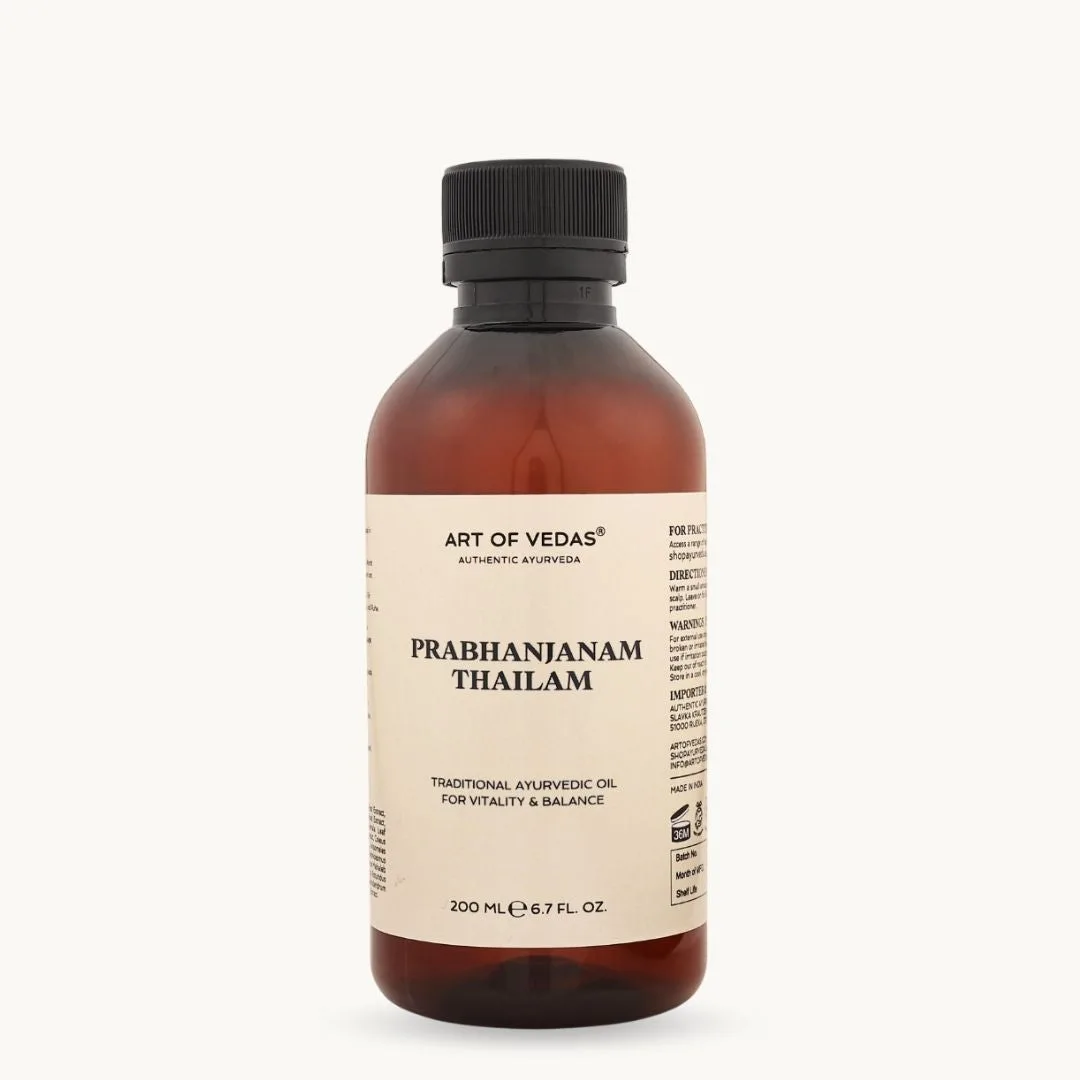
In brief: Brihat Marichadi Thailam (also written Brihat Marichadi Thailam, Brihat Marichadi Taila or Marichadi oil) is a classical Ayurvedic medicated oil named after Maricha, black pepper, its first ingredient. Brihat means great, and marks the expanded version of the shorter Marichadi Thailam. It is cooked into a sesame oil base, and the classical compendia describe it as a warming oil applied to the skin. Art of Vedas does not currently offer Brihat Marichadi Thailam; the closest oils in our range are Kottamchukkadi Thailam and Prabhanjanam Thailam. This guide covers what it is, how the tradition describes it, how such an oil is used, and which of our oils to consider instead.
What Brihat Marichadi Thailam is and where the name comes from
Maricha is the Sanskrit name of black pepper, Piper nigrum, one of the three pungent spices of the Trikatu group and one of the most used warming ingredients of the classical pharmacy. The suffix adi means "beginning with", so Marichadi Thailam is the oil whose recipe begins with black pepper. Brihat means great or large; in the naming of classical recipes it marks the longer, fuller version of a formula that also exists in a shorter form. Thailam, Thailam and Taila are the same word in different transliterations and mean a medicated oil.
The classical description
The classical recipe names, among others, Maricha, black pepper, cooked by the Sneha Paka method into a sesame oil base. The classical compendia list both a Marichadi Thailam and a Brihat Marichadi Thailam, and the supporting ingredients and proportions differ between the versions in circulation, so the label of a given oil is always the reference. Where the texts describe the oil, they do so as a strong warming oil applied to the skin, and this guide keeps to that description without adding claims of its own.
Character in Ayurvedic terms
The tradition describes black pepper as pungent, Katu, and warming, Ushna, and places it with Kapha and Vata. Sesame oil is itself warming and placed with Vata. Cooked together with the supporting plants, they give a finished oil that the texts describe as warming and that is classically placed with Vata and Kapha. It belongs to the more strongly warming group of classical oils and is regarded as a focused oil rather than a mild oil for a daily whole-body routine.
How a strongly warming oil is used in practice
A pepper oil is applied to one region at a time rather than over the whole body, in a small amount, and usually at the direction of a practitioner. Warm the closed bottle in a bowl of warm water for a few minutes. Work a small amount into the skin of the region until it is absorbed, leave it for 15 to 20 minutes, then wash it off with warm water. A warming oil of this strength is not applied to the face. Two or three applications a week are the usual rhythm for a focused oil. The routine for the milder oils is set out in our Abhyanga guide.
Who should ask first
Every classical oil is for external use only. With a pepper oil the skin test matters more than usual: apply a small amount to the inner forearm and wait a day before the first full application, keep the oil well away from the eyes, the face and any broken skin, and wash the hands after applying it. In pregnancy, and for children, ask your doctor or a qualified Ayurvedic practitioner first. Whether a strongly warming oil suits you at all is a question for a qualified Ayurvedic practitioner.
Art of Vedas and Brihat Marichadi Thailam
Art of Vedas does not currently offer Brihat Marichadi Thailam. The closest oils in our range are Kottamchukkadi Thailam, a warming sesame-based oil named after Kottam and Chukku, dried ginger, with ginger, moringa, garlic, mustard, galangal and Devadaru cooked into the base, applied gently warmed to one region at a time, and Prabhanjanam Thailam, a warming sesame-based Vata oil for the regular Abhyanga routine. Kottamchukkadi is the nearer match in character, a focused warming oil for one region; Prabhanjanam is the milder choice for the whole body. See also our complete guide to traditional Ayurvedic Thailams and our comparison of Ayurvedic massage oils.