Of all six possible Dosha combinations, Vata-Kapha is the one that surprises people most when they first encounter it. The qualities of Vata - light, dry, cold, mobile, quick - seem almost directly opposed to those of Kapha - heavy, moist, cool, slow, stable. And yet this combination exists, and when it does, it produces a genuinely distinct and recognisable constitutional type.
If you are simultaneously restless and a creature of deep habits - if you are thin in some places and carry density in others - if you can be sharply creative one moment and deeply, comfortably immovable the next - you may be looking at a Vata-Kapha constitution. Understanding how these two Doshas interact in your specific nature is the beginning of understanding what you actually need.
The Paradox of Vata-Kapha
Classical Ayurveda explains the apparent contradiction in Vata-Kapha through the one quality these two Doshas share: coldness (Sheeta). Both Vata and Kapha are cold - Vata from its airy, mobile nature; Kapha from its heavy, dense nature. In a Vata-Kapha constitution, this shared quality is amplified. Cold, in many of its forms, is this constitution's most characteristic experience.
Beyond that shared quality, Vata and Kapha tend to dominate different regions and functions in the body. Vata may predominate in the nervous system, the skin, the joints and the lower body; Kapha may predominate in the chest, the lymphatic system and the overall structural density. This regional distribution means that Vata-Kapha types often experience their two Doshas quite differently depending on which part of the body or which aspect of life they are looking at.
Not yet familiar with the three Doshas? Start here: What Are the Three Doshas?
Recognising Vata-Kapha in Practice
Physical characteristics often seen in Vata-Kapha types:
Variable body composition - often lean in the upper body (Vata) with more density or weight in the lower body (Kapha), or a generally slender frame that carries more Kapha in the torso
Skin that is both dry (Vata) and cool (both Doshas) - often very cold to the touch, drier than expected
Tendency toward cold in the extremities more pronounced than in most other constitutions
Variable energy - periods of creative activity and lightness (Vata) alternating with heavy, slow periods (Kapha)
Digestion that is irregular (Vata) but can also be slow and congested (Kapha) - often alternating between the two patterns rather than settled in one
Mental and behavioural characteristics often seen in Vata-Kapha types:
Creative, imaginative thinking (Vata) with a deep sentimental attachment to the familiar (Kapha)
The ability to generate many ideas and also to hold onto the past - both at once
Strong long-term memory (Kapha) combined with short-term scattered attention (Vata)
Deep personal loyalty (Kapha) with a tendency toward social anxiety or unpredictability in new situations (Vata)
Under stress: simultaneously anxious and withdrawing - the Vata worry and the Kapha desire to retreat and hibernate
The Seasonal Pattern for Vata-Kapha
The seasonal challenge for Vata-Kapha types is significant - every Dosha season brings challenge for at least one of their two Doshas.
Autumn and early winter (Vata season): Cold, dry, mobile Vata season elevates Vata in everyone. Vata-Kapha types feel this strongly on the Vata side - anxiety, dryness, cold, restlessness, irregular sleep and digestion.
Late winter and spring (Kapha season): Cold, damp, heavy Kapha season elevates Kapha. Vata-Kapha types feel this as heaviness, sluggishness, congestion and difficulty initiating. Both of their Doshas are cold, so the damp cold of Kapha season can feel particularly heavy for this constitution.
Summer (Pitta season): Often the most comfortable season for Vata-Kapha types. The warmth of summer pacifies both the cold of Vata and the cold of Kapha. Pitta-aggravating heat is not a concern for this constitution. Many Vata-Kapha types feel their best in warm, dry summer conditions.
How Ayurveda Approaches Vata-Kapha Balance
The shared quality of coldness in both Doshas means that warmth is one of the most universally beneficial qualities for Vata-Kapha - it simultaneously opposes both Doshas' tendency toward cold.
Beyond warmth, the approach needs to be careful about the distinction between the two Doshas:
For Vata within the Vata-Kapha constitution: Nourishment, regularity, grounding, warming oils, light and consistent routine. Addressing dryness, restlessness and cold.
For Kapha within the Vata-Kapha constitution: Stimulation, lightness, movement, invigoration. Addressing congestion, heaviness and stagnation.
The key principle for Vata-Kapha: warming and stimulating, without adding dryness. Dryness helps Kapha but aggravates Vata. Heaviness helps Vata but aggravates Kapha. Warm and stimulating benefits both.
Oil and Abhyanga for Vata-Kapha
Abhyanga is important for Vata-Kapha - both Doshas are cold, and the warming, nourishing effect of warm oil addresses both. The adaptations:
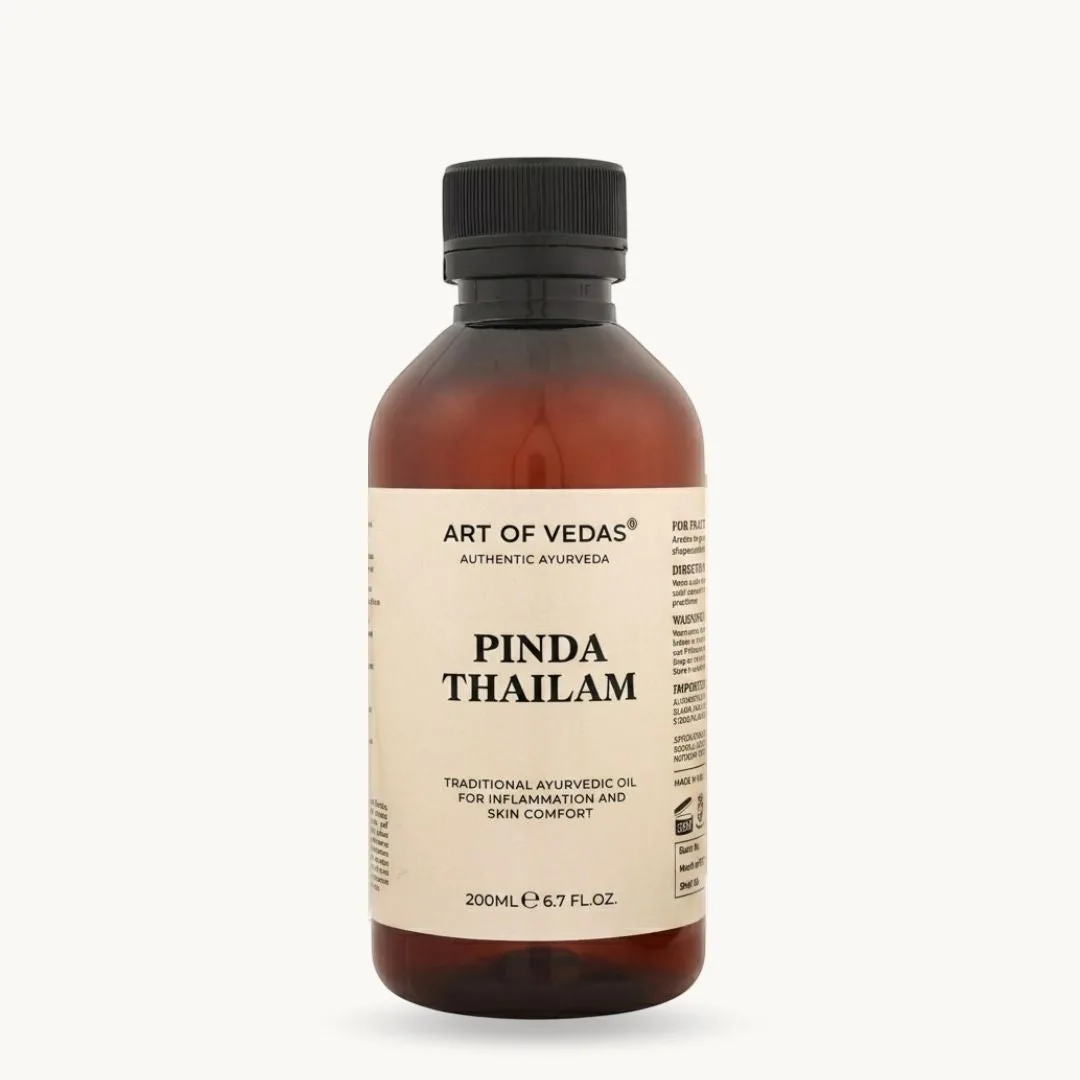
Oil choice: Warming sesame-based oils suit Vata-Kapha well - warming for both Doshas, and with enough nourishment to address Vata's dryness without adding Kapha's heaviness if used in appropriate quantities. Dhanwantharam Thailam in moderate quantity is a good fit for most Vata-Kapha types in the cooler seasons.
Technique: Warmer than for Pitta, but with more vigour than for Vata - a middle path. The Kapha aspect benefits from the stimulation of more active strokes; the Vata aspect benefits from the warmth and sustained contact.
Frequency: Daily practice benefits the Vata aspect; 4 to 5 times per week is appropriate for most Vata-Kapha types if daily is not possible.
Garshana: Dry brushing before oil application - particularly in late winter and spring - benefits the Kapha aspect of Vata-Kapha by stimulating lymphatic movement before the oil is applied.
Browse all classical Ayurvedic massage oils
Daily Routine Guidance for Vata-Kapha
Warmth is the theme of the daily routine for Vata-Kapha. Warm food, warm drink, warm morning practice, warm environment - consistently across the day, across the seasons.
Regularity for Vata, movement for Kapha: A consistent morning routine at the same time each day provides the Vata stabilisation this constitution needs; vigorous enough movement within that routine provides the Kapha stimulation.
Avoid cold and damp environments when possible: This constitution feels the cold more acutely than most and has less Pitta heat available to compensate. Warm, dry environments are genuinely supportive.
Seasonal cleansing in spring: The Kapha accumulation of winter is real for Vata-Kapha types. A gentle spring detoxification or lightening of food and routine in late winter and early spring can clear Kapha congestion before it becomes a sustained Kapha problem through the warmer months.
Discover Your Full Constitutional Picture
Vata-Kapha is less common than Vata-Pitta or Pitta-Kapha, and its presentation can be subtle - particularly when the two Doshas are nearly equal in proportion or express strongly in different regions of the body.
Take our free Dosha assessment to clarify your full constitutional picture. Start here
For a precise constitutional assessment and a personalised protocol adapted to your specific Vata-Kapha balance and current state, our AYUSH-certified Ayurvedic doctors offer personalised online consultations available from anywhere in Europe.
Book an online consultation with an AYUSH-certified Ayurvedic doctor
Frequently Asked Questions
Why is Vata-Kapha considered paradoxical? Because the dominant qualities of Vata (light, dry, mobile) and Kapha (heavy, moist, stable) seem opposed. The key is that both are cold - and this shared quality is what makes Vata-Kapha a coherent constitutional type rather than simply two contradictory Doshas in conflict.
How do I know if I am Vata-Kapha or simply have elevated Vata or Kapha on a different constitutional base? Prakriti (your constitutional baseline) is fixed at birth and represents your optimal state. Vikriti is your current imbalanced state. Someone with a Pitta constitution can have elevated Vata as a current imbalance - but their Vata-Pitta Vikriti is not the same as a Vata-Pitta Prakriti. This is precisely why a professional assessment is valuable. Book a consultation with one of our AYUSH-certified doctors.
Is Vata-Kapha a weak constitution? No. Every constitution has its strengths. Vata-Kapha types often have strong long-term memory, deep creative imagination combined with unusual loyalty and patience, and a distinctive sensitivity to their environment that, when supported, becomes a genuine strength.
What is the best season for Vata-Kapha? Summer - warm and dry conditions benefit both Doshas simultaneously. Many Vata-Kapha types feel their most vital, energetic and comfortable in warm, sunny weather.