In brief: Somaraji Thailam (also written Somaraji Taila, Somaraji Thailam, Somraji Tel or Somaraji oil) is a classical Ayurvedic oil for the skin, named after Somaraji, the Sanskrit name of the Bakuchi seed, which leads its recipe. It is cooked into a sesame oil base and is cited from the Ashtanga Hridayam. Unlike the Abhyanga oils used over the whole body, it is applied to one area of the skin, in small amounts, on the advice of a practitioner. This guide covers the name, the classical description, how an oil of this kind is applied, who should ask first, and which Art of Vedas oils come closest.
What Somaraji Thailam is and what the name means
Somaraji is one of the classical Sanskrit names of Bakuchi, the plant known botanically as Psoralea corylifolia. Somaraji Thailam simply means "the Somaraji oil", the oil in which the Bakuchi seed is the lead ingredient.
Somaraji Thailam, Somaraji Taila, Somaraji Thailam, Somaraji oil and Somraji Tel all name the same preparation; the spelling changes with the language and the maker, the recipe does not.
The classical description
The Ashtanga Hridayam is the source most often cited for Somaraji Thailam, in the chapters of its Chikitsa Sthana that deal with the skin. The classical recipe names Bakuchi seed first, followed by further plants that share its sharp character; no full list and no herb count is given here. The plants are ground to a paste and cooked slowly into the base oil by the Sneha Paka method until the water has gone. In the preparations sold today the base is sesame oil. Our complete guide to traditional Thailams explains the method and the base oils.
Character in Ayurvedic terms
The classical texts describe Bakuchi as warming, sharp and drying and place it with Kapha and Vata. Somaraji Thailam carries those qualities, which is why the tradition counts it among the strong, targeted skin oils and not among the nourishing oils of the daily routine: it is made for a small area and a short contact time.
How a classical skin oil of this kind is used in practice
Somaraji Thailam is applied to one area of the skin, not massaged over the body. Wash and dry the area, take a small amount on a fingertip or a clean cotton pad and apply a thin layer to the area only, without working it into the surrounding skin. Leave it on for the time the practitioner sets, then wash it off with warm water and a mild cleanser, and wash the hands. No warming is needed; a sesame base stays liquid at room temperature.
Bakuchi is a plant the tradition pairs with care in sunlight: keep the oiled area out of strong sun while the oil is on the skin and for some time afterwards. The rhythm, once a day or a few times a week, is set by the practitioner and reviewed as the weeks go on. Our Abhyanga guide describes the whole-body routine, a different practice.
Who should ask first
Somaraji Thailam is a classical oil to be used on the advice of a qualified Ayurvedic practitioner, who decides whether it is the right oil, where it goes and for how long. It is for external use only. Do a small skin test on the inner forearm before the first application, keep the oil away from the eyes, the mouth and broken skin, and keep the oiled area out of strong sunlight. If you are pregnant, or wish to use any oil on a child, ask your doctor or a qualified Ayurvedic practitioner first. Anyone who reacts to sesame should not use it.
Somaraji Thailam and the Art of Vedas range
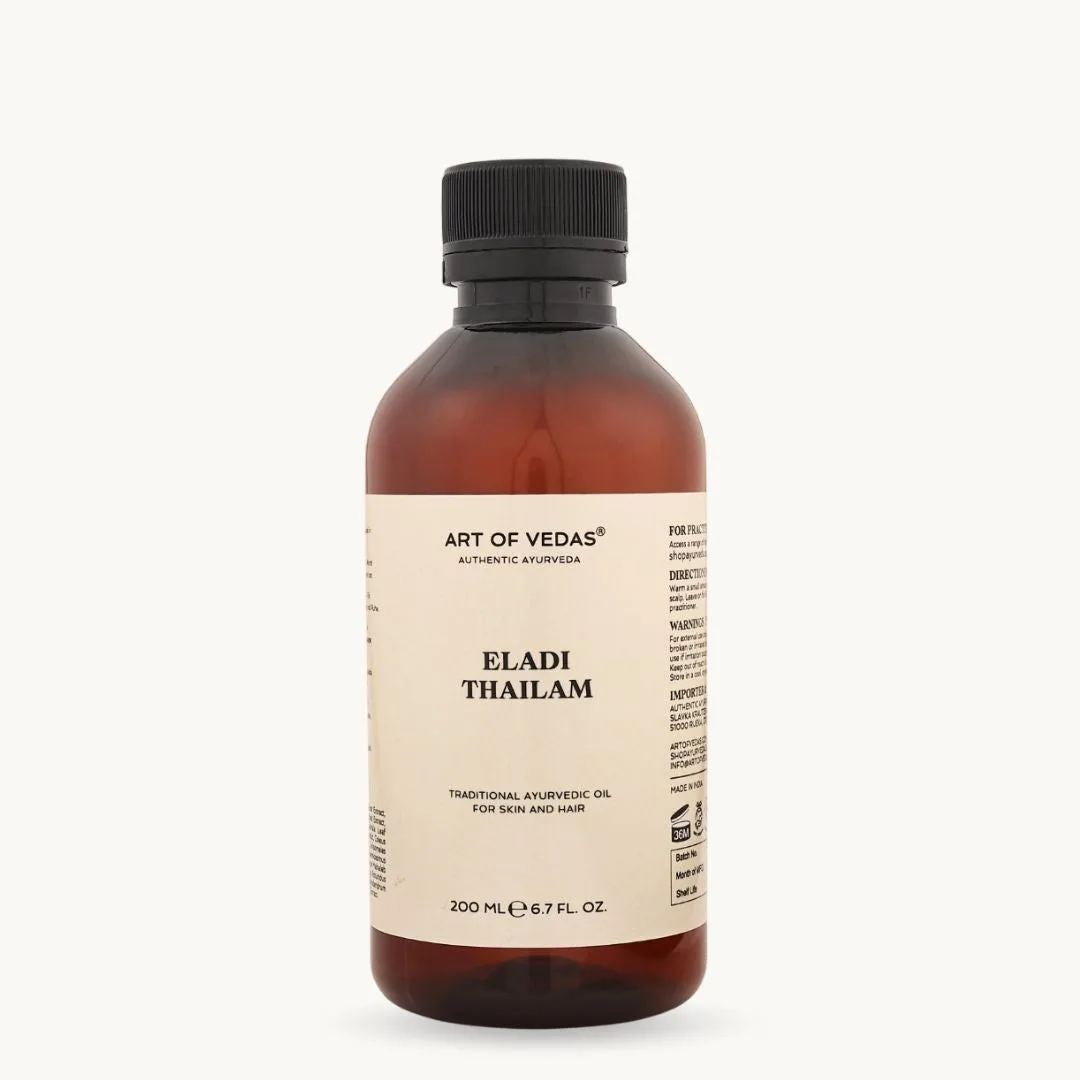
Art of Vedas does not currently offer Somaraji Thailam. The closest oils in our range are gentler oils for larger areas of skin: Nalpamaradi Kera Thailam, the coconut-based oil led by the barks of the four Nalpamara trees and turmeric, used on the face and body as part of the daily routine, and Eladi Thailam, the cardamom-led oil used on the skin and in Abhyanga. Neither is a substitute for a targeted Bakuchi oil; a practitioner can advise which, if either, suits you. Our comparison of Ayurvedic massage oils sets the gentler oils side by side.