There is a specific type of Ayurvedic oil that practitioners reach for when the condition they are addressing involves deep structural Vata: not surface dryness, not mild restlessness, but the kind of Vata aggravation that has settled into the musculoskeletal system, affecting flexibility, mobility and the integrity of the joints and neural pathways. In these classical presentations, the required oil has to be more than warming and nourishing - it has to be penetrating. It has to reach the deep tissues. Prasarini Thailam was formulated for exactly this.
The Sanskrit word Prasarini carries the meaning of "one who spreads" or "one who penetrates and diffuses." This is not merely a poetic name - it describes the classical pharmacological property of the primary herb in this formulation. Prasarini (Paederia foetida) is described in the classical texts as having exceptional Sukshma (subtle, fine, penetrating) qualities - the ability to reach tissues that less penetrating substances cannot access. Understanding this property is the key to understanding why Prasarini Thailam occupies a specific and non-substitutable role in the classical oil pharmacopoeia.
Art of Vedas includes Prasarini Thailam as part of its classical Vata oil range precisely because of this distinct action. The full spectrum of classical Vata oils is available in the Ayurvedic Thailams collection.
The Classical Foundation: Where Prasarini Appears in the Texts
Prasarini Thailam is described most explicitly in the Ashtanga Hridayam, Chikitsa Sthana, Chapter 21 - the chapter dedicated to the treatment of Vata Vyadhi, the broad category of conditions arising from Vata Dosha disturbance. This placement is defining. Vata Vyadhi is the largest single chapter in the Chikitsa Sthana (treatment section), reflecting the classical understanding that Vata-related conditions represent the broadest and most complex category of Ayurvedic pathology.
Within the Vata Vyadhi chapter, Prasarini Thailam is listed among the formulations indicated for conditions affecting the musculoskeletal system, the neural pathways and the joints - all territories governed by Vata Dosha. The Charaka Samhita also references Prasarini in contexts involving Vata, specifically noting its Sukshma and Tikshna (sharp, penetrating) properties as the pharmacological basis for its deep-tissue action.
The Sahasrayogam, a comprehensive classical Ayurvedic classical text, includes Prasarini Thailam in its list of preparations for Vata conditions, reflecting the continued use of this formulation in the most clinically active surviving lineage of classical Ayurvedic practice. The Ashtavaidya tradition has maintained Prasarini Thailam as a standard offering for musculoskeletal and neural Vata conditions, providing an unbroken clinical tradition alongside the textual documentation.
Prasarini: The Classical Pharmacology of the Primary Herb
Prasarini (Paederia foetida) - sometimes called Skunk vine in English, a name that references the herb's pungent aroma - is described in the classical Ayurvedic texts with a pharmacological profile that explains its central role in deep-penetrating Vata formulations.
Rasa (Taste): Tikta (bitter) and Katu (pungent). These tastes are associated in classical pharmacology with Shodhana (cleansing) and Vata-channel-opening action. Unlike the sweet, nourishing tastes of Bala or Ashwagandha - which build depleted tissues - Prasarini's bitter-pungent combination works by clearing and opening the Srotas (channels) through which Vata has become obstructed or stagnant.
Virya (Potency): Ushna (warming). The warming potency directly counteracts the cold quality of accumulated Vata in the musculoskeletal and neural channels. This is the basis for Prasarini Thailam's classical use in conditions characterised by cold, contracted, stiff presentations.
Guna (Qualities): Sukshma (subtle, penetrating), Laghu (light) and Tikshna (sharp, cutting). This quality profile is what distinguishes Prasarini from the heavier, nourishing Vata oils. The Sukshma quality in particular - the ability to penetrate into fine channels and reach deep tissues - is the defining pharmacological feature that makes this herb irreplaceable in the formulations where it is indicated.
Dosha Effect: Vata and Kapha pacifying. The combination of warming and penetrating properties makes Prasarini Thailam most appropriate for presentations where Vata aggravation has a cold, obstructed, stagnant character - as distinct from pure Vata depletion, which calls for nourishing, heavy oils like Mahamasha Thailam or the milk-processed Ksheerabala Thailam.
Classical Indications: What Prasarini Thailam Is Used For
The Ashtanga Hridayam and supporting classical texts describe the following as the primary indications for Prasarini Thailam:
Gridhrasi (Classical sciatic nerve pathway condition): The classical condition describing pain, numbness or altered sensation following the path of the sciatic nerve from the lower back through the buttock and down the leg. The classical understanding is that Vata has accumulated in the lumbar Srotas and is pressing on or affecting the neural channel below. Prasarini Thailam is specifically listed in the Ashtanga Hridayam for Gridhrasi - its combination of warming, penetrating and channel-opening properties addresses the obstruction at the root of this presentation.
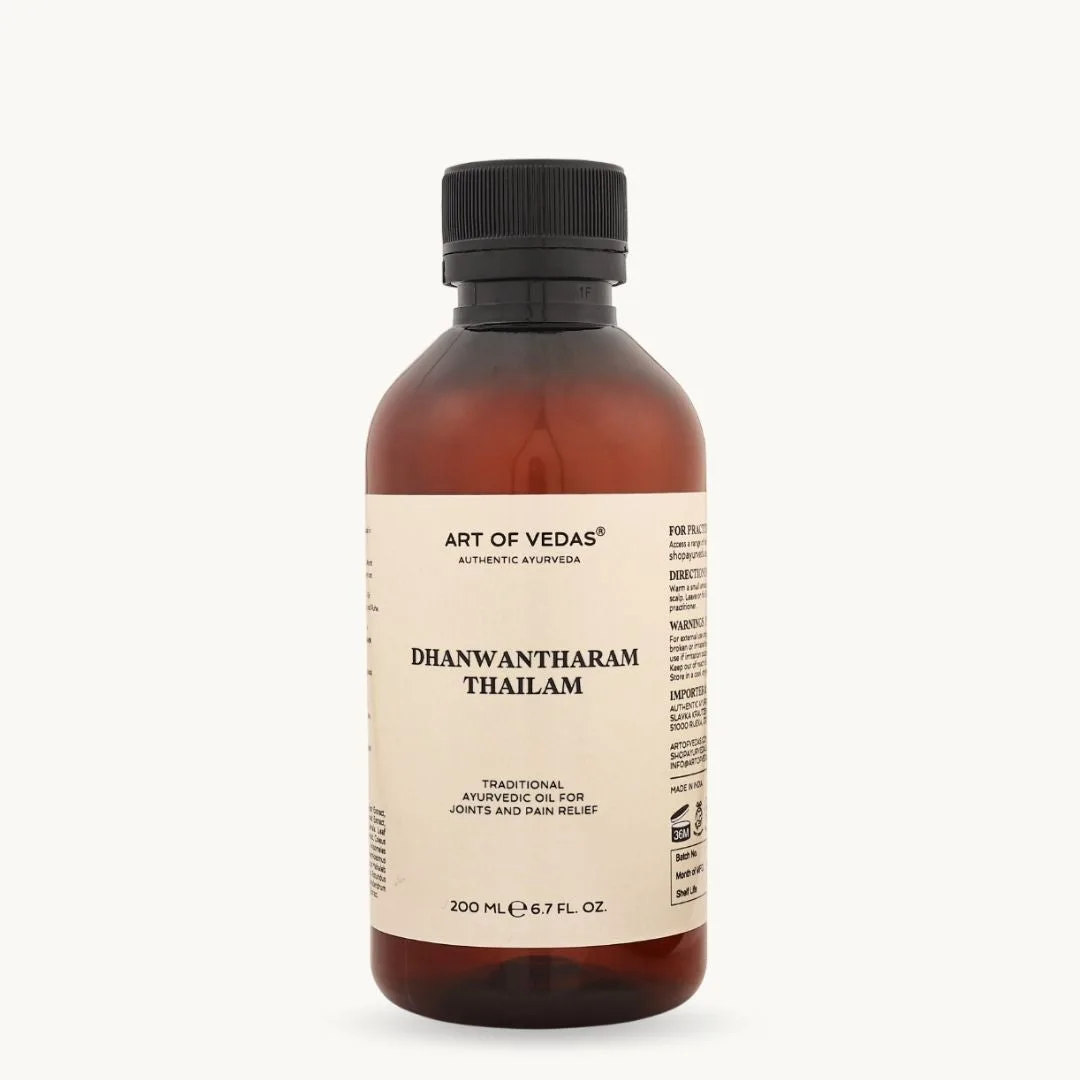
Sandhivata (Joint stiffness and restricted movement from Vata): The classical joint condition arising from Sleshaka Kapha depletion in the joint spaces and Vata accumulation within the joint cavity. Prasarini Thailam's Sukshma property allows it to penetrate the joint capsule more deeply than heavier oils, while its Ushna Virya addresses the cold contraction. For presentations involving both inflammatory heat and structural stiffness, Prasarini Thailam is often appropriate as a penetrating complement to the nourishing action of oils like Dhanwantharam Thailam.
Adamriduvata (Cervical Vata conditions): The classical description covering stiffness, restricted movement and pain in the cervical region. Prasarini Thailam is specifically listed for this presentation in the classical texts, applied locally to the neck and upper back with sustained massage technique.
Ardita (Facial palsy from Vata): A classical condition involving Vata disturbance of the facial neural pathways. Prasarini Thailam's Sukshma and Tikshna properties are described as reaching the fine neural channels of the face more effectively than heavier formulations. Application for Ardita is always under qualified practitioner guidance.
Paksha Ghata (Hemiplegia): Among the most severe Vata Vyadhi presentations. Prasarini Thailam is listed in classical texts for this condition within full Panchakarma treatment protocols - a clinical context requiring physician supervision.
Chronic musculoskeletal Vata: Beyond the specific named conditions, Prasarini Thailam has broad application in any presentation involving chronic Vata obstruction in the musculoskeletal channels - recurring stiffness and restricted movement in the back, hips or limbs with a cold, contracted character, and joint or muscular conditions that have not fully responded to standard Vata nourishing oils alone.
Prasarini Thailam vs. Other Classical Vata Oils: Understanding the Difference
The classical Vata oil range includes formulations with distinct actions - and choosing correctly between them depends on understanding whether the primary presentation involves depletion (requiring nourishment) or obstruction (requiring penetration and channel-opening).
Dhanwantharam Thailam is the foundational, broadly nourishing Vata oil - the classical first recommendation for most Vata presentations. It nourishes depleted Dhatus, supports Sleshaka Kapha in the joints and is appropriate for general daily Abhyanga for Vata constitutions. Where Prasarini Thailam penetrates and opens channels, Dhanwantharam nourishes and replenishes.
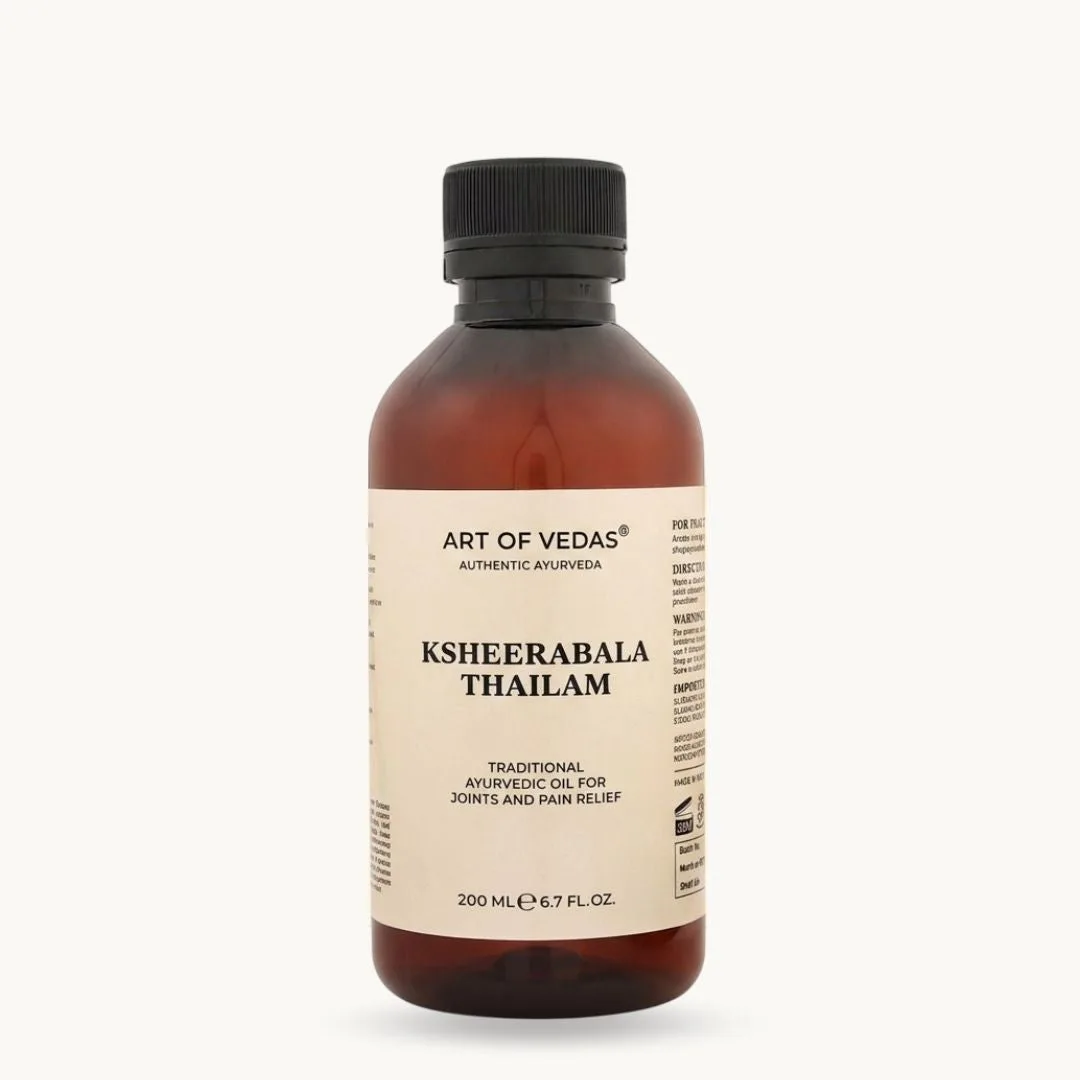
Ksheerabala Thailam, processed through the Ksheerapaka milk method, has its primary affinity for Majja Dhatu (nervous tissue) - it is the classical choice for deep neural depletion where the presentation is one of tissue loss and neural weakness rather than channel obstruction. It is cooling rather than warming, making it appropriate for Vata-neural conditions with a Pitta-inflammatory component alongside the depletion.
Mahamasha Thailam is the classical oil for muscular depletion (Mamsa Kshaya) - heavy, warming and deeply nourishing for presentations involving visible muscular weakness or wasting. Where Mahamasha rebuilds, Prasarini Thailam penetrates and clears.
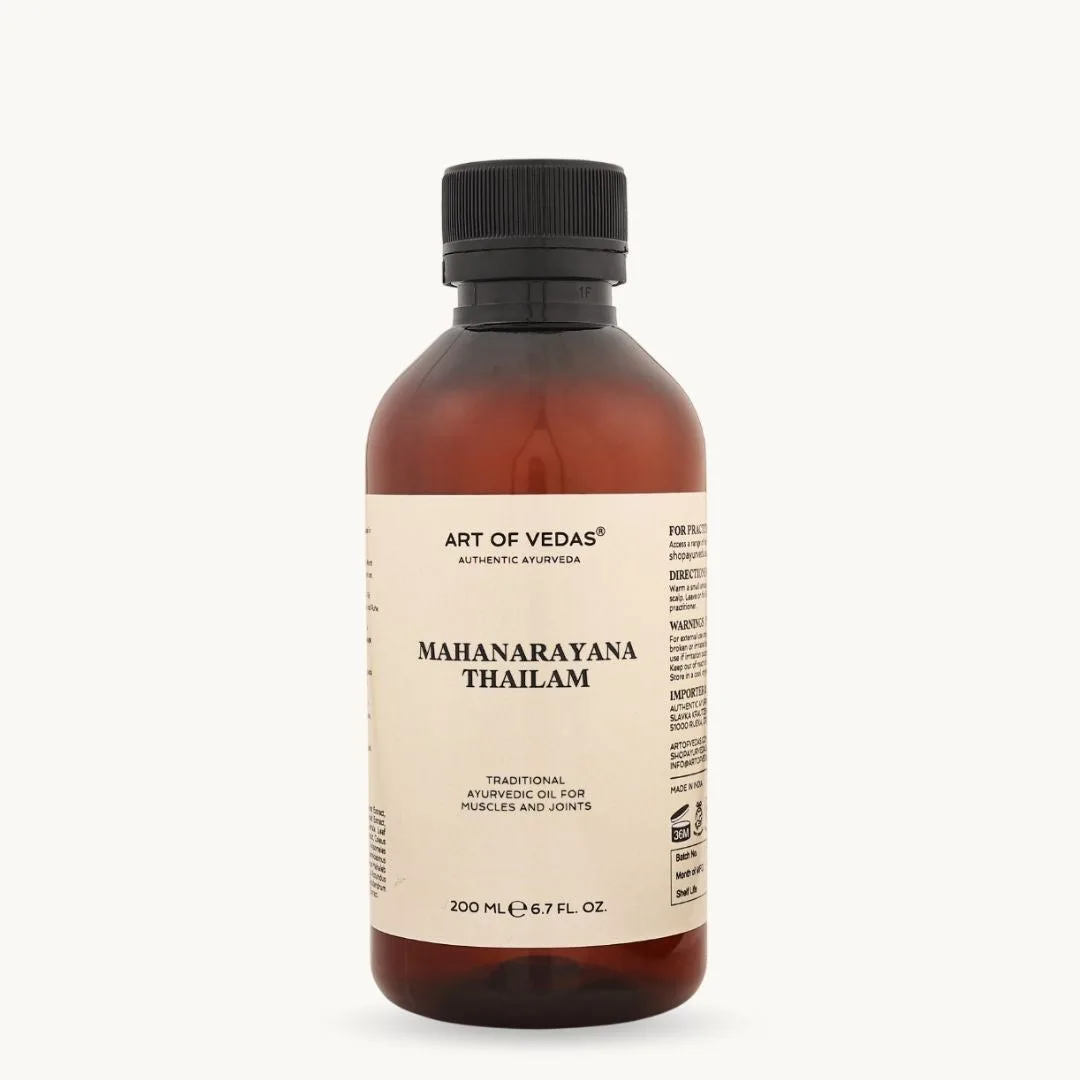
Mahanarayana Thailam is Sarva Vata Hara - broad-spectrum Vata balancing - appropriate when Vata aggravation is diffuse and widespread rather than concentrated in specific musculoskeletal channels.
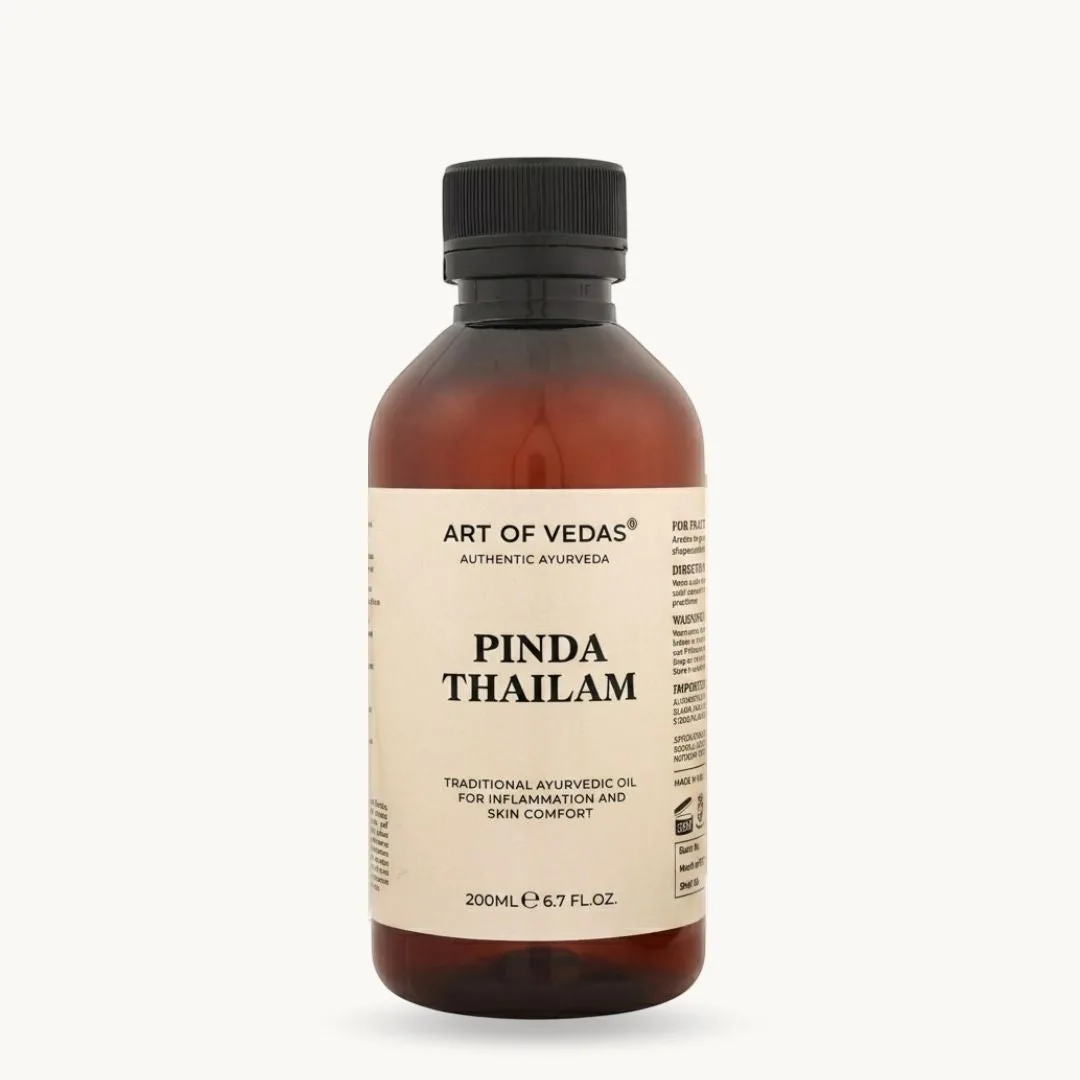
Pinda Thailam is the primary cooling oil for Pitta-dominant joint presentations, with a Sheeta (cooling) Virya that directly contrasts with Prasarini Thailam's warming, penetrating action. Where Pinda is the choice for hot, inflamed joints, Prasarini is the choice for cold, stiff, obstructed joints.
The complete framework for choosing between these formulations is covered in the guide to comparing classical Ayurvedic massage oils.
How to Use Prasarini Thailam for Abhyanga
For home Abhyanga, Prasarini Thailam is applied with the standard classical technique. Warm the oil gently by placing the bottle in warm water, then apply with sustained strokes to the specific areas of concern - typically the lower back, hips, legs and any joints where Vata obstruction is manifesting as stiffness or restricted movement.
Because of its Sukshma and Tikshna properties, Prasarini Thailam benefits from firm, penetrating application technique - sustained pressure strokes that work with the muscle tissue and joint areas rather than light surface strokes. The classical texts emphasise that penetrating oils require time and sustained contact to reach the deeper channels, so allow the oil to remain on the skin for a minimum of 30 to 45 minutes before bathing.
Following application with warmth - a warm compress on the treated area, or bathing in warm water - supports the Ushna Virya of the oil and enhances the classical penetrating action. This combination of warm oil and external warmth is described in the classical Bahya Snehana (external oleation) protocols as the most effective approach for deep musculoskeletal Vata conditions.
For Nasya (nasal oleation) as a complement to musculoskeletal Vata treatment - particularly for cervical conditions - the Anu Thailam (Nasya Oil) from Art of Vedas provides the classical Prana Vata channel support through the nasal route, addressed separately from the external Abhyanga. The complete Abhyanga technique is covered in the Art of Vedas Abhyanga guide.
Frequently Asked Questions
What makes Prasarini Thailam different from other Vata oils?
The defining property is Sukshma - the penetrating, fine quality of the primary herb Prasarini (Paederia foetida) that allows the oil to reach deep into musculoskeletal and neural channels that heavier, nourishing oils cannot access as directly. Prasarini Thailam works primarily by opening obstructed Vata channels and penetrating deep structural Vata, rather than by nourishing depleted tissues. This makes it the appropriate choice for presentations of obstruction and stiffness, where oils like Dhanwantharam Thailam or Mahamasha Thailam are the classical choice for presentations of depletion and tissue loss.
Can Prasarini Thailam be used for full-body Abhyanga?
Yes, Prasarini Thailam can be used for full-body Abhyanga, but it is most commonly applied in the classical context to specific areas of musculoskeletal concern - the lower back, hips, legs and affected joints - rather than as a routine full-body daily oil. For daily full-body Abhyanga, Dhanwantharam Thailam is typically the classical recommendation for Vata constitutions, with Prasarini used for targeted application on the areas requiring deeper penetration.
Is Prasarini Thailam appropriate for Pitta constitutions?
Prasarini Thailam has a warming Virya (Ushna), which means it is most appropriate for cold, contracted Vata presentations. For Pitta-dominant constitutions or presentations with acute inflammatory heat and redness, the warming quality can be uncomfortable. If you have a strongly Pitta constitution and are dealing with joint conditions that have a significant inflammatory component, the cooling Pinda Thailam or the cooling-yet-Vata-pacifying Ksheerabala Thailam are more appropriate classical choices. To understand your constitution, the Art of Vedas Dosha assessment provides a structured framework.
How does Prasarini Thailam compare to Dhanwantharam Thailam for joint conditions?
Dhanwantharam Thailam nourishes the joint - replenishing Sleshaka Kapha (the classical joint lubricant), building Asthi Dhatu (bone tissue) and providing the Brimhana action that supports long-term joint integrity. Prasarini Thailam penetrates the joint - opening the channels, dispersing obstructed Vata and reaching the deeper structural tissues with its Sukshma action. For chronic joint conditions, the two oils are often used in combination or in alternation under practitioner guidance - Dhanwantharam for the nourishing phase and Prasarini for the penetrating phase.
What classical text most directly describes Prasarini Thailam?
The primary reference is the Ashtanga Hridayam, Chikitsa Sthana, Chapter 21 (Vata Vyadhi Chikitsa), where Prasarini Thailam is listed among the specific formulations for musculoskeletal and neural Vata conditions. The Charaka Samhita references the Sukshma and penetrating properties of the Prasarini herb in the context of Vata treatment. The Sahasrayogam includes Prasarini Thailam in its classical formulations, maintaining the continuous clinical tradition of this preparation across centuries of practice.
Can Prasarini Thailam be used alongside other Vata oils?
Yes. In classical Ayurvedic practice, different oils are used for different purposes within the same treatment period - a general nourishing oil for daily full-body Abhyanga and a more targeted formulation for specific areas of concern. Prasarini Thailam is commonly used in this localised, targeted role alongside a broader daily oil like Dhanwantharam Thailam or Mahanarayana Thailam. A qualified Ayurvedic practitioner can advise on the appropriate combination for your specific presentation and how to alternate or integrate multiple oils effectively.
For external use only. Prasarini Thailam is a traditional Ayurvedic medicated oil. It is not intended to diagnose, treat, cure or prevent any disease and is not a substitute for professional medical advice. Consult a qualified Ayurvedic practitioner for conditions involving musculoskeletal or neural Vata disturbance.