In brief: Manjishtadi Thailam (also written Manjishthadi Taila, Manjishtadi Thailam, Manjistha oil or Manjishtha oil) is a classical Ayurvedic oil whose recipe opens with Manjishtha, the root of Rubia cordifolia, cooked with a group of further plants into sesame oil. The tradition places the oil with Pitta and Kapha, and it is traditionally used for Abhyanga of the skin rather than of the muscles and joints. Art of Vedas does not currently offer Manjishtadi Thailam. This guide covers what the oil is, what the name means, how such an oil is used, how it differs from Mahamanjishtadi Kwath, and which oils in our range come closest to it.
What Manjishtadi Thailam is and what the name means
Manjishtha is the Sanskrit name of Indian madder, Rubia cordifolia, a climbing plant whose root has been used for centuries as a red dye. The ending adi means "and the others": Manjishtadi is the oil whose recipe begins with Manjishtha and continues with the plants that follow it. Thailam, Thailam and Taila are one word for oil; Manjishthadi is the more Sanskrit spelling.
Because the root is a dye plant, cooking it into sesame oil gives a deep red colour, and the finished oil keeps it.
What the classical tradition describes
The tradition groups the Manjishtha oils among the oils for the skin. The classical recipe of Manjishtadi Thailam names Manjishtha first and, among others, a group of plants that the texts pair with it for the skin, all cooked into a sesame oil base by the Sneha Paka method: a decoction of the roots and a paste of the finer plants are cooked slowly into the oil until the water has gone. Our complete guide to traditional Thailams explains the method. No full list is given here, because it differs between texts and makers; judge a product by its declared list.
Manjishtadi Thailam should not be confused with Mahamanjishtadi Kwath (also written Mahamanjisthadi Kashayam), which is searched alongside it. The Kwath is a decoction, a water preparation with a long list of plants that is taken by mouth under a practitioner's direction. It is not an oil, and Art of Vedas does not offer it.
Character in Ayurvedic terms
Manjishtha is described in the classical texts by its sweet, bitter and astringent taste, and the oils built on it are placed with Pitta and Kapha. Manjishtadi Thailam is therefore not one of the hot spice oils for the muscles and joints; the tradition describes it as a skin oil, applied in a thin layer and left to work on the surface rather than massaged in deeply.
How such an oil is used in practice
A Manjishtha skin oil is used for a light Abhyanga of the skin. Warm the closed bottle briefly in a bowl of warm water; the oil needs only to be at body temperature, not hot. Apply a thin layer to the area with the flat of the hand, without pressure, leave it on for 20 to 30 minutes and wash it off with warm water and a mild cleanser. Two or three applications a week is the usual rhythm. Because of the dye in the root, the oil can leave a faint red tint on light fabrics and, for a short while, on the skin: use an old towel, and wash off before dressing in light colours. The general sequence of an oil application is in our Abhyanga guide.
Who should ask first
Manjishtadi Thailam is for external use only. Do a small skin test on the inner forearm before the first full application, keep the oil away from the eyes and broken skin, and do not use any sesame oil preparation if you react to sesame. If you are pregnant or wish to use any oil on a child, ask your doctor or a qualified Ayurvedic practitioner first.
Art of Vedas does not currently offer Manjishtadi Thailam
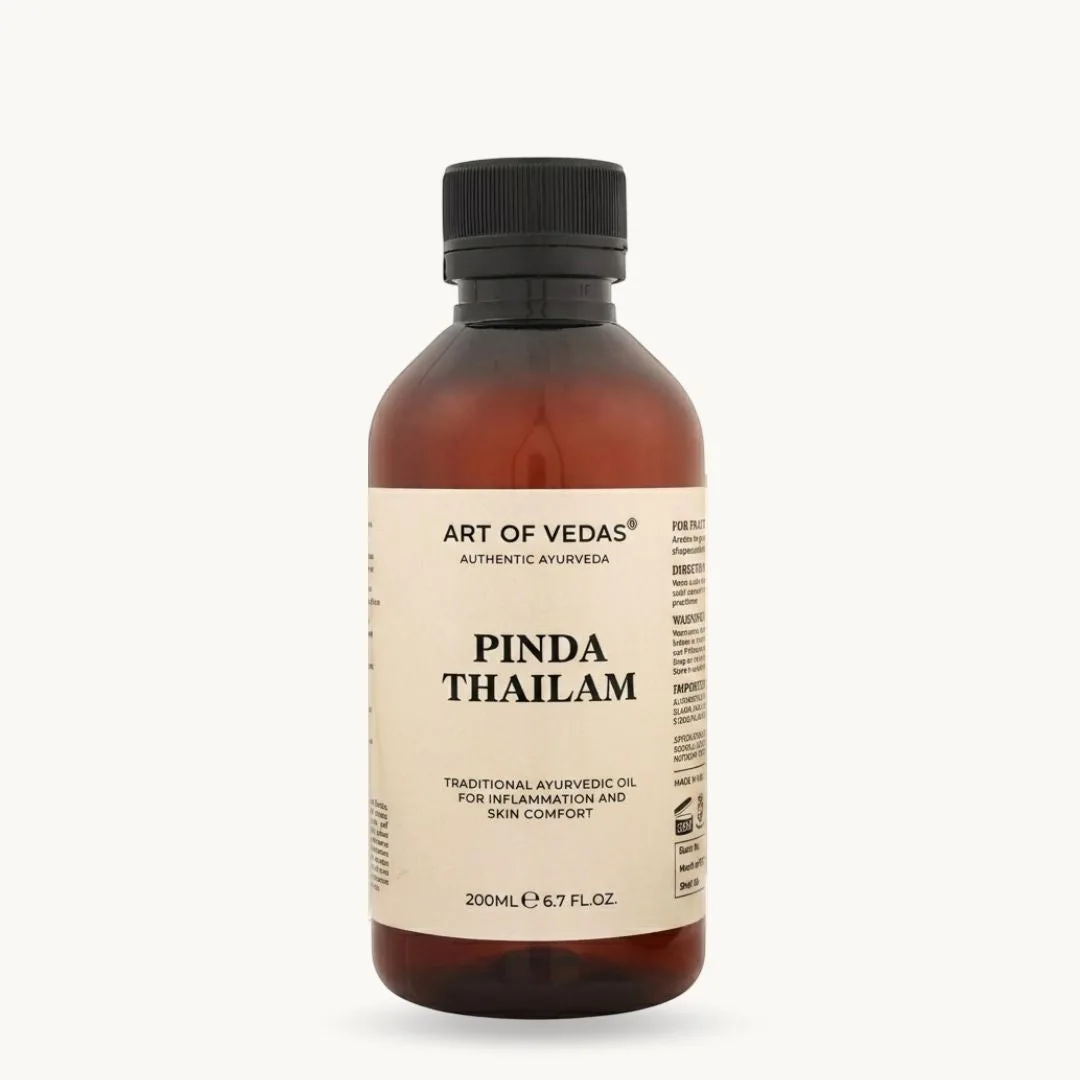
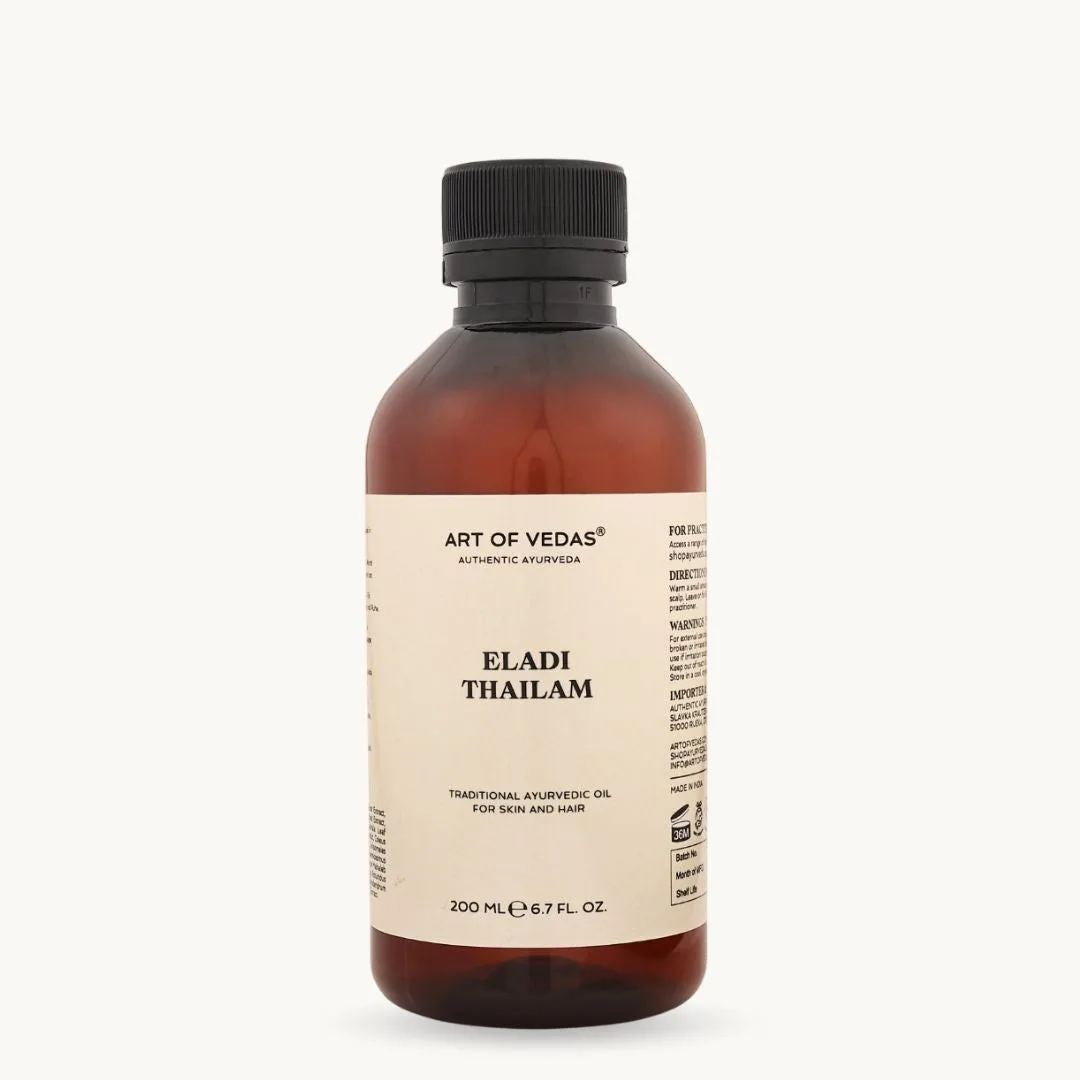
The closest oils in our range are the two classical skin oils. Pinda Thailam is the cooling oil placed with Pitta whose classical recipe itself contains Manjishtha, together with Sariva, and it shares the red colour; it is the nearest to Manjishtadi Thailam in character. Eladi Thailam is the cardamom-led skin oil of the Ashtanga Hridaya, used in the same thin-layer way.