Last Updated: February 8, 2026 | Reading Time: 10 minutes

Quick Overview

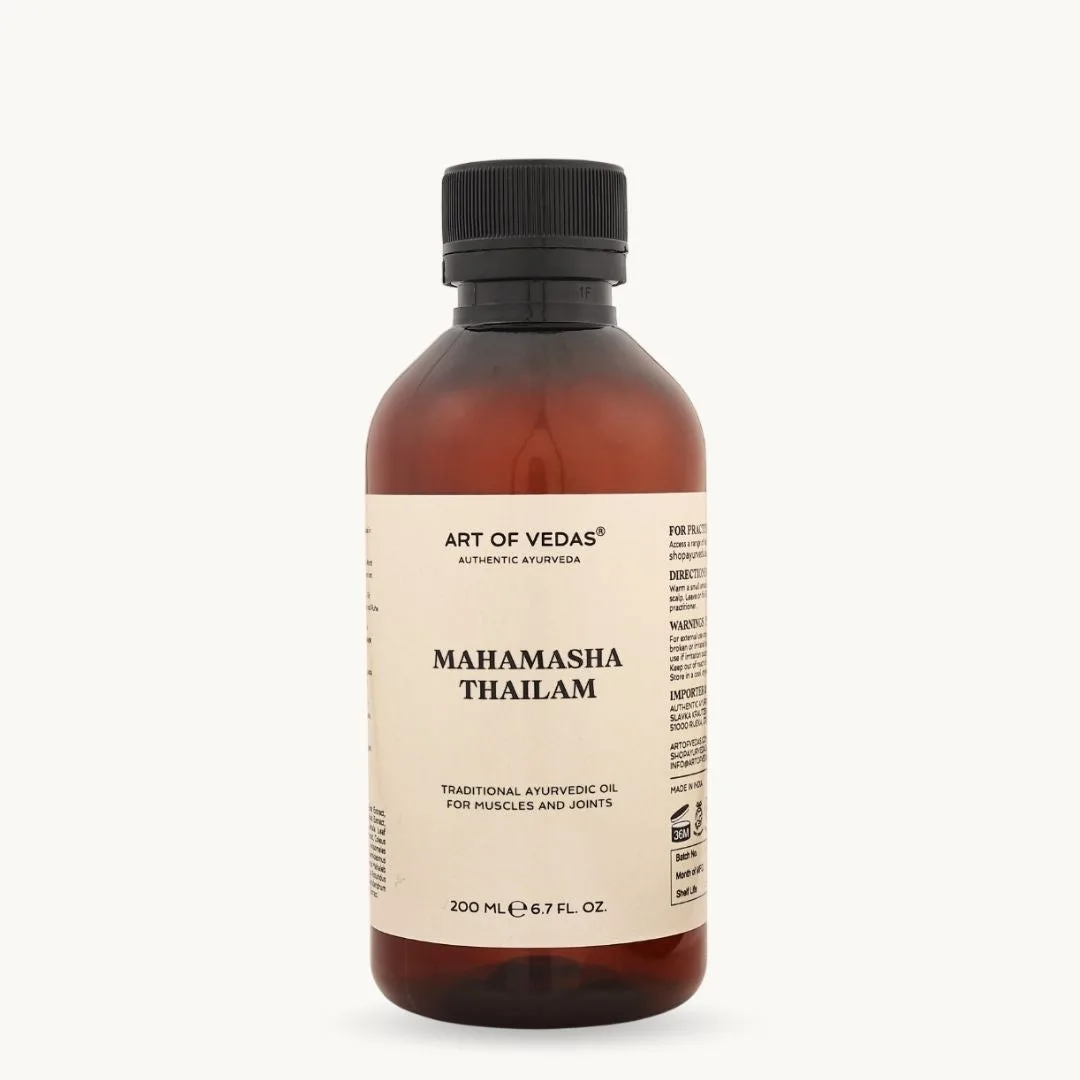
Mahamasha Thailam is a classical Ayurvedic oil preparation featuring black gram (Vigna mungo) as its primary ingredient, combined with sesame oil and traditional herbs. This warming oil is particularly valued in Ayurvedic practice for its Vata-balancing properties and is traditionally used for Abhyanga (self-massage), Panchakarma therapies, and seasonal wellness routines.

Key Facts:

  • Primary Use: Warm oil massage (Abhyanga)
  • Best For: Vata dosha imbalance
  • Season: Autumn, winter, and transitional periods
  • Classical Reference: Sahasrayogam, Bhaishajya Ratnavali
  • Main Ingredient: Masha (black gram/Vigna mungo)

Table of Contents

  1. What is Mahamasha Thailam?
  2. Historical Background and Classical References
  3. Traditional Properties and Energetics
  4. Effects According to Ayurveda (Wirkung)
  5. How to Use Mahamasha Thailam (Anwendung)
  6. Comparison with Other Ayurvedic Oils
  7. Dosha Suitability
  8. Frequently Asked Questions

What is Mahamasha Thailam?

Mahamasha Thailam is a traditional Ayurvedic oil preparation (taila) that has been used for centuries in classical Ayurvedic practice. The name derives from two Sanskrit words: "Maha" meaning great or large, and "Masha" referring to black gram (Vigna mungo), the primary herb in this formulation.

Unlike simple herbal oils, Mahamasha Thailam is prepared through the classical Ayurvedic method of taila paka (oil processing), where herbs are cooked with sesame oil base following precise traditional protocols. This time-intensive process extracts the therapeutic properties of the herbs into the oil medium, creating a preparation that Ayurveda considers superior to raw herbal applications.

Main Components:

  • Base Oil: Sesame oil (Tila taila) - chosen for its ability to penetrate deep tissue layers
  • Primary Herb: Masha (black gram/Vigna mungo) - provides heavy, nourishing, grounding qualities
  • Additional Herbs: Various formulations may include Bala (Sida cordifolia), Ashwagandha (Withania somnifera), and other classical ingredients depending on the specific traditional recipe followed

The preparation follows guidelines from classical Ayurvedic texts, particularly the Sahasrayogam and Bhaishajya Ratnavali, which document hundreds of traditional oil formulations preserved through generations of Ayurvedic physicians.


Historical Background and Classical References

Mahamasha Thailam appears in several authoritative Ayurvedic texts, indicating its long-standing importance in traditional practice:

Sahasrayogam (Collection of Thousand Formulations)

This medieval Ayurvedic text includes Mahamasha Thailam among essential external oil preparations. The text describes it as particularly valuable for Vata disorders and as a preparatory treatment in Panchakarma therapy.

Bhaishajya Ratnavali

This comprehensive pharmaceutical text references Masha-based oil preparations in the context of Vata management and strengthening therapies (Balya karma).

Traditional Context

In classical Ayurvedic practice, Mahamasha Thailam was not viewed as a standalone treatment but rather as part of a comprehensive approach to maintaining balance and supporting the body's natural healing processes. It was particularly valued in the Panchakarma tradition, where specialized oil therapies form the foundation of detoxification and rejuvenation protocols.

The preparation method itself is considered crucial - classical texts specify that the oil must be cooked for precise durations, tested for proper consistency, and stored appropriately to maintain its therapeutic potential.


Traditional Properties and Energetics

According to Ayurvedic pharmacology (Dravyaguna), every substance possesses specific qualities that determine its effects on the doshas and body tissues. Mahamasha Thailam's properties reflect the combined characteristics of its ingredients:

Energetic Properties (Guna-Karma):

Rasa (Taste): Madhura (sweet) - the predominant taste of black gram

Guna (Qualities):

  • Snigdha (unctuous, oily)
  • Guru (heavy)
  • Picchila (slimy, smooth)

Virya (Potency): Ushna (heating) - provides warming effect

Vipaka (Post-digestive effect): Madhura (sweet)

Prabhava (Special action): Balya, Vatahara (Vata-reducing)

Dosha Action:

  • Vata: Pacifies (reduces) - primary action
  • Pitta: May increase if used excessively due to heating nature
  • Kapha: May increase due to heavy, oily qualities

Tissue Action (Dhatu):

According to traditional understanding, Mahamasha Thailam particularly nourishes:

  • Mamsa dhatu (muscle tissue)
  • Asthi dhatu (bone tissue)
  • Majja dhatu (marrow and nervous tissue)

These classical descriptions help Ayurvedic practitioners determine when and for whom this oil is most appropriate.


Effects According to Ayurveda (Wirkung)

In Ayurvedic understanding, Mahamasha Thailam's effects arise from its ability to balance Vata dosha and nourish body tissues. The following describes traditional indications according to classical texts, not modern medical claims:

Vata Balancing Properties

Vata dosha, characterized by qualities of dryness, coldness, lightness, and mobility, responds well to opposing qualities. Mahamasha Thailam provides:

  • Snehana (Oleation): The oily nature counteracts Vata's dryness
  • Swedana (Warmth): The heating property balances Vata's coldness
  • Brimhana: The heavy quality grounds Vata's lightness

Traditional Indications

Classical Ayurvedic texts describe Mahamasha Thailam as traditionally used for:

Musculoskeletal Support:

  • Traditionally applied for stiffness and discomfort in joints
  • Used in classical massage for muscle tension
  • Part of traditional protocols for supporting mobility

Nervous System Support:

  • Historically used in Ayurveda for restlessness and nervousness
  • Traditional application for supporting calm and groundedness
  • Classical use for promoting restful sleep when applied in evening Abhyanga

Seasonal Application:

  • Particularly valued during Vata season (autumn/winter)
  • Traditional use during cold, dry weather
  • Classical recommendation for transitional periods between seasons

Panchakarma Context:

In authentic Panchakarma therapy, Mahamasha Thailam serves specific preparatory roles:

  • Purvakarma (Preparatory therapy): Used in Snehana (oleation) to prepare the body
  • Abhyanga: Full body massage with warm oil
  • Specific applications: Kati Basti (lower back), Janu Basti (knees), Greeva Basti (neck)

Important Distinction

These traditional uses reflect centuries of Ayurvedic observation and practice. They are not medical claims or promises of specific health outcomes. Ayurveda views these applications as supporting the body's natural balance and self-regulatory processes.


How to Use Mahamasha Thailam (Anwendung)

Proper application technique is considered essential in Ayurveda to receive the full benefits of oils. Here are the traditional methods:

Traditional Abhyanga (Self-Massage)

Preparation:

  1. Warm the oil to a comfortable temperature (approximately 38-40°C/100-104°F)
  2. Use a double-boiler method or place the oil bottle in warm water
  3. Test temperature on your inner wrist before application
  4. Ensure you have 30-45 minutes for the complete practice

Application Technique:

Step 1 - Head and Scalp (Optional)

  • Apply small amount to scalp
  • Massage in circular motions
  • Move to ears and face with gentle strokes

Step 2 - Limbs

  • Use long, sweeping strokes along arms and legs
  • Follow the direction from extremities toward the heart
  • Apply moderate pressure, adjusted to your comfort

Step 3 - Joints

  • Use circular motions over all joints (shoulders, elbows, wrists, hips, knees, ankles)
  • Spend extra time on areas that feel tense or stiff

Step 4 - Torso

  • Apply oil to chest and abdomen with gentle circular motions
  • Use clockwise circles on the abdomen (following the direction of the colon)
  • Apply to back and spine as much as you can reach

Step 5 - Feet

  • Give special attention to feet, which Ayurveda considers particularly important
  • Massage soles, toes, and ankles thoroughly

Duration:

  • Allow oil to absorb for minimum 20-30 minutes
  • Traditional recommendation: 45 minutes for deeper penetration
  • Keep warm during this time (wrap in a robe or old clothes)

Bathing:

  • Shower or bathe with warm water
  • Use mild soap if desired, though some oil residue is beneficial
  • Pat dry gently

Frequency Recommendations

Daily Practice (Traditional Ideal):

Classical Ayurveda recommends daily Abhyanga as part of Dinacharya (daily routine), particularly during Vata season (autumn and winter).

Modern Adaptation:

  • 2-3 times weekly: Provides significant benefits for most people
  • Once weekly: Minimum frequency for maintenance
  • Daily during high-Vata periods: When feeling particularly dry, cold, or anxious

Best Time for Application

Morning Abhyanga:

  • Traditional recommendation for most people
  • Energizes and prepares for the day
  • Particularly good for those with sluggishness

Evening Abhyanga:

  • Recommended for those with Vata imbalance
  • Promotes calming and restful sleep
  • Helpful for those with active or stressful days

Localized Applications

Mahamasha Thailam can also be used for specific body areas:

Kati Basti (Lower Back):

Traditional Panchakarma technique where warm oil is pooled on the lower back using a dough dam. Best performed by trained practitioners.

Janu Basti (Knee):

Similar technique applied to knee joints. Traditionally used for knee stiffness and discomfort.

Pada Abhyanga (Foot Massage):

Particularly calming when applied to feet before bed. Ayurveda teaches that foot massage influences the entire nervous system.

Important Considerations

  • Use old towels and clothing, as sesame oil can stain
  • Protect surfaces (use old sheets or towels on floor)
  • Avoid cold drafts during and after application
  • Do not apply oil if you have active fever or acute illness
  • Skip Abhyanga during menstruation if it feels uncomfortable

Comparison with Other Ayurvedic Oils

Understanding how Mahamasha Thailam compares to other classical oils helps in choosing the most appropriate preparation:

Oil Name Primary Use Dosha Focus Heating/Cooling Best Season Key Difference
Mahamasha Thailam General Vata balance, strengthening Vata ↓ Heating Autumn/Winter Heavy, deeply nourishing, grounding
Mahanarayana Thailam Joints, muscles, flexibility Vata ↓ Heating Autumn/Winter Contains 50+ herbs, stronger for musculoskeletal
Ksheerabala Thailam Gentle Vata balance, nervous system Vata ↓, Pitta ↓ Cooling Summer/All seasons Milk-processed, cooling, lighter
Dhanwantharam Thailam Postpartum, women's health Vata ↓ Heating Autumn/Winter Specialized for reproductive health
Balaswagandhadhi Thailam Strengthening, rejuvenation Vata ↓ Heating Autumn/Winter Ashwagandha-based, more strengthening focus

When to Choose Mahamasha Thailam

Best For:

  • General Vata imbalance (dryness, coldness, anxiety)
  • Cold seasons and climates
  • Those seeking a deeply nourishing, grounding oil
  • As part of Panchakarma preparatory therapy
  • Those who tolerate heavier oils well

Consider Alternatives If:

  • You have high Pitta (heat intolerance, inflammation) → Try Ksheerabala
  • You need specific joint/muscle support → Consider Mahanarayana
  • You prefer lighter oils → Try Kumkumadi or simple sesame oil
  • You're in hot climate/summer → Consider cooling oils

For Which Dosha Type is Mahamasha Thailam Suitable?

Highly Recommended for Vata Types

Mahamasha Thailam is ideal for individuals with predominant Vata dosha or Vata imbalance. Signs of Vata predominance include:

Physical Characteristics:

  • Light body frame, difficulty gaining weight
  • Dry skin, hair, and mucous membranes
  • Cold hands and feet
  • Variable appetite and digestion

Mental-Emotional Patterns:

  • Active, creative mind
  • Tendency toward worry or anxiety
  • Variable energy (enthusiastic then exhausted)
  • Light, interrupted sleep

Vata Imbalance Symptoms:

  • Increased dryness
  • Restlessness or nervousness
  • Constipation
  • Difficulty staying warm
  • Stiff or creaky joints

For these individuals, Mahamasha Thailam's heavy, warm, oily qualities provide exactly the opposite properties needed to restore balance.

Use With Caution for Pitta Types

Individuals with predominant Pitta dosha should use Mahamasha Thailam mindfully:

When It May Be Appropriate:

  • During cold seasons when Pitta is naturally lower
  • If Vata is also elevated alongside Pitta
  • In moderate amounts and frequency

When to Avoid:

  • During hot weather or hot climates
  • If experiencing heat-related imbalances (inflammation, irritation, excess heat)
  • If skin is sensitive or prone to redness

Better Alternatives for Pitta:

Pitta types generally benefit more from cooling oils like Ksheerabala Thailam or Chandanadi Thailam.

Generally Not Recommended for Kapha Types

Kapha dosha already possesses heavy, oily, cool qualities - the same properties present in Mahamasha Thailam. Adding more of these qualities typically increases Kapha rather than balancing it.

Kapha types usually benefit from:

  • Lighter oils (mustard oil, sunflower oil)
  • Warming, stimulating oils
  • Less frequent oil application overall

Exception:

If a Kapha-predominant person has significant Vata imbalance (dryness, anxiety, irregular digestion), short-term use may be considered under guidance.

Not Sure of Your Dosha Type?

Understanding your constitutional type (Prakriti) and current imbalances (Vikriti) helps choose the most appropriate Ayurvedic preparations. Consider taking a comprehensive dosha assessment or consulting with a qualified Ayurvedic practitioner.


Frequently Asked Questions

1. How often should I use Mahamasha Thailam?

Traditional recommendation: Daily Abhyanga is considered ideal in classical Ayurveda, particularly during autumn and winter (Vata season).

Modern practical approach: 2-3 times per week provides significant benefits for most people. Listen to your body - if you feel dry, cold, stiff, or anxious, these are signals that more frequent application may be beneficial.

Seasonal adjustment: Increase frequency during cold, dry seasons and decrease during hot, humid weather.

2. Must I warm the oil before application?

Yes, warming is essential for several reasons:

  • Warm oil penetrates deeper into tissues
  • Heat activates the herbal properties
  • Warm application is more comfortable and relaxing
  • Cold oil is traditionally considered to disturb Vata rather than balance it

Warm to approximately 38-40°C (100-104°F) - pleasantly warm to touch, not hot. Always test temperature on your inner wrist before full application.

3. What is the difference between Mahamasha Thailam and Mahanarayana Thailam?

Both are classical Vata-balancing oils, but with distinct characteristics:

Mahamasha Thailam:

  • Simpler formulation centered on black gram (Masha)
  • Deeply nourishing and grounding
  • Excellent for general Vata balance
  • More affordable due to simpler ingredient list
  • Ideal for cold seasons and constitutional Vata types

Mahanarayana Thailam:

  • Complex formulation with 50+ herbs
  • Contains Bala, Ashwagandha, and many other strengthening herbs
  • Traditionally more specific for joints and muscles
  • Higher cost due to extensive ingredient list
  • Classical choice for musculoskeletal concerns

Which to choose?

  • For general Vata balance and seasonal wellness: Mahamasha
  • For specific joint/muscle support: Mahanarayana
  • Both are excellent oils - the choice depends on individual needs and constitution

4. Can I use Mahamasha Thailam daily?

Yes, daily use is actually the traditional recommendation, especially for:

  • Those with Vata predominance
  • During autumn and winter seasons
  • As part of a health-promoting daily routine (Dinacharya)

However, adjust frequency based on:

  • Your body's response
  • Climate and season
  • Your dosha type
  • Time and practical constraints

If daily application feels too heavy or oily, reduce to 3-4 times weekly.

5. Is it safe during pregnancy?

Ayurvedic oil application during pregnancy requires specific guidance:

General considerations:

  • The warming nature of Mahamasha Thailam requires caution during pregnancy
  • Traditional Ayurveda uses specific pregnancy-appropriate oils, primarily Bala Thailam or Dhanwantharam Thailam
  • First trimester is particularly sensitive - avoid self-prescribed treatments

Recommendation:

Always consult with your healthcare provider and a qualified Ayurvedic practitioner before using any Ayurvedic preparations during pregnancy. They can recommend pregnancy-safe oils and appropriate application methods for your specific situation.

6. How long should I leave the oil on before bathing?

Traditional recommendation: 45 minutes to 1 hour allows maximum absorption

Minimum effective time: 20-30 minutes

Practical consideration: Even 15 minutes is beneficial if time is limited

During the absorption time:

  • Keep warm (wrap in old robe or sit in warm room)
  • Avoid cold drafts
  • Relax and allow the oil to penetrate
  • This waiting period is considered part of the therapy, not just a formality

7. Can I use it on my face?

Yes, Mahamasha Thailam can be used on the face, particularly:

  • For dry facial skin
  • As part of traditional facial massage (Mukha Abhyanga)
  • During cold, dry weather

However:

  • It may be too heavy for oily or combination skin types
  • Some prefer lighter facial oils (Kumkumadi, Eladi)
  • Test on a small area first if you have sensitive skin
  • Use sparingly - a little goes a long way on the face

8. What if I have sensitive skin?

While Mahamasha Thailam is generally well-tolerated:

For sensitive skin:

  • Perform a patch test on inner arm before full body application
  • Start with small amounts
  • Ensure you're using authentic, traditionally prepared oil
  • Watch for any reaction (redness, itching, rash)

Note: True allergic reactions to traditional sesame-based oils are rare, but individual sensitivities can occur. Discontinue use if any adverse reaction appears.

9. How should I store Mahamasha Thailam?

Storage guidelines:

  • Keep in cool, dark place away from direct sunlight
  • Tightly close the cap after each use
  • Avoid storing in bathroom (humidity and temperature fluctuations)
  • Properly stored, it maintains quality for 1-2 years
  • If oil develops off odor or changes consistency, discontinue use

Temperature: Room temperature is ideal. Refrigeration is not necessary and may make the oil too thick for easy use.

10. Can I use it with other Ayurvedic treatments?

Yes, Mahamasha Thailam combines well with other Ayurvedic practices:

Compatible practices:

  • Herbal supplements (as advised by practitioner)
  • Dietary recommendations for Vata balance
  • Yoga and gentle exercise
  • Meditation and breathing practices

In Panchakarma: It's commonly used as part of comprehensive therapeutic protocols under professional supervision.

Important: If undergoing any medical treatment or taking medications, inform your healthcare provider about all complementary practices you're using.


Where to Buy Authentic Mahamasha Thailam

Authentic Mahamasha Thailam should be:

  • Prepared following classical methods
  • carefully selected
  • Made with genuine, properly identified herbs
  • Free from synthetic additives or preservatives

Art of Vedas sources traditional Mahamasha Thailam directly from traditional Ayurvedic manufacturers who follow classical preparation methods. Each batch is prepared according to traditional protocols documented in Ayurvedic texts.

Shop Authentic Mahamasha Thailam →


Important Disclaimer

This article provides educational information about traditional Ayurvedic practices and is not intended as medical advice. The traditional uses described reflect historical Ayurvedic texts and practices, not modern medical claims.

Mahamasha Thailam is intended for external use as part of general wellness routines. It is not intended to diagnose, treat, cure, or prevent any disease or medical condition.

If you have specific health concerns, are pregnant, nursing, taking medications, or have a medical condition, consult with qualified healthcare providers before using Ayurvedic preparations.

The information in this article is for educational purposes and represents traditional Ayurvedic understanding. Individual results may vary.


Related Articles:


Last updated: February 8, 2026