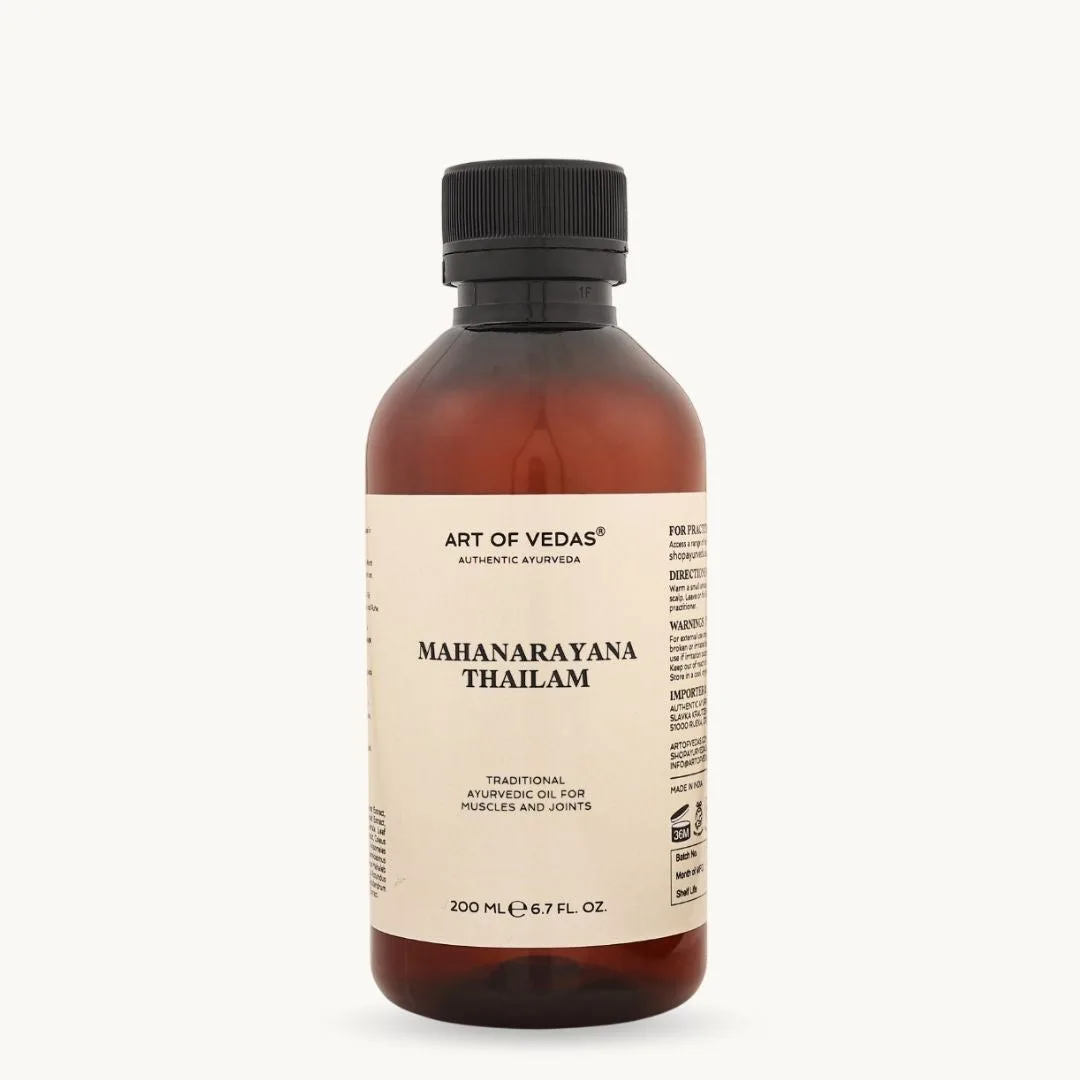
Knowing how to use Mahanarayana Thailam well turns a good oil into a lasting ritual. This classical sesame preparation is traditionally used in Ayurveda to support the comfort of joints, muscles and the lower back, and it gives its best when applied warm, slowly and with intention. The following guide sets out the traditional Abhyanga method step by step, from warming the bottle to the closing bath.
Before You Begin: Warming the Oil
Warmth is not a refinement of this ritual; it is the heart of it. Stand the bottle of Mahanarayana Thailam in a jug of hot water for a few minutes, or pour a small portion into a bowl set over warm water. Test a drop on the inside of the wrist: it should feel pleasantly warm, never hot. Choose a warm, draught-free room, lay out an older towel, and set aside unhurried time. Ten minutes is enough for a focused application; a full Abhyanga deserves twenty or more.
The Abhyanga Sequence, Step by Step
- Begin at the crown and shoulders with a little warm oil, using calm, even pressure.
- Work along the arms with long strokes over the long bones and circular movements around shoulders, elbows and wrists.
- Apply oil to the chest and abdomen with gentle clockwise circles.
- Give the lower back generous attention, working slowly with the flat of the hand.
- Continue down the legs: long strokes along thighs and calves, circles at hips, knees and ankles.
- Finish with the feet, taking time over the soles.
- Rest for twenty to thirty minutes, wrapped warmly, before a warm bath or shower.
The classical rule of thumb is easily remembered: long strokes along the length of the limbs, circular strokes at the joints, always toward warmth and ease.
A Focused Routine for Joints and the Lower Back
On busy days, a shorter application keeps the tradition alive. Warm a spoonful of oil, then work slowly around one region at a time: the knees in the evening, the shoulders after a day at the desk, the lower back after lifting and carrying. Leave the oil in place under warm clothing, or lay a comfortably warm cloth over the area for a few minutes. This unhurried, local practice is the form in which most households first come to know the oil. The background to the formula itself is described in our complete guide to Mahanarayana Thailam.
Pairing the Oil with a Kansa Wand
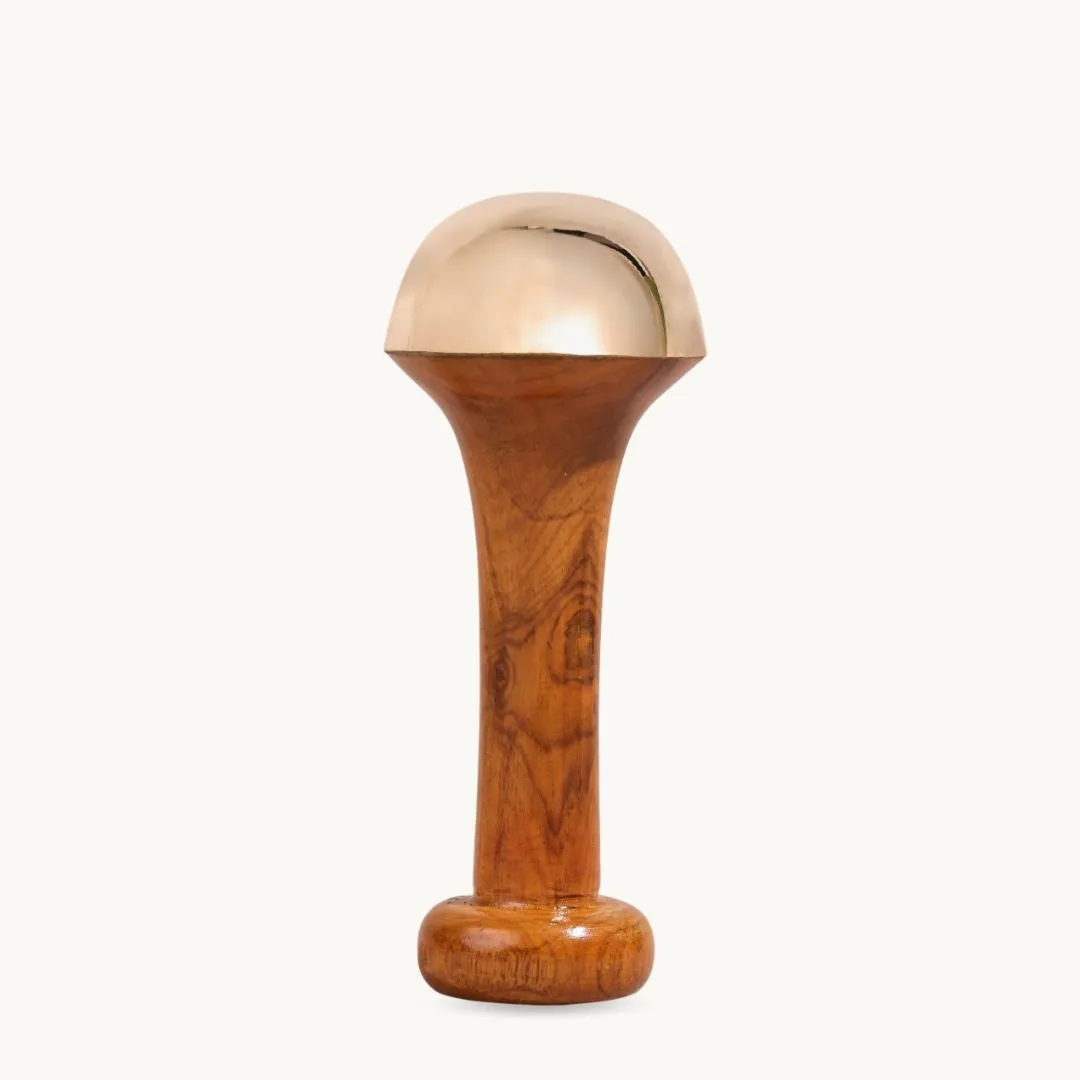
Many practitioners deepen the ritual by working the warm oil with a kansa Abhyanga wand, the traditional bronze-domed tool of Ayurvedic body massage. The smooth metal glides over oiled skin, allowing steady, even pressure along the large muscles without tiring the hands. Work in the same order as the hand sequence above, keeping the strokes slow. The full method is described in our kansa Abhyanga wand body massage guide.
Practised regularly, this simple sequence offers:
- A settling warmth that gathers the senses at the end of the day
- Joints and muscles that feel eased, supple and looked after
- Skin comfortably nourished through the dry, cold months
- A steady evening ritual that prepares body and mind for rest
Frequency and Season
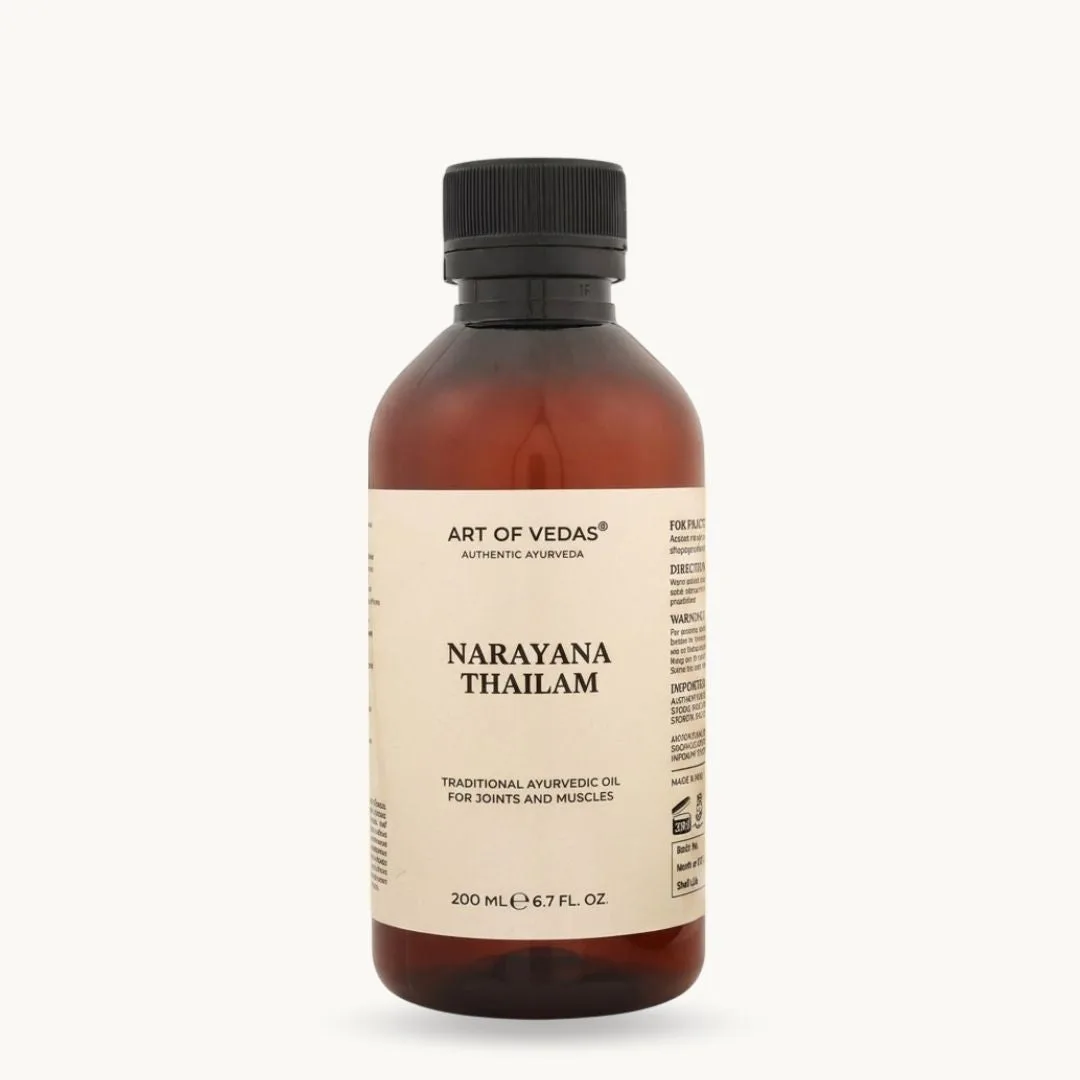
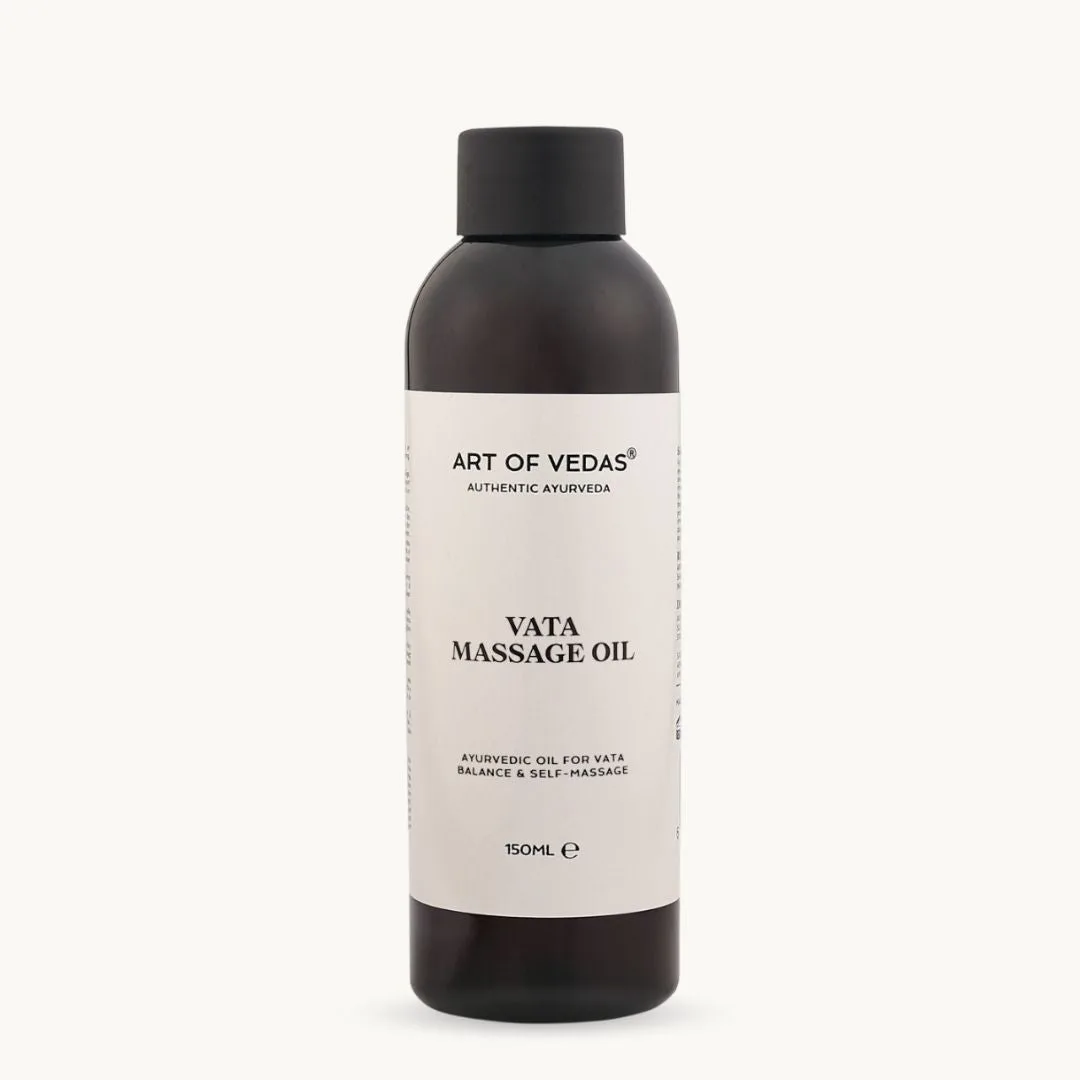
Classical Ayurveda welcomes daily Abhyanga, and Mahanarayana Thailam suits this rhythm especially in autumn and winter, the seasons in which Vata rises. In warmer months, or for those who prefer a lighter texture in daily use, a gentler blend such as our Vata massage oil serves the everyday ritual, with Mahanarayana Thailam kept for the focused routines described above. If you are weighing this oil against its simpler parent formula, our comparison of Mahanarayana and Narayana Thailam will help you choose.
Frequently Asked Questions
How much oil should I use?
For a full Abhyanga, two to three tablespoons warmed in a bowl is usually ample; a focused application to one region needs only a teaspoon or two. It is better to begin modestly and add a little more where the skin drinks it in than to begin with too much.
How long should the oil stay on the skin?
Tradition allows the oil twenty to thirty minutes before bathing, which gives its warmth time to be felt. When the day is short, even ten quiet minutes is worthwhile. For evening applications to the lower back or knees, the oil may simply remain under warm clothing overnight, with older linens protecting the bed.
Is morning or evening better?
The classical texts favour morning Abhyanga before bathing, as part of Dinacharya, the daily routine. Modern households often find the evening kinder to their schedule, and the oil serves both equally well. What matters most is regularity and warmth, not the hour on the clock.
Can I combine it with other oils?
Yes, in the simple sense of using different oils for different purposes: a light blend for daily full body work and Mahanarayana Thailam for joints and the lower back. Blending oils together in one bowl is not the classical way; each preparation is complete in itself and best used as intended.
Should the skin be washed before application?
Clean, dry skin receives oil best, so many practise Abhyanga before their bath or shower. If you bathe first instead, dry the skin thoroughly and allow it to cool from hot water before applying warm oil, so that the warmth you feel is the oil's own.
For external use only. This article describes traditional Ayurvedic practice for educational purposes and does not constitute medical advice. Always consult a qualified professional before beginning a new routine, especially during pregnancy, while nursing, or if you have specific concerns.