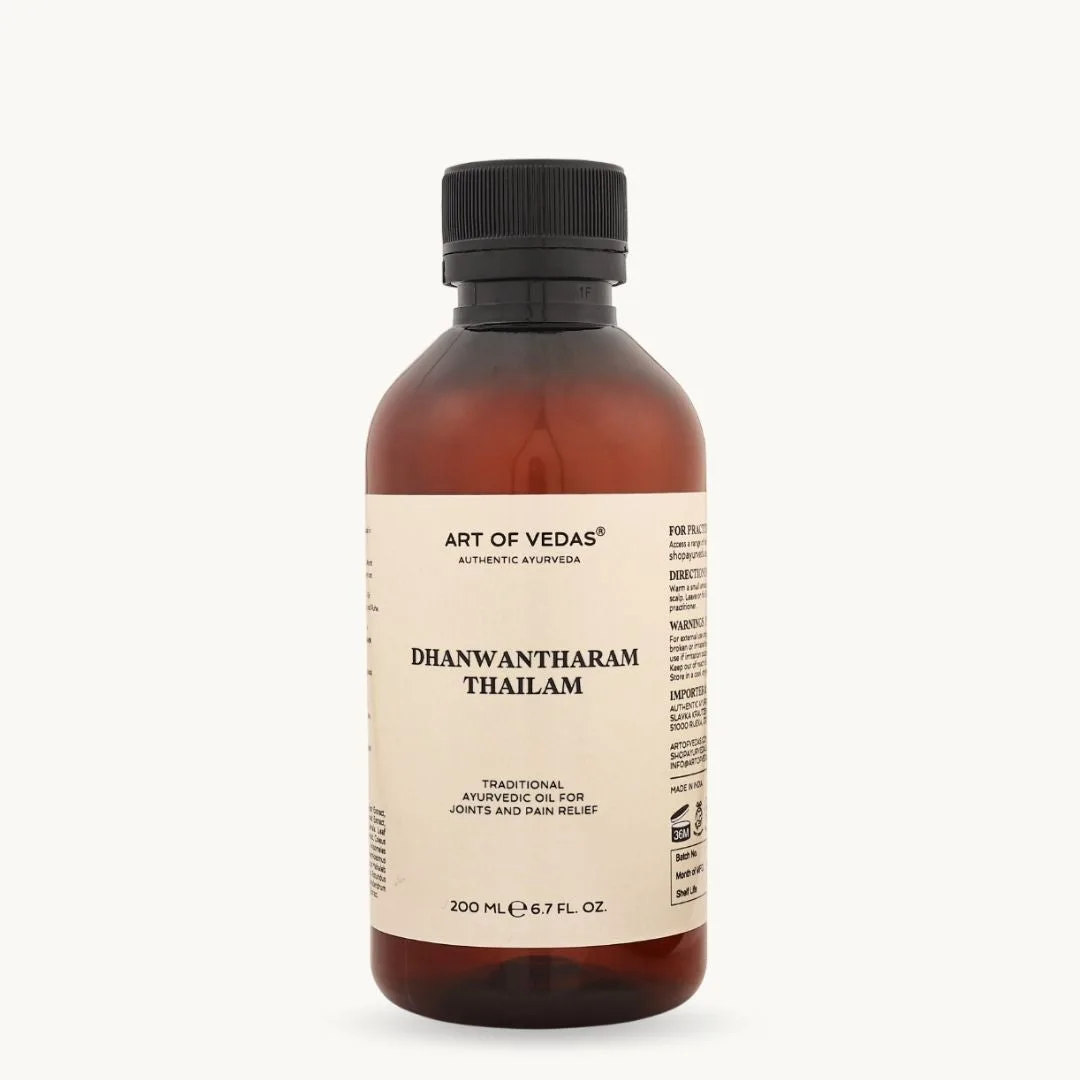
Dhanwantharam Thailam occupies a cherished place in the traditional postnatal care, where warm oil massage has accompanied new mothers for many generations. Classical Ayurveda understands the weeks after birth as a season of heightened Vata, calling for warmth, nourishment and rest, and the daily Abhyanga with Dhanwantharam Thailam stands at the centre of that tradition. This article describes the ritual as it is classically practised, in the spirit of care rather than prescription.
The Postnatal Tradition
, the period following childbirth is traditionally organised around quiet, warmth and daily rhythm. An experienced attendant, often a woman who has cared for mothers across several generations of a family, arrives each morning to give a full body massage with generously warmed oil. Warm baths, simple nourishing meals and long rest complete the picture. The tradition commonly continues for around six weeks, though every family and every practitioner shapes it differently. What remains constant is the intention: to give the mother a protected season of recovery in which she is held, warmed and cared for.
Why Dhanwantharam Thailam Holds This Place
Among the classical oils, Dhanwantharam Thailam is the one most closely associated with this season of life. It is named after Dhanvantari, the celestial physician of the Ayurvedic tradition, and is traditionally used in Ayurveda to support comfort, suppleness and a settled, grounded state when Vata runs high. Its herbal depth is considerable: a decoction of Bala (Sida cordifolia, the classical strengthening root) forms the foundation, joined by the ten roots of Dashamoola (a grounding group central to Vata care) and Yashtimadhu (liquorice root, traditionally soothing), all worked slowly into a sesame oil base in the classical manner. A fuller portrait of the formula is given in our complete guide to Dhanwantharam Thailam.
What a Traditional Postnatal Routine Looks Like
The ritual itself is unhurried. The room is kept warm and free of draughts, and the oil is warmed until it feels pleasantly hot on the inside of the wrist. The attendant works with long, rhythmic strokes along the limbs and back, gentler circles over the abdomen, and particular attention to the feet and lower back, where tiredness gathers. The oil is left to rest on the skin for a while before a warm bath. Households that prefer a richer, more clinging texture often reach for Dhanwantharam Kuzhambu, the traditional format described in our Dhanwantharam Kuzhambu guide. Step-by-step application methods are covered in how to use Dhanwantharam Thailam.
Practised in this spirit, the tradition offers:
- A warm, enveloping daily ritual that marks a protected moment of rest
- Skin that feels soft, supple and comfortably nourished
- The grounding scent of herbs slow-cooked in sesame oil
- A steady rhythm that gives shape to the early weeks with a newborn
- A living connection to generations family care
A Note on Pregnancy and Professional Guidance
During pregnancy itself the classical tradition is markedly more restrained, and oils are chosen, if at all, with individual care. We therefore ask readers to treat this article as cultural and educational background only. Any massage routine during pregnancy or in the postnatal weeks should first be discussed with a qualified Ayurvedic practitioner, midwife or physician who knows your situation. At Art of Vedas we are glad to describe the tradition faithfully, and equally firm that personal guidance belongs in professional hands.
Frequently Asked Questions
When does the traditional postnatal routine begin?
Customs vary between families and regions. The daily oil massage typically begins some days after birth, once the mother feels ready and the household's practitioner or midwife agrees. There is no universal starting day in the classical sources; readiness, warmth and comfort guide the decision, always with professional advice for the individual situation.
Can Dhanwantharam Thailam be used during pregnancy?
Tradition treats pregnancy with great restraint, and we do not recommend beginning any oil routine during pregnancy without personal professional guidance. If your practitioner or midwife approves gentle massage, they will advise which oil, where and how. Please regard this article as background on the postnatal tradition rather than guidance for pregnancy itself.
Should I choose the Thailam or the Kuzhambu?
Both carry the same classical formula. The Thailam has a lighter sesame texture suited to daily full body massage, while the Kuzhambu is richer and more clinging, which some households prefer for focused, slower work. Many families simply follow what their own tradition or practitioner recommends; there is no single correct choice.
How long does the postnatal oil tradition continue?
A period of around six weeks is common households, though some continue longer and others keep the ritual to a shorter season. The length is shaped by the mother's comfort, family custom and professional advice rather than by a fixed rule in the classical texts.
Can plain sesame oil be used instead?
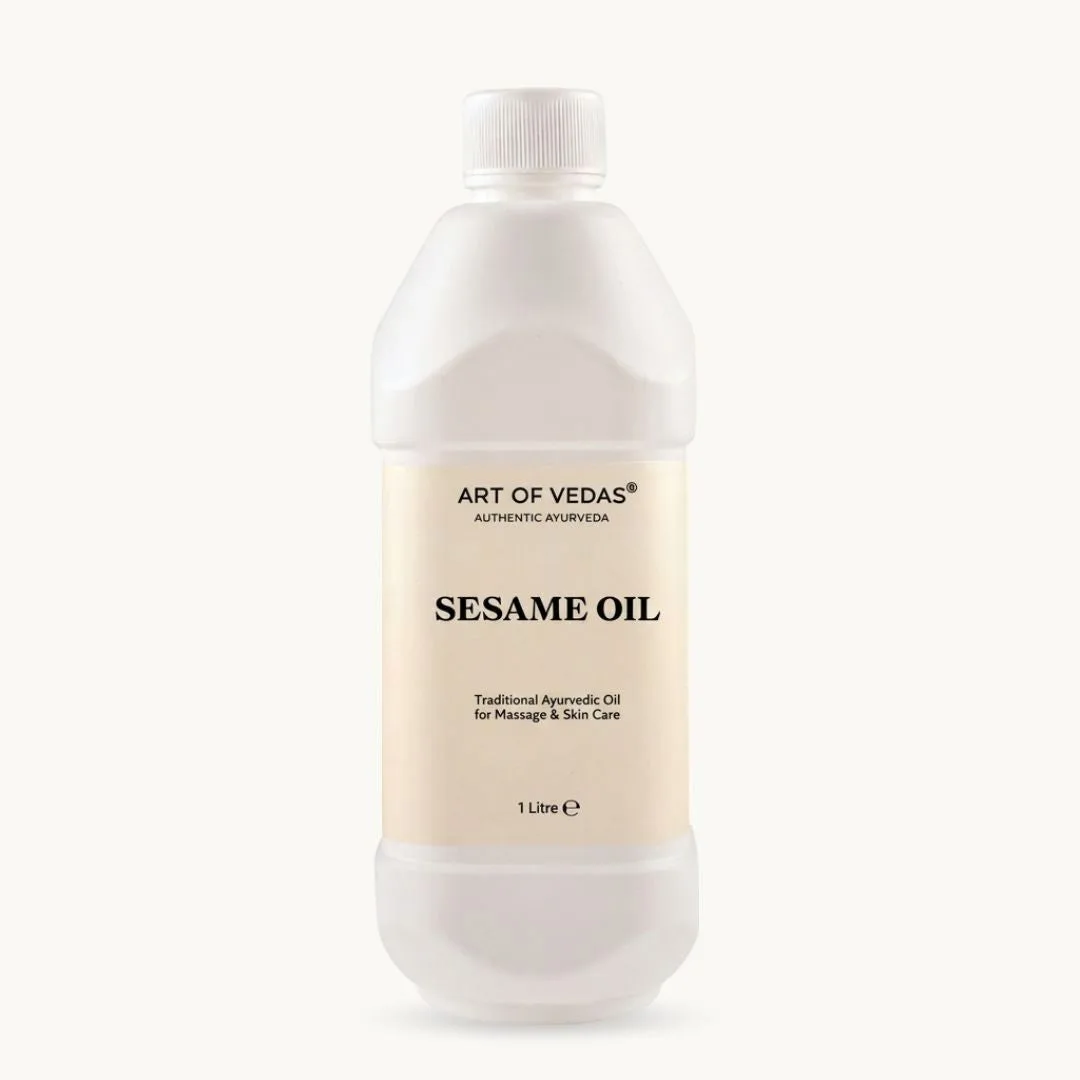
Warm sesame oil is the everyday base of Abhyanga throughout Ayurveda, and it is a perfectly honest place to begin. Dhanwantharam Thailam adds the classical herbal decoctions that tradition considers especially fitting for the postnatal season, which is why families reach for it at this particular time.
For external use only. This article describes traditional Ayurvedic practice for educational purposes and does not constitute medical advice. Always consult a qualified professional before beginning a new routine, especially during pregnancy, while nursing, or if you have specific concerns.