This article is part of our Kapha Type in Ayurveda: The Complete Guide guide series.
There is a state that is not quite sadness and not quite laziness, but something that feels like both. A reluctance to begin. The sofa pulling harder than the gym. The meal that should be smaller but is not. The attachment to people, routines and comforts that have genuinely run their course. The kind of tiredness that sleep does not cure.
This is elevated Kapha. And in classical Ayurvedic understanding, it is not a character failing - it is a Doshic state, with specific causes, specific signs and specific practices that shift it.
Kapha Dosha governs structure, stability, moisture and cohesion in the body and mind. When in balance, these qualities produce remarkable gifts: endurance, loyalty, patience, physical strength and the deep calm that Vata and Pitta types often quietly envy. When Kapha is elevated, these same qualities turn toward excess: heaviness, stagnation, attachment, congestion and a density in both body and mind that resists the very movement that would relieve it.
What is Kapha? The classical properties
Kapha is the Dosha of earth and water. The Ashtanga Hridayam defines it as heavy, slow, cold, oily, smooth, dense, stable, soft and sweet. Physiologically, Kapha governs the mucous membranes, the fluid that lubricates the joints, plasma and lymph, connective tissue and the building processes that create and maintain tissue mass. In balance, it gives strength, stability, endurance and a calm, patient temperament. In excess, heaviness becomes lethargy, moisture becomes congestion, steadiness becomes stubbornness and nourishment becomes excess weight.
Kapha imbalance is often overlooked in self-assessment because its early stages feel comfortable compared with the agitation of Vata or the heat of Pitta. A person accumulating Kapha may simply feel satisfied, a little slow and disinclined to change, which is exactly why Kapha can build for months before it becomes pronounced.
The five sub-doshas of Kapha
- Kledaka Kapha: in the stomach, moistening food.
- Avalambaka Kapha: in the chest and heart, supporting the lungs and heart.
- Bodhaka Kapha: in the mouth and throat, governing taste.
- Tarpaka Kapha: in the head, nourishing the sense organs.
- Shleshaka Kapha: in the joints, providing lubrication.
An imbalance in any one of them produces signs in its own region.
Who is most susceptible to Kapha imbalance?
People with a Kapha-dominant Prakriti are the most prone to Kapha excess, although Kapha can accumulate in any constitution under the right conditions. Kapha types are typically heavier in build, with strong digestion when balanced, soft and oily skin, thick hair and a calm, steady temperament. They tend to sleep deeply and enjoy food, comfort and familiar routine. In temperate climates the main Kapha season runs from late winter into early spring, when the heavy, wet and cold qualities outside directly increase Kapha inside.
More classical causes of Kapha imbalance
The Charaka Samhita (Sutrasthana, chapter 17) lists the causes that specifically aggravate Kapha. Beyond those named above:
- Tastes: sweet, sour and salty tastes in excess.
- Heavy foods: heavy meats, wheat, fried food, cold drinks, excessive sugar and large amounts of food eaten too often.
- Eating before the last meal is digested: the Ashtanga Hridayam describes this as one of the fastest ways to create Ama (undigested residue) and Kapha accumulation at the same time.
- Daytime sleep: the Kapha-aggravating habit most consistently named in the classical texts. Brief rest is not harmful, but habitual daytime sleep, particularly after meals, raises Kapha in most people.
- Too much comfort: sedentary work, staying in warm indoor rooms and avoiding cold and wind. Kapha paradoxically needs the qualities it finds uncomfortable: stimulation, movement and mild discomfort.
- Season and climate: late winter and the spring rains, cold and damp climates and long periods indoors during winter.
Kapha imbalance symptoms: the wider picture
The Ashtanga Hridayam and the Charaka Samhita describe Kapha imbalance as a pattern of heaviness, stagnation and excess moisture in the tissues and channels. In addition to the signs above, the classical descriptions include:
- Persistent fatigue and heaviness in the body, especially in the morning
- Congestion in the head, throat or chest that worsens in cold weather
- Oily skin and enlarged pores
- Water retention, particularly in the lower legs
- Dull or blunted taste and smell
- Loose, pale stools or sluggish bowel function
- Heaviness and stagnation in the muscles
- Mental dullness: slower thought, slower memory retrieval and slower responses
- Procrastination and difficulty waking in the morning
- A gentle, persistent melancholy, and possessiveness in its emotional expression
The Kapha-pacifying protocol in more detail
Kapha is heavy, slow, cold, oily, dense and stable, so the answer is light, stimulating, warm, dry and mobile.
What to eat to reduce Kapha
In practice, the most helpful foods for Kapha are ginger, black pepper, chilli, turmeric, mustard seed, bitter greens, legumes and light grains such as barley and millet. Warm water with ginger, lemon and a little honey, the one sweet substance said to reduce Kapha in moderation, is a classical morning drink for Kapha. Reducing wheat, heavy meats, cold foods, fried foods and sugar matters more for Kapha than for any other Dosha, because a Kapha-heavy digestion processes them slowly and incompletely and the residue feeds further accumulation. Eating only two meals a day without snacks is a classical Kapha strategy that lets Agni finish each meal before the next.
Exercise to the point of perspiration
The Charaka Samhita (Sutrasthana, chapter 7) describes exercise as reducing Kapha, increasing warmth and improving digestion. For Kapha types the texts recommend exercise to the point of perspiration, in contrast with the gentler approach for Vata, ideally in the morning before breakfast. Cold water in the morning, dry brushing and lively movement such as brisk walking, cycling or dance all counter Kapha's heavy, stagnant qualities.
Sleep discipline
Limiting sleep to about seven hours and giving up daytime sleep entirely are among the most effective non-dietary steps for Kapha. Rising before 6 a.m. uses the light, mobile Vata phase of the early morning (2 a.m. to 6 a.m.); staying in bed after 6 a.m. moves into Kapha time and reinforces heaviness.
Ayurvedic oils and herbs for Kapha imbalance
Unlike Vata, which needs heavy, nourishing oil in generous amounts, Kapha benefits from lighter, stimulating oil with warming herbs. The aim is not nourishment, which Kapha already has in excess, but to stimulate circulation, open the channels and move stagnation.
Karpasasthyadi Thailam
This warming Thailam is described in the Sahasrayogam for heaviness, stagnation in the muscles and sluggish circulation. Its sesame base carries a decoction of pungent, stimulating herbs, and it suits Kapha Abhyanga, particularly for the limbs and back. For Kapha the oil can be slightly cooler than for Vata, and the Ashtanga Hridayam describes Garshana with a raw silk glove before the oil as a Kapha-managing practice.
Trikatu and Triphala
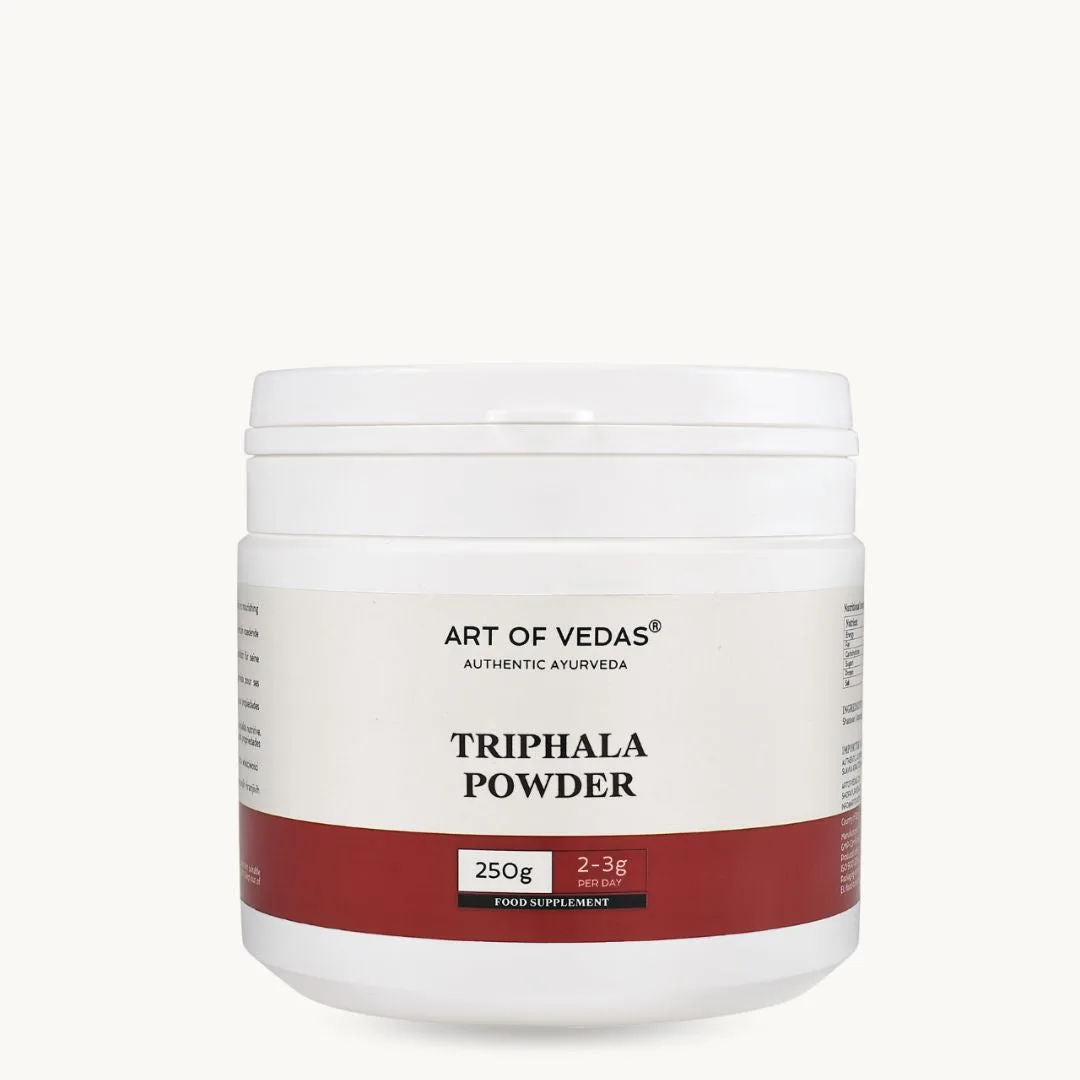
Trikatu churna, the powder of the three pungents, is a classical Kapha-stimulating preparation taken in small amounts before or after meals; the Ashtanga Hridayam describes it as supporting digestion and countering Kapha excess. Triphala churna is a mild Kapha-balancing formula through the astringency of its three fruits and the specific Kapha-reducing action of Haritaki and Bibhitaki. Internal preparations should be chosen with a qualified practitioner, and always during pregnancy, for children or when taking prescribed products.
The spring Kapha cleanse at home
The spring routine (Vasanta Ritucharya) is the traditional annual way to clear the Kapha accumulated over winter. The Charaka Samhita names Vamana as the main Panchakarma procedure for Kapha, but it is a clinical procedure that needs professional supervision. At home, the spring cleanse means mainly warm, light, easily digested food such as kitchari, warm soups and steamed vegetables, more ginger and peppercorn, vigorous morning exercise, dry brushing before bathing and warming herbal teas. Done each spring, it keeps Kapha from building up year after year.
What Kapha Imbalance Means
Kapha accumulates the way water does - slowly, from the bottom, without drama. There is rarely a sudden Kapha crisis. Instead there is a gradual increase in heaviness, in inertia, in moisture and congestion, that builds over weeks and months - often through a winter, often through a period of reduced activity or comfort-eating, often through a relationship or life situation that no longer serves but is held onto.
Classical texts describe the three stages for Kapha:
Sanchaya (accumulation): Kapha begins to build. Signs are subtle - a slight increase in weight, a bit more congestion in the morning, a bit less enthusiasm. This is the ideal time to intervene.
Prakopa (provocation): Kapha becomes clearly elevated. The signs below are persistent and noticeably affecting daily life and wellbeing.
Prasara (spread): Elevated Kapha spreads from its primary seat (the stomach, lungs and chest) into other systems - the sinuses, the lymphatic system, the joints and the mind.
Common Causes of Elevated Kapha
The causes of Kapha elevation share Kapha's own qualities: they are heavy, slow, moist, cold and stable - things that add more of Kapha's existing qualities to the system.
Dietary causes:
- Heavy dairy - large quantities of cheese, ice cream, cold milk, thick yoghurt
- Excess sweet foods and refined carbohydrates
- Fried and oily food in quantity
- Cold food and drinks - cold water, refrigerated food eaten cold
- Eating beyond satiety - Kapha types have a slower satiety signal and are more prone to eating past fullness
- Eating too late - heavy evening meals that are not metabolised before sleep
Lifestyle causes:
- Sedentary routine - the absence of vigorous movement is the most powerful Kapha accumulator
- Excessive sleep, particularly sleeping past sunrise and napping in the daytime
- Little variety or change - Kapha's natural preference for the familiar and stable, taken to excess, produces stagnation
- Cold, damp environments - late winter and spring amplify Kapha accumulation
- Grief, loss and prolonged emotional attachment - the holding-on quality of unprocessed Kapha emotion
Seasonal causes:
- Late winter and spring - the Kapha season. Cold, damp, heavy air; Kapha accumulated through winter begins to liquefy as temperatures slowly rise, producing the congestion and heaviness characteristic of this season
- Periods of particularly cold, wet weather at any time of year
The Signs of Elevated Kapha
In the body:
- Weight gain or heaviness that feels disproportionate to intake - Kapha's slow metabolism and dense nature make weight gain easier and weight loss harder
- Congestion in the chest, sinuses or throat - particularly in the morning, consistent with the Kapha time of day (6am to 10am)
- Excess mucus production - nasal, respiratory, digestive
- Slow, sluggish digestion - food sitting heavily, a feeling of fullness that persists for hours after eating
- Swelling, particularly in the extremities - Kapha's dense, moist quality expressed in fluid accumulation
- Skin that feels congested, thick or dull - the Kapha skin in excess
- Heavy, extended sleep that does not feel refreshing - sleeping long and still waking tired
- Morning lethargy - the characteristic Kapha heaviness in the hours after waking, before the Pitta time of day brings energy
In the mind and behaviour:
- Inertia - the difficulty beginning things that is Kapha's primary mental challenge. Not laziness (which implies willingness without action) but a genuine heaviness that makes initiation genuinely difficult
- Excessive attachment - to people, objects, routines and situations that have run their course; the holding-on that Kapha's cohesive nature makes natural but which, in excess, becomes clingy
- Depression of a particular quality - slow, grey, unmotivated, withdrawn; different from the anxious Vata depression or the intense self-critical Pitta depression
- Resistance to change - Kapha's stability quality in excess produces a genuine aversion to variation, novelty and adjustment
- Oversleeping - the tendency to seek more sleep than needed, particularly in the morning and afternoon
- Difficulty letting go - of people, of the past, of comfortable habits that no longer serve
The Classical Approach to Restoring Kapha Balance
The classical principle: introduce the opposite qualities of Kapha - warmth, lightness, dryness, movement and stimulation.
Kapha is the Dosha that benefits most dramatically from vigorous intervention. The practices that most help Vata (slow, nourishing, warming) and Pitta (cool, moderate, spacious) are the opposite of what Kapha needs. Kapha needs intensity, change and movement - and the resistance to exactly these is one of the primary expressions of Kapha imbalance.
1. Vigorous, Daily Movement - Most Important
Classical texts are emphatic: exercise is one of the most powerful tools for Kapha. And it must be genuinely vigorous - not gentle yoga or a walk, but movement that generates heat, increases heart rate and produces a light sweat. This is the practice that most directly counters Kapha's accumulating tendency.
The timing is critical: morning exercise is essential for Kapha - getting up and moving before the Kapha hours of 6am to 10am, rather than sitting with the heaviness of morning Kapha, is one of the most effective daily interventions.
For Kapha types, establishing a morning movement practice is the single most impactful lifestyle change available. Everything else builds more easily once this is in place.
2. Dry Brushing Before Abhyanga (Garshana)
Classical Ayurveda recommends Garshana - dry brushing with a raw silk or cotton garment or brush - as a specifically Kapha-supportive practice that precedes oil massage. Garshana stimulates the lymphatic system, removes surface congestion and increases circulation before oil is applied, so the Abhyanga that follows works on a more open, receptive tissue.
For Kapha types, Garshana before Abhyanga is more important than the oil itself in many ways - it provides the initial stimulation that Kapha most needs.
3. Abhyanga with Lighter Oil and Invigorating Technique
Kapha types still benefit from Abhyanga - but the approach is different from Vata or Pitta.
Lighter oil in smaller quantity - avoid the heavy sesame oils suited to Vata. Lighter sesame or warming formulas are appropriate. Less oil than Vata, applied with more vigour.
Invigorating technique - brisk, stimulating strokes rather than slow and nourishing. The intention is circulation and lymphatic movement, not deep nourishment. More vigorous strokes on the limbs and torso.
Full Abhyanga guide with Kapha adaptations Choosing the right oil for Kapha
4. Lighter Diet
The dietary approach for Kapha imbalance requires particular honesty. The foods that comfort Kapha most - heavy dairy, sweet foods, warm bread, excess carbohydrates - are precisely those that aggravate the condition. The classical guidance for Kapha diet: lighter, warmer, more pungent and bitter, smaller portions.
Specifically: increase pungent (warming spices), bitter (leafy greens) and astringent (lentils, most vegetables) tastes. Reduce sweet, sour and salty. Reduce heavy dairy significantly. Eat the largest meal at midday, the lightest in the evening. Do not eat after 7pm.
Full food guide by Dosha
5. Deliberate Variety and Change
Classical Ayurveda recommends that Kapha types deliberately introduce variety into their routines - new routes, new activities, new social experiences, seasonal changes in food and practice. This is not a general wellness recommendation; it is a specific Kapha intervention. The stability that Kapha's nature prefers becomes, in excess, the stagnation that perpetuates the imbalance.
6. Spring as the Decisive Season
The Kapha season (late winter through early spring) is when Kapha accumulation peaks and when the transition toward the lighter, warmer Pitta season provides a natural opportunity to clear it. Classical Ayurveda describes spring as the traditional season for gentle seasonal cleansing - lighter eating, increased movement and specifically Kapha-clearing practices in the weeks of March and April.
Beginning Kapha-supportive practices in February, before the spring Kapha peak, prevents the accumulation from becoming pronounced. See the full seasonal guide.
When to Seek More Support
When Kapha imbalance is significant, persistent or is accompanied by marked lethargy, low mood or physical congestion that has not responded to lifestyle adjustment, a professional assessment provides more precision.
Our AYUSH-certified Ayurvedic doctors assess both your constitutional Prakriti and your current Vikriti, identify the specific pattern of Kapha accumulation and its likely causes, and give you a personalised protocol specific to your situation.
Book an online consultation with an AYUSH-certified Ayurvedic doctor
Frequently Asked Questions
What are the five sub-doshas of Kapha? Classical Ayurveda describes five Kapha sub-doshas. Kledaka Kapha moistens food in the stomach, Avalambaka Kapha supports the heart and lungs from the chest, Bodhaka Kapha governs taste in the mouth and throat, Tarpaka Kapha nourishes the sense organs in the head and Shleshaka Kapha lubricates the joints. An imbalance in one of them shows first in its own region.
Is it possible to have too little Kapha? Yes, though it is far less common than excess. Too little Kapha, called Kapha Kshaya, shows as dry joints, reduced body weight, thirst and a loss of the natural calm and stability that balanced Kapha gives. It often accompanies strong Vata excess. In that case the warming, Kapha-reducing routine would make things worse, so a qualified practitioner should assess first.
Why does Kapha feel heavier in spring? In classical Ayurveda, the Kapha that accumulates through a cold, heavy winter is released and liquefied by the first warmth of spring and floods the respiratory channels, which is why spring brings congestion and heaviness. The traditional advice is to start clearing Kapha before spring, eat lighter food, move vigorously each morning and keep up a daily Nasya practice with Nasya oil.
What should you eat to reduce Kapha? To reduce Kapha, favour pungent, bitter and astringent tastes: ginger, black pepper, turmeric, mustard seed, bitter greens, legumes and light grains such as barley and millet. A warm drink of ginger, lemon and a little honey suits Kapha in the morning. Keep wheat, heavy meats, sugar, cold and fried foods low, and eat two meals a day without snacks.
Is daytime sleep bad for Kapha? The classical texts name habitual daytime sleep as the lifestyle habit that most consistently raises Kapha, particularly sleep after meals. A brief rest is not harmful. For a Kapha imbalance, the classical advice is about seven hours of night sleep, no daytime naps and rising before 6 a.m., before the heavy Kapha time of morning begins.
Which oil is best for Kapha imbalance? For Kapha imbalance, Ayurveda uses lighter, warming oils in small amounts and applies them briskly. Karpasasthyadi Thailam, described in the Sahasrayogam for heaviness and sluggish circulation, is a classical choice, particularly for the limbs and back. Dry brushing (Garshana) with a raw silk glove before the oil adds the stimulation Kapha needs most.
How do you do a spring Kapha cleanse at home? A home spring Kapha cleanse means mainly warm, light, easily digested food such as kitchari, soups and steamed vegetables, more ginger and peppercorn, vigorous morning exercise, dry brushing before bathing and warming herbal teas. Clinical procedures such as Vamana belong only under professional supervision. During pregnancy or with a persistent complaint, ask a qualified practitioner before you begin.
I am a mix of both Kapha and Vata: am I supposed to increase or decrease that dosha? Your constitution itself, the Prakriti, is not something to increase or decrease. Ayurveda works with whichever Dosha is currently in excess. If heaviness, congestion and lethargy dominate, the light, warming Kapha routine helps; if dryness and depletion dominate, that same routine could aggravate Vata. With a Kapha-Vata mix, a qualified practitioner should assess the current pattern first.
Can Vata and Pitta types have elevated Kapha? Yes. Late winter and spring elevate Kapha in everyone. Very sedentary periods, comfort eating and grief can elevate Kapha in any constitutional type - it is simply most persistent and pronounced in Kapha-dominant individuals.
How long does it take to reduce Kapha? Kapha responds more slowly than Vata or Pitta to intervention - this is consistent with Kapha's slow, stable nature. Noticeable changes in energy and motivation typically emerge within 2 to 3 weeks of consistent vigorous movement and dietary adjustment. Significant shifts in weight and congestion develop over 6 to 12 weeks of consistent practice.
Is the depression associated with Kapha the same as clinical depression? Classical Ayurveda describes patterns that overlap with what contemporary medicine calls depression - but these are Doshic descriptions, not diagnoses. If you are experiencing significant depression, please consult with a qualified healthcare professional. An AYUSH-certified Ayurvedic doctor can assess the Doshic dimension of your experience within, not instead of, that professional care.
Why does vigorous exercise help when I feel too heavy to move? This is the central paradox of Kapha imbalance - the inertia it produces is precisely what needs to be countered by the movement that feels hardest to initiate. Classical texts acknowledge this explicitly: the Kapha type benefits most from vigorous movement and is most resistant to beginning it. Starting with 10 minutes at a fixed time each morning - not negotiable - and building from there is the classical practical approach.
Understand your full Kapha constitution: Kapha Dosha guide
Explore the other imbalance guides: Vata imbalance Pitta imbalance
Not sure which Dosha is elevated? Take the free Dosha test
Browse Kapha-balancing massage oils