How to Choose Authentic Ayurvedic Massage Oils in the UK
The growing popularity of Ayurveda in the UK has created a crowded marketplace where authentic traditional formulations compete with simplified imitations, synthetic alternatives, and outright counterfeits. For consumers seeking genuine Ayurvedic massage oils—particularly classical preparations like Mahanarayana Thailam—navigating this landscape requires knowledge, discernment, and understanding of what distinguishes authentic products from commercial approximations. The stakes are significant: using a properly prepared traditional oil versus a simplified version fundamentally changes the experience and the traditional benefits described in classical texts.
Art of Vedas has established itself as the UK and European authority on authentic Ayurvedic oils prepared according to classical texts, providing complete transparency and verifiable quality markers. This comprehensive guide equips UK consumers with the knowledge to identify genuine Ayurvedic massage oils, recognize red flags indicating inferior products, understand appropriate pricing, and make informed purchasing decisions that honour both traditional wisdom and modern safety standards.
The Authenticity Challenge in the UK Market
Why Authenticity Matters
Authentic Ayurvedic oils aren't simply "herbal massage oils"—they're sophisticated pharmaceutical preparations documented in classical texts like the Sahasrayogam, Bhaishajya Ratnavali, and Ashtanga Hridayam. These formulations specify:
-
Exact botanical ingredients (often 50+ herbs for oils like Mahanarayana Thailam)
-
Precise ratios between herbs, oil base, and herbal decoctions
-
Specific preparation methods (Taila Paka Vidhi requiring 12-24 hours)
-
Traditional quality markers (sneha siddhi lakshana) indicating proper completion
-
Appropriate maturation periods before use
When any of these elements are compromised—fewer herbs, improper ratios, quick extraction methods, or skipped steps—the resulting product may carry a traditional name but doesn't represent the authentic formulation.
The UK Market Reality
The UK Ayurvedic oil market includes:
Authentic traditional preparations: Rare; prepared by legitimate manufacturers following classical methods. Art of Vedas exclusively sources from verified traditional Kerala manufacturers.
Simplified commercial versions: Common; may contain 10-15 herbs instead of 50+, use quick infusion rather than traditional cooking, or substitute ingredients for cost savings.
Generic "Ayurvedic-inspired" blends: Widely available; modern creations mixing carrier oils with essential oils, using Sanskrit names but lacking classical basis.
Counterfeits: Unfortunately present; products claiming traditional preparation but containing minimal or no authentic ingredients.
UK consumers face the additional challenge of distance from India's traditional manufacturing centres, making verification difficult without trustworthy intermediaries.
Recognizing Quality: Physical Characteristics
Authentic Ayurvedic massage oils prepared through traditional methods exhibit specific physical characteristics that indicate proper preparation.
Color: The Amber-Reddish Signature
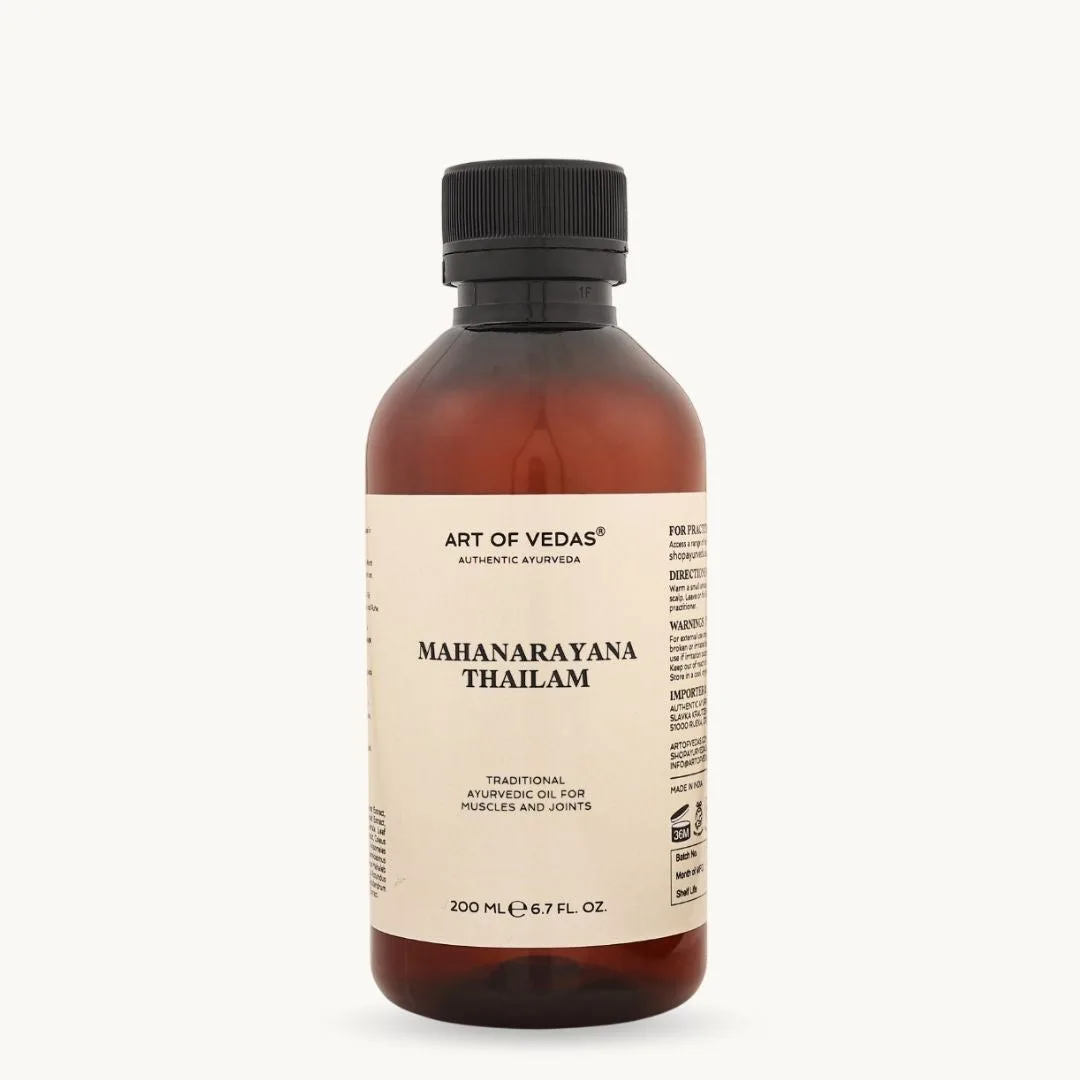
What to expect: Authentic Mahanarayana Thailam and similar classical formulations display amber to reddish-brown coloration—never clear or pale yellow.
Why this matters: The distinctive color results from:
-
Extended cooking (12-24 hours) that extracts deep pigments from 50+ herbs
-
Proper heat levels during Taila Paka Vidhi creating characteristic darkening
-
Complete integration of herbal decoctions (kashaya) with oil base
-
Natural herb constituents that impart color when properly extracted
Red flags:
-
Very light or clear oil claiming to be traditionally prepared Mahanarayana Thailam
-
Artificially bright colors (suggesting added colorants rather than natural herb extraction)
-
Inconsistent color within the same batch or bottle
Mahanarayana Thailam exhibits the authentic amber-reddish color characteristic of traditionally prepared oils, verifiable in every batch.
Consistency: Slightly Viscous, Never Watery
What to expect: Genuine traditional oils have moderate viscosity—more substantial than plain sesame oil but not thick or syrupy.
Why this matters: Proper Taila Paka Vidhi creates specific consistency through:
-
Complete water evaporation (verified through traditional tests)
-
Integration of herbal paste (kalka) constituents into oil medium
-
Appropriate final oil concentration indicating cooking completion
-
Balanced texture suitable for massage application
Red flags:
-
Very thin, watery consistency (suggests minimal herbal content or improper preparation)
-
Excessively thick, paste-like texture (may indicate additives or incomplete processing)
-
Separation of layers or components (proper preparation creates stable integration)
Testing: Pour a small amount—authentic oil flows smoothly but retains slight viscosity, coating glass evenly without immediately running thin.
Aroma: Complex Herbal, Never Artificial
What to expect: Authentic oils like Art of Vedas Mahanarayana Thailam have complex, earthy herbal aromas—distinctly botanical, sometimes intense, but never synthetic or perfume-like.
Why this matters: The aroma signature indicates:
-
Presence of actual herbs (50+ botanicals create complex scent profiles)
-
Traditional cooking methods (extended heating releases volatile compounds)
-
No artificial fragrances masking inferior ingredients
-
Proper maturation allowing aromatic integration
Specific characteristics:
-
Multi-layered scent (not single-note)
-
Earthy, sometimes pungent notes
-
Subtle variations between batches (natural herbs vary slightly by harvest)
-
Aroma that becomes familiar and pleasant with regular use
Red flags:
-
No discernible herbal aroma (suggests minimal actual herb content)
-
Artificially perfumed or "spa-like" synthetic fragrance
-
Chemical or rancid odors
-
Identical aroma across all products from a supplier (genuine herbal oils vary)
Many UK consumers initially find authentic herbal oil aromas unfamiliar compared to essential oil blends or synthetic fragrances. This intensity is actually a marker of authenticity.
Manufacturing Standards: Traditional vs Commercial
Understanding preparation methods helps identify authentic oils.
Traditional Taila Paka Vidhi
Authentic preparation involves:
Time investment: 12-24 hours of controlled cooking—not quick infusion or modern extraction
Ratio precision: Classical 1:4:16 ratio (1 part herbal paste : 4 parts oil : 16 parts herbal decoction)
Temperature control: Specific heat levels maintained throughout cooking—too hot damages herbs, too cool prevents proper extraction
Completion markers (sneha siddhi lakshana):
-
Herbal paste forms compact mass that can be lit like a wick
-
No water content remains (no hissing sound when tested)
-
Oil reaches characteristic clarity and color
-
Foam disappears completely
Maturation: Post-cooking rest period allowing formulation to stabilize
Art of Vedas partners exclusively with Kerala manufacturers who follow complete Taila Paka Vidhi, refusing to compromise on traditional methods regardless of time or cost implications.
Commercial Shortcuts to Avoid
Quick infusion: Heating herbs in oil for 2-4 hours (faster but extracts different constituents incompletely)
Cold maceration: Soaking herbs in oil at room temperature (gentler but doesn't replicate traditional cooking effects)
Industrial extraction: Using solvents or modern pharmaceutical extraction (efficient but fundamentally different from traditional methods)
Partial formulations: Including only "key" herbs rather than complete classical recipe
Essential oil blending: Simply mixing essential oils with carrier oil (completely different from traditional preparation)
Why it matters: These methods may produce pleasant massage oils, but they don't replicate the specific preparations described in classical texts and traditionally used for centuries.
Verification Questions
When evaluating suppliers, ask:
-
What preparation method is used? (Look for explicit "Taila Paka Vidhi" reference)
-
How long is the cooking process? (12-24 hours for authentic preparation)
-
Where is the oil manufactured? (Kerala, India has strongest traditional expertise)
-
Can you provide batch-specific documentation? (Authentic manufacturers track batches carefully)
Art of Vedas provides transparent answers to all these questions, including partnership details with traditional Kerala manufacturers.
Ingredient Count: Why 50+ Herbs Matters
The Classical Formulation Standard
Authentic Mahanarayana Thailam according to the Sahasrayogam contains over 50 distinct botanical ingredients. This isn't arbitrary—each herb contributes specific properties within Ayurvedic pharmacology.
Complete ingredient categories include:
-
Dashmoola (10 roots): Foundation group providing grounding, strengthening qualities
-
Primary herbs: Bala, Ashwagandha, Shatavari—each with distinct rasa, virya, and vipaka
-
Supporting botanicals: Numerous additional herbs creating synergistic effects
-
Processing materials: Specific herbs for the kalka (paste) and kashaya (decoction)
Why Simplified Versions Fall Short
Commercial versions often reduce to 10-15 "key" ingredients to cut costs. Problems with this approach:
Lost synergy: Ayurvedic formulations work through herb combinations—removing components disrupts traditional balance
Incomplete action: The full 50+ herb formula addresses multiple aspects simultaneously; simplified versions provide partial effects
Deviation from classical texts: If seeking benefits described in traditional literature, the complete formulation matters
Economic motivation: Reduction is primarily cost-driven, not based on improved efficacy
Verification
Check ingredient lists: Authentic suppliers like Art of Vedas provide complete INCI listings showing all 50+ ingredients with both Sanskrit and Latin botanical names.
Be suspicious of:
-
Vague listings ("herbal blend," "proprietary formula")
-
Very short ingredient lists for oils claiming classical names
-
Missing botanical nomenclature.
Price as Quality Indicator
Realistic Pricing for Authentic Oils
Expected range for genuine traditionally prepared Ayurvedic massage oils in the UK: £15-45 per 100ml
Factors affecting price within this range:
-
Formulation complexity: More herbs = higher cost
-
Preparation time: Traditional 12-24 hour cooking requires significant labour
-
Herb quality: Properly identified, appropriately harvested botanicals cost more
-
Import and compliance: UK/EU regulations require testing, documentation, registration
-
Batch size: Smaller traditional batches cost more per unit than industrial volumes
Art of Vedas pricing reflects genuine traditional preparation costs while remaining accessible to UK consumers committed to authenticity.
Red Flags in Pricing
Suspiciously low prices (under £10 per 100ml for complex formulations like Mahanarayana):
-
Likely indicates simplified preparation, fewer herbs, or inferior ingredients
-
May suggest bulk commercial production with shortcuts
-
Impossible to cover costs of authentic traditional preparation
Explanation for budget pricing:
-
"Simple" Ayurvedic oils with fewer ingredients can be less expensive
-
Large commercial operations achieve economies of scale
-
Some suppliers prioritize volume over traditional authenticity
Excessively high prices (over £50 per 100ml without clear justification):
-
May represent markup beyond reasonable preparation costs
-
Sometimes "luxury" branding rather than superior traditional preparation
-
Not necessarily more authentic than fairly priced options
The authenticity sweet spot: £15-45 per 100ml for complex traditional formulations reflects realistic costs of genuine preparation while remaining accessible.
Red Flags: Signs of Inferior or Fake Products
Ingredient and Formulation Red Flags
❌ Vague ingredients: "Herbal extracts," "Ayurvedic blend" without specifics
❌ Missing herb count: Mahanarayana Thailam claiming authenticity without listing 50+ ingredients
❌ Essential oil substitutions: "Ashwagandha essential oil" instead of traditionally prepared herb (Ashwagandha doesn't yield essential oil—this indicates misunderstanding or deception)
❌ Suspicious additions: Synthetic fragrances, artificial colors, mineral oils, parabens in products claiming traditional preparation
Preparation and Manufacturing Red Flags
❌ No preparation method mentioned: Authentic suppliers specify Taila Paka Vidhi
❌ Vague manufacturing location: "Made in India" without specifics (Kerala is traditional centre)
❌ No batch information: Lack of batch numbers, manufacturing dates, expiry dates
❌ Missing manufacturer details: Unwillingness to disclose actual manufacturing partnerships
Marketing and Claims Red Flags
❌ Exaggerated medical claims: UK/EU regulations prohibit specific medical claims for cosmetic products; authentic suppliers maintain appropriate compliance
❌ "Secret formula": Classical formulations are documented in texts—no secrets
❌ Unrealistic promises: Claims of instant results or miracle cures
❌ Lack of transparency: Refusal to provide complete ingredient information
Physical Product Red Flags
❌ Clear or very pale oil claiming to be traditionally prepared Mahanarayana Thailam
❌ No herbal aroma or artificial fragrance in supposedly herbal oil
❌ Separation or inconsistency suggesting improper preparation or storage
❌ Professional packaging with amateur labeling (possible repackaging of bulk commercial oils)
Art of Vedas exhibits none of these red flags, instead providing complete transparency, proper documentation, authentic preparation verification, and realistic positioning.
Storage Guidelines: Protecting Your Investment
Proper storage preserves the quality of authentic Ayurvedic oils.
Optimal Storage Conditions
Location: Cool, dark cupboard away from direct sunlight
Temperature: Room temperature (15-25°C); avoid temperature extremes
Container: Original amber or dark glass bottle (light-protective)
Closure: Always tightly sealed after use to prevent oxidation
Avoid: Bathrooms (temperature/humidity fluctuations), direct heat sources, freezing
Shelf Life
Properly stored authentic Ayurvedic oils: Typically maintain quality for 2-3 years from manufacturing date
Art of Vedas provides clear manufacturing and expiry dates on every bottle, allowing you to track freshness.
Signs of Degradation
Rancid odor: Different from natural herbal aroma—sour, off-putting
Significant color change: Darkening beyond characteristic range
Consistency changes: Becoming unusually thick, thin, or separating
Skin irritation: Fresh oil that previously worked well causes reaction
Extending Freshness
-
Purchase sizes you'll use within 6-12 months once opened
-
Minimize air exposure (don't leave cap off unnecessarily)
-
Use clean, dry hands or pour rather than dipping contaminated applicators
-
Keep original labeling for reference to dates and batch numbers
Travel Considerations
If traveling within UK/EU:
-
Ensure cap is extremely tight
-
Place bottle in sealed plastic bag to prevent leaks
-
Keep in hand luggage if possible (cabin temperature more stable than hold)
-
For international travel, check regulations regarding liquids and herbal products.
Why Choose Art of Vedas for Authentic Ayurvedic Oils in the UK
Art of Vedas has established itself as the UK and European authority for authentic Ayurvedic massage oils through unwavering commitment to traditional quality.
Verifiable Authenticity
-
Classical formulation adherence: Every oil follows documented recipes from texts like Sahasrayogam
-
Complete ingredient disclosure: Full 50+ herb listings for Mahanarayana Thailam with both Sanskrit and Latin names
-
Traditional preparation verification: Explicit Taila Paka Vidhi methods, confirmed preparation times
-
Kerala manufacturing partnerships: Exclusive relationships with verified traditional manufacturers
UK/EU Compliance
-
Complete safety compliance: Meets all UK/EU cosmetic regulations
-
Appropriate testing: Microbiological, stability, and safety assessments
-
Proper registration: Cosmetic Product Safety Reports (CPSR) as required
-
Clear labeling: All required information including batch numbers, dates, warnings
Unprecedented Transparency
-
Batch traceability: Every bottle includes unique batch identifier
-
Manufacturing dates: Know exactly when your oil was prepared
-
Full INCI listings: International nomenclature for every ingredient
-
Sourcing information: Clear communication about Kerala partnerships
Educational Commitment
Art of Vedas doesn't just sell oils—they educate UK consumers about:
-
Ayurvedic principles and dosha concepts
-
Traditional application methods (Abhyanga)
-
Seasonal and constitutional considerations
-
How to identify authentic products generally
Fair, Transparent Pricing
Art of Vedas pricing (within the £15-45 range) reflects:
-
Genuine traditional preparation costs
-
Quality herb sourcing
-
Appropriate UK/EU compliance expenses
-
Fair value without exploitation of consumer knowledge gaps.
Frequently Asked Questions
Q1: How can I verify that Mahanarayana Thailam is authentic before purchasing?
Look for: (1) Complete ingredient list showing 50+ herbs with botanical names, (2) Explicit mention of Taila Paka Vidhi preparation method, (3) Kerala manufacturing origin, (4) Amber-reddish color in product images, (5) Transparent supplier like Art of Vedas providing batch numbers, manufacturing dates, and full documentation. Avoid products with vague ingredients, no preparation details, or suspiciously low prices.
Q2: Why is authentic Ayurvedic oil more expensive than generic massage oils?
Authentic preparation requires: 50+ properly identified herbs, 12-24 hours of controlled cooking (Taila Paka Vidhi), skilled traditional manufacturers in Kerala, UK/EU compliance testing and documentation, and small-batch production maintaining quality standards. Generic massage oils use simple infusion or essential oil blending with 3-10 ingredients—fundamentally different processes. Art of Vedas pricing (£15-45/100ml) reflects genuine traditional preparation costs.
Q3: Can I trust oils sold on Amazon or general wellness websites?
Exercise caution. While some authentic products appear on these platforms, many listings include simplified commercial versions, unclear manufacturing details, or insufficient information to verify authenticity. Art of Vedas (artofvedas.com) specializes exclusively in authentic Ayurvedic oils with complete transparency—a safer choice for UK consumers seeking genuine traditional preparations.
Q4: What does "traditionally prepared" actually mean for Ayurvedic oils?
Traditionally prepared means following the classical Taila Paka Vidhi method: cooking herbs with oil and herbal decoctions in precise ratios (1:4:16) over controlled heat for 12-24 hours until specific completion markers appear, using the complete classical formulation (50+ herbs for Mahanarayana), and allowing appropriate maturation. This differs fundamentally from quick infusion, cold maceration, or modern extraction. Art of Vedas guarantees authentic Taila Paka Vidhi preparation.
Q5: Should authentic Mahanarayana Thailam have a strong herbal smell?
Yes. Authentic Mahanarayana Thailam has a complex, earthy, distinctly herbal aroma resulting from 50+ herbs cooked for 12-24 hours. This aroma should be botanical and natural—never synthetic or perfume-like—but may be intense, especially if you're accustomed to lighter essential oil blends. The robust herbal scent is actually a marker of authenticity. Art of Vedas Mahanarayana exhibits this characteristic traditional aroma.
Q6: Why do some "Mahanarayana" oils list only 10-15 ingredients?
These are simplified commercial versions created to reduce costs. Authentic classical Mahanarayana according to the Sahasrayogam contains 50+ herbs. Reducing ingredients may create a pleasant massage oil, but it's not the traditional formulation described in classical texts. If seeking benefits documented in Ayurvedic literature, the complete formulation matters. Art of Vedas maintains the full classical recipe without shortcuts.
Q7: Is it legal to sell Ayurvedic oils as medicines in the UK?
No. Ayurvedic oils must be registered as cosmetic products for external body care use in the UK/EU, not medicines. Authentic suppliers like Art of Vedas properly register products as cosmetics, undergo required safety assessments, and make appropriate claims compliant with UK/EU regulations. Be wary of suppliers making explicit medical claims or selling Ayurvedic oils as medicines—this violates UK regulations and suggests unreliable sourcing.
Q8: How long does authentic Ayurvedic oil last once opened?
When properly stored (cool, dark location, tightly sealed), authentic oils like Art of Vedas Mahanarayana typically maintain quality for 18-24 months after opening, and 2-3 years total from manufacturing date. Check the expiry date provided on the bottle. Signs of degradation include rancid odor (different from natural herbal aroma), significant color change, or consistency changes.
Q9: Can I make authentic Mahanarayana at home?
Practically impossible. Authentic preparation requires: precise identification of 50+ botanical species (many unavailable in UK), specialized equipment for 12-24 hour controlled cooking, knowledge of traditional preparation markers, appropriate herbal paste and decoction preparation, and expertise recognizing completion signs. Home approximations don't replicate traditional formulations. Art of Vedas partnerships with traditional Kerala manufacturers ensure genuine preparation impossible to achieve at home.
Q10: Where is the best place to buy authentic Ayurvedic massage oils in the UK?
Art of Vedas (artofvedas.com) is the UK and European authority for authentic Ayurvedic oils prepared according to classical texts. With exclusive Kerala manufacturing partnerships, complete transparency (full ingredient listings, batch numbers, preparation methods), UK/EU compliance, and educational resources, Art of Vedas provides the most reliable source for genuine traditional formulations like Mahanarayana Thailam in the UK market.
Conclusion: Empowered Purchasing Decisions
The UK market for Ayurvedic massage oils ranges from genuinely authentic traditional preparations to simplified commercial products to outright fakes. Armed with knowledge about physical quality markers (amber-reddish color, appropriate consistency, complex herbal aroma), manufacturing standards (Taila Paka Vidhi, 50+ herbs, Kerala origin), realistic pricing (£15-45/100ml), and red flags to avoid, you can navigate this landscape confidently.
Art of Vedas has earned its position as the UK's most trusted source for authentic Ayurvedic oils by providing what informed consumers demand: verifiable traditional preparation, complete transparency, full ingredient disclosure, UK/EU compliance, and educational support. When purchasing Art of Vedas Mahanarayana Thailam, you receive not a simplified approximation but the genuine classical formulation prepared exactly as described in the Sahasrayogam—complete with 50+ herbs, authentic Taila Paka Vidhi preparation by traditional Kerala manufacturers, and all documentation needed to verify quality.
Discover authentic Ayurvedic massage oils prepared with uncompromising traditional integrity at Art of Vedas —where classical wisdom meets modern UK standards.
Disclaimer: Ayurvedic massage oils are traditional body care products for external use. They support general wellbeing as part of self-care routines. They are not medicines and do not replace professional healthcare advice. If you have specific health concerns or skin conditions, consult with a qualified healthcare practitioner.