Dashamula is not a plant. It is a set: dasha, ten, and mula, root. Ten roots gathered under one name, and the name then travels to the preparations built on them. Dhanwantharam Ghritham is one of those preparations, and its ingredient list is the clearest place on this site to read the full set.
Two halves of five
The ten are counted as two groups of five. Brihat Panchamula, the five greater roots, are taken from trees. Laghu Panchamula, the five lesser roots, are taken from herbs and small shrubs. The division is by the size of the plant, not by rank.
The five greater roots
- Bilva, Aegle marmelos
- Agnimantha, Premna corymbosa
- Shyonaka, Oroxylum indicum
- Patala, Stereospermum colais
- Gambhari, Gmelina arborea
The five lesser roots
- Shalaparni, Desmodium gangeticum
- Prishniparni, Pseudarthria viscida
- Brihati, Solanum anguivi
- Kantakari, Solanum xanthocarpum
- Gokshura, Tribulus terrestris
Reading the ten on a label
A European label prints botanical names, so the classical set is present but not announced. Read the first ten botanical names on the Dhanwantharam Ghritham list against the two lists above and the whole of Dashamula is there, in the classical order, before the remaining herbs of the formula begin.
Why roots
A Gana is usually named for what is collected from it. Here the texts specify the root, the part that is dug rather than picked, which is also the part that carries the name: mula. Preparations that draw on the group are understood to draw on those roots specifically.
Where the group appears in the range
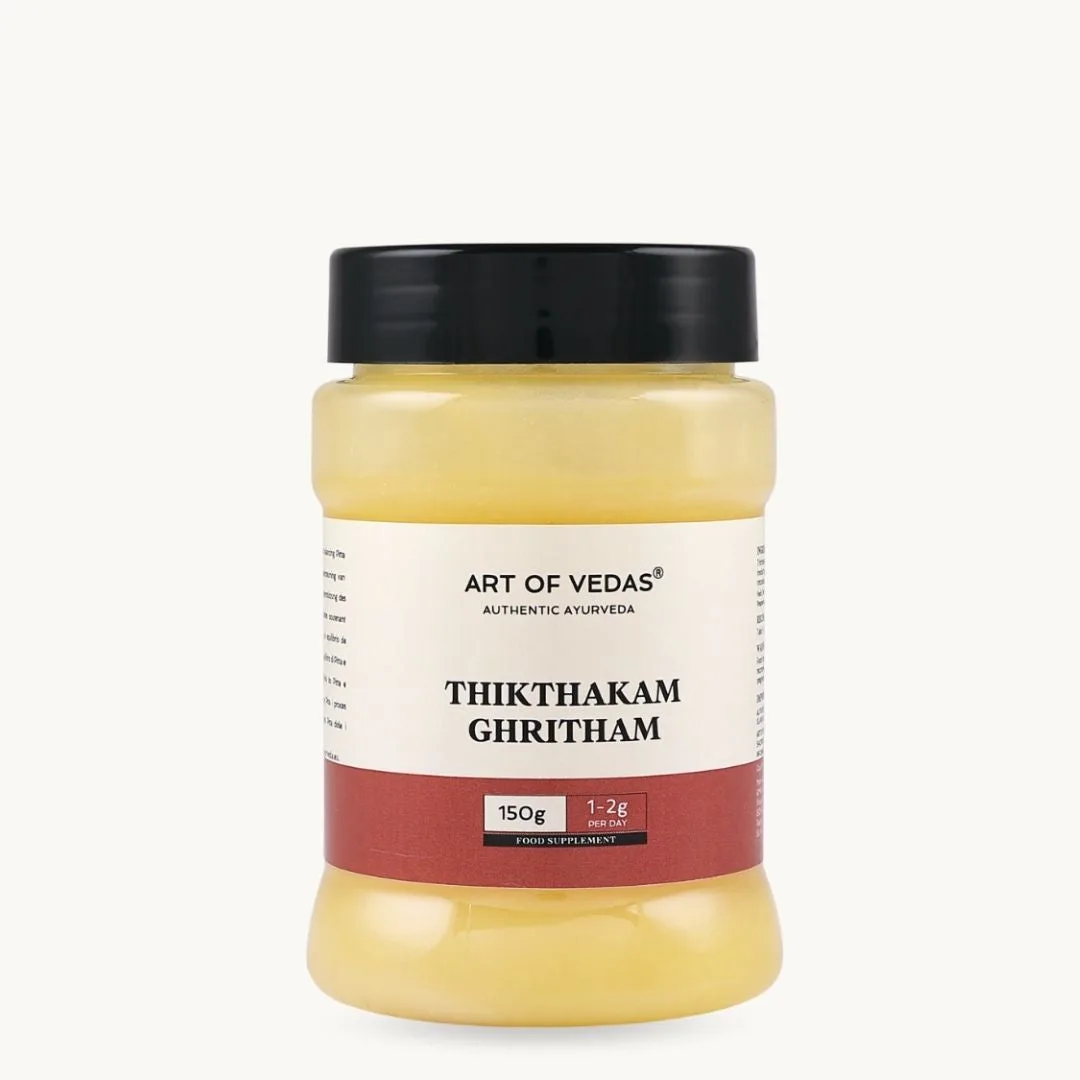
Dashamula stands behind Dhanwantharam and runs through the Thailams as well. Other classical groups work the same way: Triphala, the three fruits, names both a powder and two of the ghees, and Panchatikta, the five bitters, stands behind Gulgulu Thikthakam Ghritham. The range comparison places each preparation in the family.
Frequently Asked Questions
What does Dashamula mean?
Ten roots, from dasha, ten, and mula, root.
Is Dashamula one herb?
No. It is a named group of ten, counted as five greater roots from trees and five lesser roots from herbs and shrubs.
Does Dhanwantharam Ghritham contain all ten?
The ten appear on the ingredient list of the Art of Vedas jar, which is the authoritative record of what it contains.
This article is for educational purposes and describes the classical Ayurvedic record. The products mentioned are food supplements, not a substitute for a varied, balanced diet, and are not intended to diagnose, treat, cure or prevent any disease. Take classical ghee preparations under the guidance of a qualified Ayurvedic practitioner.