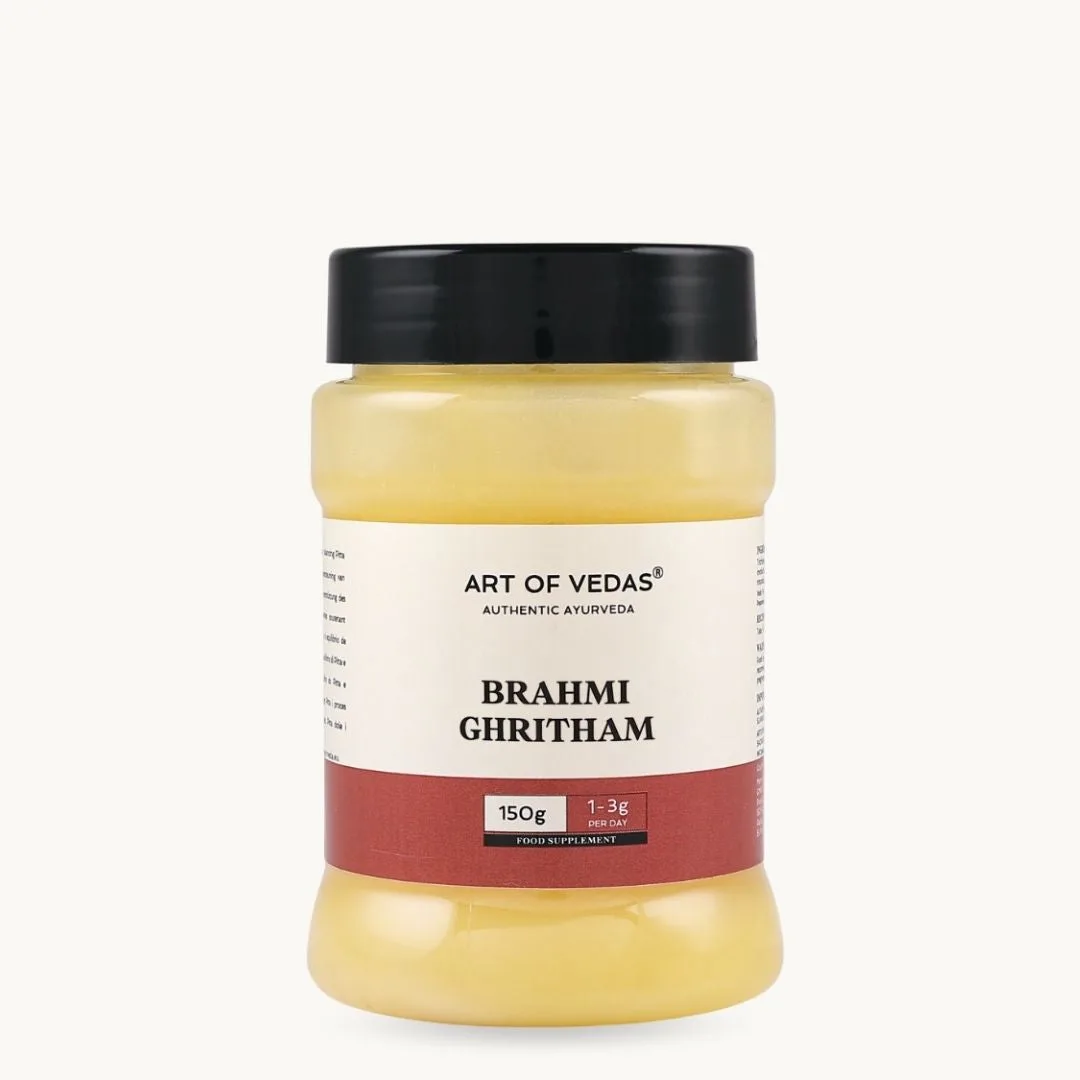
The Ghritham shelf can look uniform at first glance: a row of identical jars, each holding a pale golden ghee. The differences sit in the herbs cooked into them and in the classical formula each one follows. This guide sets the Art of Vedas range side by side, explains what separates one preparation from another, and points to where each is described in the classical literature. The whole range is gathered in the Ghritham collection.
What a Ghritham Is
A Ghritham is ghee cooked slowly with herbs through Sneha Paka, the classical method in which a decoction and a herbal paste are simmered with ghee until the water has gone and only the fat remains, carrying the character of the plants. Ghee is described in the texts as Yogavahi, able to carry what is cooked into it, which is why the tradition built an entire family of preparations on it. The background is set out in the Ghritham medicated ghee guide, and the customs around taking one are covered in how Ghritham is traditionally taken.
The Simple Ghees
Varanadi Ghritham is the plainest preparation in the range: Shatavari and Haritaki in a pure ghee base, nothing else. One sweet element, one astringent, and a mild, unremarkable taste. Indukantham Ghritham stands at the other end of that simplicity, built on Shunthi, Pippali and rock salt, the warming pungent group that the classical kitchen shares with the classical pharmacy. It is documented in the Sahasrayogam and listed in the Ayurvedic Formulary of India.
The Sweet and the Bitter
Sukumaram Ghritham takes its name from Sukumara, meaning tender, and it is the mild, sweet preparation of the range: ghee and milk with jaggery, Ashwagandha, Shatavari, liquorice and raisin. Gulgulu Thikthakam Ghritham is its opposite in character, a savoury, resinous ghee carrying Guggulu with turmeric and warming spices, described in the Ashtanga Hridayam and also known as Panchatikta Guggulu Ghrita. Between them sits Jeevanthyadi Ghritham, gentle in taste, with Ashwagandha and the three Triphala fruits against the sweetness of raisin and liquorice.
The Two Triphala Ghees
Triphala Ghritham is exactly what its name says: ghee and the three fruits, Haritaki, Amla and Bibhitaki. Maha Triphala Ghritham is the greater preparation, and the classical difference is not more Triphala but the liquids. Where the plain version uses a decoction and milk, the greater one is built on several liquids and on goat's milk, with Shatavari, raisin and long pepper alongside the three fruits. It is richer and rounder in taste. Both are documented in the Bhaishajya Ratnavali, the greater one immediately before the plain. The Triphala Ghritham guide covers the preparation in detail.
The Older Members of the Family
Four preparations were on the shelf before this range: Brahmi Ghritham, the Medhya ghee built on Brahmi; Dhanwantharam Ghritham, the Vata-directed ghee of the Dhanwantharam group; and the two bitter preparations, Thikthakam Ghritham and Mahathiktakam Ghritham. Their guides sit alongside this one and go further into each formula.
How to Choose
- Begin with the classical formula rather than the taste: each Ghritham belongs to a described tradition, and the herbs tell you which.
- The plainest preparations, Varanadi and Triphala, are the gentlest introduction to the family.
- Sweet in character means Sukumaram; savoury and resinous means Gulgulu Thikthakam.
- Three of the range contain liquorice and three contain milk beyond the ghee itself, so read the label when that matters to you.
- Every Ghritham is taken under the guidance of a qualified Ayurvedic practitioner, who decides the quantity and the length of use.
Frequently Asked Questions
Which Ghritham should a beginner start with?
The tradition does not rank them for beginners. The simplest formulas, such as Varanadi Ghritham or Triphala Ghritham, carry the fewest herbs, which is why they are often described as the gentler introduction. A practitioner should make the choice with you.
What is the difference between Triphala Ghritham and Maha Triphala Ghritham?
Not the amount of Triphala. The classical difference lies in the liquids: the plain preparation uses a decoction and milk, the greater one several liquids and goat's milk, with Shatavari, raisin and long pepper alongside the three fruits.
Do all Ghrithams contain dairy?
Yes. Ghee is clarified butter, so every Ghritham is a dairy preparation, and some carry milk or goat's milk in addition to the ghee base.
Are these the same as the ghee used in cooking?
No. Culinary ghee is the base material. A Ghritham is that base cooked with herbs through the classical Sneha Paka method until it carries their character.
Where can I see the whole range?
The jars are gathered in the Ghritham collection, each with its ingredients, net content and classical reference on the product page.
Classical background, preparation by preparation
Each preparation in the range has its own short guides to the classical record behind it: the formula as the texts set it out, the method the tradition used, and the group it belongs to.
Indukantham Ghritham
- Indukantham Ghritham: What the Classical Formula Contains
- Murchana: How Ghee Is Prepared Before the Herbs
- Indukantham and the Pungent Group in Classical Ayurveda
Sukumaram Ghritham
- Sukumaram Ghritham: The Tender One, and Its Formula
- Ksheerapaka: The Milk Method Behind Sukumaram Ghritham
- The Sweet Ghrithams: Madhura Rasa in Classical Ayurveda
Gulgulu Thikthakam Ghritham
- Gulgulu Thikthakam Ghritham: Panchatikta and Guggulu
- Dola Yantra: The Classical Method for Cooking a Resin
- The Bitter Ghrithams: Tikta Rasa and Its Preparations
Varanadi Ghritham
- Varanadi: What a Classical Gana Is, and Why It Matters
- Shatavari and Haritaki: Varanadi Ghritham's Two Herbs
- Shatavari: The Sweet Root in a Ghee Preparation
Jeevanthyadi Ghritham
- Jeevanthi: The Herb That Names Jeevanthyadi Ghritham
- Triphala Inside Jeevanthyadi Ghritham: A Group in a Formula
- Reading Classical Names: Adi, Maha and What They Mean
Triphala Ghritham
- Triphala: The Three Fruits of Classical Ayurveda
- Two Triphala Ghee Formulas in the Classical Record
- Decoction, Paste and Milk: How a Triphala Ghee Is Made
Maha Triphala Ghritham
- Maha Triphala Ghritham: What Maha Means in a Formula
- Goat's Milk in Classical Ayurvedic Ghee Preparations
- Maha Triphala or Triphala Ghritham: The Difference
Brahmi Ghritham
- Brahmi Ghritham: The Classical Medhya Rasayana Guide
- Brahmi or Mandukaparni: Two Plants, One Classical Name
- Reading Classical Names: Adi, Maha and What They Mean
Dhanwantharam Ghritham
- Dhanwantharam Ghritham: Classical Vata Rasayana Guide
- Dashamula: The Ten Roots
- Reading Classical Names: Adi, Maha and What They Mean
Thikthakam Ghritham
- Thikthakam Ghritham: The Classical Tikta Bitter Ghee Guide
- The Bitter Ghrithams: Tikta Rasa and Its Preparations
- Dola Yantra: The Classical Method for Cooking a Resin
Mahathiktakam Ghritham
- Mahathiktakam Ghritham: The Classical Great Bitter Ghee Guide
- The Bitter Ghrithams: Tikta Rasa and Its Preparations
- Reading Classical Names: Adi, Maha and What They Mean
The products mentioned in this article are food supplements. Food supplements are not a substitute for a varied, balanced diet and a healthy lifestyle, and they are not intended to diagnose, treat, cure or prevent any disease. Always follow the directions and the recommended daily intake stated on the product label, and consult a qualified Ayurvedic practitioner or healthcare professional if you are pregnant, nursing, taking medication or have an existing medical condition.