
In brief: A Basti Yantra is the instrument used to perform Basti, one of the classical Panchakarma procedures. In its classical form it is a bag, the Basti Putaka, joined to a nozzle, the Basti Netra, and is used by a physician for Niruha and Anuvasana Basti. The name is also used for the equipment of the local, oil-pooling Basti forms: rings for Kati, Greeva, Janu and Hrid Basti, and the eye instrument for Netra Basti. This guide covers each piece, the ring sizes, oil warming, table setup and hygiene in a European clinic. All Basti forms are performed by trained practitioners.
Therapies & Oils
Basti Equipment: Yantra, Rings and Classical Setup
This article is part of our Ayurveda Practitioner Supplies guide series.
Understanding Basti in Ayurvedic Practice
Basti is considered one of the most important therapeutic procedures in Ayurveda. The Charaka Samhita calls it "Ardha Chikitsa," meaning half of all treatment, reflecting its central role in classical practice. The procedure involves administering herbal decoctions or medicated oils through the rectal route (Niruha and Anuvasana Basti) or applying warm oil pools to specific body areas using ring-shaped dams.
Each form of Basti requires distinct equipment. This guide covers the essential instruments, materials, and setup considerations for practitioners establishing or upgrading their Basti practice in a European clinic setting.
Basti Yantra: The Classical Administration Device
What Is a Basti Yantra?
The Basti Yantra is the traditional device used for administering enema-type Basti treatments (Niruha Basti and Anuvasana Basti). In its classical form, it consists of a bladder-like bag (the Basti Putaka, traditionally made from animal bladder) attached to a tube or nozzle (the Basti Netra).
Modern adaptations use medical-grade silicone or rubber bags with stainless steel or medical plastic nozzles. The principle remains the same: controlled, gentle delivery of the medicated liquid at the correct pressure and flow rate.
Components of the Basti Yantra
- Basti Putaka (bag/reservoir): holds the decoction or oil, typically 300 to 800 ml capacity. Modern versions use autoclavable silicone
- Basti Netra (nozzle/catheter): the insertion tube, available in various diameters. Classical texts specify the Netra should be smooth, straight, and of appropriate thickness for the patient
- Connecting tube: flexible tubing between the bag and nozzle, with a clamp or stopcock for flow control
Choosing the Right Basti Yantra
For European clinical practice, prioritise materials that can be sterilised to meet health regulations. Autoclavable silicone bags and medical-grade stainless steel nozzles are the standard. Single-use nozzles are available and may be required depending on your country's health regulations.
Key specifications to look for:
- Bag capacity of at least 500 ml for Niruha Basti (decoction-based treatments require larger volumes)
- A smaller bag of 200 to 300 ml for Anuvasana Basti (oil-based treatments use less volume)
- Smooth, rounded nozzle tips to ensure patient comfort
- A reliable flow control mechanism; gravity-fed systems with a clamp are simpler and less likely to fail than squeeze-pressure systems
Kati Basti Rings
What Is Kati Basti?
Kati Basti is a localised oil pooling treatment for the lower back. A ring of dough is formed on the lumbar region, creating a dam that holds warm medicated oil over the area. The treatment is traditionally used in Ayurveda to support comfort in the lower back and is one of the most requested procedures in European Ayurvedic clinics.
Dough Rings vs Reusable Rings
The classical method uses black gram flour (urad dal) dough, freshly prepared for each session. The practitioner shapes the dough into a ring directly on the client's back, pressing it down to form a watertight seal.
Reusable rings made from food-grade silicone or rubber offer a convenient alternative. These come in standard sizes and can be sterilised between clients. They save preparation time but require a thin layer of dough or paste underneath to create a seal against the contours of the body.
Many practitioners use a hybrid approach: a reusable ring for structure with a thin dough base for sealing.
Ring Sizes and Shapes
- Standard Kati Basti ring: oval shape, approximately 15 to 20 cm long and 10 to 15 cm wide, 4 to 5 cm high
- Large ring: for broader coverage, up to 25 cm, suitable for larger body frames
- Depth: the ring must be tall enough to hold a pool of oil 2 to 3 cm deep; at least 4 cm height is recommended
Greeva Basti Rings
Greeva Basti applies the same oil pooling principle to the cervical (neck) region. The rings are smaller and shaped to fit the curvature of the upper back and neck.
- Size: approximately 10 to 15 cm diameter, circular or slightly oval
- Height: 3 to 4 cm is sufficient for the neck area
- Fit: the ring must accommodate the cervical curve; some reusable models have a contoured base
The same dough-sealing technique applies. The neck area is more contoured than the lower back, so a good seal requires more attention.
Janu Basti and Hrid Basti Rings
The oil pooling technique extends to other body areas:
- Janu Basti: applied to the knee joint. Rings are circular, 12 to 15 cm diameter, designed to sit around the kneecap
- Hrid Basti: applied to the chest/heart region. Rings are typically 12 to 15 cm diameter
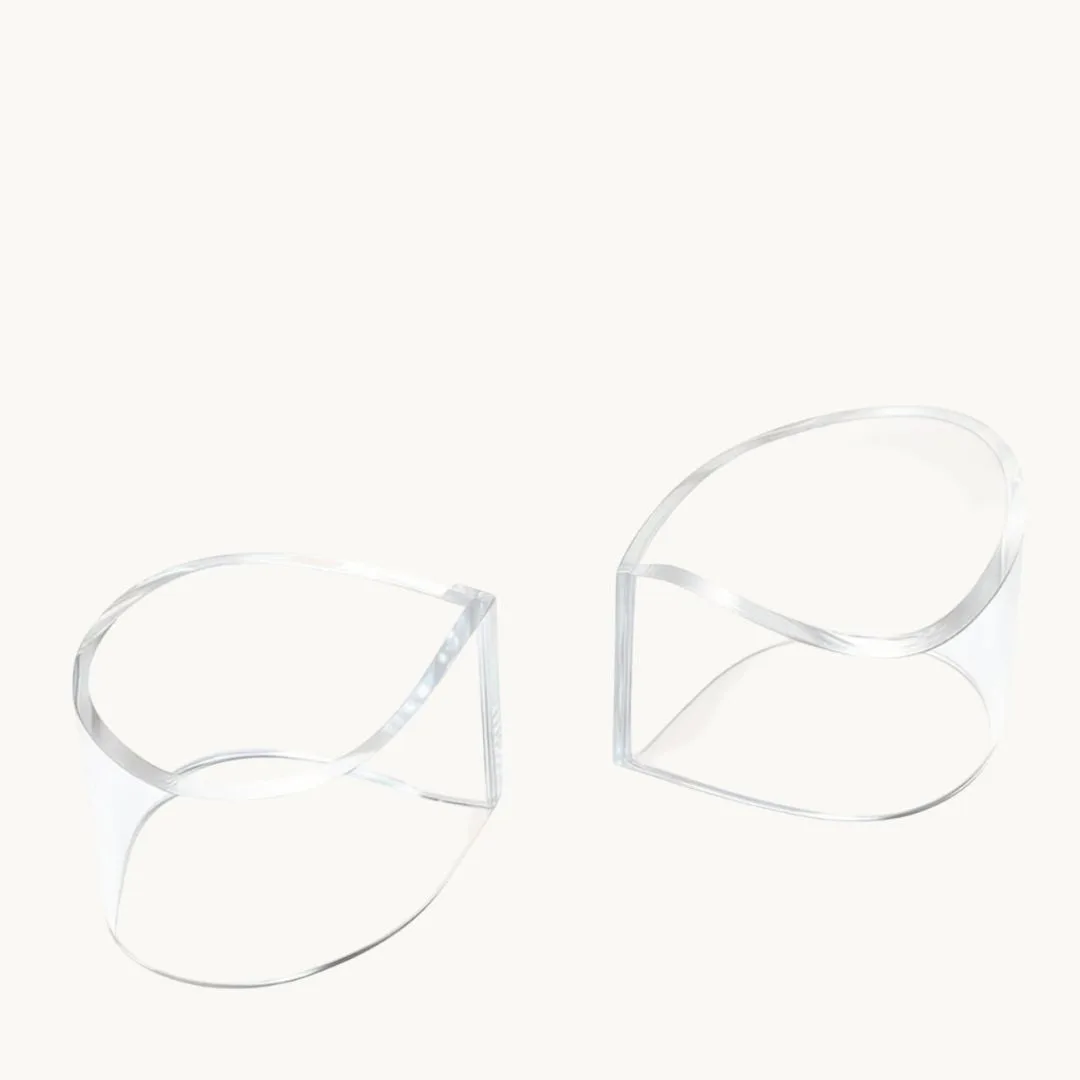
- Netra Basti: applied around the eyes. Classically, small dams of fresh dough are shaped each time for a precise fit. Trained practitioners also use a Netra Basti Yantra, a dedicated instrument for the eye area, which Art of Vedas offers
A practitioner who offers the full range of localised Basti treatments should stock rings in at least three sizes or invest in a set that covers all common treatment areas.
Oil Warming Equipment for Basti
All Basti treatments require oil at a consistent warm temperature. For localised Basti (Kati, Greeva, Janu), the oil must stay warm throughout the 20 to 40 minute session. This means having a warming system nearby.
Practical Setup
- An electric oil warmer with thermostat control, set to 40 to 45 degrees Celsius
- A small ladle or spouted vessel for adding warm oil to the ring as the pool cools
- A pipette or turkey baster for removing cooled oil from the ring before adding fresh warm oil
- Extra oil on standby; a typical Kati Basti session uses 200 to 400 ml with periodic refreshing
Treatment Table Considerations
A flat, stable treatment table is essential. For Kati Basti and Greeva Basti, the client lies prone (face down). The table should have:
- A face cradle or face hole for comfortable prone positioning during sessions of 30 minutes or more
- Oil-resistant covering; Ayurvedic oils stain standard vinyl covers permanently
- Sufficient width (at least 65 cm) so the practitioner can access the treatment area from both sides
- Stability; the client must remain still during treatment, and any table wobble risks spilling the oil pool
For enema-type Basti (Niruha, Anuvasana), the client typically lies on their left side. Ensure the table is wide enough for comfortable side-lying with a pillow between the knees.
Hygiene and Sterilisation
European health regulations vary by country, but general principles apply to all Basti equipment:
- Nozzles and catheters: single-use disposable items are the safest option. If reusing, autoclave sterilisation is mandatory
- Silicone bags: wash with medical-grade disinfectant and autoclave between clients
- Reusable rings: clean with hot water and mild detergent, disinfect with alcohol-based solution, air dry completely
- Dough: always prepare fresh for each client. Never reuse dough
- Oils: never reuse oil between different clients. Used oil is discarded
Keep a sterilisation log as part of your clinic records. This demonstrates compliance during inspections and builds client trust.
Setting Up a Complete Basti Station
- Treatment table: oil-proof, stable, with face cradle
- Oil warming area: within arm's reach, with thermostat-controlled warmer
- Ring storage: a clean tray with rings of various sizes, covered to prevent dust
- Dough preparation area: a small side table with flour, warm water, and a mixing bowl
- Basti Yantra station: bags, nozzles, tubing, clamps, and lubricant arranged on a clean trolley
- Disposal: a lined waste bin for single-use items and used dough
- Towels and wipes: warm towels for cleanup, cotton pads for wiping excess oil
Sourcing Basti Equipment in Europe
Authentic Basti equipment can be carefully selected. Art of Vedas works with practitioners across the EU to supply treatment equipment, medicated oils, and consumables. Browse our full range on the practitioner supplies page.
When ordering, verify:
- Material safety data sheets for any silicone or rubber components
- CE marking on electrical items (oil warmers)
- Autoclave compatibility if you plan to sterilise reusable items
- Correct sizing; request measurements before purchasing rings if you cannot inspect them in person
Related Resources
For a complete understanding of Basti therapy and its classical protocols, read our guide to Basti treatment in Ayurveda. To explore the full range of practitioner equipment and supplies for your clinic, visit our practitioner supplies overview.
Frequently asked questions about Basti Yantra
What is a Basti Yantra? A Basti Yantra is the classical instrument for Basti. In its rectal form it combines a reservoir, the Basti Putaka, a connecting tube with a clamp, and a nozzle, the Basti Netra. Practitioners also use the term for the rings and eye instruments of the local, oil-pooling Basti forms such as Kati, Greeva, Hrid and Netra Basti.
What is a Basti Putaka? The Basti Putaka is the bag or reservoir of the Basti Yantra that holds the oil or decoction. It was classically made from an animal bladder; present-day versions are autoclavable silicone, typically 300 to 800 ml. A bag of at least 500 ml is used for Niruha Basti and one of 200 to 300 ml for Anuvasana Basti.
What is a Niruha Basti Yantra? A Niruha Basti Yantra is a Basti Yantra sized for Niruha, the decoction Basti, which needs a larger volume than the oil form, so the bag holds at least 500 ml. It should have a smooth, rounded nozzle and reliable flow control; a gravity-fed system with a clamp is simpler than a squeeze system. Its use belongs to a qualified physician.
What is a Kati Basti Yantra? For Kati Basti, the lower back form, the Basti Yantra is a ring that holds a pool of warm oil over the lumbar area. Classically it is shaped from fresh black gram (urad dal) dough; reusable silicone rings, oval, about 15 to 20 cm long and at least 4 cm high, are a common alternative, sealed with a thin dough base.
Which ring sizes are used for Greeva, Janu and Hrid Basti? Greeva Basti rings for the neck are about 10 to 15 cm across and 3 to 4 cm high, some with a contoured base for the cervical curve. Janu Basti rings sit around the kneecap at 12 to 15 cm, and Hrid Basti rings on the chest are typically 12 to 15 cm in diameter. Each is sealed to the skin with dough.
What is a Netra Basti Yantra? A Netra Basti Yantra is the instrument for Netra Basti, the local Basti form around the eyes. This guide describes the classical setup with small dams of fresh dough, shaped for a precise fit each time. Art of Vedas sells a Netra Basti Yantra for trained practitioners.
What other equipment does a Basti station need? Besides the Basti Yantra and rings, a Basti station needs a thermostat-controlled oil warmer set to 40 to 45 degrees Celsius, a ladle or spouted vessel for adding warm oil, a pipette for removing cooled oil, a stable, oil-proof table at least 65 cm wide with a face cradle, fresh dough materials and warm towels.
How is Basti Yantra equipment cleaned between clients? Single-use nozzles are the safest option; reusable nozzles and silicone bags are disinfected and autoclaved between clients. Reusable rings are washed in hot water with mild detergent, disinfected with an alcohol-based solution and dried. Dough and oil are never reused. Rules vary by country, and a qualified Ayurvedic practitioner should perform every Basti.