In brief: A new Ayurvedic practice in Europe is better served by a narrow opening stock held in working volumes than by a wide catalogue held in retail bottles.
A common error in a first order is buying one bottle of thirty different preparations. It looks like readiness and behaves like paralysis: nothing is held in the volume a treatment room consumes, the first month empties half the shelf, and the reorder arrives after the appointments have been rescheduled. A practice that opens with six preparations in litre formats is in a stronger position than one that opens with thirty in 200 ml bottles.
Start from the treatment list, not from the catalogue
Write down the treatments you will offer in the first six months and how many of each you realistically expect per week. A first list generally holds Abhyanga (classical full-body oil massage), one or two localised oil applications such as Kati Basti or Greeva Basti, and Shirodhara (the continuous pouring of warm oil over the forehead). Panchakarma (the classical purification programme) in residential form usually comes later, once the room, the schedule and the assistant are in place.
Each treatment carries a consumption figure, and those figures multiplied by weekly volume give the only stock plan that survives contact with a booked diary.
- Full-body Abhyanga: roughly 80 to 150 ml per session, depending on body size and hair, counted as single-patient use.
- Localised applications with a dough ring: roughly 150 to 250 ml, not recovered.
- Shirodhara: 1.5 to 2 litres charged into the vessel per session. Most returns to the pot, but plan on counting it as used rather than returning it to shared stock.
- Pizhichil and other high-volume oil treatments: several litres per session, which is why they usually wait until the room and the schedule can carry them.
Twenty Abhyanga treatments a month at 120 ml is 2.4 litres of one oil. Two Shirodhara sessions a week adds 12 to 16 litres. Written down, the case for bulk formats stops being a discount question and becomes an operational one.
A working core of oils
Six preparations will carry a general practice through its first year. The principle is that each should do a job no other item in the cupboard does.
The general body oils
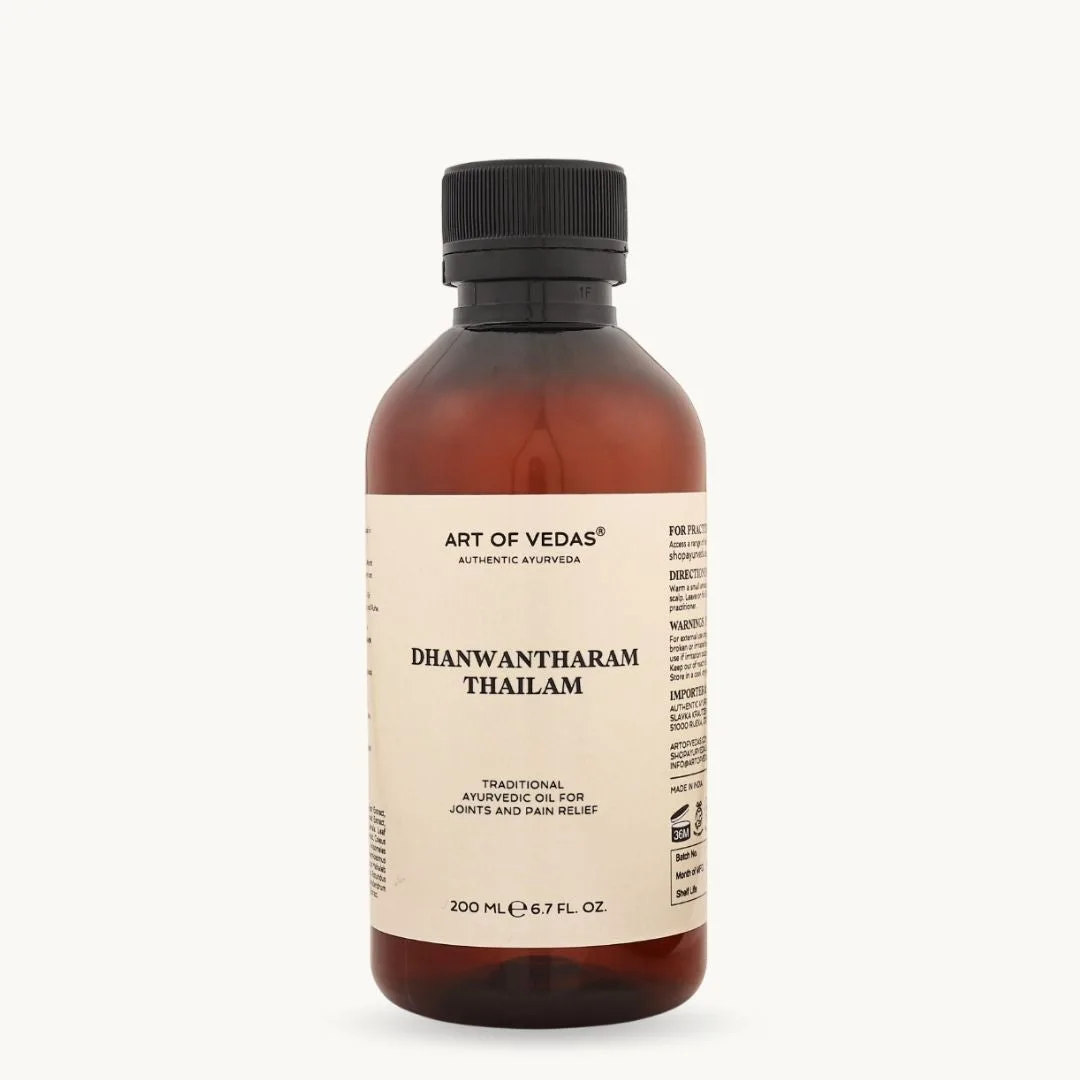
Dhanwantharam Thailam is the classical Vata (the Dosha governing movement) oil and the usual default for Abhyanga and for the general constitutional work that fills a new appointment book. It is the one item worth holding in the largest format you can rotate within its shelf life.
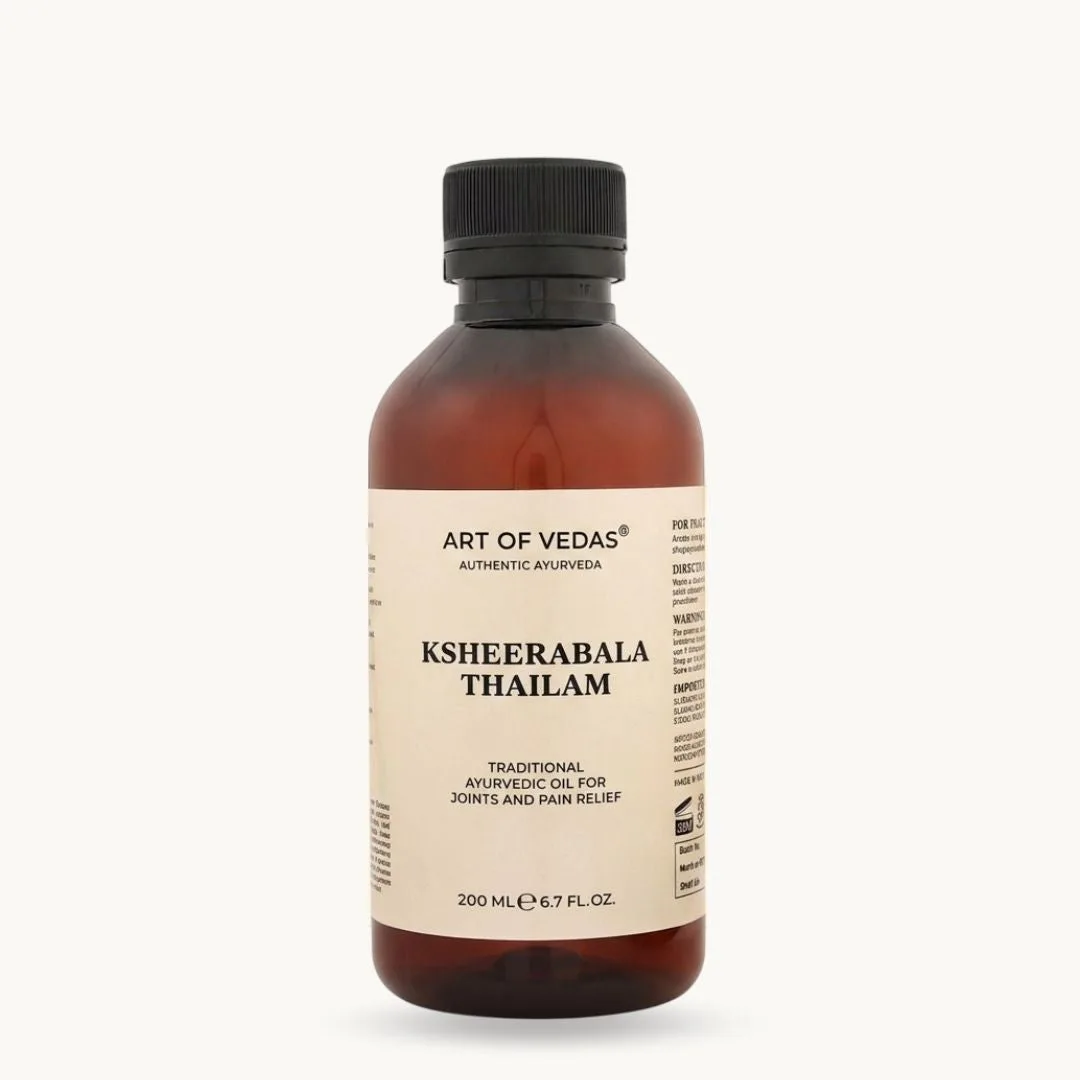
Ksheerabala Thailam serves the opposite purpose. The tradition directs it towards small quantities, often on the head and the extremities, and one litre lasts a long time. Hold it modestly.
A plain, unmedicated base oil belongs alongside both. Sesame oil is the classical vehicle for Thailam (medicated oil) preparations, and a clinic uses it for dilution and for patients who prefer something simple.
The localised applications
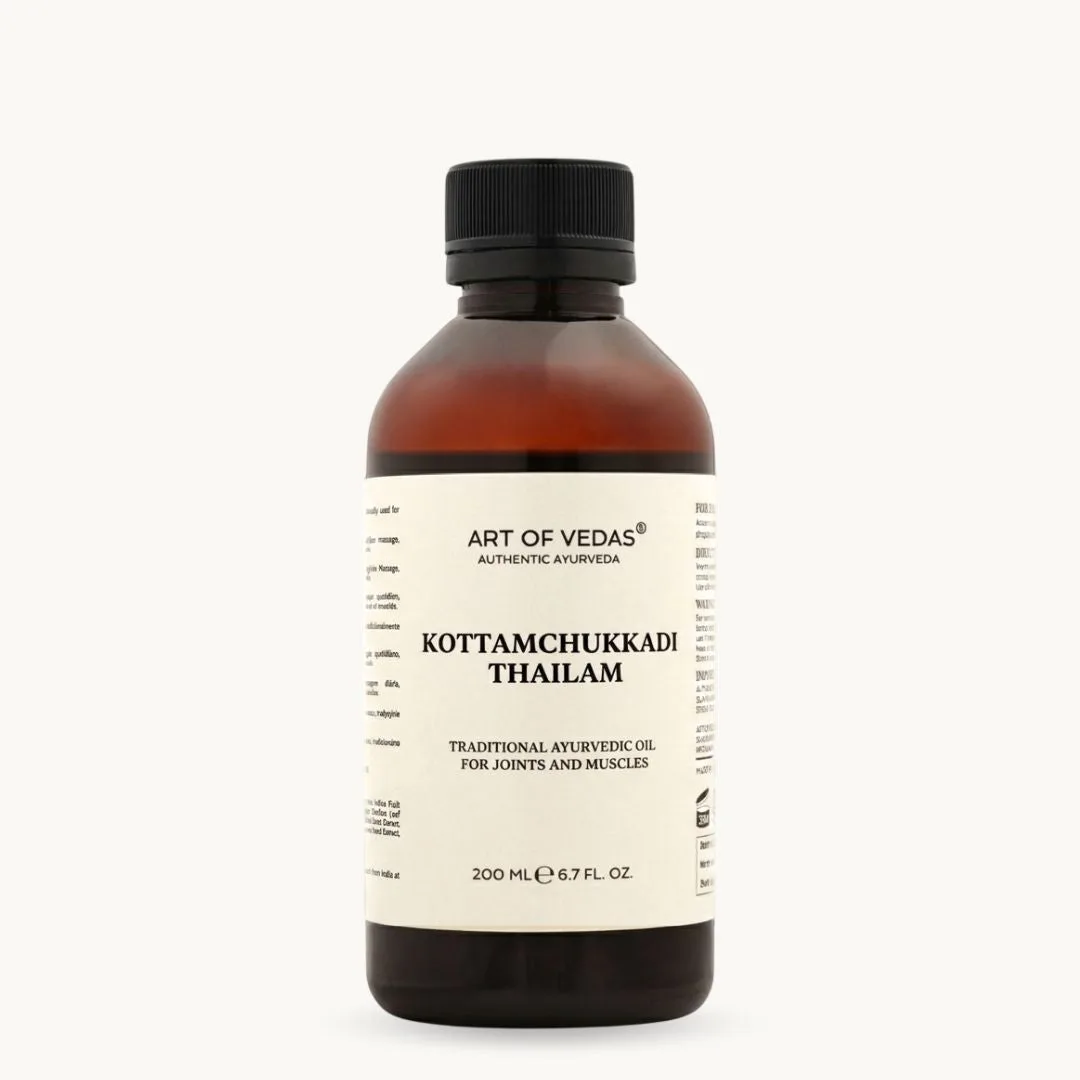
Kottamchukkadi Thailam is classically used for localised application over the limbs and the lower back, which is precisely the work a dough-ring treatment does. Where a practice offers Kati Basti or Greeva Basti, this is the oil that empties first.
Beyond these, add by exception rather than by default, and let the patient files decide the order. A common second wave is a Kuzhambu (a thicker, semi-solid medicated preparation), a nasal oil for Nasya (nasal administration) and one further Churnam. Our note on planning oil volumes for a Panchakarma room works through the same arithmetic for a residential programme.
The second tier: powders, tablets and Ghritham
Internal preparations behave differently from oils. They move in smaller quantities, they are dispensed rather than consumed in the room, and in several European countries they sit under national food supplement rules rather than cosmetic rules. The paperwork differs accordingly, and a supplier who can say which regime applies to which item is worth more than one quoting a lower price.
For a first order, a small Churnam (powdered preparation) shelf covering the two or three formulations you actually dispense is enough; Triphala and Dashmoola are the usual starting points. Ghritham (the classical preparations made in a clarified fat base) are temperature-sensitive and are better ordered against actual patient need than held speculatively.
Equipment that earns its place in the first year
Equipment is the visible part of a clinic and therefore the tempting part of an opening budget. The honest test is whether an item will be used weekly.
- A Shirodhara vessel and a stable stand, if the treatment is on your list at all. A traditional brass Shirodhara pot is used daily in practices that offer it and is decoration in those that do not.
- A treatment table that tolerates oil, and a laundry arrangement that tolerates it too. Both are easier to settle before the first week than during it.
- Warming equipment sized to your session length, since oil at working temperature is part of the treatment.
- Basti rings, Netra Basti and Kansa tools: useful, but each should follow the first patient who needs it rather than precede them.
Documentation to request before the first delivery
A European practice carries responsibility for what it applies and what it dispenses, and that responsibility is documentary. Cosmetic products placed on the EU market fall under Regulation (EC) No 1223/2009, which requires a Responsible Person established in the Union and notification through the CPNP portal. Food supplements are regulated nationally. Before a first delivery, ask any supplier for:
- Confirmation of who the Responsible Person is for each cosmetic item, and that it is notified.
- Labelling in the language of the country where you practise, including the full ingredient declaration.
- Batch numbers and best-before dates you can record against treatments, which is what makes traceability possible later.
- Safety documentation for any item you decant, dilute or blend in the clinic.
A supplier who cannot answer these quickly will not answer faster when an inspector asks.
Formats, professional pricing and reordering
Once that arithmetic is on paper, the format question answers itself. Preparations consumed in the treatment room belong in litre or five-litre packaging; preparations dispensed to patients belong in the retail format they leave with, since a clinic that repacks or relabels takes on the Responsible Person duties described above. One substantial order per quarter with a small monthly top-up keeps both formats moving.
Art of Vedas serves practices through a professional platform at shopayurveda.eu, where practitioner pricing, bulk formats and the documentation described above are available once professional status is verified. Clinics buying at volume, and centres supplying a residential programme, will find the account structure and ordering terms in our notes on bulk supply for Ayurveda centres and wholesale Ayurvedic oils in Europe.
Questions practitioners ask before a first order
How much should a new Ayurvedic practice budget for opening stock?
Budget in the order the room consumes rather than by catalogue. First the oils that appear in your weekly arithmetic, in formats you can rotate; then equipment for the treatments already on the schedule; then a small dispensing shelf you can replace quickly. Anything that appears in neither the arithmetic nor the schedule can wait for the patient who needs it.
How much oil does one Shirodhara session use?
Two Shirodhara sessions a week use more oil in a month than twenty Abhyanga treatments, so this is the line that sets the reordering rhythm. Charge 1.5 to 2 litres into the vessel per session and plan stock against that figure rather than against patient numbers.
Do I need five-litre formats from the start?
Only for the oils you will genuinely rotate. Five litres of your primary Abhyanga oil is sensible from week one. Five litres of a preparation used twice a month will reach its best-before date long before the container empties.
Can I resell products to my patients?
Yes. Products must be sold in their original sealed packaging with intact labelling, which means holding a small retail stock separately from the bulk you work with.
What is the difference between a practitioner account and ordering from the public shop?
A professional account gives access to bulk formats not offered publicly, practitioner pricing, and the regulatory documentation a clinic holds on file. Professional status is verified, which is why registration is not instant.