In brief: Tungadrumadi Thailam (also written Tungadrumadi Thailam, Tungadrumadi Taila or Thungadrumadi Thailam) is a classical Ayurvedic medicated oil named after Tungadruma, the Punnaga tree, Calophyllum inophyllum, whose bark opens the recipe. It is recorded in the Sahasrayogam, and the classical texts place it among the oils applied to the head. Art of Vedas does not currently offer Tungadrumadi Thailam; the closest oils in our range are Ksheerabala Thailam and Dhanwantharam Thailam. This guide covers what the name means, how the texts describe the oil, how an oil of this kind is used, and which oils in our range come nearest to it.
What Tungadrumadi Thailam is and where the name comes from
Tunga is one of the classical Sanskrit names of Punnaga, the Alexandrian laurel, Calophyllum inophyllum; the old lexicons list Tunga, Punnaga and Kesara together as names of the same tree. Druma means tree, so Tungadruma is the Punnaga tree, and the suffix adi means "beginning with". Tungadrumadi Thailam is therefore the oil whose recipe begins with the Punnaga tree. Thailam, Thailam and Taila all mean a medicated oil, a base oil into which plants have been cooked.
The classical description
The classical recipe names, among others, the bark of the Punnaga tree, prepared as a decoction and a paste and cooked into the oil base by the Sneha Paka method. The oil is recorded in the Sahasrayogam, and where the texts describe it, they do so in the language of the head and the scalp, among the oils applied to the head rather than to the whole body. This guide does not list the full recipe, because the versions in circulation differ in their secondary plants and proportions, so the label of a given oil is the reference. Punnaga seed oil is a separate material; in Tungadrumadi Thailam it is the bark, cooked into a base oil, that defines the preparation.
Character in Ayurvedic terms
The classical texts do not give Tungadrumadi Thailam the heavy, warming character of the large Dashamoola oils such as Mahanarayana or Dhanwantharam Thailam. The tradition places it among the lighter oils of the head. Beyond that, this guide does not assign it a Dosha placement, because the sources we trust do not state one clearly; ask a qualified Ayurvedic practitioner.
How an oil of this kind is used in practice
An oil placed among the head oils belongs to Shiroabhyanga, the oil massage of the scalp described in the classical daily routine, Dinacharya. Warm the oil by standing the closed bottle in a bowl of warm water for a few minutes; do not use a microwave. Work a small amount into the scalp with the fingertips, in slow circles from the crown outwards, leave it on for 30 to 60 minutes, and wash it out with a mild shampoo. Two or three times a week is the usual rhythm. Practitioners also use oils of this kind in supervised procedures of the head such as Shirodhara, which are not home practice. Our Abhyanga guide covers the routine.
Who should ask first
Any classical oil is for external use only. Do a small skin test on the inner forearm before the first full application, keep the oil away from the eyes and do not apply it to broken skin. In pregnancy, and before using any oil on a child, ask your doctor or a qualified Ayurvedic practitioner first. A qualified Ayurvedic practitioner is also the only person who should advise on Tungadrumadi Thailam itself, which Art of Vedas does not sell.
Art of Vedas and Tungadrumadi Thailam
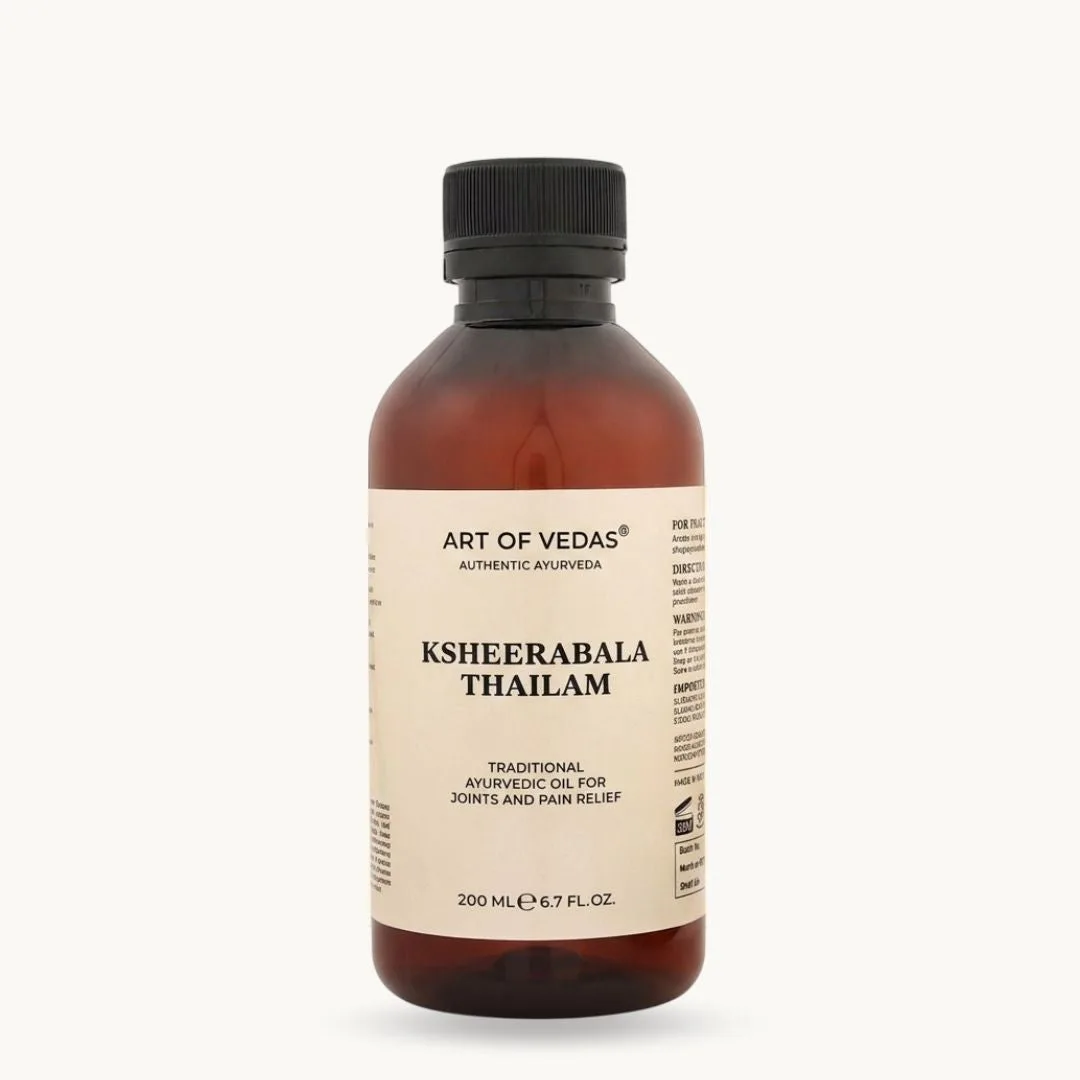
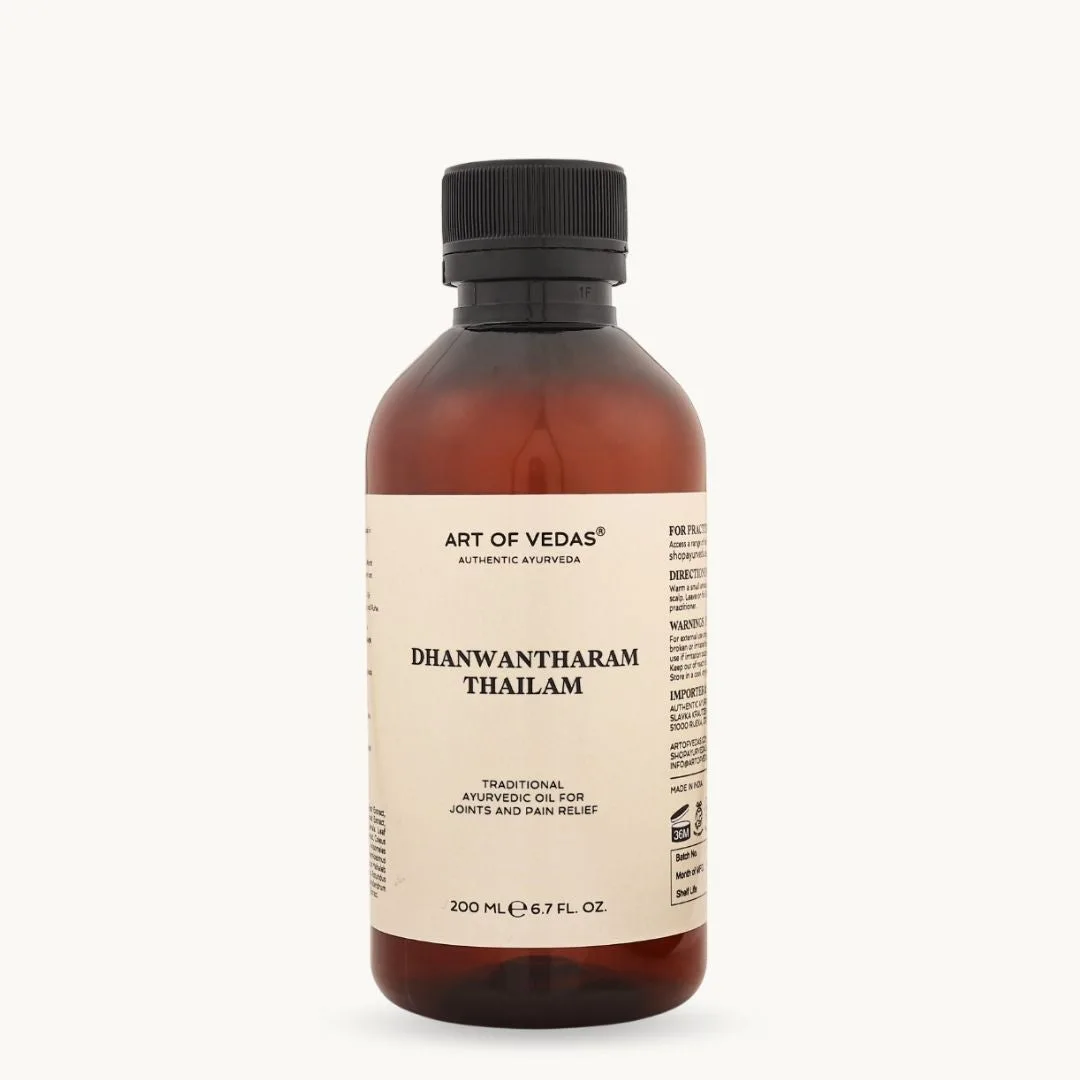
Art of Vedas does not currently offer Tungadrumadi Thailam. The closest oils in our range are Ksheerabala Thailam and Dhanwantharam Thailam. Neither is a Punnaga oil, but both are classical sesame-based oils that the tradition uses on the head as well as on the body. Ksheerabala Thailam is the plainest: Bala root cooked with milk into sesame oil, mildly warming, placed with Vata and Pitta, and the oil most often chosen in our range for Shiroabhyanga and for Shirodhara. Dhanwantharam Thailam is the gentle all-rounder: Bala with the Dashamoola roots in sesame oil, mildly warming, placed with Vata, and used for a daily Abhyanga of the whole body. See also our complete guide to traditional Ayurvedic Thailams.