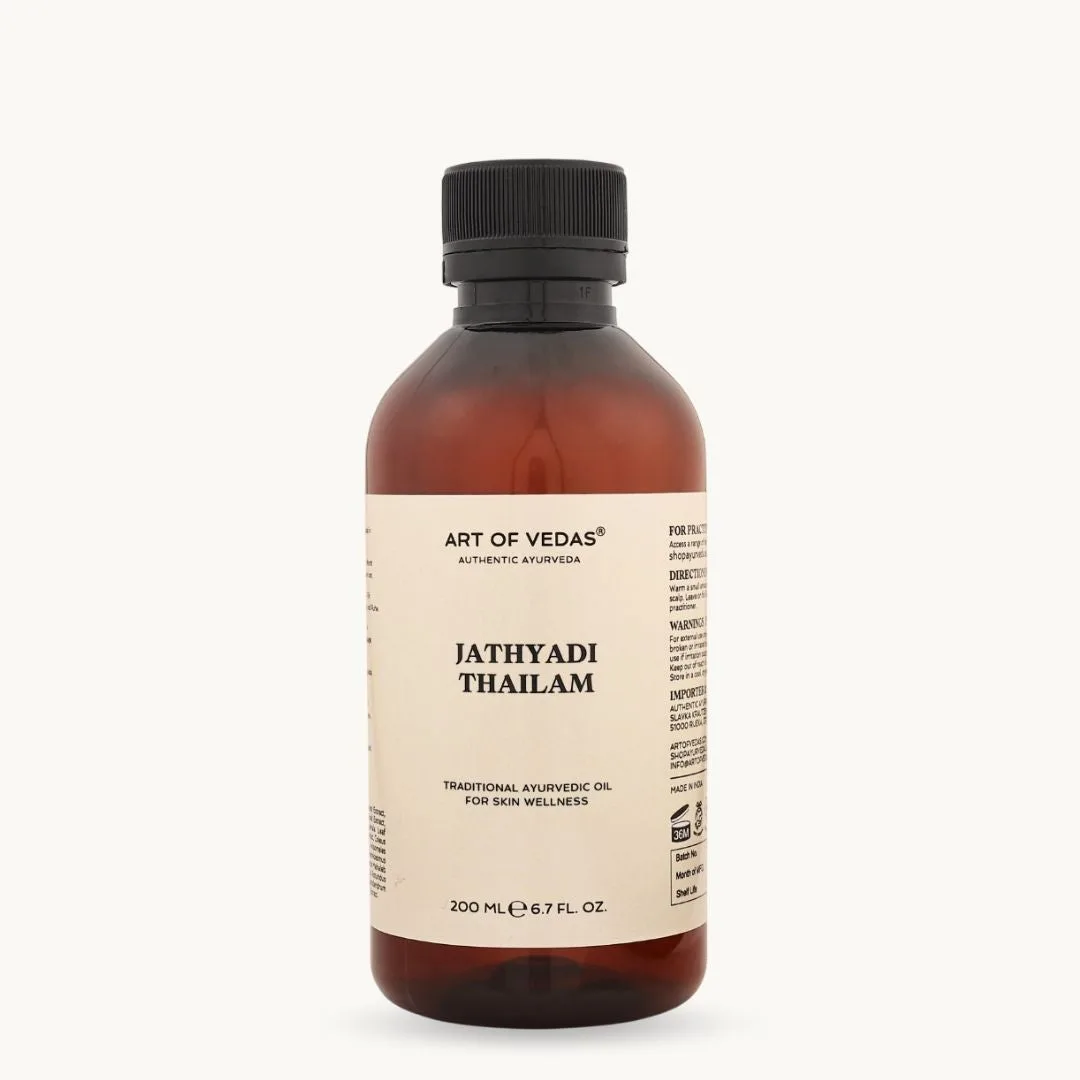
In brief: Jathyadi Thailam (also written Jatyadi Taila, Jatyadi Thailam, Jathyadi Thailam or Jathyadi oil) is a classical Ayurvedic oil for external use, named after Jati, the jasmine plant that leads its recipe: in the Art of Vedas oil, jasmine, neem leaf, turmeric, Manjistha, Sariva, liquorice and Karanja seed oil are cooked into a sesame oil base in the classical manner. It is applied in small amounts to a chosen area of skin rather than used for whole-body massage. This guide covers what it is, what the Art of Vedas oil declares, how to apply it, and how it differs from Jathyadi Keram and from Murivenna.
What Is Jathyadi Thailam?
The name tells the story: Jati is the jasmine plant, and adi means "and the others", the classical way of saying that jasmine leads a longer list. Jathyadi Thailam belongs to the family of skin-oriented classical oils, prepared by the same patient method as the other great Thailams: a sesame base slowly processed with herbal decoction and paste until it carries the character of its plants. It is a preparation for external use, applied in small quantities to chosen areas of skin rather than used for whole-body massage.
The Ingredients of Jathyadi Thailam
Fresh Jati leaf gives the formula its name and its lead. Around it, the classical recipe gathers a considered company: Nimba leaf, known in Europe as neem; Haridra, the turmeric rhizome; Manjistha; and further supporting botanicals of the traditional skin repertoire, all worked into cold-pressed sesame oil. The recipe rewards slow preparation, and the finished oil carries a deep herbal colour and a quiet, green aroma. The complete composition of our Jathyadi Thailam is listed on the product page.
Traditional Uses and Character
In the classical understanding, Jathyadi Thailam is a preparation for skin that asks for particular care: areas that have been through friction, dryness or the ordinary demands of physical life. Its register is gentle and specific rather than broad.
- Traditionally chosen for focused skin-comfort routines
- Sesame base with a light, workable texture
- Jasmine-leaf formula with a long recorded tradition
- Suited to small, deliberate applications on chosen areas
- Gentle enough for regular use within a steady routine
How to Use Jathyadi Thailam
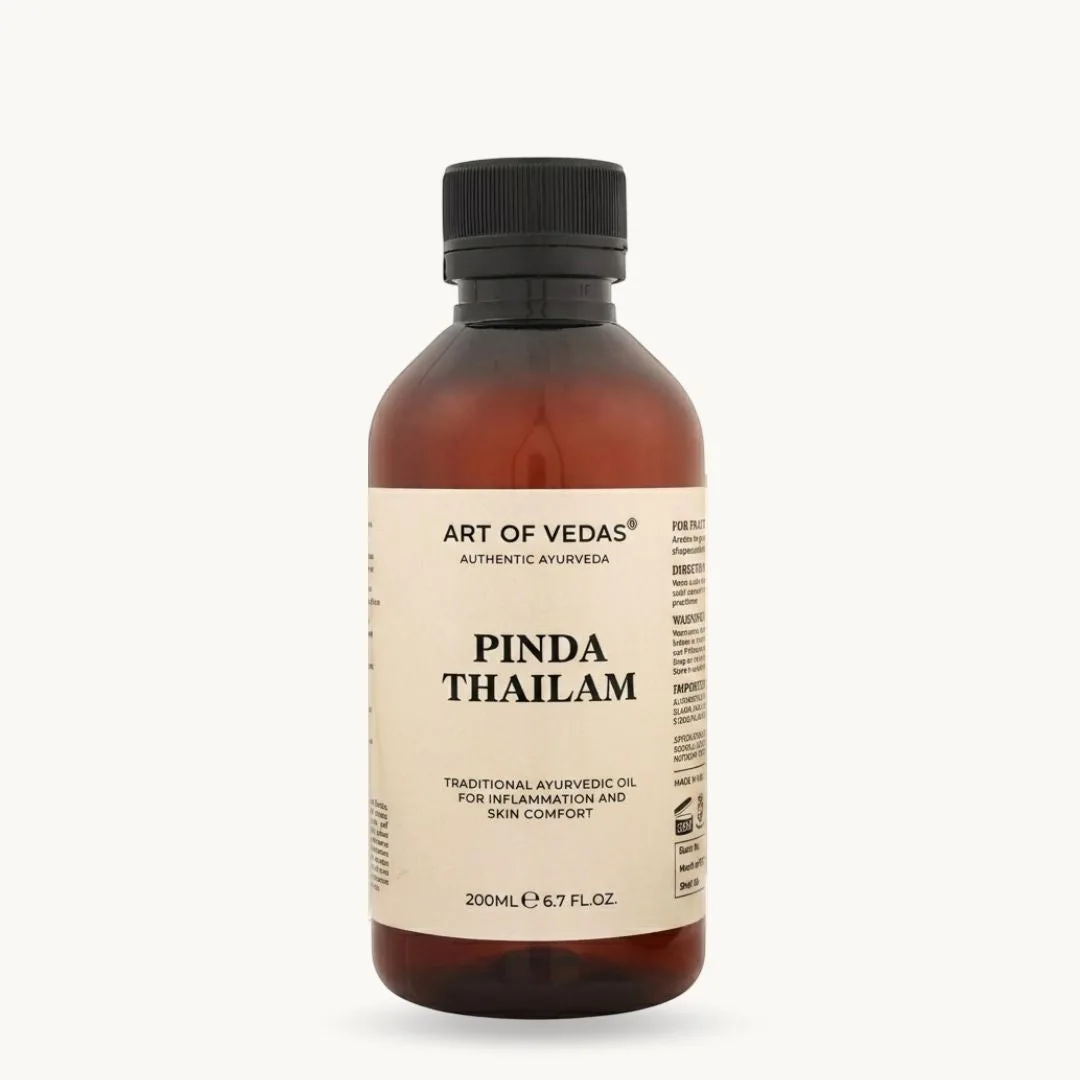
Perform a patch test before first use. Then apply a small quantity, at room temperature or briefly warmed in a water bath, to the chosen area once daily or as your routine allows, and give it time to absorb. Those building a fuller skin practice will find a natural companion piece in our guide to using Pinda Thailam for the skin, and readers who want to understand the other classical formats, powders included, may consult our guide to Churnam, the classical herbal powder.
Jathyadi Thailam and Murivenna
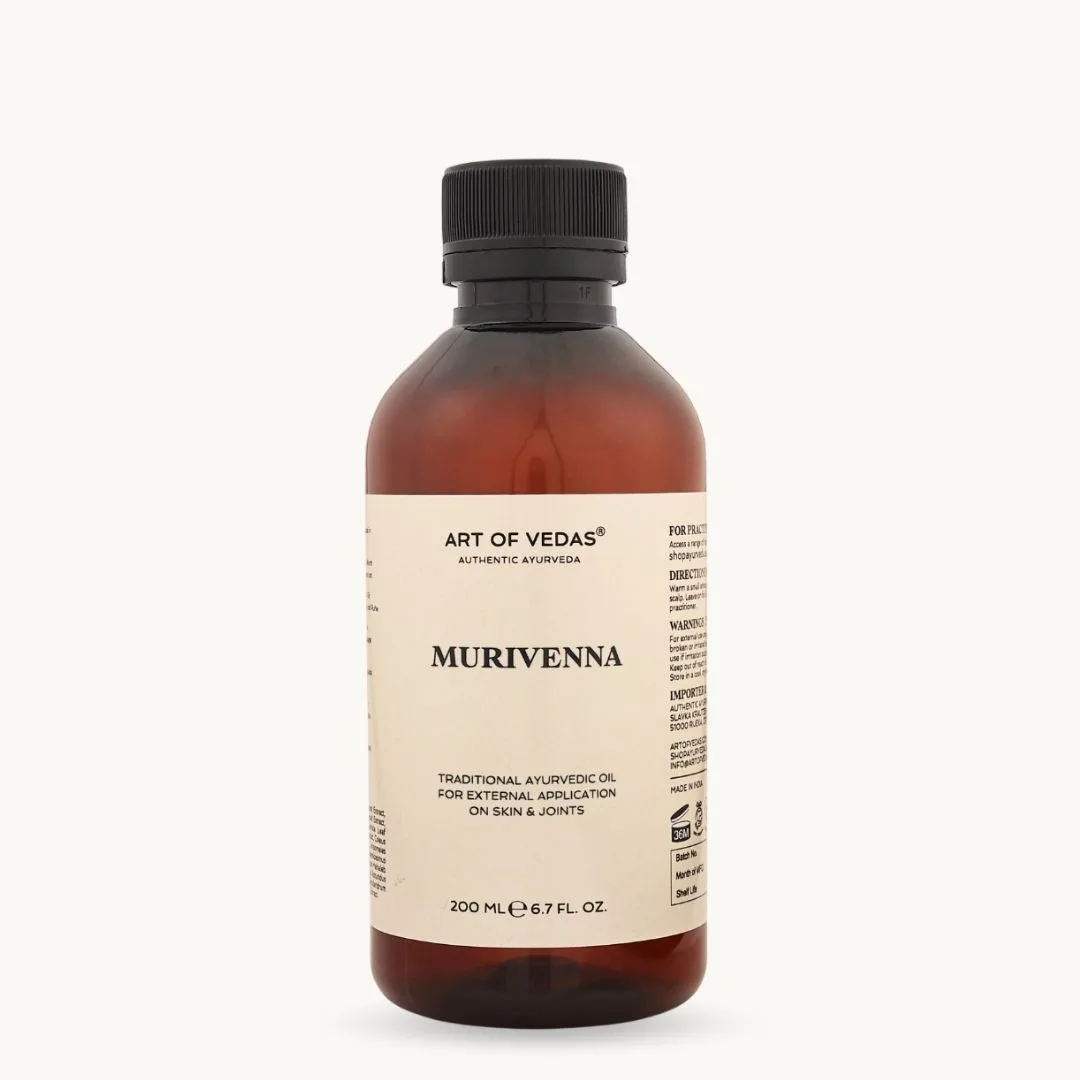
The two preparations are often mentioned in the same breath, and they are indeed siblings in purpose: both belong to the classical skin-care repertoire. The difference is the base. Murivenna stands on coconut oil, light and cooling; Jathyadi Thailam stands on sesame, warmer and more substantial. Many households keep both, letting season and skin decide. Our guide to Murivenna describes the coconut-based classic in full, and the preparation itself is available as Murivenna oil.
Frequently asked questions about Jathyadi Thailam
What is Jathyadi Thailam? A classical Ayurvedic oil for external use, named after Jati, the jasmine plant that leads its recipe. In the Art of Vedas oil, jasmine, neem leaf, turmeric, Manjistha, Sariva, liquorice and Karanja seed oil are cooked into a sesame oil base in the classical manner. The name is also written Jatyadi Taila, Jatyadi Thailam, Jathyadi Thailam or simply Jathyadi oil; the spelling changes, the oil does not.
What is Jathyadi Thailam used for? For external application to the skin in small amounts. Unlike the Abhyanga oils, Jathyadi Thailam is not an oil for whole-body massage: the tradition applies it in a thin layer to one chosen area of skin as part of a regular care routine. Art of Vedas sells it for external use only and makes no claims beyond this traditional practice; ask a qualified Ayurvedic practitioner how it fits your routine.
How do you use Jathyadi Thailam? Do a small skin test on the inner forearm first. Then apply a few drops to clean, dry skin on the chosen area, at room temperature or after standing the closed bottle in warm water for a few minutes, and let the oil absorb. Keep it away from the eyes, wash your hands afterwards, and store the bottle closed, in a cool place away from sunlight.
How often can you apply Jathyadi Thailam? Once a day on the chosen area is the usual rhythm, or as your routine allows: a small amount applied regularly is the traditional way, rather than a large amount now and then. Jathyadi Thailam is not meant for whole-body massage, so the 200 ml bottle lasts a long time. Ask a qualified Ayurvedic practitioner what rhythm suits you.
What are the ingredients of Jathyadi Thailam? The Art of Vedas oil declares sesame seed oil as its base, with jasmine, neem leaf, turmeric root, Manjistha root, Sariva root (Indian sarsaparilla), liquorice root and Karanja seed oil cooked into it. Benzyl benzoate, benzyl salicylate and linalool are listed at the end: they occur naturally in jasmine and are named because EU cosmetics rules require it. The full declaration is on the product page and the label.
What is the difference between Jathyadi Thailam and Jathyadi Keram? The base oil. Jathyadi Keram, also written Jathyadi Kera Thailam, is the same jasmine-led recipe cooked into coconut oil, which is lighter and cooler on the skin. Jathyadi Thailam is cooked into sesame oil, which is warmer and more substantial. Art of Vedas offers the sesame-based Jathyadi Thailam; the Keram form is not in our range.
Jathyadi Thailam or Murivenna: which one? Both are classical oils applied in small amounts to one area of skin rather than used for whole-body massage, and many households keep both. Jathyadi Thailam is sesame-based and led by jasmine, with neem, turmeric and Manjistha. Murivenna is coconut-based and led by betel leaf, moringa leaf and aloe vera, so it feels lighter and cooler. Art of Vedas sells both for external use.
Can Jathyadi Thailam be used in pregnancy or for children? Ask your doctor or a qualified Ayurvedic practitioner first. Jathyadi Thailam is for external use only. Do a small skin test on the inner forearm before the first full application, keep it away from the eyes and broken skin, and do not take it by mouth. Store the bottle closed, in a cool place away from sunlight, out of the reach of children.