When the air turns cold, dry and moving, classical Ayurveda calls the moment Vata season, and it answers with oil. The best Ayurvedic oils for Vata season are warming, sesame-based Thailams applied in unhurried daily ritual: they lend the body exactly the qualities the weather takes away. This guide matches the classical oils to the three routines that matter most between late autumn and the end of winter.
Why oil is the Vata season practice
Vata is described in the classical texts as light, cold, dry and mobile. European autumn and winter amplify all four qualities: wind, falling temperatures, heated indoor air, a quickening calendar. Warm oil is the tradition's direct reply, heavy where the season is light, warm where it is cold, smooth where it is rough. The daily self-massage, Abhyanga, is therefore not a luxury in these months but the anchor of the routine. If you are still weighing the wider field of oils, our Abhyanga oil selection guide gives the full picture.
For daily Abhyanga: the two workhorses
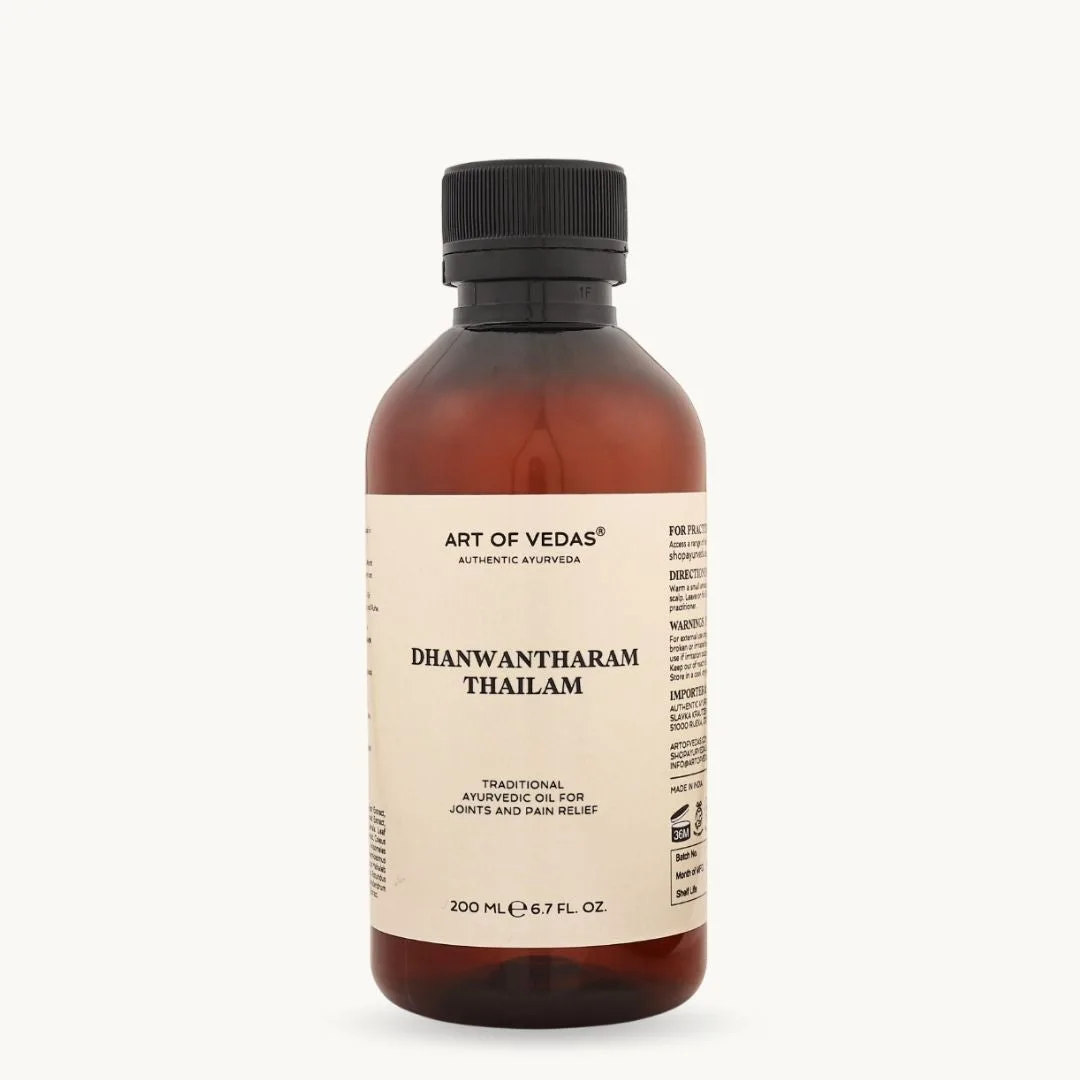
The foundation of a Vata-season routine is a mild, dependable morning oil. Our Vata massage oil is blended for precisely this use: warming, grounding and gentle enough for every day. The great classical alternative is Dhanwantharam Thailam, the formula of Bala and the ten Dashamoola roots, traditionally used in Ayurveda to support steadiness and comfort through the cold months. Either oil, warmed and applied in long strokes before a morning shower, carries the season well.
For deep warmth after exertion
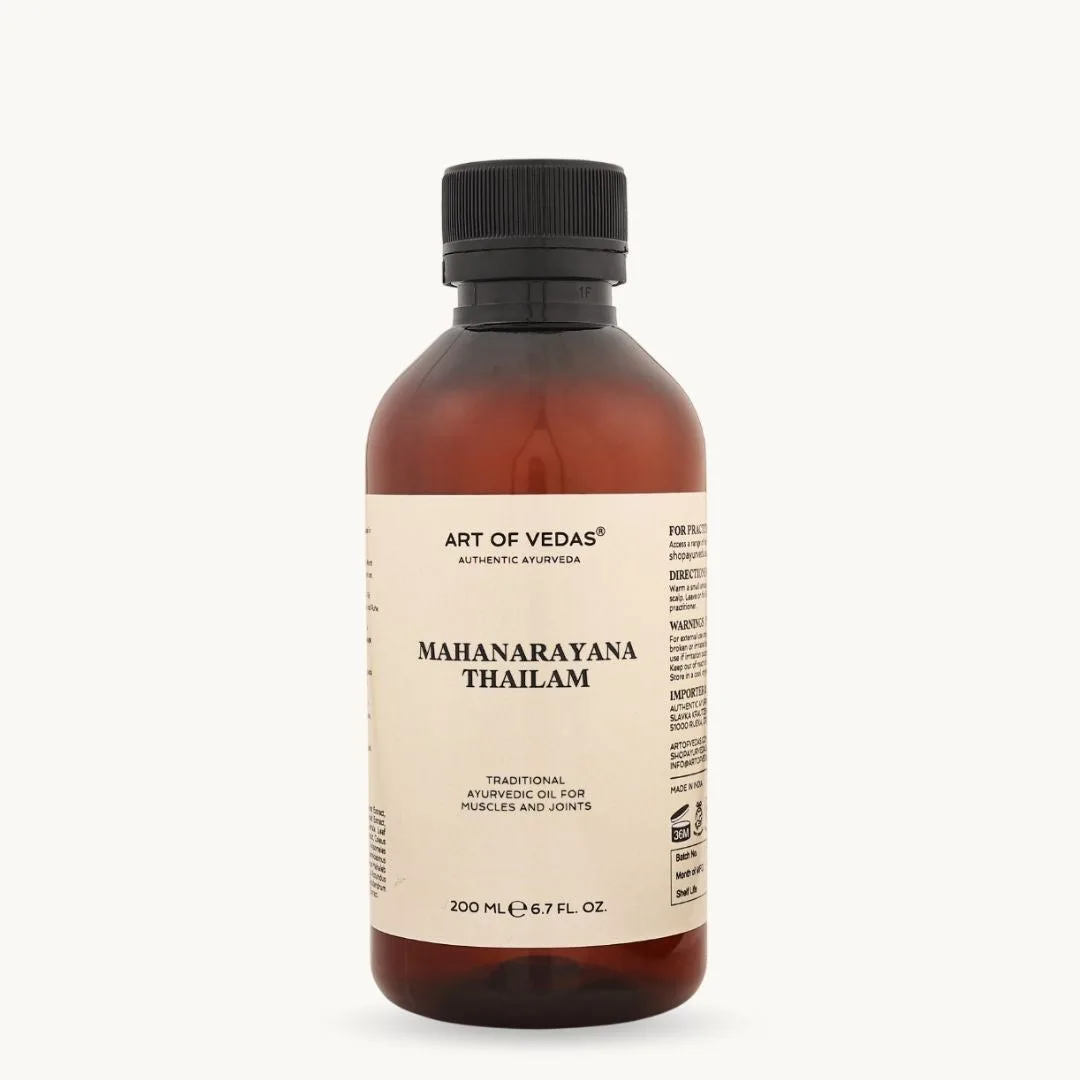
Cold weather makes the body feel its work more keenly. For the evenings after sport, heavy gardening or long days on the feet, Mahanarayana Thailam is the classical choice: a rich, many-herbed formula traditionally applied with slow, firm strokes over knees, shoulders and the lower back to support joint comfort. It is stronger company than a daily oil, and it is precisely in Vata season that its character shows best. Our comparison of Mahanarayana, Dhanwantharam and Ksheerabala helps you place it against the gentler formulas.
For the feet before sleep
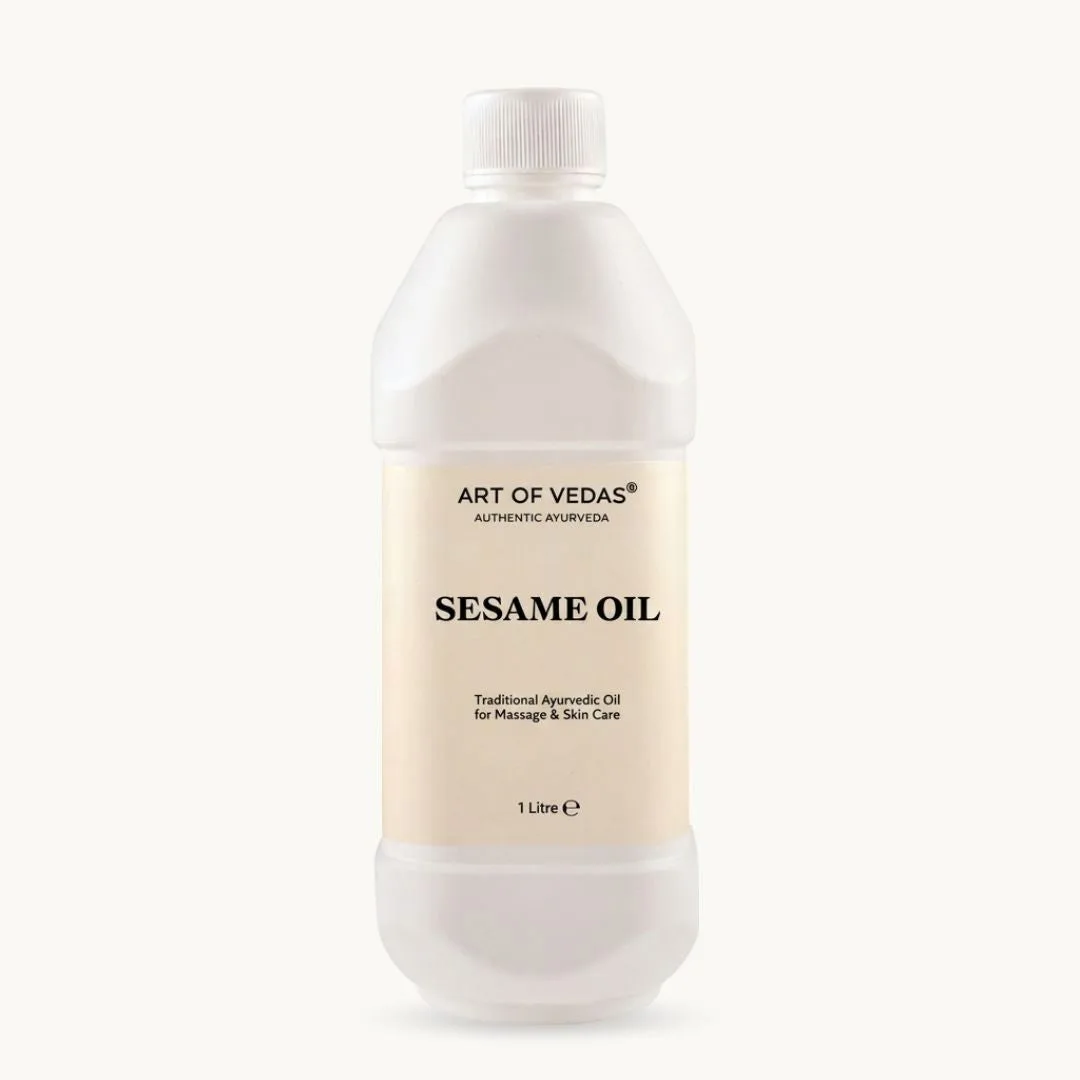
The third Vata-season ritual is the smallest and perhaps the most loved: warm oil on the soles of the feet before bed. Plain cold-pressed sesame oil is entirely sufficient here, warmed to skin temperature and massaged in for five quiet minutes. Those who enjoy a tool can pair the oil with a bronze bowl in the traditional manner; our evening Kansa foot routine describes the practice step by step. It is a modest habit that makes winter evenings noticeably softer.
Kept through the season, this small set of rituals offers:
- • Warmth that lingers on the skin after the morning shower
- • A grounded, unhurried start to short and busy days
- • Comfortable joints and muscles through the cold months
- • Softer, calmer skin despite wind and heated rooms
- • An evening ritual that prepares the body honestly for rest
The herbs behind the warmth
The Vata-season formulas share a recognisable cast. Sesame oil (Tila Taila, the warming base of the tradition) carries nearly all of them. Within the decoctions sit Bala (Sida cordifolia, traditionally associated with strength and steadiness), the Dashamoola (ten roots prepared together as a grounding foundation), Ashwagandha (Withania somnifera, the classical restorative) and Shatavari (Asparagus racemosus, nourishing in character). It is this combination of substantial base and grounding roots that makes these oils feel so unmistakably right when the wind picks up.
Frequently Asked Questions
When does Vata season begin in Europe?
Classically, Vata rises when the weather becomes cold, dry and windy, which in most of Europe means from mid-autumn until deep winter. There is no fixed date: let the weather decide. When mornings turn crisp and skin starts to feel dry and tight, the Vata-season routine has its cue.
How often should Abhyanga be practised in autumn and winter?
Daily practice is the classical ideal in Vata season, even if abbreviated to ten minutes. If that is unrealistic, three or four mornings a week still carry real benefit. Consistency matters more than duration; a short warm-oil massage practised steadily outweighs an elaborate ritual performed twice a month.
Must the oil be warmed?
In Vata season, yes, without exception. Cold oil on cold skin defeats the purpose of the practice. Stand the closed bottle in a bowl of hot water for a few minutes until the oil feels pleasantly warm on the inner wrist, then apply it in long, even strokes on dry skin.
Is plain sesame oil enough, or do I need a Thailam?
Plain cold-pressed sesame oil is a respectable Vata-season companion, particularly for the evening foot ritual. A classical Thailam adds the character of its herbs and suits those who want the fuller tradition. Many households use both: sesame for the feet at night, a Thailam for the morning massage.
Do I shower before or after the oil?
Traditionally the oil comes first, followed by a warm shower that removes the excess while leaving a fine nourishing film. Allow the oil ten to twenty minutes on the skin beforehand if your morning permits. Use a mild cleanser and lukewarm water so the work of the massage is not undone.
For external use only. Not a substitute for professional medical advice.