This article is part of our Ayurveda and Stress: Classical Approaches to Mental Balance guide series.
This article discusses classical Ayurvedic approaches to general wellbeing and stress management as educational content. All products mentioned are food supplements or topical preparations for general support and are not intended to diagnose, treat, cure or prevent any disease. If you are experiencing significant mental health symptoms, please consult a qualified healthcare professional.
Ayurvedic Stress Management: The Classical Approach to Nervous System Support and Resilience
The contemporary experience of chronic stress - the state of being perpetually activated, unable to fully relax, waking at 3am with a busy mind, oscillating between mental exhaustion and the inability to stop - is not new to Ayurvedic medicine. The Charaka Samhita and Ashtanga Hridayam describe this pattern with precision, and they describe it as Vata disturbance in the Prana and Vyana channels. The language is different from modern neuroscience, but the phenomenology is identical: a nervous system that has lost the capacity to transition between activation and rest, caught in a sustained state of alert that drains the tissues and ultimately the Ojas that sustains long-term resilience.
The Ayurvedic approach to this state is not to suppress the activation through sedation. It is to restore the natural mobility and grounding of Vata through a combination of nourishing oils, Medhya Rasayana herbs (the herbs specifically classified as supportive for mind and nervous system), dietary regularity, and specific practices that bring the nervous system back to its natural oscillating rhythm. This guide covers the classical understanding and the practical protocol, including the Art of Vedas preparations most specifically indicated for this presentation.
The Classical Framework: Prana Vata and Nervous System Disturbance
Vata governs all movement in the body and mind. Its sub-dosha Prana Vata is specifically responsible for the life force, the breath, the reception of sensory information, and the function of the higher mind. It resides in the head and chest and governs the connection between the mind and the body. When Prana Vata is disturbed - through excess sensory stimulation, irregular routine, travel, emotional shock, sleep deprivation, or sustained cognitive demand - the symptoms include anxiety, racing thoughts, insomnia, sensitivity to sensory input, and the inability to settle that characterises the stressed, wired state.
Vyana Vata, the sub-dosha that circulates throughout the entire body via the channels and is responsible for circulation, sensation, and the distribution of nutrition to all tissues, is simultaneously disturbed. This is why chronic stress produces physical as well as mental symptoms: the skin becomes dry, the digestion becomes irregular, the muscles tighten, and the joints become stiff. These physical symptoms are the body's expression of the same Vata disturbance that is producing the mental symptoms. The Charaka Samhita Nidanasthana's chapters on the causes and presentations of Vata disorders describe this systemic pattern in detail.
Ojas Depletion: The Long-Term Consequence
Sustained Prana Vata disturbance depletes Ojas - the subtle essence of all bodily tissues that is the substrate of both immunity and mental resilience. The Ashtanga Hridayam describes the signs of Ojas depletion with characteristic precision: fear, excessive worry, grief, poor complexion, emaciation, weakness, frequent illness, difficulty concentrating, and exhaustion that does not resolve with rest. This is the late-stage presentation of chronic stress in classical Ayurvedic terms - a presentation that requires not just stress management but genuine tissue rebuilding and Ojas restoration.
The connection between stress, Ojas, and immunity described in the immunity guide is directly relevant here. Addressing nervous system stress is also an immune-supporting intervention in classical Ayurvedic terms, because both stem from the same underlying Ojas depletion.
The Medhya Rasayana Herbs
Medhya Rasayana is a specific category in classical Ayurveda: herbs that specifically support the mind, intelligence, memory, and the nervous system, classified as Rasayana for the mental and nervous dimension of health. Charaka Samhita Chikitsasthana Chapter 1 lists four primary Medhya Rasayana herbs: Mandukaparni (Centella asiatica), Yashti Madhuka (Glycyrrhiza glabra), Guduchi (Tinospora cordifolia), and Shankhapushpi (Convolvulus pluricaulis). Alongside these, the classical texts frequently describe Brahmi (Bacopa monnieri) and Ashwagandha (Withania somnifera) as primary herbs for nervous system support and resilience.
Brahmi (Bacopa monnieri)
Brahmi is the primary Medhya herb for the mental clarity and nervous system stability aspects of the stressed presentation. Its classical action is described as supporting Dhi (intelligence), Dhriti (the capacity to hold purpose and intention), and Smriti (memory) - three of the mental functions most significantly affected by chronic stress. The Ashtanga Hridayam cites Brahmi as beneficial for mental fatigue, restlessness, and the scattered thinking that characterises Prana Vata disturbance. It is classified as cooling (Sita Virya), which makes it specifically appropriate for the anxious, heated aspect of stress as well as for the Pitta-combined presentations where stress is accompanied by anger and irritability. Art of Vedas offers Brahmi preparations in the supplements collection. See the Brahmi guide for detailed classical usage guidance.
Ashwagandha (Withania somnifera)
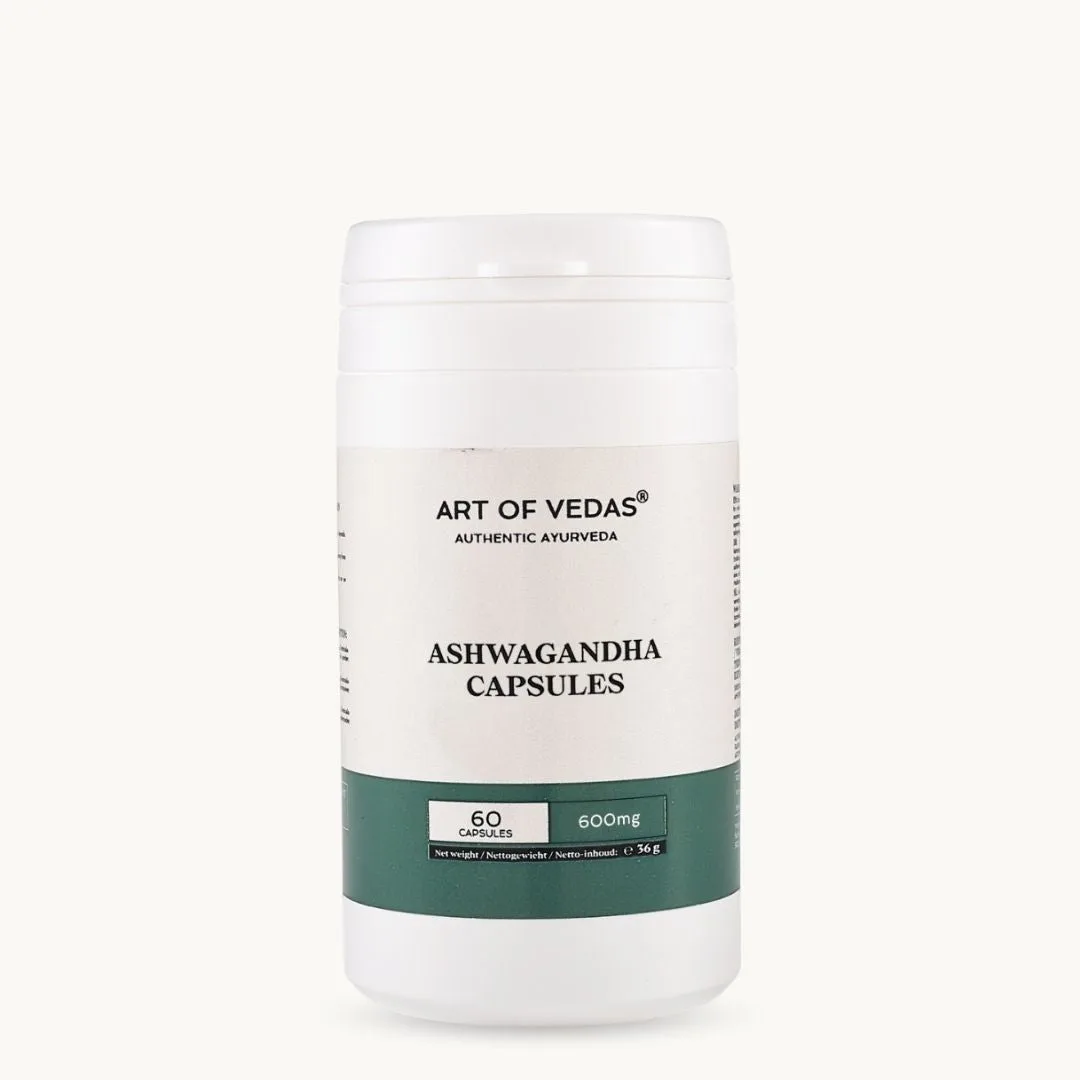
Where Brahmi addresses the clarity and nervous system stability dimension, Ashwagandha addresses the physical depletion and tissue-rebuilding dimension. Its classification as a Vata Rasayana with specific action on Mamsa Dhatu (muscle tissue) and Majja Dhatu (nerve tissue and bone marrow) makes it the primary herb for the physical manifestations of chronic stress: the muscle weakness, the thinning and weight loss, the cold and dry skin, and the deep fatigue that accompanies long-standing Prana Vata disturbance. Charaka Samhita Chikitsasthana describes Ashwagandha as specifically indicated for anxiety, emaciation, and conditions of Vata excess combined with Ojas depletion. The Ashwagandha capsules guide covers the practical usage protocol in detail.
Abhyanga as Nervous System Medicine
The application of warm oil to the body is described in Charaka Samhita Sutrasthana Chapter 5 as specifically Vata-pacifying and as producing the qualities of groundedness, calm, and stability that counter the mobile, scattered qualities of elevated Prana Vata. The classical text uses the analogy of a tree with dried roots that is revived by water - the oil nourishes the nervous system and body through the skin in the same way that water revives a dried tree through its roots.
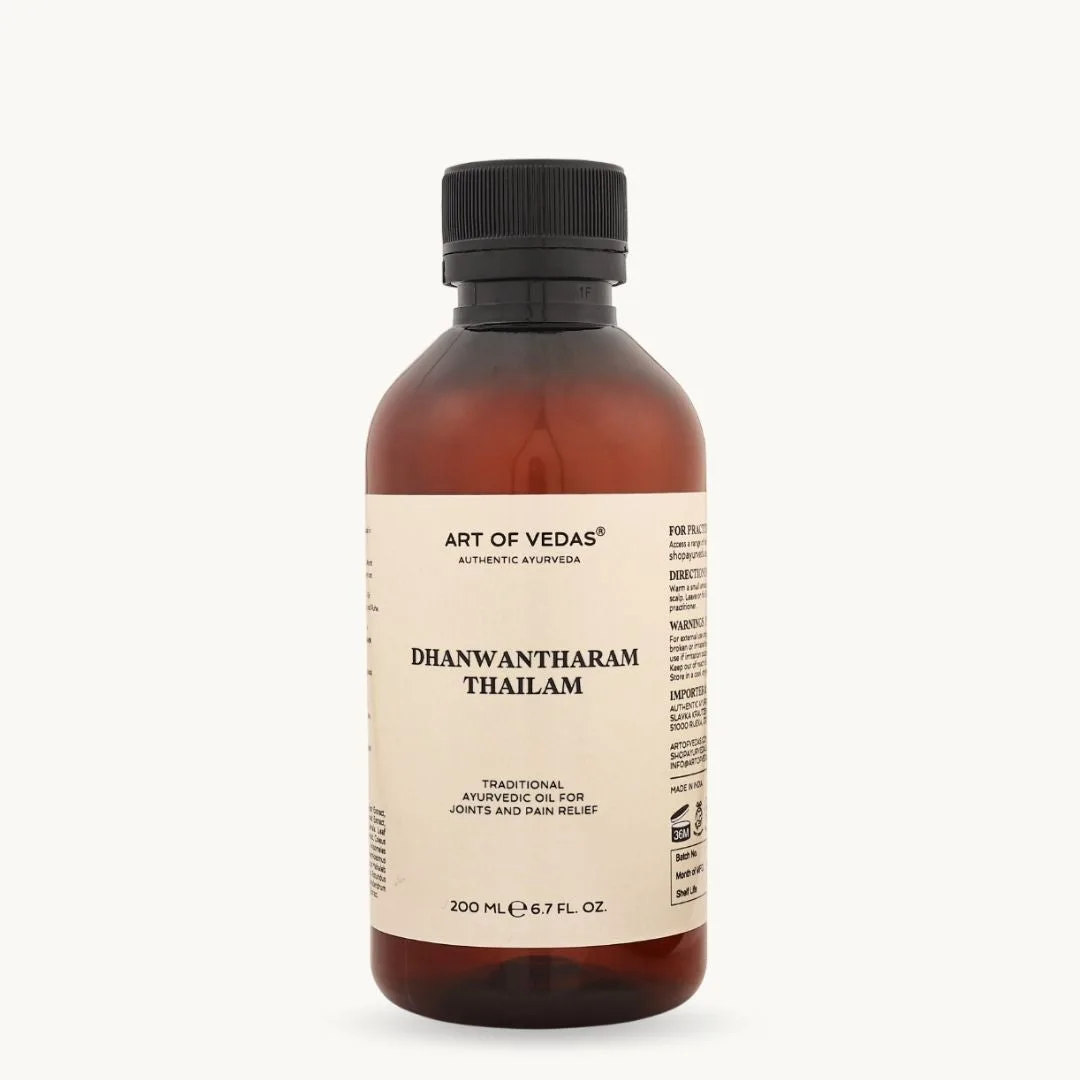
For the stressed, wired presentation, the evening Abhyanga is particularly valuable. Applied before sleep with warm Dhanwantharam Thailam or Bala Thailam (for significant depletion), it directly calms Prana Vata through the Marma points (particularly the crown, temples, and feet) and prepares the nervous system for the restorative sleep that stress habitually interrupts. The Charaka Samhita Sutrasthana specifically lists Abhyanga as a practice that promotes Supti (sound sleep) - one of the most consistent benefits described for the practice in the classical literature.
Scalp oiling with warm oil, applied to the crown and temples and left on for 20 minutes before sleep, specifically addresses the Adhipati Marma (the master Marma point at the crown of the head) and its connection to Prana Vata. This localised practice, when full Abhyanga is not practical on a given evening, provides a concentrated calming input for the nervous system in less than ten minutes. The Vata imbalance guide provides the full protocol context for the grounding oil practices.
Dietary Support for Nervous System Resilience
The Charaka Samhita's dietary guidance for Vata nervous system conditions is consistent and practical: warm, freshly cooked, slightly oily food at consistent times. The consistency of meal timing is as therapeutically significant as the food itself - it provides the regulatory anchor that a disturbed Vata nervous system particularly needs. Missing meals, eating at irregular times, and eating while distracted or while working are all specifically listed in the classical texts as Vata-aggravating dietary habits.
warm water with ghee and a small amount of Ashwagandha before sleep is the classical evening nerve tonic preparation described in Charaka Samhita Chikitsasthana. Ghee is Ojas-building, Ashwagandha rebuilds the depleted Mamsa and Majja Dhatu, and the milk carries both compounds via the Anupana (vehicle) principle into the tissues most in need of nourishment overnight. This preparation, consistently taken for four to six weeks, produces measurable improvement in sleep quality, morning energy, and the sense of groundedness that characterises a recovering Prana Vata.
Sleep as the Primary Vata Nervous System Intervention
The Charaka Samhita is explicit: sleep is the single most important restorative practice for Vata and for the nervous system. The classical texts describe sleep deprivation as one of the most potent Vata aggravators, producing every symptom of the stressed, wired presentation when chronically insufficient. Consistent sleep before 10pm - entering the restorative deep sleep phases before midnight, when the body's tissue repair is most active - is both the outcome of a well-managed Vata nervous system and one of the inputs that produces it.
The practices described above - Abhyanga before sleep, consistent meal timing, Ashwagandha in reduction of screens and sensory stimulation in the evening hours - all serve as preparatory practices for the sleep that is the actual restorative agent. The Ashtanga Hridayam's Ratricharya (evening routine) chapter describes these practices in exactly this context: as the preparation for sleep rather than as ends in themselves. For the full morning and evening routine context, see the morning routine guide and the Dinacharya guide.
The Role of Consultation in Significant Presentations
The protocol described here is appropriate for mild to moderate stress presentations and for the general maintenance of nervous system resilience. For significant or long-standing presentations - particularly where sleep is severely disrupted, anxiety is intense, or the physical manifestations of depletion are marked - professional guidance from a qualified Ayurvedic practitioner is the more appropriate starting point. The Art of Vedas consultation service provides personalised assessment and protocol guidance for specific presentations. For practitioners working with stressed and depleted clients, the professional-grade preparations available through Shop Ayurveda EU provide clinical quantities of the oils and supplements described here.
Frequently Asked Questions
Is there a difference between Brahmi and Ashwagandha for stress?
Both are Medhya Rasayana herbs with classical indications for stress and nervous system support, but they target different aspects. Brahmi works primarily on the mental dimension: clarity, memory, the capacity to be present rather than scattered, and the cooling of Pitta-type mental agitation (anger, perfectionism, hyper-focus). Ashwagandha works primarily on the physical dimension: rebuilding depleted tissues, increasing Bala (strength) and endurance, and addressing the fatigue and physical weakness that accompany chronic stress. For the full clinical picture of stress - mental agitation combined with physical depletion - both are often indicated in classical practice, with the balance between them determined by which dimension is more significant in the individual presentation.
Can these practices help with sleep problems related to stress?
Sleep disruption is one of the most consistent presentations of Prana Vata disturbance, and the entire Vata-pacifying protocol described here is directly relevant to improving sleep quality. The Charaka Samhita specifically cites Abhyanga with Ashwagandha before sleep, consistent sleep timing, and oil application to the feet and scalp as practices that promote restful sleep. Brahmi in warm water before sleep is described in Ashtanga Hridayam as specifically supporting sleep quality in Pitta-predominant presentations where the sleep disturbance has an element of mental agitation. Results from the combined protocol typically develop over two to four weeks of consistent practice.
Is chronic stress always a Vata condition?
The majority of chronic stress presentations are primarily Vata in nature - the restless, wired, scattered, mobile quality of excess Vata dominates. However, stress can have a significant Pitta component (anger, drive, perfectionism, the inability to delegate or stop working) or a Kapha component (withdrawal, depression, heaviness, avoidance). The primary protocol described here addresses the Vata component. For significantly Pitta-driven stress presentations, the cooling herbs and practices from the Pitta guides are more specifically appropriate. The dosha assessment and the Pitta imbalance guide provide further context for distinguishing these patterns.
How long does it take for Medhya Rasayana herbs to produce results?
The classical texts describe Rasayana effects as cumulative and developing over weeks and months of consistent use. Charaka Samhita's guidance on Rasayana herbs consistently describes sustained daily use as the prerequisite for the described benefits - single or occasional doses have minimal effect. In clinical practice, most individuals report noticeable improvement in sleep quality and mental calm within three to four weeks of consistent daily Ashwagandha and Brahmi supplementation combined with the oil and dietary practices. The deeper tissue rebuilding and Ojas restoration require three to six months of sustained practice for significant prior depletion.