The Ayurvedic Framework for Skin Types
Classical Ayurveda does not use the modern cosmetic categories of oily, dry, or combination skin in isolation. Instead, it understands skin through the lens of the three doshas - Vata (air and ether), Pitta (fire and water), and Kapha (earth and water) - and the ways in which their balance or imbalance expresses itself through the skin.
Every individual has a unique combination of all three doshas in their constitution. The skin type they tend toward naturally reflects this constitution, while temporary changes in skin quality reflect shifts in the dosha balance caused by diet, season, stress, or lifestyle.
Vata Skin Type: Dry, Fine, Variable
Characteristics
Vata skin tends toward dryness, fine texture, and a variable quality that shifts easily with the season or with changes in diet and routine. When Vata is in balance, the skin has a fine, delicate quality that can be beautiful in its lightness. When Vata is elevated - particularly in autumn, winter, or with irregular eating, travel, or stress - the same skin tends toward flakiness, roughness, loss of moisture, fine lines, and a dull or greyish tone.
The Charaka Samhita describes Vata skin as typically thin (Sukshma), dry (Ruksha), and rough (Khara) - with a tendency toward premature aging when Vata accumulates over time without proper nourishment.
Classical Oil Selection for Vata Skin
The primary need for Vata skin is oleation - providing the moisture, warmth, and heaviness that counterbalances the dry, cold, light qualities of excess Vata. Classical oils for Vata skin are warm, rich, penetrating, and deeply nourishing:
-
Sesame oil (Tila Taila): The classical foundation for all Vata-type body oil practice. Warm, heavy, and deeply penetrating in classical terms - the most appropriate base oil for Vata skin.
-
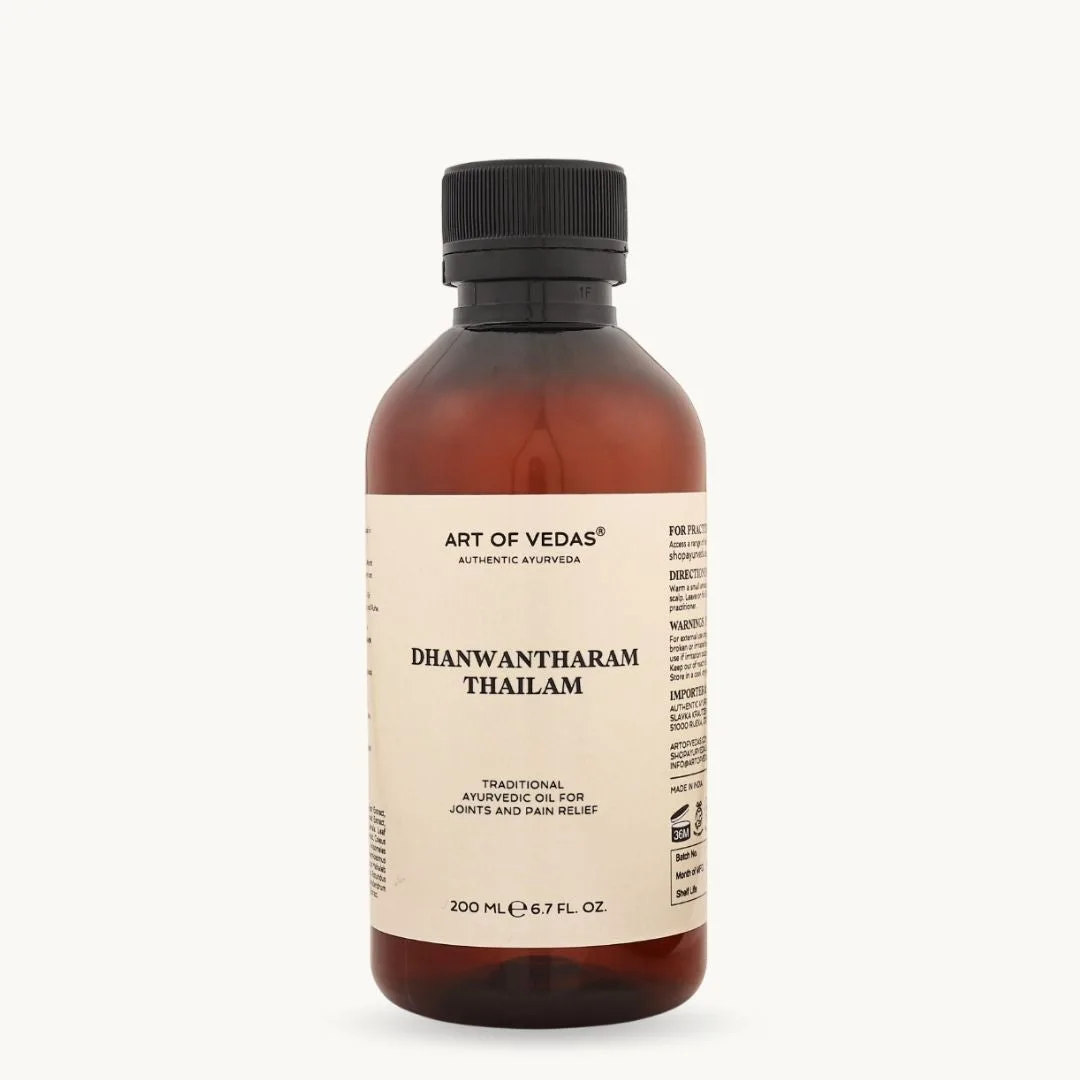
Dhanwantharam Thailam: The classical choice for Vata-related body and skin conditions, with Brimhana herbs that directly support Vata-depleted tissue. See our Dhanwantharam Thailam guide.
-
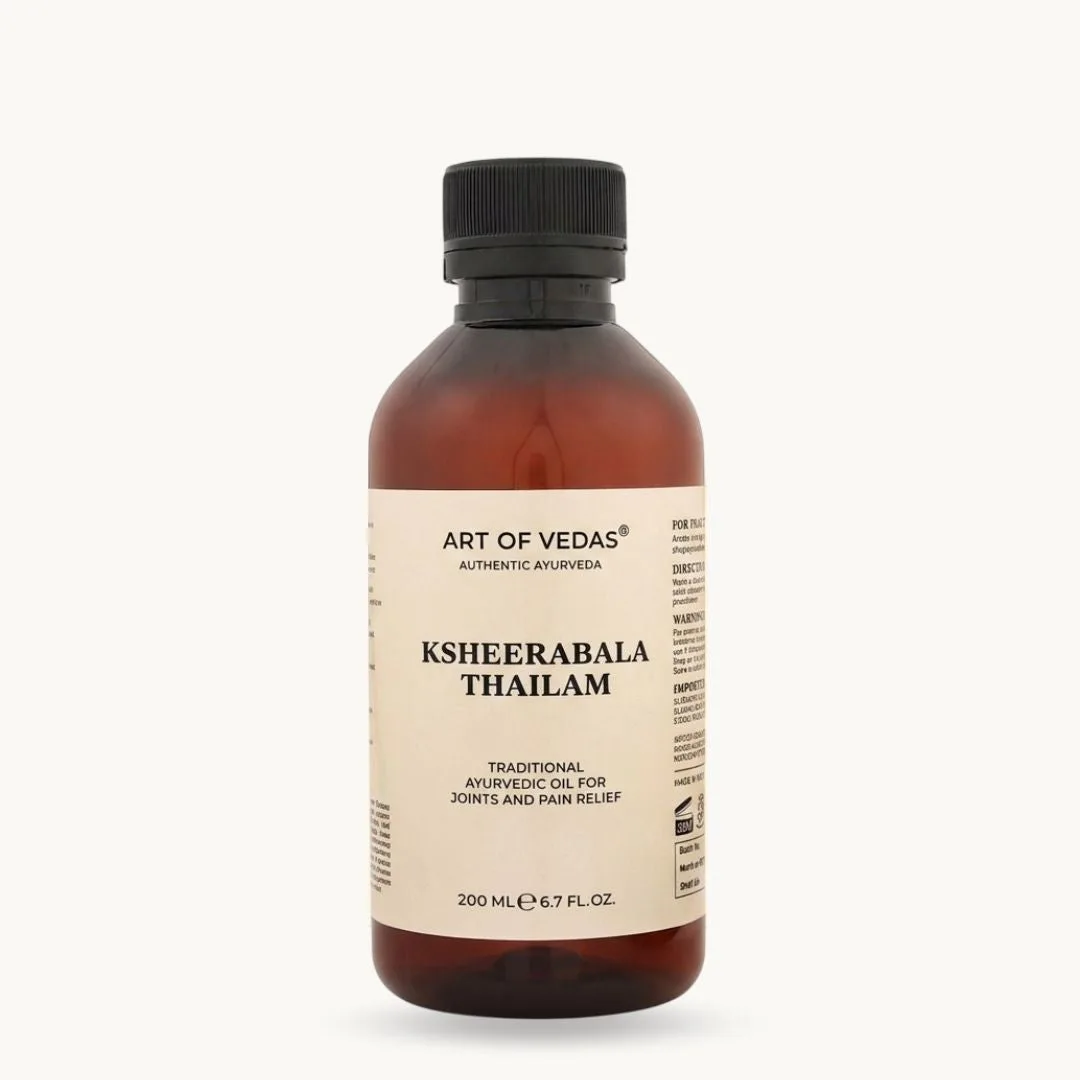
Ksheerabala Thailam: Processed in milk with Bala herb, deeply nourishing to the Majja and Mamsa Dhatus, and particularly suited to Vata skin with structural depletion. See the Ksheerabala guide.
-
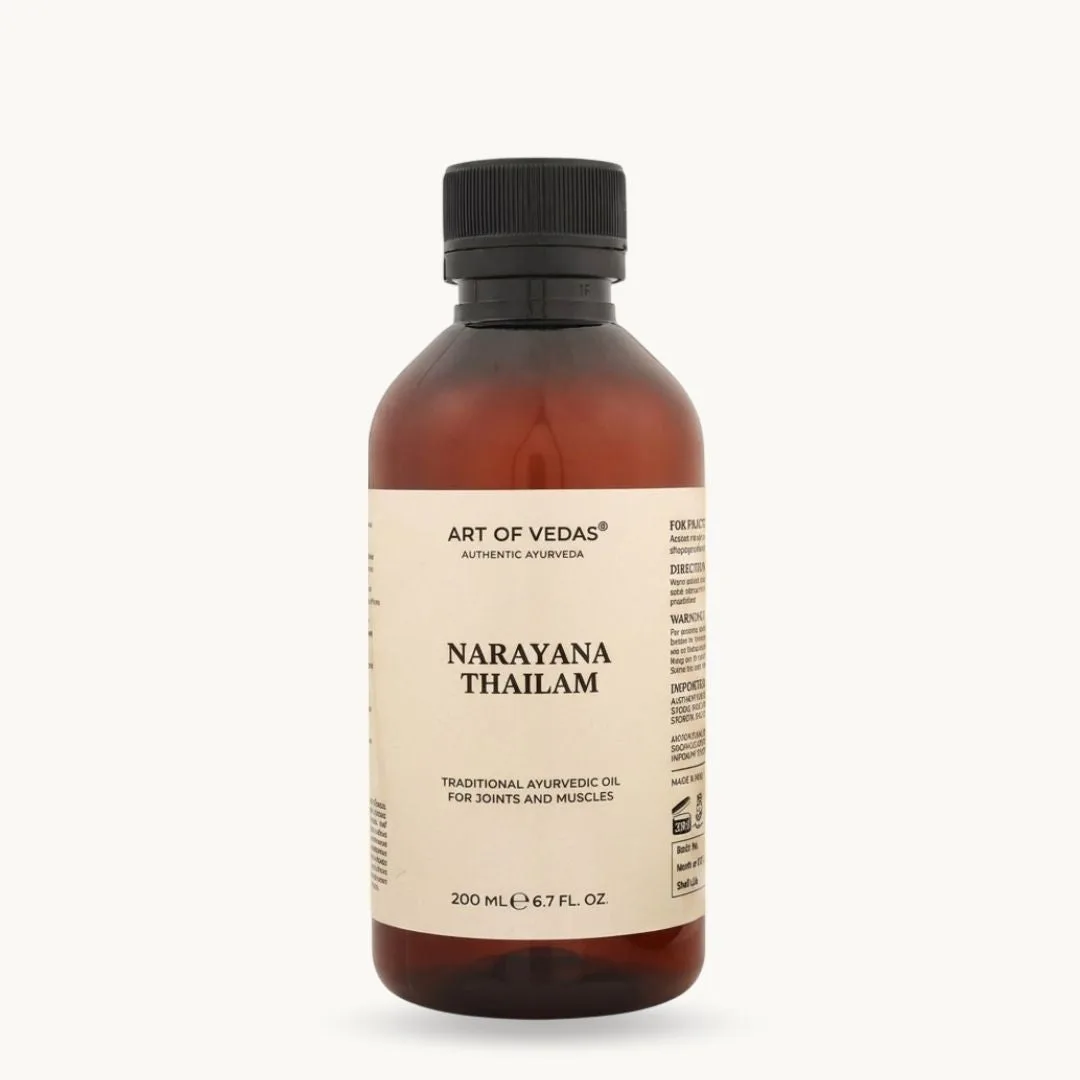
Narayana Thailam: For comprehensive full-body Vata management - the Sarva Vata hara oil of the classical tradition. See the Narayana Thailam guide.
-
Kumkumadi Thailam (sesame-based formulation): For Vata facial skin - nourishing and Varnya (complexion-supporting).
Application Approach for Vata Skin
Daily warm oil application, generous quantity, longer retention before bathing. Apply in slow, long strokes. Prioritise regularity - consistency is especially important for Vata types, who benefit most from steady routine. See our Abhyanga guide.
Pitta Skin Type: Sensitive, Reactive, Heat-Prone
Characteristics
Pitta skin tends toward sensitivity, reactivity, and a susceptibility to redness and heat-related responses. When Pitta is in balance, the skin can be radiant and clear, with a warm, luminous quality. When Pitta is elevated - from excess heat in the diet, emotional stress, exposure to sun, or high summer temperatures - the same skin may become reactive, flushed, sensitive to products, prone to breakouts, or show uneven pigmentation.
The Ashtanga Hridayam describes Pitta skin as typically warm (Ushna), slightly oily (Snigdha), with a tendency toward inflammation when Pitta is aggravated. The primary requirement is cooling, soothing, and Pitta-pacifying.
Classical Oil Selection for Pitta Skin
-
Coconut oil (Narikela Taila): The classical cooling body oil for Pitta conditions - light, cooling, and Pitta-shamana. The foundational base for Pitta-type body application.
-
Chandanadi Thailam: Sandalwood-based, classically cooling, Varnya, and Pitta-pacifying - for both face and body use in Pitta conditions.
-
Ksheerabala Thailam: Cooling and nourishing due to its milk processing, it is suitable for Pitta skin where nourishment is also needed alongside cooling.
-
Eladi Keram: A classical preparation with a coconut oil base, clarifying and cooling - the traditional choice for Pitta facial skin and for use in summer months.
-
Kumkumadi Thailam (coconut-based formulation): For Pitta facial skin - the cooling version of this classical Varnya oil.
Application Approach for Pitta Skin
Use oil at room temperature or slightly cooled in hot weather - avoid applying very warm oil to reactive Pitta skin in summer. Use a lighter hand and smaller quantities. Avoid the face in peak summer sun with sesame-based oils. The Kansa wand facial practice is excellent for Pitta skin - its metal's natural cooling quality works with the oil to reduce surface heat. See our Kansa wand guide.
Kapha Skin Type: Thick, Oily, Cool
Characteristics
Kapha skin tends toward thickness, oiliness, and a cool, heavy quality. When Kapha is in balance, this skin type is often the most resilient and ages well - retaining moisture naturally and showing fewer fine lines than Vata skin. When Kapha is elevated - from excess of sweet or heavy foods, sedentary routine, cold and damp weather, or emotional heaviness - the same skin may become congested, dull, prone to enlarged pores, or slow in its response to external products.
Classical Oil Selection for Kapha Skin
-
Light sesame oil in small quantities: The classical approach for Kapha body application is to use sesame oil in smaller amounts and with more vigorous application technique - enough to nourish without adding to the already-sufficient Kapha moisture.
-
Nalpamaradi Thailam: Used as a pre-bath Udvartan-style treatment - applied, worked in, and then washed off - rather than as a leave-on oil. The turmeric and Ficus combination supports clarity and evenness of the complexion for Kapha skin.
-
Eladi Thailam: Lighter, aromatic, and mildly stimulating - more suited to Kapha skin than heavy Vata oils.
Application Approach for Kapha Skin
Use more vigorous strokes in Abhyanga - the classical Udvartana (dry herb rubbing) technique is specifically prescribed for Kapha conditions alongside oil. Use warm oil, apply vigorously in circular motions over congested areas, and consider dry brushing before oil application during Kapha season (late winter to spring).
Mixed and Seasonal Considerations
Most people have mixed constitutions - Vata-Pitta, Pitta-Kapha, Vata-Kapha, or balanced Tridoshic constitutions. The classical approach for mixed types is to observe which dosha is most prominent in the current season or condition and adjust accordingly. A Vata-Pitta type will use Ksheerabala Thailam (which addresses both doshas) as a foundation, adjusting between more warming and more cooling approaches with the season.
Seasonal rotation of oils is explicitly recommended in the classical texts:
-
Autumn and winter: Heavier, warming oils - sesame-based, Vata-nourishing (Dhanwantharam, Ksheerabala, Narayana)
-
Spring: Lighter application, Kapha-clearing - smaller quantities, more vigorous technique, Nalpamaradi as pre-bath treatment
-
Summer: Cooling, Pitta-pacifying - coconut-based, Chandanadi, Eladi Keram, smaller quantities overall
Quick Reference: Classical Oil by Skin Type
Dry / Vata skin: Dhanwantharam Thailam, Ksheerabala Thailam, Narayana Thailam, sesame oil base
Sensitive / Pitta skin: Ksheerabala Thailam, Chandanadi Thailam, Eladi Keram, coconut oil base
Oily / Kapha skin: Light sesame oil, Nalpamaradi Thailam, Eladi Thailam
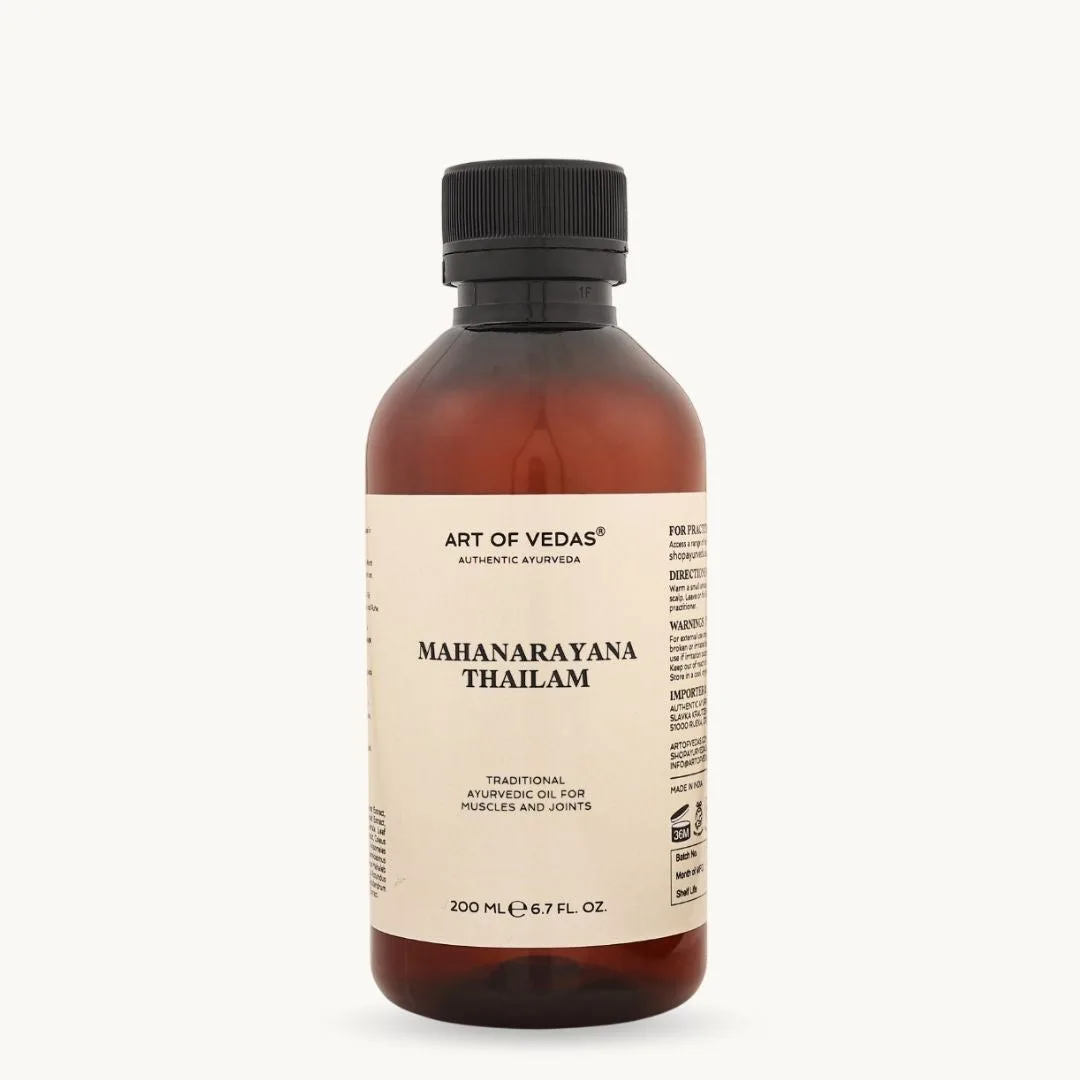
Aging / Rasayana approach: Narayana / Mahanarayana Thailam, Dhanwantharam Thailam, Ksheerabala Thailam. See our full Rasayana approach to aging skin guide.
Face care: Kumkumadi Thailam, Eladi Keram, Chandanadi Thailam. See our face oil selection guide.
Frequently Asked Questions
How do I know my Ayurvedic skin type?
Ayurvedic skin typing begins with understanding your overall Prakriti (constitution) - determined by your natural tendencies across a range of physical, mental, and behavioural characteristics. It also takes into account your Vikriti (current state), which may differ from your natural constitution due to diet, season, stress, or lifestyle. An Ayurvedic practitioner can assess both. As a starting point, observe your skin's predominant tendency: dry and variable (Vata), sensitive and reactive (Pitta), or thick and oily (Kapha).
Can I use the same oil year-round?
Classical Ayurveda recommends adjusting oils seasonally. The core daily Abhyanga oil may remain consistent (for example, Dhanwantharam Thailam as a year-round Vata-nourishing base), but the quantity, temperature of application, and supplementary preparations change with the seasons. In summer, a switch to lighter or cooling oils is classically recommended even for Vata types.
Is sesame oil good for all skin types?
Sesame oil is described in classical texts as primarily Vata-shamana (Vata-balancing) - making it most appropriate for Vata and mixed Vata-type conditions. For Pitta-type skin, coconut oil is the classical alternative. For Kapha types, sesame oil is used in smaller quantities with a more vigorous technique. No single oil is universally optimal - but sesame oil is the closest to a classical all-round base for most people in temperate climates.
What is Abhyanga and how often should I do it?
Abhyanga is the classical Ayurvedic full-body oil massage, described in the Ashtanga Hridayam as a foundational daily self-care practice. The classical recommendation is daily application, though two to three times per week is a meaningful and achievable frequency for most modern practitioners. See our complete Abhyanga guide.
Which oil is best for combination skin?
For Vata-Pitta combination skin, Ksheerabala Thailam is often the most balanced choice - it is nourishing and deeply penetrating (addressing Vata) while being processed in milk, giving it a cooling quality that does not aggravate Pitta. For seasonal adjustment, shift toward more warming oils in autumn and winter, and toward cooling preparations in late spring and summer.
Explore Classical Ayurvedic Oils at Art of Vedas
Browse our full range of classical Ayurvedic oils at Art of Vedas Thailams. For detailed guides to specific oils, see our guide to comparing classical oils, our Abhyanga practice guide, and our guide to the Ayurvedic daily routine.
This article is for informational and educational purposes only. The preparations and practices described are traditional Ayurvedic approaches to skin care and self-care. They are not medicines and are not intended to diagnose, treat, cure, or prevent any medical condition. Consult a qualified Ayurvedic practitioner for personalised guidance.