Ksheerabala Thailam: Benefits, Uses and Classical Application
There is a reason Ksheerabala Thailam is one of the most consistently recommended oils in classical Ayurveda for Vata-related conditions. It is not simply the herbs in the formula - it is how those herbs are processed. The preparation method involves cooking the oil with both the herb paste and milk, a process the classical texts specify carefully and which is considered to produce a preparation with different, more refined properties than standard oil processing. Understanding this method - and the benefits that flow from it - is the key to understanding why this oil occupies the place it does in the classical repertoire.
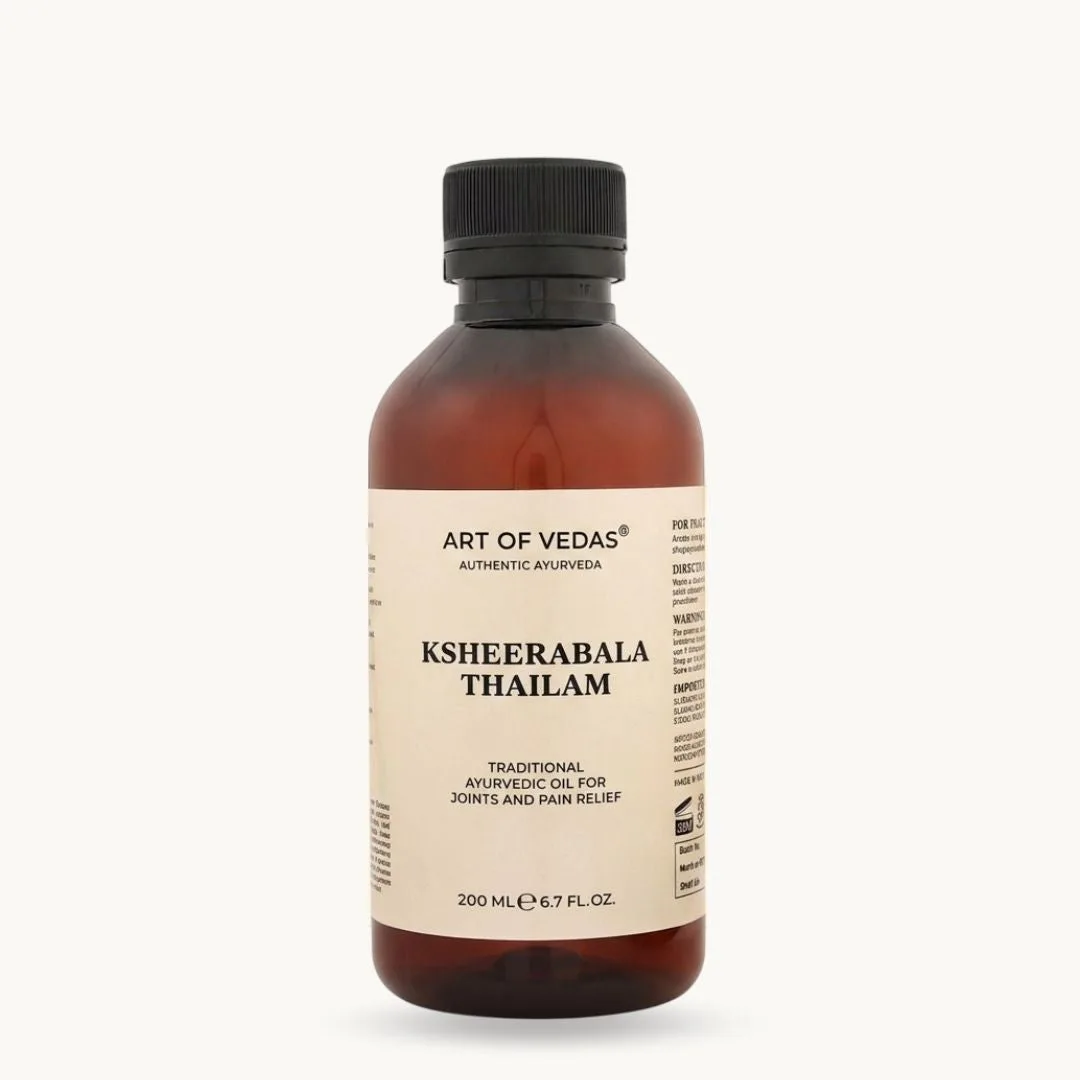
This guide covers the benefits, classical uses, and application method for Ksheerabala Thailam. For the full background on the formulation - its ingredients, classical textual history, and comparative context - see our complete Ksheerabala Thailam guide.
The Classical Preparation: Why Milk Matters
Ksheerabala Thailam takes its name from two key ingredients: Kshira (milk) and Bala (Sida cordifolia). The preparative method specified in the classical texts - particularly the Ashtanga Hridayam and the Sahasrayogam - involves processing the base sesame oil with Bala paste (kalka) and a decoction or quantity of milk. The result is a Thailam that carries the lipophilic properties of sesame oil combined with the nutritive, cooling qualities that milk introduces into the preparation.
There is a variant preparation known as Ksheerabala 101 (or 1001), in which the preparation cycle is repeated 101 (or 1001) times. Each repetition involves adding fresh milk and continuing the processing. This extended preparation, described in the texts and compendiums of Kerala Ayurveda, is considered to produce an increasingly refined and potent preparation. The number of repetitions is not arbitrary - it reflects the classical pharmacological understanding that repeated processing deepens the transformation of the base medium.
Standard Ksheerabala Thailam (single preparation) is what Art of Vedas carries and is the form most appropriate for regular self-care use at home. The multi-processed variants are more commonly used in clinical therapeutic contexts.
The Primary Benefits of Ksheerabala Thailam
Nourishing Support for Vata Dosha
Ksheerabala Thailam is classified in classical Ayurveda as a deeply nourishing oil with particular affinity for Vata dosha. The combination of Bala (Sida cordifolia) - a classical Brimhana (nourishing, tonifying) herb - with the nutritive quality of milk and the grounding warmth of sesame oil makes this one of the most considered Vata-pacifying preparations in the classical tradition.
Vata dosha, when balanced, governs movement, lightness, and clear communication in the body. When aggravated - through irregular sleep, travel, excessive activity, cold and dry weather, or periods of physical or mental depletion - Vata manifests as dryness, tension, instability, and discomfort in the muscles and nervous system. Ksheerabala Thailam is traditionally used in Abhyanga (oil self-massage) practice as a supportive preparation for these presentations. You can read more about recognising Vata imbalance in our Vata Imbalance guide.
Nervous System Support
Bala (Sida cordifolia) is classified in the classical texts as a Brimhana herb - one that nourishes and builds - with specific traditional affinity for Mamsa dhatu (muscle tissue), Majja dhatu (nervous tissue), and Shukra dhatu (reproductive and vital tissue). In the context of Ksheerabala Thailam applied externally, this translates to a preparation traditionally used where nourishment and settling of the nervous system are indicated.
The classical texts describe Majja dhatu as the tissue layer associated with the nervous system, and Vata as the dosha with the strongest influence over Majja. Preparations that pacify Vata and support Majja - like Ksheerabala - are described in the Ashtanga Hridayam in the context of Vata Vyadhi (Vata disorders) affecting these tissue layers.
Muscle and Structural Support
Sida cordifolia (Bala) is one of the classical Ayurvedic herbs described in the Ashtanga Hridayam Sutrasthana (the chapter on properties of herbs) as Mamsa-brimhana - supportive of muscle tissue nourishment. When processed into a Thailam and applied through regular Abhyanga, this property is considered accessible through the transdermal route.
Classical Ayurvedic literature consistently describes the skin (Twak) as a pathway for the action of medicated oils. Regular application of Ksheerabala during Abhyanga is traditionally associated with nourishment of the muscle and structural tissue layers in the classical therapeutic model.
Gentle and Suitable for Sensitive Constitutions
One of the practical advantages of Ksheerabala Thailam is that its milk-based processing and the inherently Sheeta (cooling) quality of Bala make it one of the gentler nourishing Vata oils. Compare this to Mahamasha Thailam, which is more intensely heating and is traditionally reserved for significant Vata presentations, or to Dhanwantharam Thailam, which is warming and primarily targeted at musculoskeletal Vata. Ksheerabala offers nourishing Vata support with a less heating profile, making it suitable for people who run warm or for use during hotter seasons while still requiring Vata support.
This nuance is important when choosing an oil for daily Abhyanga - a question we address more fully in our guide to choosing the right Ayurvedic massage oil.
Classical Uses: What the Texts Prescribe
The Ashtanga Hridayam describes Ksheerabala Thailam in the chapters addressing Vata disorders (Vata Vyadhi Chikitsa). It is mentioned in the context of Brimhana therapies - nourishing treatments - for conditions where depletion, dryness, and instability in the musculoskeletal and nervous system are central presentations.
The Sahasrayogam (Kerala classical compendium) includes Ksheerabala prominently, with specific references to its use in Pizhichil (oil drip therapy) and Abhyanga contexts in Kerala Panchakarma traditions. Kerala Ayurvedic practice has maintained a particularly strong tradition with this oil, and it appears frequently in the records of classical Panchakarma treatments in that tradition.
Key classical use contexts include:
- Daily Abhyanga as a nourishing practice for Vata constitutions or during Vata seasons
- Post-activity recovery support - particularly relevant for people with physically demanding lifestyles
- Support during periods of fatigue, depletion, or overexertion
- As a head massage oil (Shiro Abhyanga) for stress and nervous system settling
- In Pizhichil (Kerala Panchakarma oil-drip therapy) in clinical Panchakarma contexts
How to Apply Ksheerabala Thailam
For Full-Body Abhyanga
The classical method of Abhyanga involves warming the oil before application, applying it to the full body before bathing, and allowing a period of rest before washing. The sequence is described in detail in our Complete Abhyanga Guide. The specific notes for Ksheerabala are:
- Warming: Ksheerabala Thailam should be warmed gently before use. Place the bottle in a bowl of hot water for three to five minutes. The oil should be warm to the touch, not hot. The warming step is described in classical texts as essential - cold oil is said to have a contracting effect that works against the nourishing intention of Abhyanga
- Direction of application: Apply in the direction of hair growth (long strokes along the limbs, circular motions at joints) using slow, even pressure. For Vata conditions, deeper and slower strokes are traditionally favoured over rapid, superficial application
- Duration: Apply for 15 to 30 minutes before bathing. Longer oil contact time is traditionally associated with deeper nourishment of the tissue layers
- Bathing: Bathe with warm (not hot) water. The classical method uses warm water to open the pores and facilitate oil absorption; hot water is considered to strip the oil benefit. Avoid soap on the main areas of oil application where possible
- Frequency: The classical texts recommend daily Abhyanga as part of Dinacharya. For most people in a modern routine, three to four times per week is a realistic and beneficial frequency
For Head Massage (Shiro Abhyanga)
Ksheerabala Thailam is well suited to Shiro Abhyanga (head oil massage) due to its nourishing, Majja-supporting properties and its gentle cooling quality. Apply warm oil to the scalp with the fingertips, working in circular motions from the crown outward. A small amount of oil left in the hair for 30 minutes to several hours before washing - or overnight - is the traditional recommendation. Our Ayurvedic Hair Oil Massage guide covers the full classical technique.
For Local Application
Ksheerabala Thailam can be applied to specific areas of the body as a local treatment - to the lower back, neck, or any area where Vata-related tension or discomfort is experienced. Warm oil applied to a specific area and allowed to rest can be combined with gentle warmth (a warm cloth or heat pad) to deepen the application.
Seasonal Considerations
Classical Ayurveda's seasonal guidelines (Ritucharya) influence which oils are appropriate at different times of year. Ksheerabala Thailam's cooling quality makes it particularly suitable during autumn (Sharada) and early winter - the transitional period when Vata begins to accumulate - and through the winter months. During summer and intense heat, its cooling quality may make it more appropriate than the more heating Vata oils for people who tend toward Pitta and Vata combined. Read more in our Vata Diet guide and Ayurvedic Autumn guide.
Ksheerabala vs Other Classical Vata Oils
Understanding where Ksheerabala Thailam sits relative to the other classical Vata oils helps with making the right choice for your practice:
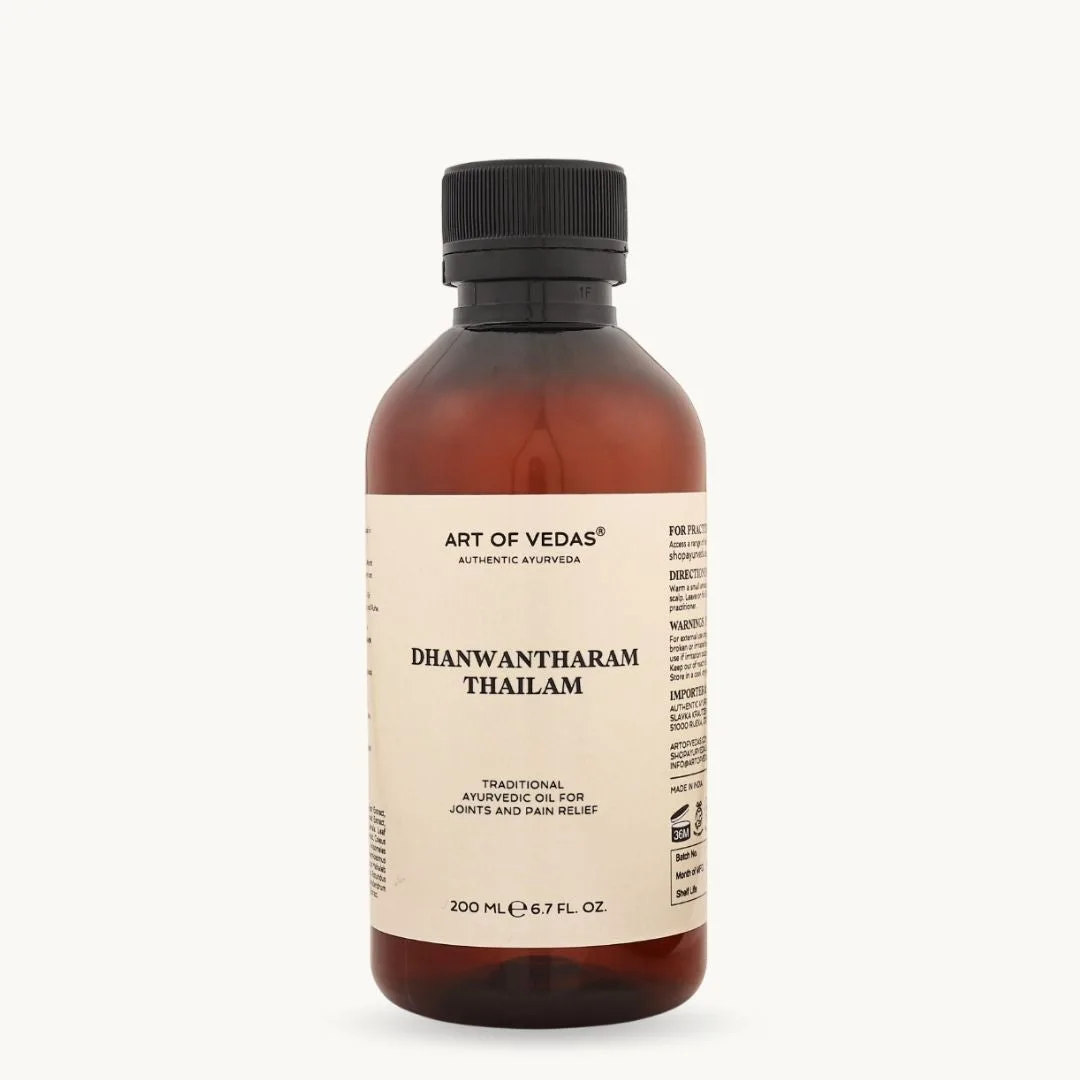
- Ksheerabala vs Dhanwantharam: Dhanwantharam Thailam is more specifically targeted at musculoskeletal Vata presentations and is warming. Ksheerabala is more broadly nourishing and cooler in its quality. For general nourishment of Vata, Ksheerabala is often the starting point; for specific musculoskeletal support, Dhanwantharam is more targeted
- Ksheerabala vs Mahamasha: Mahamasha is significantly more heating and is traditionally reserved for more severe Vata presentations affecting deep musculoskeletal structures. Ksheerabala is appropriate for milder, more general Vata nourishment
- Ksheerabala vs Narayana Thailam: Narayana Thailam is described in classical texts as a Sarva Vata hara (addressing all Vata disorders) with broad classical indications. Ksheerabala is more specifically associated with nourishing support and nervous system applications
Our guide to comparing classical Ayurvedic massage oils provides a more detailed comparative framework across the full range of classical Vata oils.
Frequently Asked Questions
Can I use Ksheerabala Thailam daily?
Yes. Daily Abhyanga is the classical recommendation, and Ksheerabala is well suited to regular daily use. Its nourishing, gentle quality makes it one of the more appropriate choices for sustained daily practice over an extended period.
What is the difference between Ksheerabala 1 and Ksheerabala 101?
Ksheerabala 1 (single processing) is the standard preparation suitable for home use. Ksheerabala 101 and Ksheerabala 1001 are preparations in which the processing cycle is repeated 101 or 1001 times, progressively refining the preparation. These variants are described in classical texts and used in clinical Panchakarma settings. The single preparation (which Art of Vedas carries) is appropriate for home Abhyanga practice.
Is Ksheerabala Thailam suitable for children?
Classical Ayurvedic texts describe Bala (Sida cordifolia) and Ksheerabala preparations as appropriate for pediatric use in certain contexts, owing to the nourishing quality of the formulation. For use with children, a lighter application with a shorter oil contact time is advisable. Consult a qualified Ayurvedic practitioner for specific guidance on pediatric use.
Can Ksheerabala Thailam be used internally?
Classical Ayurveda describes both internal (Snehapana) and external use of Ksheerabala Thailam, with internal use specifically in clinical Panchakarma preparation contexts under practitioner guidance. For home use, Art of Vedas recommends Ksheerabala Thailam for external application only. Internal use of medicated oils requires proper assessment and guidance from a qualified Ayurvedic practitioner.
How long does a bottle last with daily use?
For full-body Abhyanga, a typical application uses 30–60 ml of oil. A 100 ml bottle provides approximately two to three full-body applications. For head massage or local application, the quantity used per session is considerably smaller. A 200 ml bottle used for full-body Abhyanga three times per week would typically last two to three months.
Conclusion
Ksheerabala Thailam is one of the classical Ayurvedic oils that genuinely warrants the attention it has received across centuries of practice. Its preparation method - oil processed with both the classical herb and milk - places it in a category of its own within the Vata-supporting oil range. The nourishing, cooling quality that results from this preparation makes it a versatile, deeply supportive daily Abhyanga oil for those with Vata constitutions or Vata imbalances.
The key is consistency. A single application is pleasant; a regular practice of three or more applications per week over several weeks is when the cumulative, nourishing effect that the classical tradition describes becomes accessible. This is true of all Ayurvedic self-care practices - they reward sustained engagement.
Find Ksheerabala Thailam in the Art of Vedas range. Explore the full Ayurvedic Oils collection for the complete classical Vata oil range.
This article is for educational purposes only. The information reflects traditional Ayurvedic knowledge as recorded in classical texts. It does not constitute medical advice and is not intended to diagnose, treat, cure or prevent any condition. Please consult a qualified Ayurvedic practitioner or healthcare provider for personal health guidance.