This article is part of our AYURVEDIC SKINCARE FOR BEGINNERS guide series.
Ayurvedic Body Oil for Aging Skin: The Rasayana Approach
Ayurveda's understanding of aging - and what can be done about it - is one of its most sophisticated contributions to the science of wellbeing. Long before the modern era of anti-aging cosmetics, classical Ayurvedic physicians developed an entire branch of the tradition dedicated to the subject: Rasayana, the science of rejuvenation and longevity.
Central to the Rasayana approach is the recognition that aging of the skin and body begins with the gradual depletion of the tissue layers (Dhatus), the drying out of the channels (Srotas) through which nourishment flows, and the progressive increase of Vata - the bodily principle governing dryness, movement, and degeneration - that naturally accompanies aging in the classical framework.
The prescription, accordingly, is oil - applied externally in the tradition of daily Abhyanga, and chosen with precision for its Rasayana properties and its capacity to nourish the specific tissue layers most affected by time.
How Ayurveda Understands Skin Aging
In classical Ayurvedic physiology, the health of the skin is directly related to the health of Rasa Dhatu - the first and most foundational of the seven tissue layers. Rasa Dhatu encompasses the plasma, lymphatic fluid, and the basic nutritive essence circulating through the body. The skin, as the outermost expression of this tissue layer, reflects its health directly.
As we age, several changes occur in the Ayurvedic framework:
-
Vata increases: The dry, light, rough, cold qualities of Vata naturally accumulate with age. This is expressed externally as dryness, loss of skin elasticity, the appearance of lines and wrinkles, and a general reduction in the plumpness and moisture of the skin.
-
Ojas decreases: Ojas - the subtle essence of all seven Dhatus and the ultimate product of ideal digestion and healthy living - gradually depletes over time. Ojas is the foundation of vitality, immunity, and radiance. Its depletion manifests as a loss of the natural lustre and glow that is associated with youthful health.
-
Dhatu nourishment declines: As the body's capacity to transport and utilise nutrients diminishes with age, the deeper tissue layers receive progressively less nourishment, contributing to the thinning, fragility, and reduced resilience of the skin.
The classical Rasayana approach addresses all three of these dimensions simultaneously - using oils and herbs that are specifically Vata-shamana (Vata-pacifying), Ojas-vardhaka (Ojas-building), and Dhatu-poshanam (tissue-nourishing) in their classical properties.
Classical Oils for the Rasayana Approach to Aging Skin
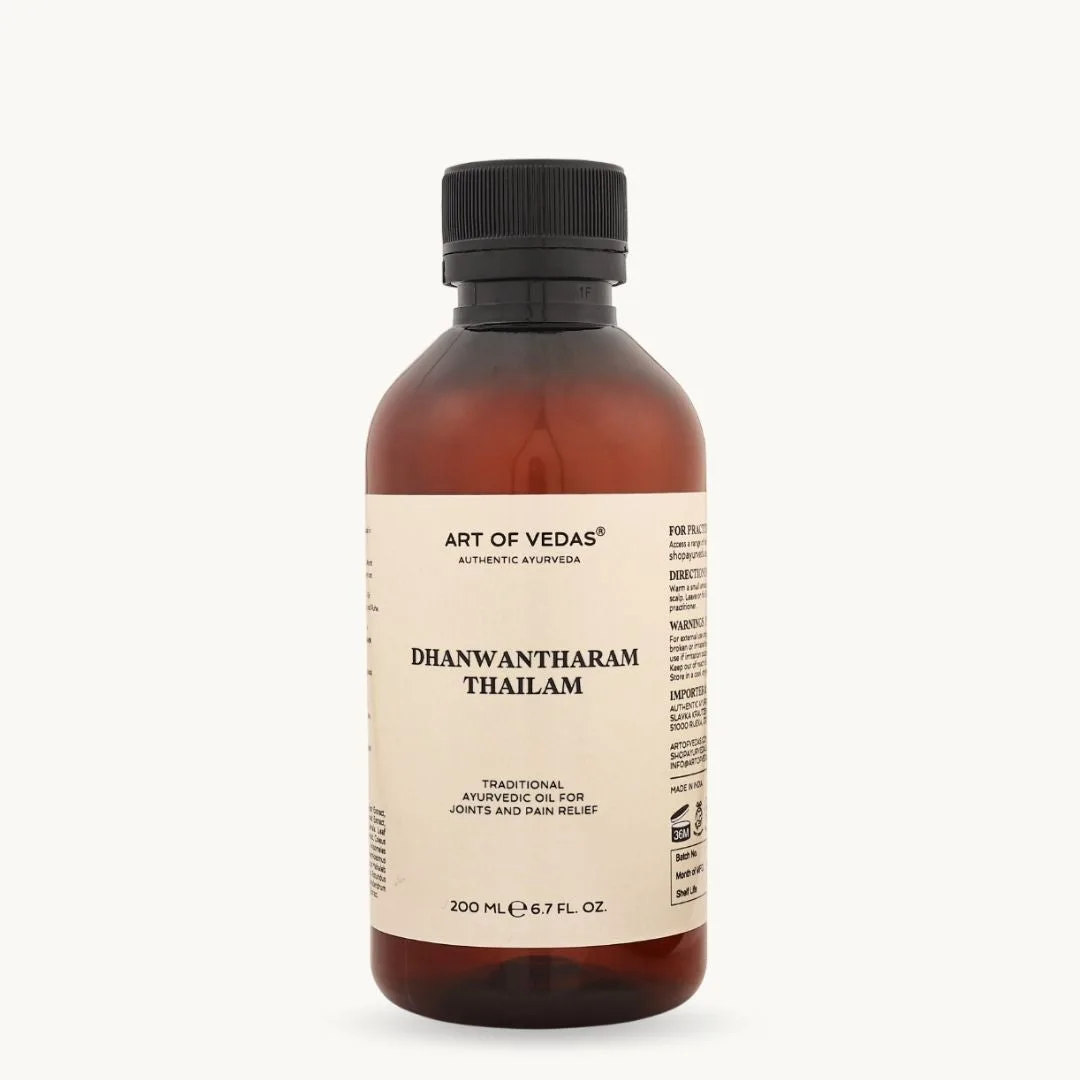
Dhanwantharam Thailam
Dhanwantharam Thailam is one of the most classically significant Ayurvedic oils for Vata-related conditions, and its role in the classical aging-skin context is well-established. The Ashtanga Hridayam (Chikitsa Sthana) describes Dhanwantharam preparations as broadly applicable for Vata disorders, with particular benefit for the musculoskeletal and skin tissues.
The formulation includes a complex combination of Brimhana herbs processed in sesame oil with milk, creating an oil that is warming, deeply penetrating, and specifically suited to the dry, depleted character of aging Vata skin. Regular full-body Abhyanga with Dhanwantharam Thailam is one of the cornerstones of classical Vata-management and rejuvenation practice. See our complete Dhanwantharam Thailam guide.
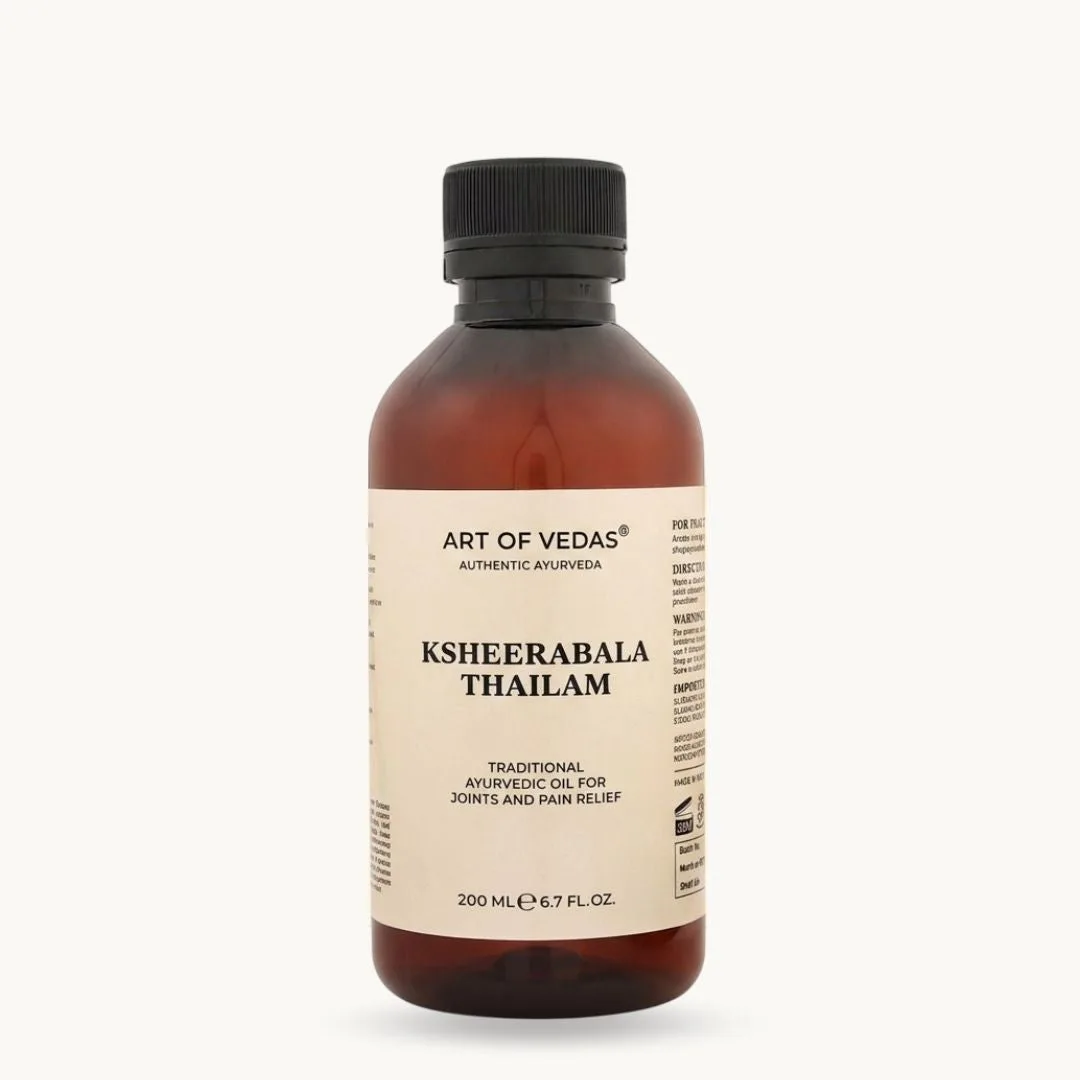
Ksheerabala Thailam
Ksheerabala Thailam - processed with Bala (Sida cordifolia) in milk and sesame oil - is a classically Brimhana preparation with strong Rasayana properties. The Bala herb is described in the Charaka Samhita as one of the primary Balya and Brimhana herbs - strengthening the tissues and building the density and nourishment of the Dhatus.
For aging skin with a tendency toward thinning, fragility, and loss of resilience, Ksheerabala Thailam provides the deep nourishment that the Mamsa (muscle) and Medas (fat) Dhatus require to maintain the structural support underlying the skin. See the full Ksheerabala application guide.
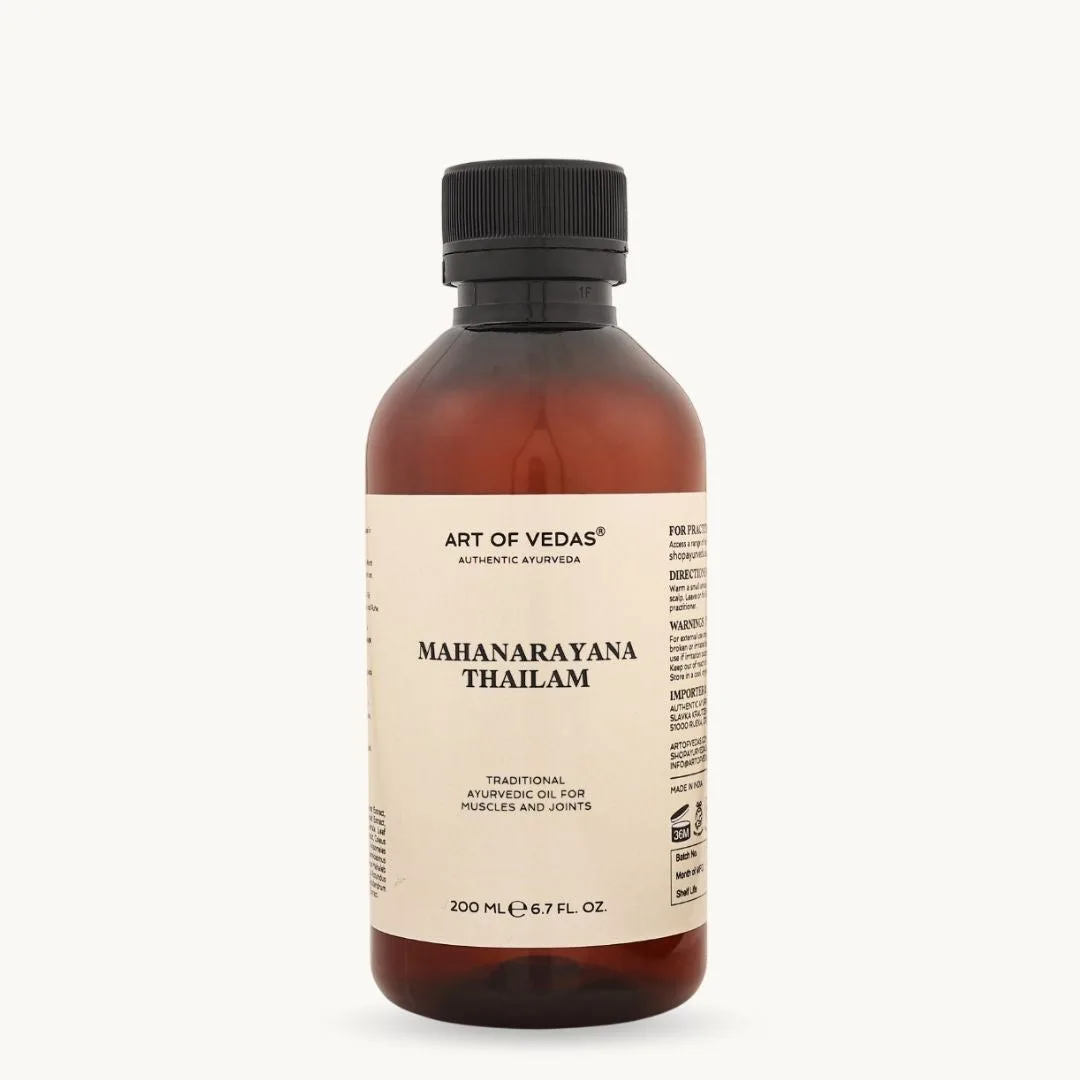
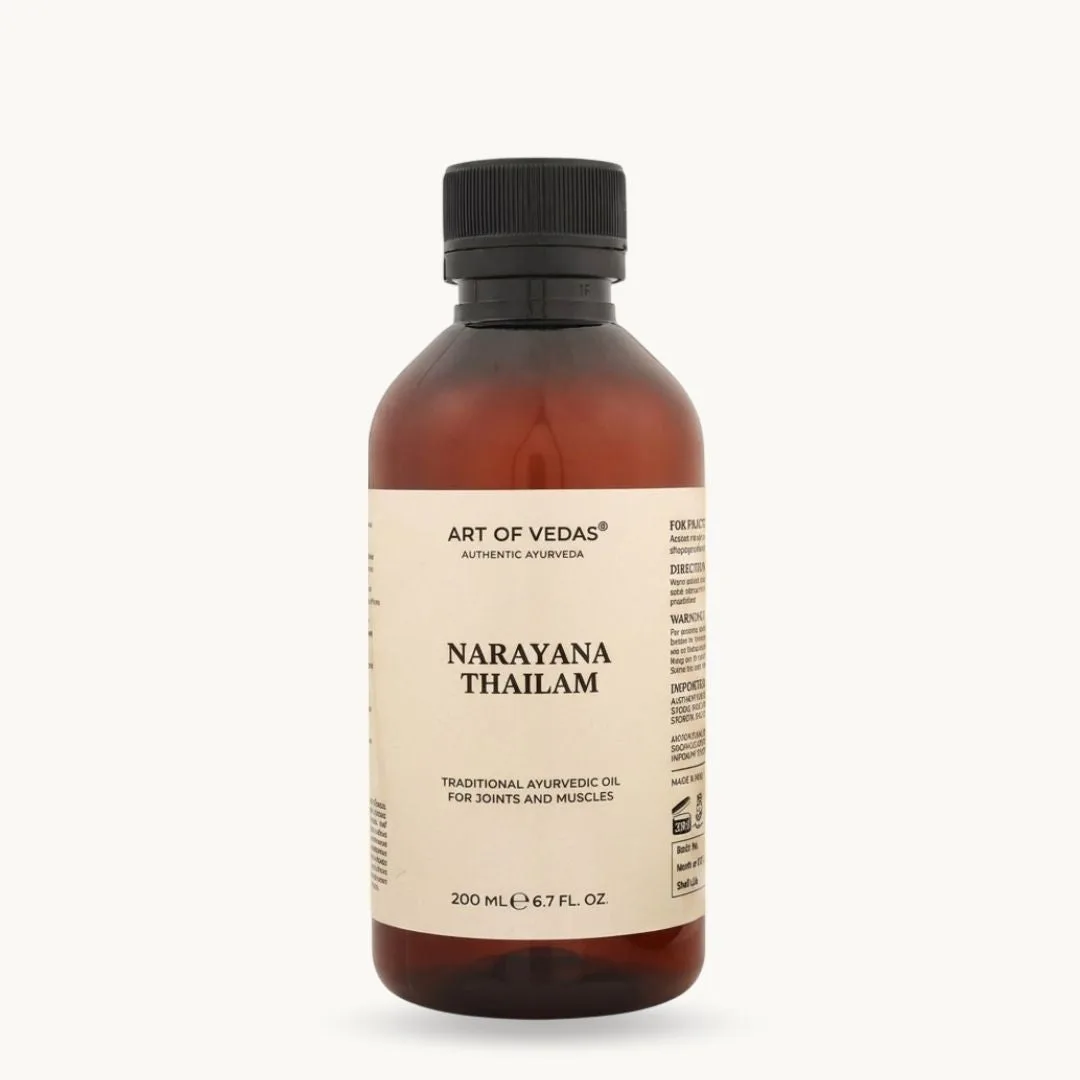
Narayana Thailam and Mahanarayana Thailam
For the aging body with a Vata-predominant profile - dryness, loss of strength, creaking of joints, reduced physical vitality - the Narayana and Mahanarayana Thailam group represents the classical comprehensive Rasayana oils for the full body. Described in the Ashtanga Hridayam as Sarva Vata hara (addressing Vata in all its manifestations), these oils combine the deep nourishment of Ashwagandha, Bala, Shatavari, and many other Rasayana herbs with the penetrating carrier quality of sesame oil. See our Narayana Thailam complete guide.
Sesame Oil (Tila Taila) as Rasayana Base
Sesame oil alone is one of the most classically Rasayana oils in Ayurveda. The Ashtanga Hridayam and Charaka Samhita both describe sesame oil as Vata-shamana, Twachya (beneficial for skin), Balya, and Agnideepana (supporting digestive strength). For those beginning an Abhyanga practice for aging skin, untoasted sesame oil is the foundational classical preparation before moving to more complex medicated formulations.
The Abhyanga Practice for Aging Skin
Abhyanga - the classical Ayurvedic full-body oil massage - is the primary delivery system for Rasayana oils in the external application context. The Ashtanga Hridayam (Sutrasthana Ch 2) describes Abhyanga as directly beneficial for skin quality, body strength, circulation, and sleep - all dimensions that become progressively more important with age.
For aging skin specifically, the classical approach to Abhyanga emphasises:
-
Warmth: Oil should always be warmed before application for aging or Vata-type skin. Cold oil applied to the body is contraindicated in classical texts for Vata conditions.
-
Longer retention time: Classical Abhyanga for Rasayana purposes involves allowing the oil to penetrate into the skin for at least fifteen to twenty minutes before bathing - longer for Vata constitutions or in winter.
-
Gentle, nourishing technique: Unlike the more vigorous strokes appropriate for Kapha conditions, aging Vata skin benefits from slow, long strokes applied with moderate pressure, moving in the direction of the body hair (anulomam).
-
Consistency: The Rasayana effect of regular Abhyanga builds over time. Daily practice during Vata season, and two to three times weekly during other seasons, is the classical recommendation.
For a full step-by-step Abhyanga guide, see our complete Abhyanga guide.
Rasayana Herbs of Particular Relevance for Aging Skin
Beyond the oils themselves, several classical Rasayana herbs appear repeatedly in formulations specifically relevant for aging skin and overall tissue rejuvenation.
Ashwagandha (Withania somnifera)
The Charaka Samhita describes Ashwagandha as Balya, Brimhana, Rasayana, and specifically beneficial for Shukra and Ojas. Its capacity to support the deep tissue layers makes it a foundational herb in any comprehensive Rasayana approach. See our guide to Ashwagandha.
Shatavari (Asparagus racemosus)
Shatavari is the foremost Rasayana herb for the feminine constitution in classical Ayurveda, with particular benefit for Rasa and Rakta Dhatu. Its cooling, nourishing, and Ojas-building properties make it especially relevant for aging skin with a Pitta or depletion character. See our Shatavari guide.
Bala (Sida cordifolia)
Bala is described consistently in classical texts as Balya, Brimhana, and beneficial for the skin and musculature. Its presence in Ksheerabala Thailam and several other Rasayana oils reflects its foundational role in building the physical resilience of the body's tissues.
Amalaki (Emblica officinalis)
Amalaki is the foremost Rasayana herb in the Ayurvedic pharmacopoeia - appearing in virtually every classical Rasayana formulation, including Chyawanprash. Classical texts describe it as Vayasthapana, Sarva Dhatu Poshana (nourishing all tissue layers), and the single herb with the most comprehensive Rasayana action in the tradition.
Practical Guide: Selecting an Oil for Aging Skin
The appropriate starting point depends on your constitution and the primary concern:
-
Dry, thin, delicate aging skin (Vata profile): Begin with Dhanwantharam Thailam or Ksheerabala Thailam. Use daily in an Abhyanga practice. Add warm sesame oil for the lower body. Consider Narayana Thailam for the full Sarva Vata Rasayana approach.
-
Sensitive, reactive aging skin (Pitta profile): Use Ksheerabala Thailam (cooling, milk-processed) or Chandanadi Thailam for the body and face. Avoid very warming oils such as Mahanarayana Thailam in summer months or for those with high Pitta.
-
Heavy, congested aging skin (Kapha profile): Use lighter sesame oil in smaller quantities, with an emphasis on vigorous Udvartana (dry herb scrubbing) to support circulation and lymphatic clearing alongside the oil application.
For an overview of how these oils compare, see our guide to comparing classical Ayurvedic oils. For dosha-specific body oil selection, see our Ayurvedic oils by skin type guide.
Frequently Asked Questions
What Ayurvedic oil is best for aging skin?
There is no single answer - classical Ayurveda selects oils based on constitution and the specific nature of the aging pattern. For dry, Vata-type aging skin, Dhanwantharam Thailam and Ksheerabala Thailam are the classical foundations. For a comprehensive Rasayana approach for the full body, Narayana or Mahanarayana Thailam are the classical recommendations.
What is Rasayana in Ayurveda?
Rasayana is one of the eight classical branches of Ayurveda - the branch dedicated to rejuvenation, longevity, and the maintenance of vitality through all stages of life. Rasayana practices include specific herbs, oils, dietary approaches, and lifestyle practices designed to nourish the Dhatus (tissue layers), build Ojas (vital essence), and maintain the quality of life as the body ages.
How does Abhyanga benefit aging skin?
The Ashtanga Hridayam describes Abhyanga as beneficial for skin quality, body strength, and circulation. In the Rasayana context, regular full-body oil massage with classical Rasayana oils is understood as directly counteracting the Vata increase and Dhatu depletion that underlie the aging of the skin - nourishing the tissues through the skin's natural absorption capacity and supporting the flow of nourishment through the Srotas (bodily channels).
Is sesame oil good for aging skin?
Yes. Sesame oil (Tila Taila) is one of the most classically Rasayana oils in Ayurvedic literature - described as Vata-shamana, Twachya (beneficial for skin), and Balya. It is the foundational carrier for most classical Rasayana body oils, and is appropriate as a standalone daily Abhyanga oil for aging Vata skin.
How often should I do Abhyanga for aging skin?
Classical texts recommend daily Abhyanga as the ideal practice. For practical purposes, two to three times per week with a dedicated Rasayana oil, and daily with plain sesame oil on the remaining days, is a realistic and meaningful approach. Consistency over time is more important than the frequency of any single week.
Begin Your Rasayana Practice
Art of Vedas offers a range of classical Rasayana oils prepared in the traditional manner. Explore our full collection of classical Ayurvedic Thailams, or begin with our complete Abhyanga guide and guide to the classical Ayurvedic daily routine.
This article is for informational and educational purposes only. The practices and preparations described are traditional Ayurvedic approaches to self-care and are not intended to diagnose, treat, cure, or prevent any medical condition. Consult a qualified Ayurvedic practitioner or healthcare professional for personalised guidance.