This article is part of our AYURVEDIC SKINCARE FOR BEGINNERS guide series.
There is a moment in most people's first serious encounter with Ayurvedic beauty thinking when something shifts. It usually happens when they realise that the classical texts do not separate beauty from health. There is no section in the Ashtanga Hridayam called "skincare." There is no chapter in the Charaka Samhita on "beauty routines."
Beauty, in the classical Ayurvedic understanding, is not a category of product. It is the natural outward expression of constitutional health maintained over time.
This is not a poetic reframe. It is the literal basis of the Ayurvedic approach to the appearance of skin, hair, eyes and complexion - and understanding it changes how you think about everything that follows.
The Classical Ayurvedic Understanding of Beauty
The Sanskrit term most directly translated as beauty is "Saundarya" - but the Ayurvedic texts also use a related cluster of terms that describe the outer expression of inner health: Kanti (luminosity, radiance of complexion), Lavanya (natural beauty or loveliness), Arogya (freedom from disease, health as beauty).
What the classical texts describe about Kanti and Lavanya is consistently the same: they are the natural outward expressions of:
Balanced Doshas - when Vata, Pitta and Kapha are in appropriate proportion for the individual's constitution, the skin and complexion reflect that balance. Vata excess produces dryness, roughness and loss of lustre. Pitta excess produces redness, heat and inflammatory skin responses. Kapha excess produces paleness, dullness and excess oiliness.
Adequate Ojas - Ojas is the classical term for the most refined product of complete digestion and tissue nutrition - the essence of all seven tissue layers. Classical texts describe Ojas as the physical basis of immunity, vitality and the luminosity of skin and complexion. When Ojas is high, the complexion is described as radiant, the eyes bright and clear, the skin nourished. When Ojas is depleted - by poor digestion, excessive exertion, stress or improper diet - these outward signs diminish.
Strong Agni - Agni is the digestive and metabolic fire that processes food into the seven tissue layers. When Agni is functioning properly, the tissues are fully nourished. When Agni is impaired, Ama (metabolic waste or unprocessed residue) accumulates in the tissues, and the complexion becomes dull, the skin loses tone and the hair loses lustre.
Appropriate daily routine - The classical texts describe the daily Dinacharya (daily routine) as a beauty practice as much as a health practice. The daily Abhyanga (warm oil self-massage), the tongue scraping, the Nasya oil - these are not simply health maintenance. They are the physical practices through which Vata is grounded, the channels are maintained, and the outer tissues are nourished.
Why This Changes the Approach
Once you understand that classical Ayurvedic beauty care is an expression of constitutional health, the implications are clear:
Products are not the primary intervention. The most important "beauty practice" in classical Ayurveda is the daily routine - particularly the Abhyanga (warm oil self-massage) and the dietary and lifestyle habits that maintain Agni and Dosha balance. Topical products support and enhance the outer tissues, but they work on a foundation set by internal health.
Constitution determines everything. The right oil, the right herbs, the right daily routine - all depend on Prakriti (constitutional type). What nourishes Vata skin may aggravate Pitta skin. What stimulates Kapha complexion may be too heavy for Vata. There is no one-size-fits-all approach. Read the complete guide to Ayurvedic skin types by constitution.
Age is a Dosha expression, not just time. Classical Ayurvedic texts describe the three major phases of life through the Dosha lens: childhood as the Kapha phase (growth, abundance, building), middle life as the Pitta phase (productivity, intensity, transformation), older life as the Vata phase (drying, lightening, the movement toward refinement). Skin and hair changes associated with ageing are, in this framework, expressions of increasing Vata - and the appropriate response is consistent Vata-pacifying practice rather than reactive treatment. Read the complete guide to Ayurvedic anti-aging approach.
Rasayana is the classical "anti-aging" practice. The Rasayana branch of classical Ayurveda - the science of rejuvenation - is the closest classical equivalent to what contemporary wellness calls anti-aging practice. It focuses on nourishing the tissue layers from the inside, enhancing Ojas and supporting the full transformation of nutrients through the Dhatu sequence. Read the complete Rasayana guide.
The Classical Beauty Practices
Mukha Abhyanga (Facial Oil Massage)
Mukha Abhyanga - facial self-massage with appropriate oil - is the primary classical topical beauty practice. The Ashtanga Hridayam describes it as part of the daily routine, using appropriate medicated oils applied to the face and head region.
The practice has three simultaneous functions: delivering the oil's herb properties directly to the facial skin; stimulating circulation through the marma points of the face; and providing the gentle physical stimulation that classical texts describe as supporting the tone and appearance of the facial tissues over time.
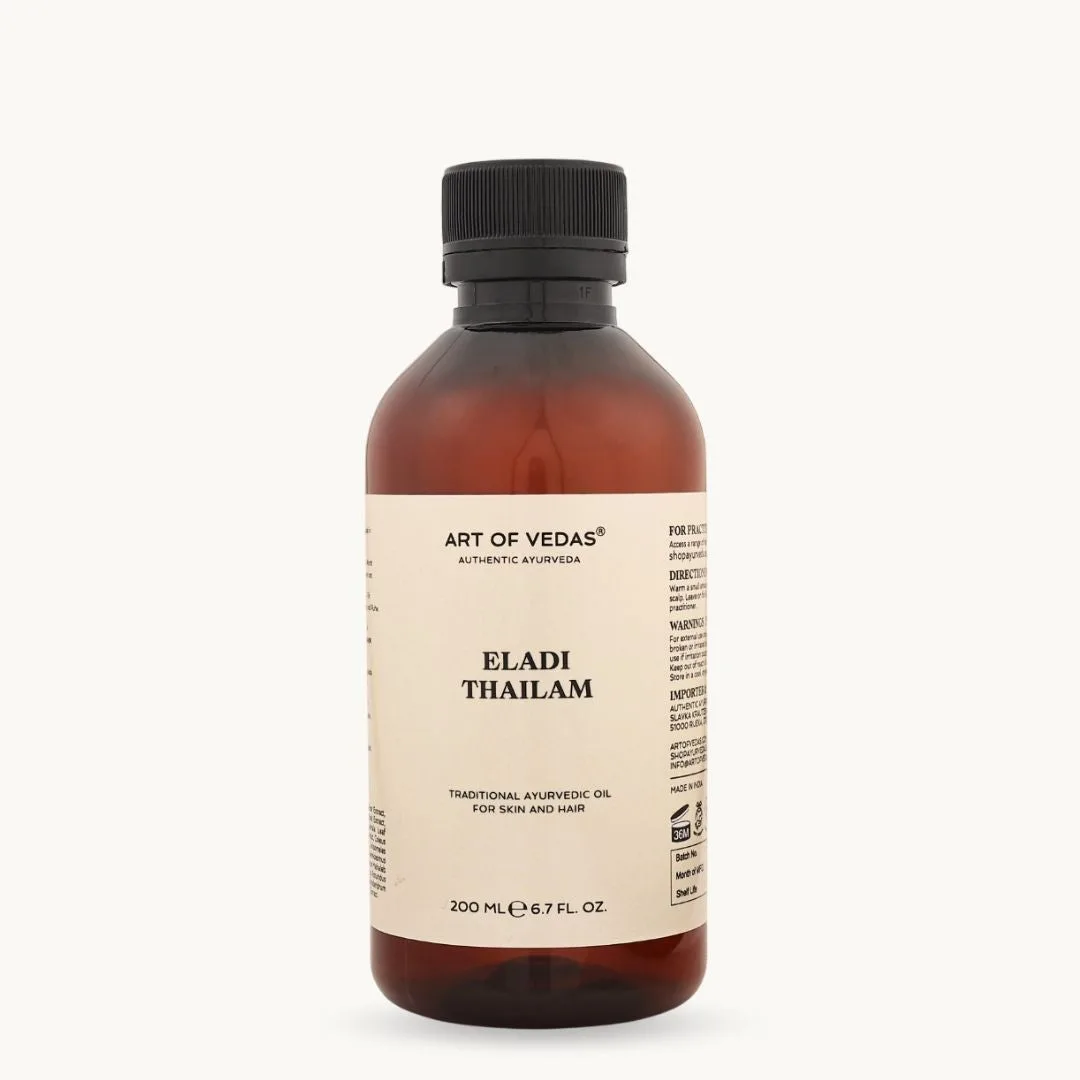
Classical facial oils such as Eladi Thailam - a compound preparation with cooling, nourishing herbs specifically formulated for the face - are the classical topical vehicle for this practice.
Complete Eladi Thailam guide.
Complete Ayurvedic skincare routine.
Kansa Wand Facial Massage
The Kansa wand - a dome-headed tool cast in classical Kansa alloy (copper, tin and zinc) - brings the properties of the Kansa metal into contact with the marma points of the face during the daily facial practice. Classical texts attribute specific properties to Kansa in relation to Pitta and skin - the alloy is described as Tridoshic and specifically beneficial for the surface tissues.
Used with appropriate facial oil, the Kansa wand makes the facial self-massage practice both more effective and more pleasant. The two tools - oil and Kansa wand - are the classical paired approach to daily facial care.
Complete Kansa wand guide.
Abhyanga (Full-Body Warm Oil Massage)
The Ashtanga Hridayam contains one of the most unambiguous statements in all classical Ayurvedic literature about the value of daily Abhyanga: "the person who practices Abhyanga daily is not afflicted by old age, exertion or Vata disturbances. Their skin becomes soft and strong. The body is nourished."
This is the classical beauty claim for Abhyanga - not that it makes you look younger in the short term, but that consistent daily practice over years maintains the nourishment, flexibility and quality of the skin and underlying tissues. Classical texts describe it as working through the skin and its underlying channels to reach the deeper tissues.
Complete Abhyanga guide.
Dinacharya (Daily Routine as Beauty Practice)
The classical Dinacharya - the full morning routine including tongue scraping, oil pulling, Nasya oil, Abhyanga, appropriate exercise and regulated meals - is described in classical texts as the primary daily investment in health and beauty maintenance.
The logic: consistent daily maintenance of the channels, Agni and Dosha balance produces better results over time than irregular intensive treatment. Classical Ayurveda is clear on this point: the daily routine is more important than any individual product or treatment.
Complete Dinacharya guide.
Rasayana Herbs (Internal Nourishment)
The classical internal beauty practice - the herbs and preparations classified as Rasayana - works at the level of the tissue layers themselves, enhancing the quality and completeness of tissue nutrition and building Ojas. Amalaki (Amla) is specifically described in classical texts as producing lustre of complexion. Shatavari nourishes the more fluid tissues. Ashwagandha builds the deeper tissues.
These herbs work from the inside - they are not cosmetic. They support the inner biological conditions that classical texts describe as producing outward beauty expression.
Complete Rasayana guide.
Starting the Classical Beauty Practice
The classical Ayurvedic beauty approach begins with one question: what is your constitution?
Prakriti - your fixed constitutional type - determines which oils nourish you, which herbs support your tissue nutrition, which daily routine keeps your Doshas in the proportion appropriate for you. A Vata skin needs different care from a Pitta skin. A Kapha constitution ages differently and needs different support than a Vata constitution.
Take our free Dosha assessment to discover your constitution and begin building the right practice for your type. Start here.
Your Ayurvedic skin type by constitution - the complete guide.
For a personalised constitutional assessment and specific beauty and skincare protocol - oils, herbs, daily routine sequence and seasonal adjustments - our AYUSH-certified Ayurvedic doctors offer online consultations from anywhere in Europe.
Book an online consultation with an AYUSH-certified Ayurvedic doctor.
Explore the Classical Beauty Range
Ayurvedic Abhyanga oils - classical Thailams for full-body care
Kansa ritual tools - facial massage wands and tools
Ayurvedic Rasayana supplements - internal beauty practice
Frequently Asked Questions
Is Ayurvedic beauty care only for people who follow Ayurveda as a complete system?
No. The individual practices - Abhyanga, Mukha Abhyanga, Kansa wand massage - have value as standalone practices even without adopting the full Ayurvedic system. That said, they are most effective within their proper context - with appropriate constitutional guidance and the supporting foundation of reasonable diet and daily routine. Starting with the constitution assessment is the most useful entry point.
How long before Ayurvedic beauty practices produce visible results?
Classical texts consistently describe beauty practices as long-term investments, not quick-fix treatments. The Ashtanga Hridayam describes the benefits of daily Abhyanga as developing over sustained practice. Rasayana herbs are classified as practices requiring minimum 30 to 90 days of consistent use before primary effects become apparent, and continue to develop over months and years. Manage expectations accordingly: this is a different paradigm from treating a skin condition acutely.
Can I use Ayurvedic oils alongside my existing skincare products?
Classical Ayurvedic oils are typically used as the primary vehicle - applied to clean, damp skin before or instead of additional moisturisers. Combining with products containing synthetic fragrances, preservatives or occlusive agents is generally not the classical approach, as these may interfere with the oil's absorption. Simplifying your routine, with the Ayurvedic oil as the foundation, is the more classical approach.