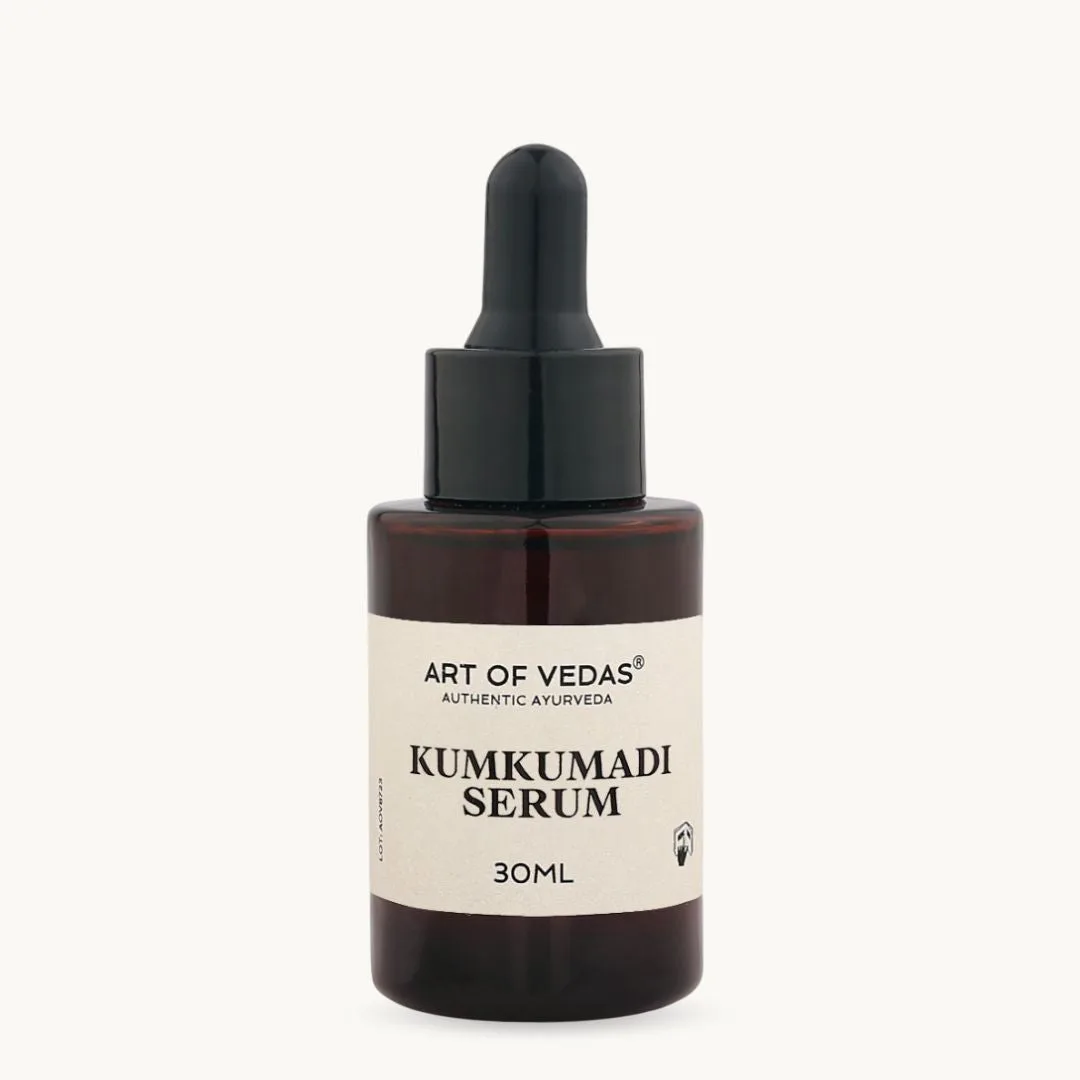
In brief: Kumkumadi Thailam (Kumkumadi oil, Kumkumadi Taila) is the classical Ayurvedic face oil: saffron (Kumkuma) with liquorice, lotus, Manjishtha, turmeric and other plants, cooked into sesame oil by the Sneha Paka method. Its traditional uses are cosmetic: a few drops massaged into clean face and neck at night for soft, even looking, radiant skin, and as the oil for a facial massage (Mukhabhyanga) with a Kansa wand. The name means the oil that begins with saffron. Art of Vedas sells it as Kumkumadi Serum.
Beauty & Skin
What Is Kumkumadi Oil? Kumkumadi Tailam Meaning in English, Ingredients and Benefits
Reviewed by Dr. Anu Joy, MD (Ayurveda), Ayurveda physician at Art of Vedas
What is Kumkumadi oil?
Kumkumadi oil is a herbal oil for the face. In Ayurveda it belongs to the Varnya preparations, the classical formulas connected with the complexion. It is used in a few drops on the clean face in the evening, as the last step of the routine. It is neither a body massage oil nor a cream.
Kumkumadi meaning in English: is Kumkumadi a flower or a plant?
Kumkuma is the Sanskrit word for saffron, the dried stigmas of the saffron crocus (Crocus sativus). The ending adi means beginning with, or and the others, and Thailam (Thailam, Taila) means oil. Kumkumadi Thailam is therefore the oil that begins with saffron. Kumkumadi is not a flower or a plant of its own: the name describes a recipe of several plants led by saffron. More about saffron itself is in our guide saffron (Kumkuma) in Ayurveda.
What is Kumkumadi oil made of?
Classical recipes are described with a larger group of plants, and the lists differ from maker to maker, so compare the declared ingredient list rather than the name. The Art of Vedas Kumkumadi Serum declares:
- sesame seed oil, the base
- saffron (Kumkuma)
- liquorice root (Yashtimadhu)
- lotus flower and blue lotus flower
- Manjishtha root (Rubia cordifolia)
- turmeric root (Haridra)
- the bark of two fig trees, Ficus benghalensis and Ficus lacor
- rose water
It contains no sandalwood and no ingredient of animal origin. Sesame oil is the classical base for oiling the face in Ayurveda and is described as warming.
Kumkumadi Thailam, oil, serum or Lepam: what is the difference?
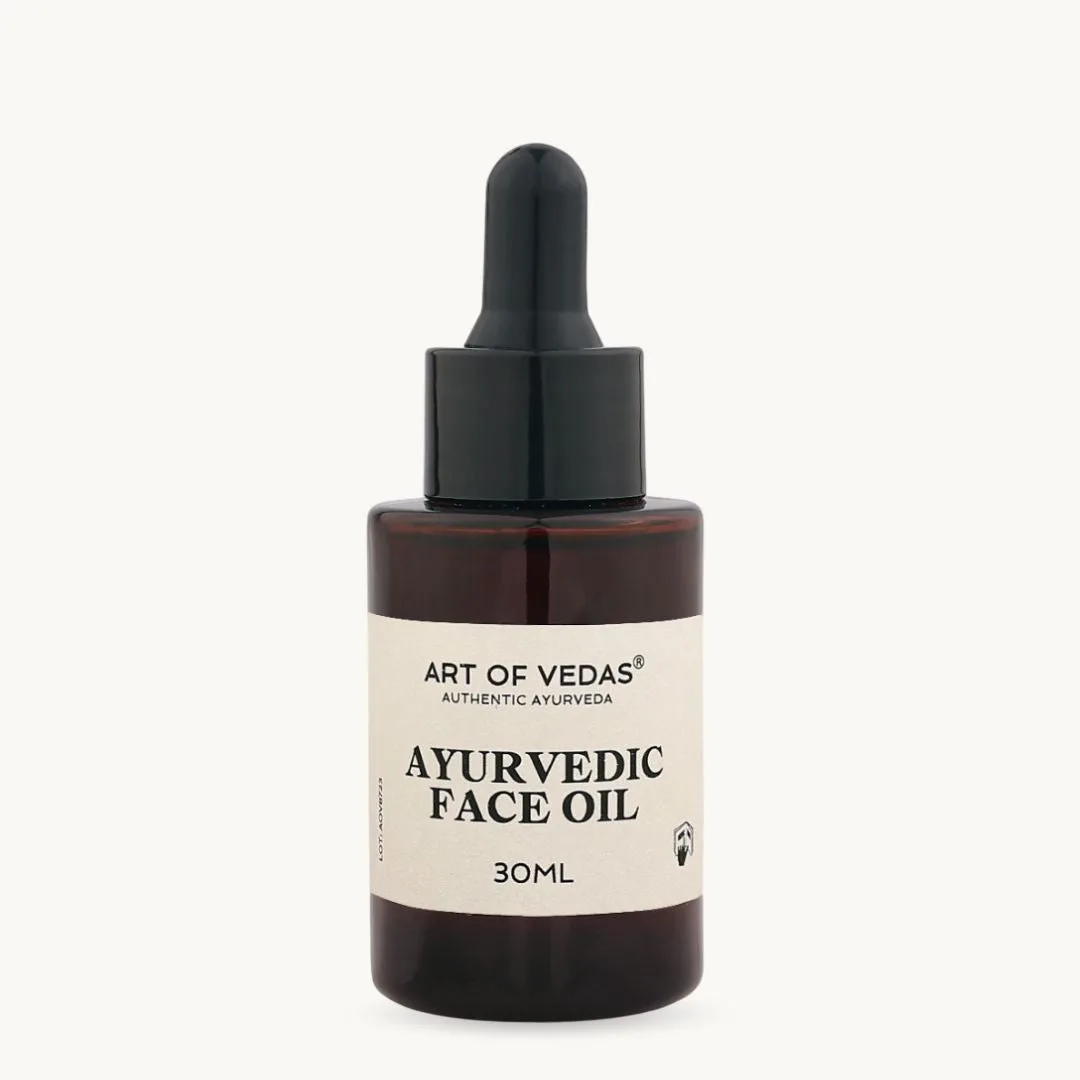
Kumkumadi Thailam, Kumkumadi Thailam and Kumkumadi oil are the same thing: Thailam simply means oil. Serum is the name under which Art of Vedas sells its Kumkumadi oil, because it is used in drops like a face serum; it is the same oil in a 30 ml bottle. Kumkumadi Lepam is a different form: a paste of the plants that is applied as a face pack, left to dry and washed off. For comparisons with other face oils, see Eladi Thailam or Kumkumadi and Kumkumadi or Nalpamaradi.
Kumkumadi oil benefits and uses: what the tradition describes
Ayurveda counts Kumkumadi among the Varnya preparations: the tradition connects it with a calm, even-looking complexion and uses it as the evening face oil. People who use it describe the skin as soft and supple after application and the scent as warm, of saffron and herbs. Art of Vedas makes no promise of an effect, because how an oil suits your skin is individual; the product information gives it as suitable for all skin types.
How to apply it, how many drops and what users describe is explained step by step in our guide how to use Kumkumadi oil on the face. Please ask a qualified Ayurvedic practitioner or your doctor before use in pregnancy, while breastfeeding, for children or if your skin is under medical care.
Frequently asked questions about Kumkumadi oil
What are the uses of Kumkumadi Thailam? Kumkumadi Thailam is traditionally used as a night face oil: 3 to 5 drops warmed between the fingers and pressed into clean skin of the face and neck, left on overnight. It is also the classical oil for Mukhabhyanga, the Ayurvedic facial massage, and for a few minutes of massage with a Kansa wand before bed.
How often should Kumkumadi Thailam be used? Most people use Kumkumadi Thailam every evening or every second evening. Start with a small amount and a patch test on the inner arm, especially with sensitive skin. Use it on clean, slightly damp skin and wash the face in the morning.
What is Kumkumadi oil? A classical Ayurvedic face oil in which a group of plants led by saffron (Kumkuma), among them liquorice, lotus, Manjishtha and turmeric, is cooked into sesame oil by the Sneha Paka method. It belongs to the Varnya (complexion) tradition of classical Ayurvedic formulas. It is also written Kumkumadi Thailam or Kumkumadi Taila, and Art of Vedas sells it as Kumkumadi Serum, a 30 ml bottle for external use on the face.
What does Kumkumadi mean in English? Kumkuma is the Sanskrit name for saffron, the stigma of Crocus sativus, and the ending adi means beginning with, or and the others. Kumkumadi therefore means the preparation that begins with saffron. It is not a flower or a plant of its own: the only flower behind the name is the saffron crocus, and the word describes a recipe of many plants cooked into oil.
Is there a difference between Kumkumadi Thailam, Kumkumadi oil and Kumkumadi Serum? No. Thailam (also taila or thailam) is simply the Sanskrit word for a cooked oil, so Kumkumadi Thailam and Kumkumadi oil are the same thing. Serum is the name under which Art of Vedas sells its Kumkumadi oil, because it is used in a few drops on the face like a modern facial serum. Compare the declared ingredient lists of different makers rather than the names.
What is Kumkumadi oil made of? The classical recipe cooks saffron with a group of plants into sesame oil. The Art of Vedas Kumkumadi Serum declares sesame seed oil, liquorice root, saffron, lotus flower, Manjishtha root, turmeric root, bark of two Ficus trees, blue lotus flower and rose water. The full declaration with botanical names is on the product page and on the label; it names no animal-origin ingredient.
What is Kumkumadi oil used for? In Ayurveda, Kumkumadi oil is the traditional night-time face oil: a few drops are massaged into the clean face as the last step of the evening routine. The classical texts describe it as an oil for the skin of the face and keep it to that one use. Art of Vedas sells Kumkumadi Serum for external use on the face; it is not a body massage oil.
How do you use Kumkumadi Serum? Cleanse the face in the evening and leave it slightly damp. Warm two to four drops of Kumkumadi Serum between the fingertips, press it over the face and neck, then work it in with light upward strokes for a minute or two. Leave it on overnight, or for at least half an hour, and wash the face in the morning. Start with three evenings a week.
What is the difference between Kumkumadi Lepam and Kumkumadi Thailam? Kumkumadi Lepam is the paste or face-pack form: the same group of plants, ground and mixed into a paste that is applied, left to dry and washed off. Kumkumadi Thailam is the oil form, cooked by the Sneha Paka method and left on the skin. Art of Vedas sells the oil form, as Kumkumadi Serum; the lepam is prepared fresh in Ayurvedic practice.
Can Kumkumadi oil be used in pregnancy, by children or on sensitive skin? Ask your doctor or a qualified Ayurvedic practitioner first. Kumkumadi Serum is for external use only: do a small skin test on the inner forearm or behind the ear and wait 24 hours before the first application to the face, keep it away from the eyes and broken skin, and stop if the skin reacts. Saffron tints the skin slightly, which washes off.