Saffron - Kumkuma or Keshara in Sanskrit - holds a privileged position in the classical Ayurvedic pharmacopoeia that extends far beyond its culinary fame. Harvested from the stigma of Crocus sativus, saffron is classified as Varnya - a group of herbs specifically indicated for complexion enhancement and skin luminosity. This classification places saffron alongside sandalwood, manjistha, and vetiver as one of the primary Ayurvedic herbs traditionally associated with skin beauty.
The Bhavaprakasha Nighantu describes saffron as cooling in Virya, Tridosha-balancing, and specifically beneficial for Rasa and Rakta Dhatus - the two tissue layers most directly responsible for skin quality.
Classical Profile
Rasa: Tikta (bitter), Kashaya (astringent)
Virya: Sheeta (cooling)
Vipaka: Katu (pungent)
Guna: Laghu (light), Snigdha (slightly unctuous)
Dosha action: Tridoshahara - balances all three Doshas. Particularly effective for Pitta conditions due to its cooling Virya, while its lightness prevents Kapha aggravation and its gentle warming post-digestive effect supports Vata circulation.
Saffron in Classical Skincare
Varnya: Complexion Enhancement
Saffron's Varnya classification means classical texts associate it with supporting an even, luminous complexion. This is not a whitening or bleaching action - it is the traditional association with skin that appears healthy, well-nourished, and radiant. Classical face preparations (Mukha Lepa) frequently feature saffron combined with milk, sandalwood, and turmeric.
Kumkumadi Thailam
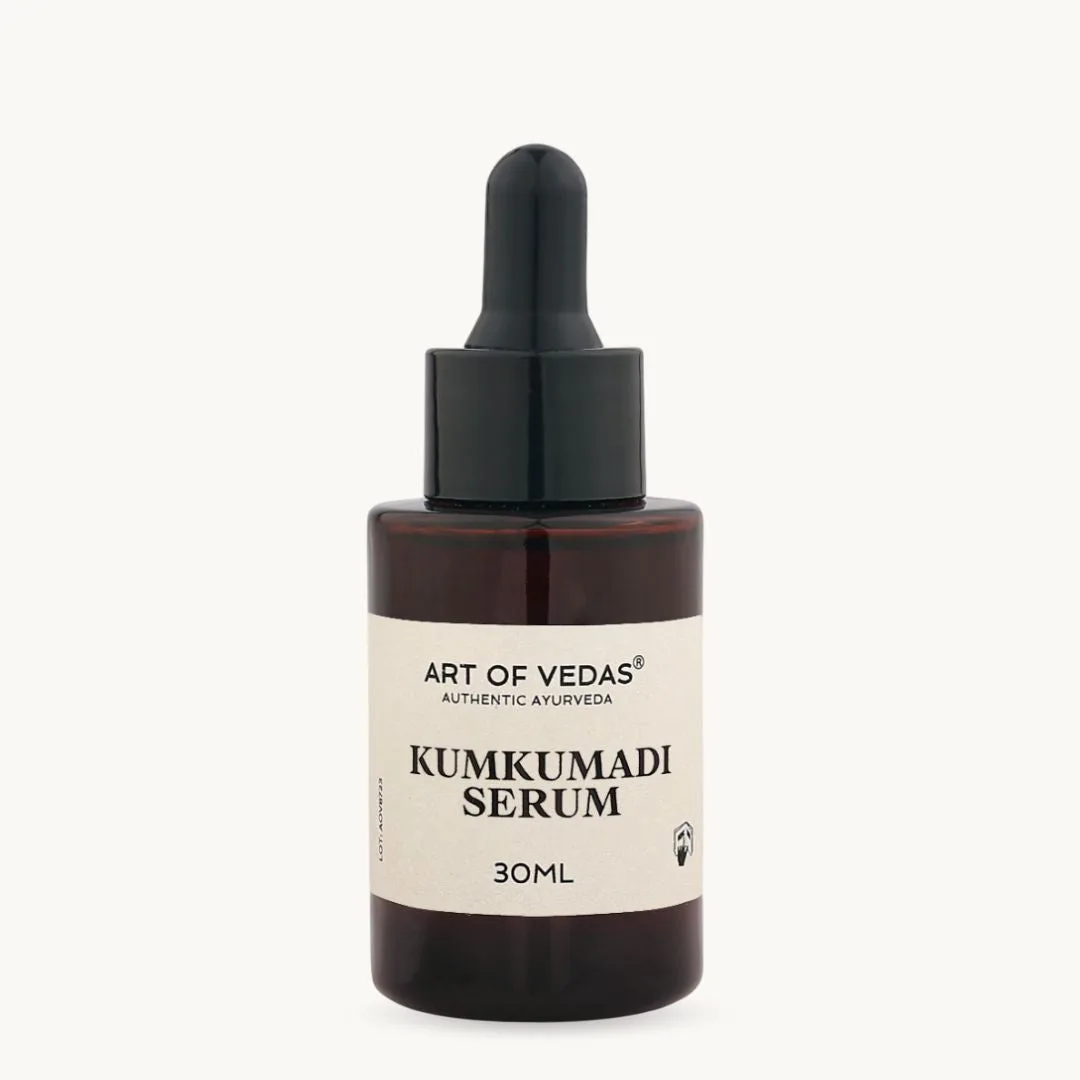
The most celebrated saffron preparation in Ayurvedic skincare is Kumkumadi Thailam - a multi-herb facial oil in which saffron (Kumkuma) is the star ingredient. This classical formulation combines saffron with sandalwood, lotus, liquorice, Manjistha, and other Varnya herbs in a sesame-milk processed base. The name itself - "Kumkuma-adi" meaning "starting with saffron" - indicates saffron's primacy in the formula. Experience this classical formulation in our Kumkumadi Serum.
Rakta Dhatu Support
Saffron's affinity for Rakta Dhatu (blood tissue) connects skin appearance to internal blood quality in the classical model. Well-nourished Rakta Dhatu produces the healthy colour, warmth, and lustre that the skin displays - and saffron's traditional role in supporting Rakta quality is the classical explanation for its complexion benefits.
Rasayana Properties
Beyond topical use, saffron is classified as a Rasayana - a rejuvenative that supports tissue quality and Ojas production. Its role in Ayurvedic anti-aging approaches is both topical (through face oils) and internal (through milk preparations and Rasayana formulations).
Quality and Authenticity
Saffron is the world's most expensive spice by weight, and accordingly, adulteration is common. Classical texts distinguish genuine saffron by its deep red-orange colour, its distinctive aroma (warm, slightly honey-like, never chemical), and its colouring power - a small amount should colour water a rich golden-yellow. When sourcing saffron for personal use or evaluating saffron-containing products, these quality markers indicate authentic material that will deliver the classical properties described above.
For personalised guidance on incorporating saffron-based preparations into your skincare and wellness routine, an Ayurvedic consultation can determine the most appropriate application for your Dosha type and skin concerns.
Classical Ayurvedic knowledge for educational purposes. Not medical or dermatological advice.