What Is Sahacharadi Thailam?
Sahacharadi Thailam is a classical Ayurvedic medicated oil described in the Ashtanga Hridayam, the Sahasrayogam, and the Ashtanga Samgraha. Its base is sesame oil, processed through the classical Taila paka vidhi with Sahachara as the primary herb alongside a supporting combination of classical Vata-balancing ingredients including Rasna (Alpinia galanga), Devadaru (Cedrus deodara), and Dashamula (the classical ten-root formula - the same combination found in several classical Vata preparations).
The name means simply "oil of Sahachara" - reflecting the classical Ayurvedic convention of naming formulations after the principal herb (the adi - primary ingredient).
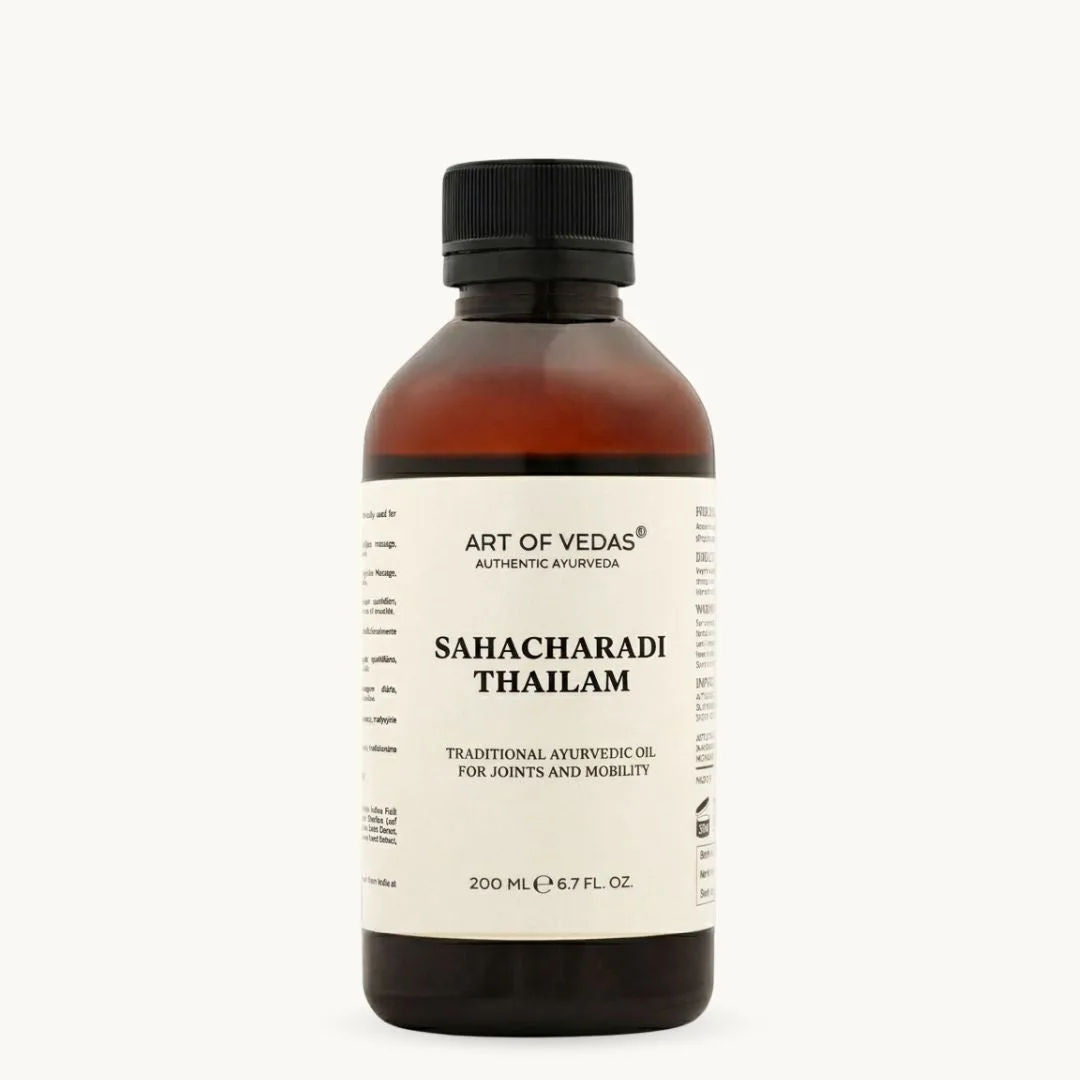
You can find Sahacharadi Thailam in the Art of Vedas classical oil range.
Sahachara: The Primary Herb
Sahachara (Strobilanthes ciliatus, syn. Nilgirianthus ciliatus) is a classical Ayurvedic herb that does not receive much attention outside of practitioner circles, yet it has a precise and well-documented role in the classical pharmacopoeia. It is classified in the classical texts as follows:
- Rasa (taste): Tikta (bitter) and Kashaya (astringent)
- Virya (potency): Ushna (warming)
- Vipaka: Katu (pungent)
- Primary action: Vata-kaphashamaka (pacifying Vata and Kapha doshas)
- Prabhava (specific action): Traditionally described as having particular affinity for conditions affecting Sira (veins and channels) and the lower extremities
The Ashtanga Hridayam Sutrasthana places Sahachara in the category of herbs with warming, penetrating qualities suited for conditions affecting the lower body structures. The Sahasrayogam includes it in several formulations specifically described for the legs and feet, which is the defining clinical context that has made Sahacharadi Thailam a persistent presence in Ayurvedic practice.
Classical Applications: The Lower Body Focus
The classical texts' description of Sahacharadi Thailam centres on conditions affecting the lower extremities. Several important anatomical and doshic points explain this specificity.
Vata and the Lower Body
Classical Ayurveda situates Vata dosha's primary seat in the lower abdomen and pelvis, with Apana Vata - the downward-moving, expulsive force - residing in the colon, bladder, and lower pelvic structures. Vata's natural tendency to move downward means that when Vata becomes imbalanced, it often manifests first and most strongly in the lower body: the feet, legs, lower back, and hips. The feet, in particular, are classical sites of Vata application in Ayurvedic therapy.
The classical practice of Padabhyanga (foot oil massage) is described in the Ashtanga Hridayam Sutrasthana as part of the daily Dinacharya, with specific mention of benefits for the health of the feet, legs, and for the quality of sleep and general Vata balance. Oil application to the feet each evening before bed is one of the most accessible and consistently mentioned classical daily practices.
Sira (Channels) and Snayu (Connective Tissues)
The classical texts describe Sahacharadi Thailam as having affinity not only for the muscles and joints of the lower body but for the Sira (veins and channels) and Snayu (tendons and connective tissues). This gives the oil a slightly different emphasis than purely muscular or joint-targeted formulations - it addresses the structural tissue network of the lower extremities in its classical description.
Kati (Lower Back)
The lower back (Kati region) is one of the primary sites of Vata accumulation according to classical Ayurveda, and it is consistently named as an application site for Sahacharadi Thailam in classical descriptions. The warming, penetrating quality of Sahachara, combined with the Dashamula component in the formula, makes this oil particularly suited to external application on the lumbar region.
Who Is Sahacharadi Thailam Suited For?
Within the classical Ayurvedic framework, Sahacharadi Thailam is particularly relevant for:
- People who spend long hours standing or walking and experience tired, heavy, or tight legs and feet
- Those who notice particular tension or stiffness in the lower back, hips, or legs - especially when this is worse in cold or dry weather (a Vata pattern)
- People who experience cold feet or a tendency toward coldness in the lower extremities
- Vata constitutions (Vata Prakriti) who want an oil specifically suited to the lower body rather than a general full-body Vata oil
- Athletes and active people who want classical support for lower body recovery and tissue maintenance
- Anyone who wants to establish a Padabhyanga (foot oil massage) practice as part of their evening routine
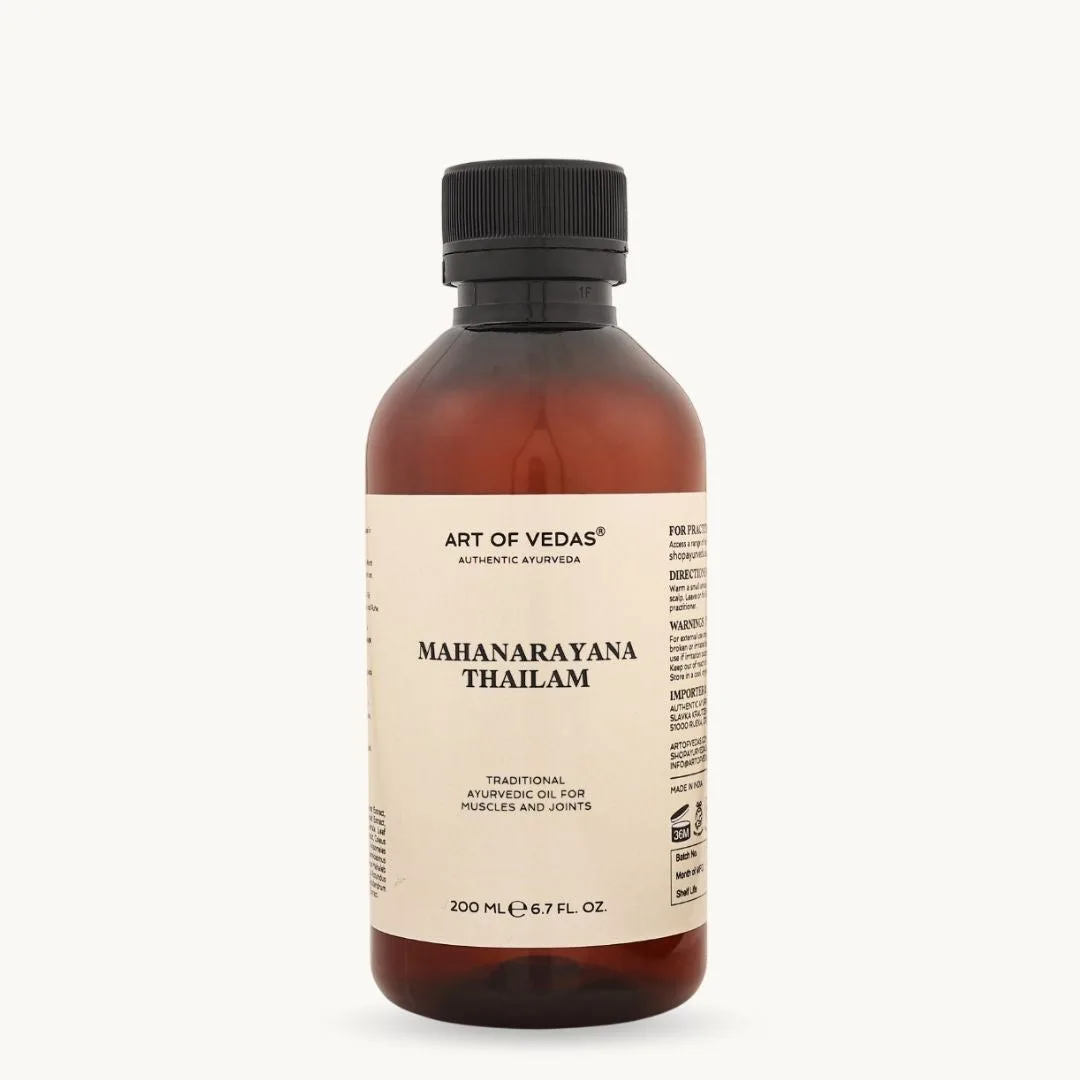
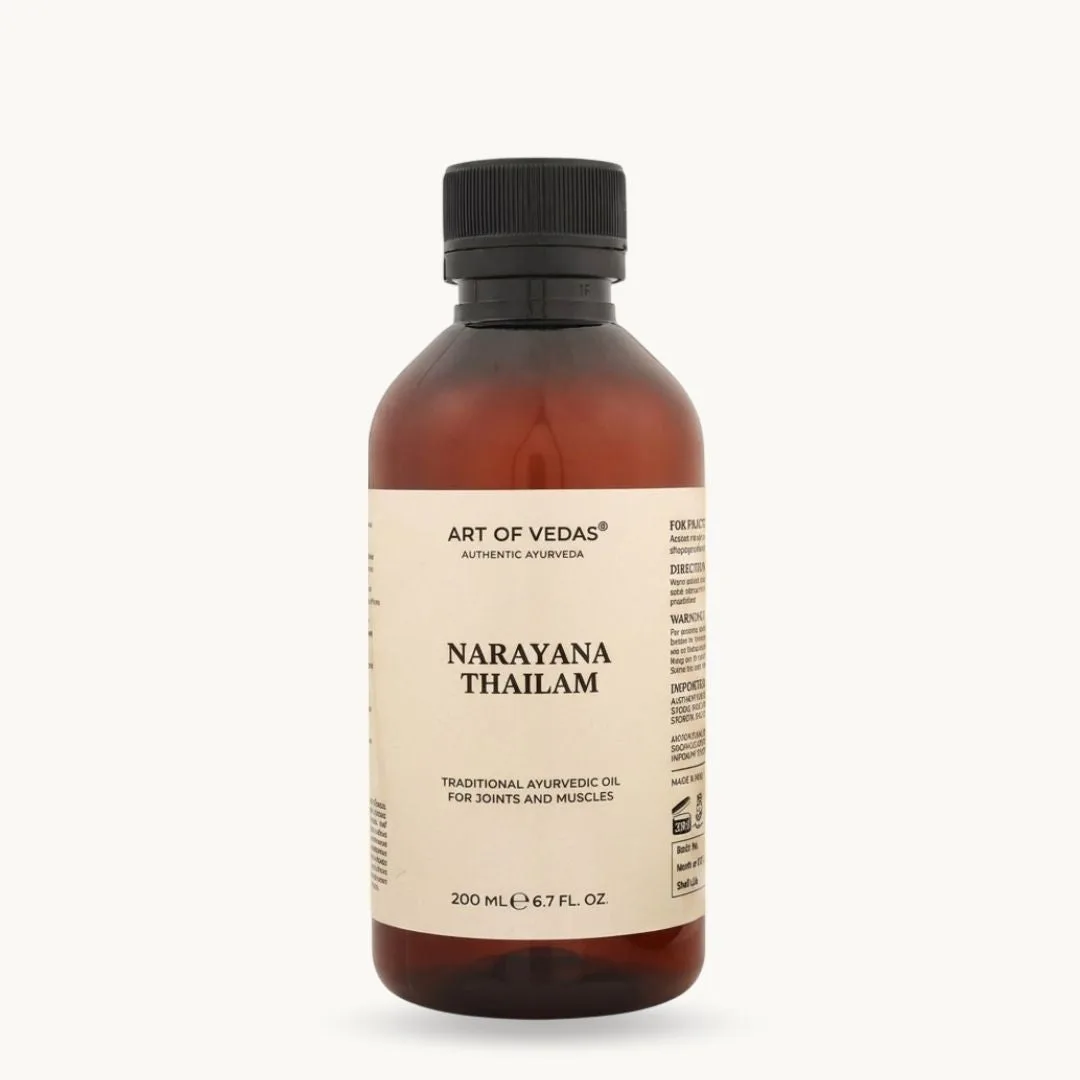
Sahacharadi Thailam is not the oil for general full-body Abhyanga where the intention is broad systemic Vata support - for that, oils like Narayana Thailam or Mahanarayana Thailam are more appropriate. Sahacharadi's value is in its specificity: it is a focused lower-body oil with a well-defined classical application context.
Padabhyanga: The Classical Foot Oil Massage
Padabhyanga - foot oil massage - is one of the simplest and most accessible classical Ayurvedic daily practices. The Ashtanga Hridayam (Sutrasthana Chapter 2, verse 8) states explicitly: Padabhyange na vatotklesha kricchrasha drishti vaishamalyam na cha skandha shirashola na cha sneha kadacana - meaning that those who practice regular foot oil massage do not suffer from Vata disturbance, dryness of the feet, visual disturbance, or shoulder and head problems. This is a direct classical recommendation for a practice that takes five to ten minutes and requires no special equipment beyond the oil itself.
Sahacharadi Thailam is one of the classical choices for Padabhyanga specifically, given its lower-body affinity and its warming quality that supports circulation to the feet and legs.
The Padabhyanga Method
- Warm the oil by placing the bottle in warm water for a few minutes
- Sit comfortably with one foot resting on the opposite knee
- Apply oil generously and work into the sole of the foot using firm, circular motions, paying particular attention to the arch, heel, and ball of the foot
- Work the oil between and around the toes
- Massage the ankle and lower leg with upward strokes
- Repeat on the other foot
- The classical texts describe Padabhyanga as an evening practice, performed before bed, which supports Vata settling and prepares the body for deep sleep
Our Dinacharya guide includes the foot massage in the context of the complete classical daily routine.
Broader Lower Body Application
Beyond Padabhyanga, Sahacharadi Thailam can be used for:
Lower Back Application
Apply warmed oil to the lumbar region with circular and long strokes, using moderate pressure. For lower back applications, a period of gentle warmth applied after the oil (a warm cloth or heated pad) can deepen the experience. This localised application is practical for daily use even when full-body Abhyanga is not possible.
Hip and Leg Massage
For the hips and thighs, apply with long strokes along the length of the muscle groups, working toward the heart (upward on the legs). For the knees and ankles, work in circular motions around the joint.
Kati Basti Preparation
In clinical Ayurvedic settings, Sahacharadi Thailam is one of the oils used in Kati Basti - a classical Panchakarma procedure involving pooled warm oil on the lower back. At home, the lower back application described above is the accessible equivalent of this practice. Read more in our Kati Basti guide.
Sahacharadi and Dashamula
The inclusion of Dashamula in Sahacharadi Thailam's formulation is worth noting. Dashamula - the "ten roots" combination - is one of the most classical Vata-pacifying formulae in Ayurveda, described extensively in the Charaka Samhita and Ashtanga Hridayam as a foundational Vata preparation. Its presence in Sahacharadi Thailam broadens the oil's Vata-balancing action beyond the specific primary herb and connects it to the broader classical Vata therapeutic framework. Our Dashamula guide explains this formulation in detail.
Frequently Asked Questions
Can I use Sahacharadi Thailam for full-body Abhyanga?
You can, though its particular strength is in lower body application. For full-body Abhyanga with a general Vata intention, Narayana Thailam or Mahanarayana Thailam are more broadly suited. Sahacharadi Thailam can certainly be used on the lower body as part of a full-body Abhyanga session, while a different oil is used for the upper body and head.
Can Sahacharadi Thailam be used for the upper back or shoulders?
While the classical emphasis is on the lower body, the oil's properties - warming, penetrating, Vata-pacifying - are not contraindicated for the upper body. The specificity of the classical recommendation is descriptive of where the oil performs best rather than a strict prohibition on upper body use.
Is Sahacharadi Thailam suitable for use before bed?
Yes. The classical Padabhyanga practice is specifically described as an evening practice before bed. The warming quality and Vata-settling properties of the oil are well suited to the transition into sleep.
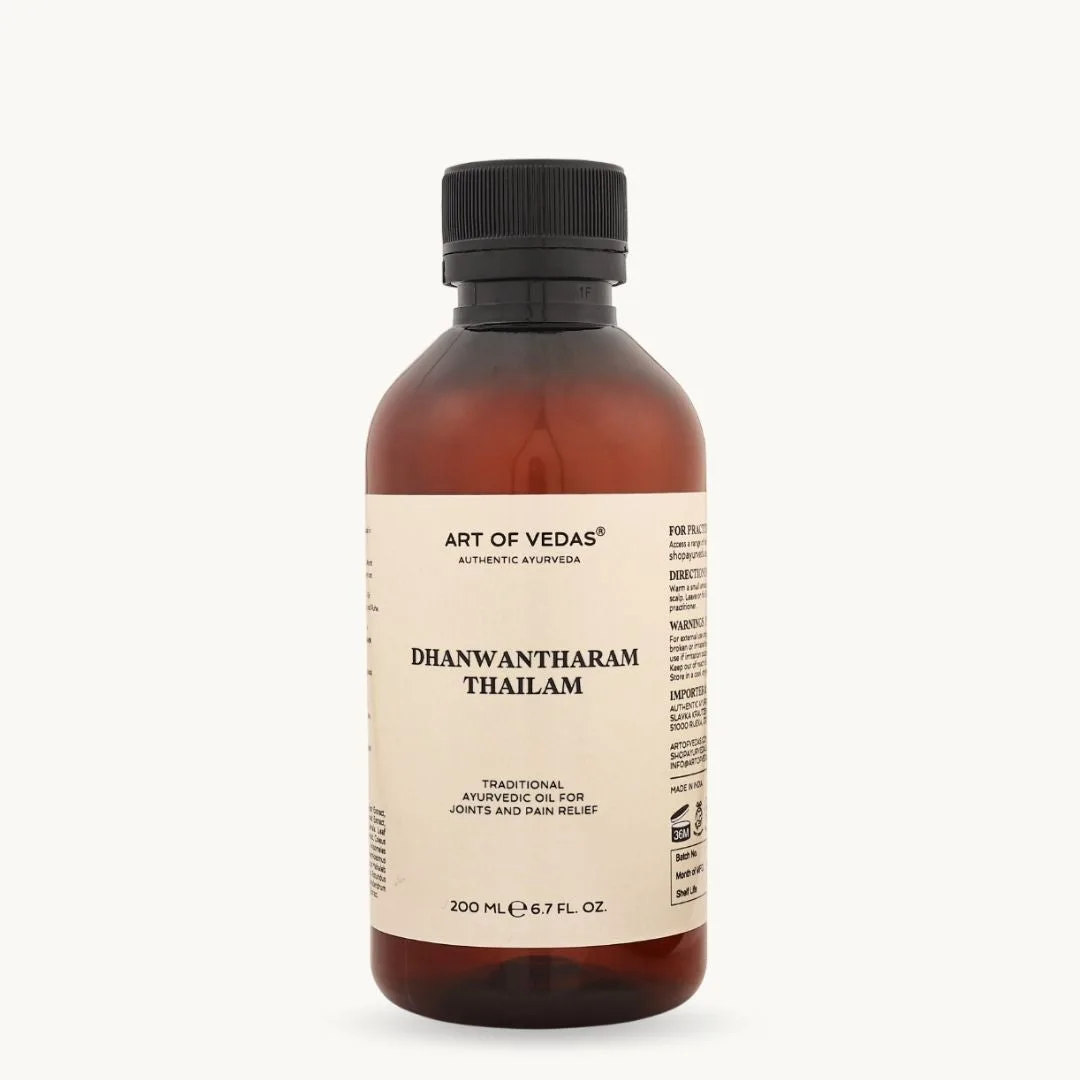
How does Sahacharadi Thailam compare to Dhanwantharam for lower back use?
Dhanwantharam Thailam is the principal classical post-natal oil with broad musculoskeletal Vata applications and is also used for lower back presentations. Sahacharadi Thailam has a slightly more specific classical association with the lower extremities (particularly the legs and feet) and the Sira/Snayu tissue networks. Both are valid choices; the specific classical selection would depend on a fuller constitutional and presenting-condition assessment.
Can I use Sahacharadi Thailam on varicose veins?
Classical Ayurvedic texts describe Sira Granthi (venous nodules) as a condition associated with Vata and Pitta, and Sahacharadi Thailam's Sira-affinity makes it contextually relevant. However, varicose veins are a medical condition, and any approach to managing them should involve consultation with a qualified healthcare provider. In classical Ayurveda, local application of therapeutic oil is a supportive measure within a broader treatment approach, not a primary medical intervention.
Conclusion
Sahacharadi Thailam is a precise classical formulation for a specific purpose: supporting the lower body within the Ayurvedic Vata framework. Its primary herb, Sahachara, and the supporting combination of Rasna, Devadaru, and Dashamula create an oil with warming, penetrating, and channel-supporting properties that the classical texts have consistently associated with the feet, legs, and lower back.
The simplest way to work with this oil is through a daily evening Padabhyanga - five to ten minutes of warm oil on the feet before bed. The classical texts describe this practice, in its modest regularity, as one of the most reliable ways to support Vata balance in the lower body and prepare the system for restful sleep.
Find Sahacharadi Thailam in the Art of Vedas range. For the full classical Vata oil collection, see our Ayurvedic Oils. To understand Vata dosha more fully, our Vata Dosha guide and Vata Imbalance guide provide the classical framework.
This article is for educational purposes only. The information reflects traditional Ayurvedic knowledge as described in classical texts including the Ashtanga Hridayam and Sahasrayogam. It is not medical advice and does not constitute a claim that any product prevents, treats, cures or diagnoses any medical condition. Consult a qualified Ayurvedic practitioner or healthcare provider for personal health guidance.