Oil pulling has become one of the most widely practised Ayurvedic-inspired morning rituals in contemporary Europe - yet the mainstream understanding of the practice often bears little resemblance to what the classical texts actually describe, or to the sophisticated pharmacological reasoning behind it. The practice has been reduced in popular perception to a simple detoxification technique: swish oil in your mouth, spit it out, your mouth is cleaner. The classical Ayurvedic framework describes something considerably more nuanced.
The classical tradition actually distinguishes two related but distinct practices: Kavala (kuh-vuh-luh) and Gandusha (gun-doo-shuh). These are not interchangeable terms for the same technique - they describe two different methods of oral oil application that produce different pharmacological effects and are indicated for different purposes. Understanding this distinction, and knowing which technique to apply, is the first step toward getting the full classical benefit of what the Ashtanga Hridayam describes as a non-optional component of the ideal daily oral care ritual.
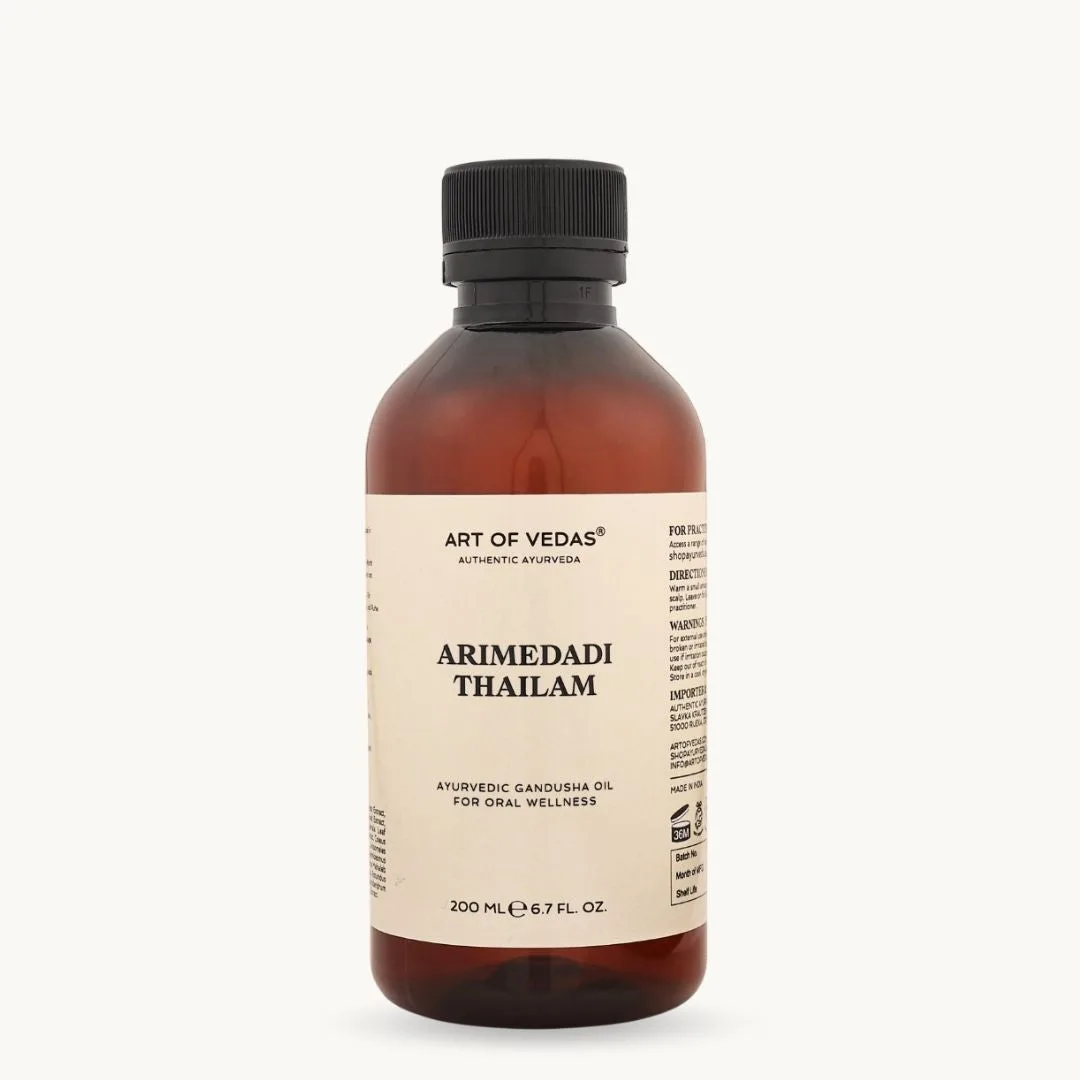
Art of Vedas offers the classical preparation for oral oil practice - Arimedadi Thailam, the principal classical medicated oil for oral use - alongside the complete range of classical copper oral care tools in the Ayurvedic Oral Care collection.
Kavala vs. Gandusha: The Classical Distinction
The Ashtanga Hridayam, Sutrasthana Chapter 22 (Dinacharya), describes both practices explicitly and with different parameters for each.
Gandusha (full-mouth retention): The mouth is filled completely with oil - so full that movement of the liquid is impossible or very limited - and the oil is held for a fixed period (the classical texts describe holding until the mouth fills with secretions or until tears and nasal secretions begin to appear, indicating the full therapeutic contact has been achieved - approximately 3 to 5 minutes). The oil is then spat out completely. Gandusha is described as primarily nourishing (Snehana) in its therapeutic action - it saturates the oral mucosa, gums and tooth structures with the oil's pharmacological properties over a sustained contact period.
Kavala (active swishing): A comfortable quantity of oil - not filling the mouth completely - is actively swished, gargled and pulled between the teeth for an extended period (10 to 20 minutes is the classical description). The active mechanical movement, combined with the oil's contact with the oral mucosa and the progressive mixing of oil with saliva over the swishing period, produces a different therapeutic effect than Gandusha - more Shodhana (cleansing) in character, mobilising and clearing the oral channels through the combination of mechanical action and pharmacological contact.
In classical daily practice, the Ashtanga Hridayam describes Kavala as the more practical regular technique for the everyday Dinacharya context - shorter preparation, more accessible, and sufficient for the daily maintenance benefit. Gandusha is described in some classical texts as the more intensive technique, appropriate for periodic deeper oral care rather than daily practice. Both use the same medicated oil - the technique varies, not the preparation.
Why Oil? The Classical Pharmacological Reasoning
The choice of oil (rather than water, herbal decoction or another medium) for oral practice is not arbitrary in the classical framework - it reflects specific pharmacological reasoning based on the properties of oil relative to the oral tissues and the channel network of the head.
Oil carries the Snigdha (unctuous), Sukshma (penetrating) and Mrudu (soft) properties that water does not. These properties allow oil to penetrate the delicate tissues of the oral mucosa, gums and tooth structures more effectively than a water-based preparation - delivering the pharmacological properties of the herbs in the oil into the tissue layers, not merely washing the surface. The classical texts describe the gums (Dantamula) and teeth (Danta) as Asthi Dhatu derivatives - meaning they share the channel network of the bone tissue system - and oil's Sukshma quality is specifically described as capable of reaching the Asthi (bone) channel network through sustained contact in the oral environment.
The gradual change in the oil's consistency during swishing - from clear or slightly cloudy at the start to more opaque and thicker toward the end of the practice - is described in the classical literature as evidence of the oil's Shodhana (cleansing) action. The oil progressively picks up the mucus, metabolic waste and bacteria from the oral cavity surfaces through the emulsification action of swishing, which is why the final oil should always be spat out rather than swallowed.
Arimedadi Thailam: The Classical Oral Oil
Arimedadi Thailam is the classical medicated oil formulated specifically for the oral Kavala and Gandusha practice. Unlike plain sesame oil, ghee or coconut oil - which are sometimes used as unmedicated alternatives - Arimedadi Thailam is a multi-herb preparation in a sesame base, with the herbs selected specifically for their affinity with the oral cavity, gums and tooth structures.
The primary herb Arimeda (Acacia farnesiana) gives the oil its name and provides the foundational Kashaya (astringent) rasa that is specifically indicated for gum health in the classical context - the astringent taste drawing, tightening and strengthening the gum tissue through its direct contact action. Astringent taste is the classical specific for Dantamula (gum) health in the Charaka Samhita - gum tissue, as an Asthi Dhatu derivative, responds to the contracting, strengthening action of Kashaya rasa.
Pippali (Piper longum) and Maricha (black pepper, Piper nigrum) contribute their Tikshna (penetrating, sharp) properties - allowing the preparation to work beyond the surface of the gums and reach the deeper periodontal tissues and tooth root channels. The classical description of strong, rooted teeth (Dridha Danta) in the Ashtanga Hridayam lists Kavala with medicated astringent and penetrating oils as among the primary practices for maintaining this quality.
Saindhava Lavana (rock salt), Haritaki (Terminalia chebula) and Vibhitaka (Terminalia bellirica) - two of the three Triphala herbs - contribute their Shodhana (cleansing) action to the formulation. Triphala's classical three-fold action (cleansing, nourishing and rejuvenating across all three Doshas) makes the Triphala herbs particularly appropriate in an oral preparation that must serve all three Doshas' oral presentations. The Charaka Samhita describes Haritaki as the pre-eminent single herb for all oral conditions.
The resulting Arimedadi Thailam has a complex, slightly warming, aromatic character that reflects the combination of astringent, penetrating and aromatic herbs - distinctly different from plain sesame oil and providing a richer, more complete oral experience than any single-herb or unmedicated oil preparation.
The Classical Benefits of Kavala and Gandusha
The Ashtanga Hridayam lists the following among the classical benefits of regular Kavala and Gandusha practice:
Danta Dridhatva (strength and firmness of the teeth): The classical texts describe the combined mechanical and pharmacological action of oil swishing as strengthening the periodontal ligament attachment, maintaining the integrity of the tooth socket, and supporting the overall structural health of the teeth through the sustained delivery of Kashaya (astringent) and Tikshna (penetrating) properties into the Asthi Dhatu channel of the tooth structures.
Gum health (Dantamula Saushtava): The Kashaya (astringent) properties of Arimedadi Thailam - derived primarily from the Arimeda herb - directly address the gum tissue through a classical tightening and strengthening action. The Ashtanga Hridayam describes Kavala as preventing the classical Dantamula conditions: bleeding gums, receding gums and gum tissue weakness.
Mukha Saugandhya (oral freshness): The aromatic herb composition of Arimedadi Thailam provides a natural freshening action distinct from the masking effect of mint-based commercial products - addressing the oral environment through the combination of Shodhana (cleansing of bacterial and metabolic residue) and the aromatic herb properties rather than simply covering odour with fragrance.
Kantha Madhurya (sweetness and clarity of the voice): The classical texts consistently list throat and voice quality among the benefits of oral oil practice. The oil's contact with the throat and upper respiratory mucosa through gargling provides direct nourishment and Vata-pacifying lubrication to the vocal structures.
Mukha Shosha Hara (relief of oral dryness): Dryness of the mouth and throat - a Vata excess presentation in the oral channel - is directly addressed by the Snigdha (unctuous) quality of the oil application. For those experiencing chronic dry mouth, morning oral dryness or the drying effects of breathing through the mouth, regular Kavala provides sustained lubrication.
The Complete Oral Dinacharya: Tongue Scraping, Kavala and Copper Tools
In the classical Dinacharya (daily routine), oral care is a multi-step sequence rather than a single practice. The Ashtanga Hridayam describes the following sequence for ideal daily oral hygiene:
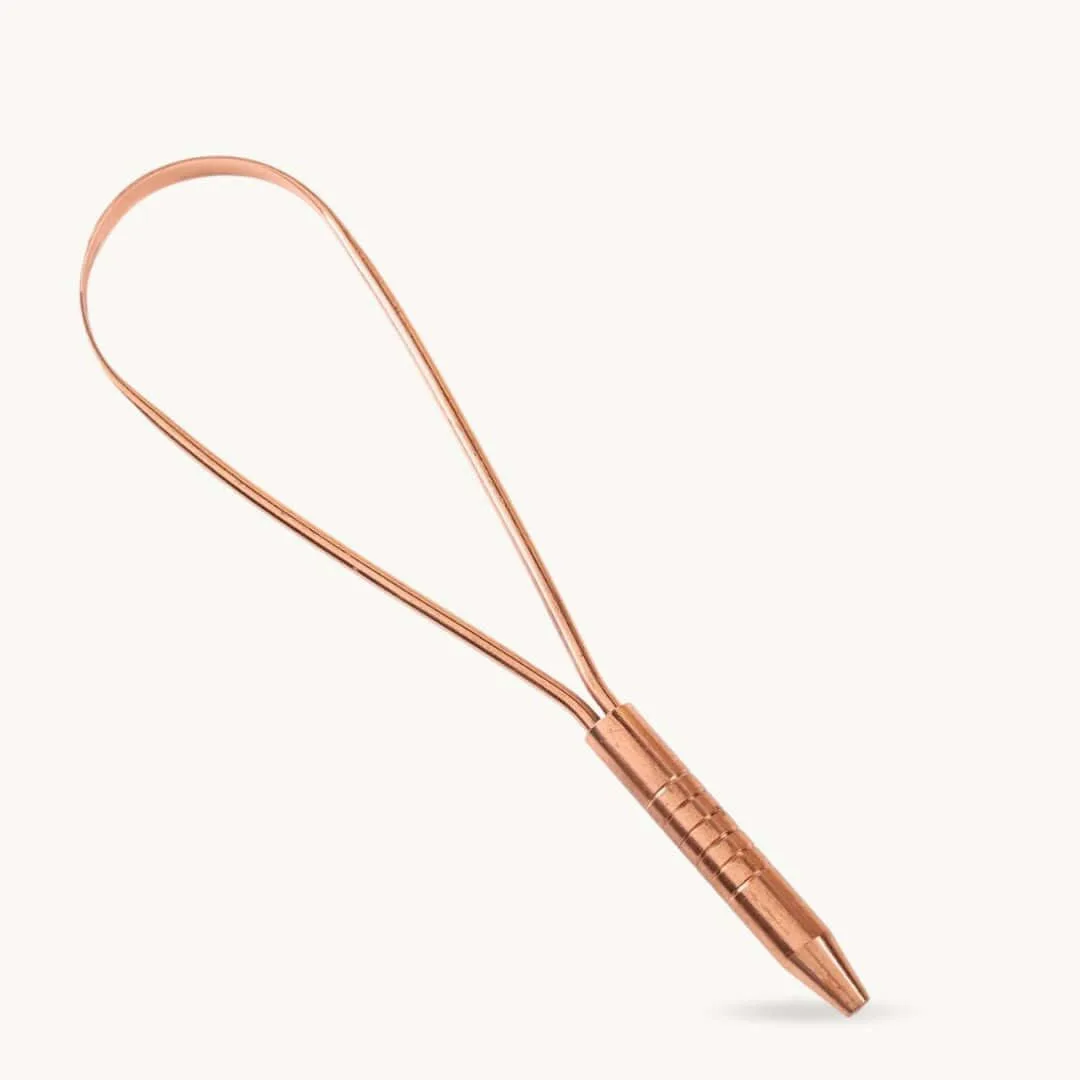
First: tongue scraping (Jivha Nirlekhanam) - removing the overnight accumulation of Ama (metabolic residue) from the tongue surface before it is swallowed or redistributed. The Ayurvedic Copper Tongue Scraper or the Copper Tongue Cleaner Double Handle are the classical copper instruments for this practice. Copper's classical antimicrobial properties make it the most pharmacologically appropriate material for tongue scraping - it does not merely mechanically remove the coating but contributes the copper's own oral channel properties to the practice.
Second: Dantadhavana (tooth cleaning) with a classical tooth powder or herbal preparation - using rough, astringent-tasting sticks or powders as described in the Charaka Samhita.
Third: Kavala or Gandusha with medicated oil - the Arimedadi Thailam practice described in this guide.
Fourth: Nasya (nasal oil application) - the Anu Thailam practice that addresses the nasal passages and head channels after the oral care sequence is complete.
The classical copper oral care tools amplify the benefit of each step through the copper's inherent pharmacological properties. The Copper Glass provides drinking water stored overnight in copper - a separate Dinacharya practice described in the copper glass guide. The complete classical oral care toolkit is available in the Ayurvedic Oral Care collection at Art of Vedas.
How to Perform Kavala with Arimedadi Thailam: Practical Guide
Timing: Perform Kavala in the morning before eating, after tongue scraping. The Ashtanga Hridayam describes morning as the appropriate time - before the first meal and before Nasya.
Amount: For Kavala (active swishing), approximately one tablespoon of Arimedadi Thailam is appropriate for most adults. For Gandusha (full-mouth retention), the mouth is filled to capacity - enough that vigorous movement is minimal.
Warming the oil: The classical texts describe warm oil as more pharmacologically effective than cold oil, as warmth increases the oil's Sukshma (penetrating) quality. Place the bottle briefly in warm water before use, or hold the measured oil in a small copper vessel.
Duration: For Kavala, swish actively for 5 to 20 minutes - actively pulling the oil between the teeth, pushing it around the gums and rolling it through the mouth. The classical texts describe continuing until the mouth fills with secretions and the oil becomes thinner and more opaque. For Gandusha, hold for 3 to 5 minutes without vigorous movement, then spit.
Disposal: Spit the oil into a bin rather than the sink - the progressive build-up of oil residue in drain pipes is the practical reason. Do not swallow the used oil.
After practice: Rinse with warm water. The Ashtanga Hridayam does not recommend vigorous brushing immediately after oil practice - the oil's residual coating on the gums provides continued protective contact. Allow 10 to 15 minutes before eating.
Frequently Asked Questions
Is any oil suitable for Kavala, or does it need to be Arimedadi Thailam?
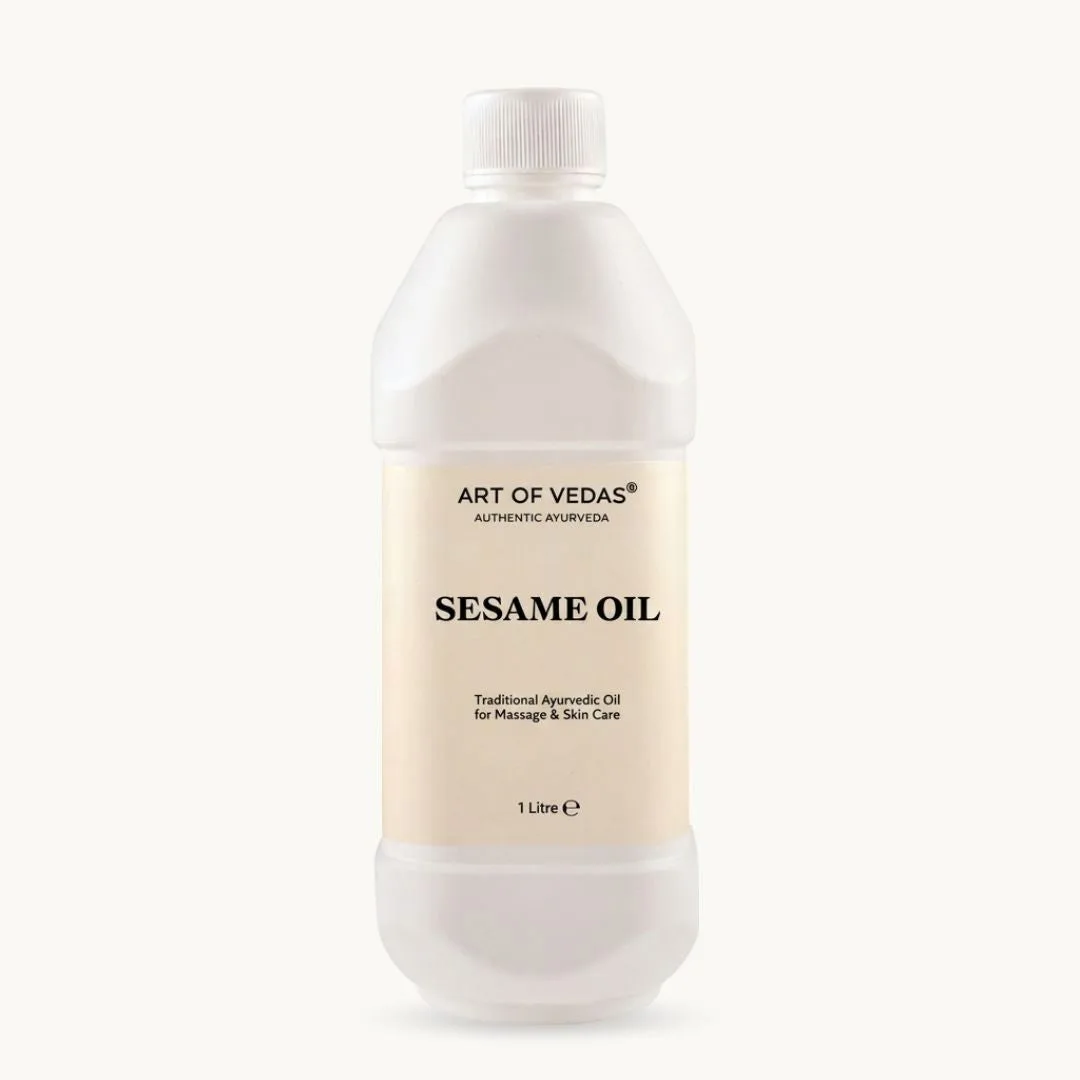
Plain sesame oil, coconut oil and ghee can all be used for Kavala - the classical texts describe these as acceptable unmedicated options. However, Arimedadi Thailam provides the multi-herb pharmacological action - particularly the Kashaya (astringent) gum-strengthening and Tikshna (penetrating) tooth-channel action - that plain carrier oils lack. For maintenance of general oral health, plain sesame oil is a functional daily option. For the full classical benefit targeting gum health and teeth specifically, Arimedadi Thailam is the classical prescription.
How long before I notice results from daily Kavala?
Freshness and morning oral dryness changes are typically noticeable within the first week of consistent daily practice. Gum sensitivity changes take longer - 4 to 8 weeks of consistent daily practice before meaningful changes in gum tissue quality become apparent. The classical texts describe the full benefit of Danta Dridhatva (tooth firmness) as developing over months of consistent practice.
Can I use Arimedadi Thailam if I have sensitive gums?
Yes - the classical indication of Arimedadi Thailam includes presentations of gum sensitivity and bleeding. The Kashaya (astringent) herbs in the formulation have a classical tightening and strengthening action on the gum tissue that is specifically indicated for these presentations. Begin with a shorter swishing time (3 to 5 minutes) and build gradually to the full duration as the oral tissues adjust to the practice.
Is the copper tongue scraper important, or is any material acceptable?
The classical texts specifically recommend metals for tongue scraping - copper, gold, silver and stainless steel are all described, with copper being the most broadly recommended for its classical antimicrobial and Tridoshahara (all-Dosha balancing) properties. Plastic tongue scrapers are not described in the classical texts and lack the metal pharmacology that copper provides. The Ayurvedic Copper Tongue Scraper and the Double Handle Copper Tongue Cleaner are the Art of Vedas classical copper instruments for this practice, both available in the Oral Care collection.
What does the copper energy ball in the oral care range do?
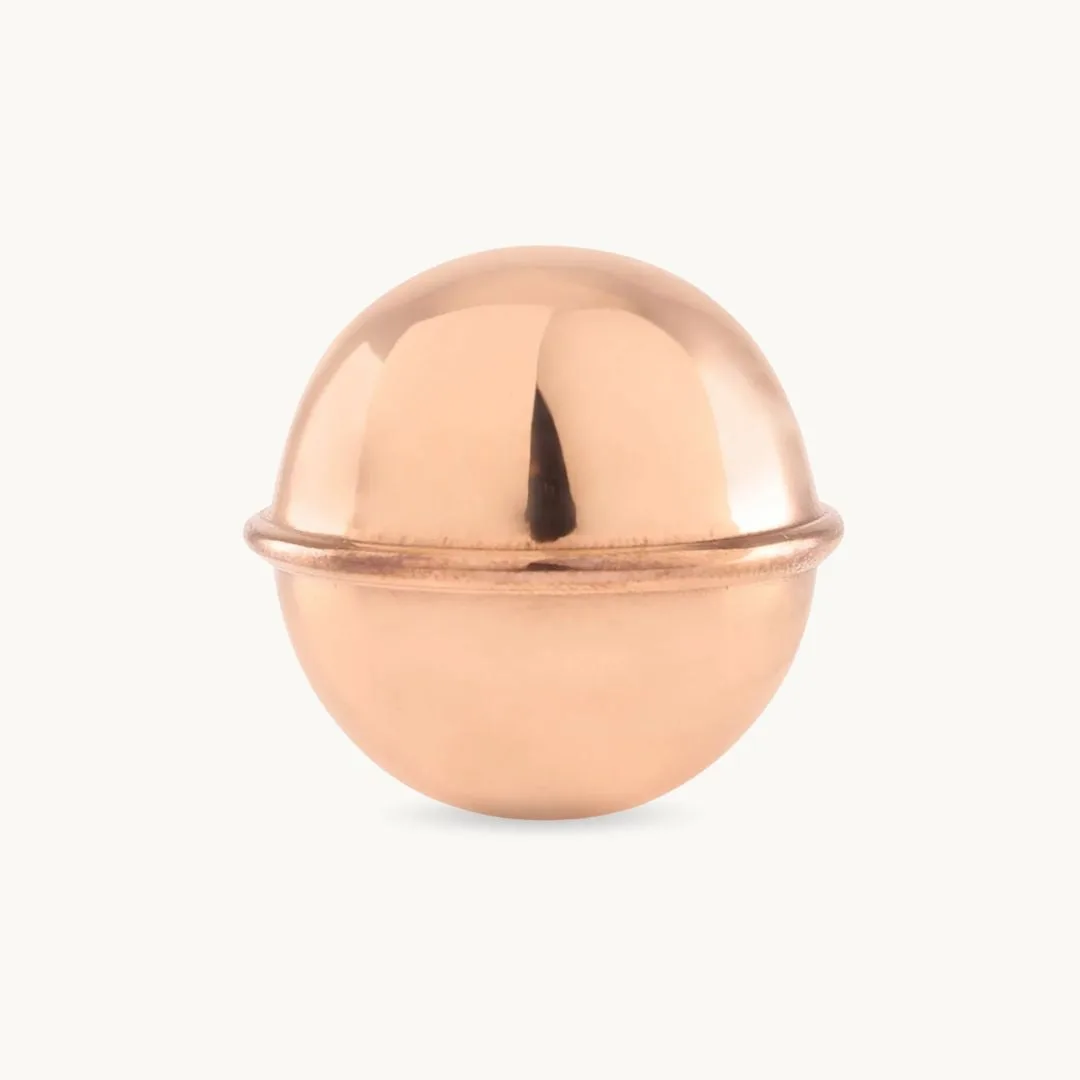
The Copper Energy Ball is a small copper sphere used for Kavala in the classical tradition - the ball held in the mouth alongside the oil during swishing, contributing the copper's direct pharmacological contact with the oral mucosa throughout the practice. Its use reflects the classical understanding of copper as a therapeutic material in direct contact with body tissues, adding the metal's properties to the liquid oil medium during the swishing action.
Arimedadi Thailam is a traditional Ayurvedic medicated oil for oral use (Kavala and Gandusha). It is intended for external use in the oral cavity only and should not be swallowed. It is not intended to diagnose, treat, cure or prevent any disease and is not a substitute for professional dental advice. For persistent dental or gum conditions, consult a qualified dental professional.