In brief: Kunthalakanthi Thailam (also written Kunthalakanthi Taila, Kuntalakanti Thailam or Kunthalakanthi hair oil) is a classical Ayurvedic hair oil whose name means "the oil for the lustre of the hair". The classical recipe cooks a group of plants, among them Bhringaraja and Amalaki, into a coconut oil base, and the oil is traditionally used for Shiroabhyanga and for dressing the hair. Art of Vedas does not currently offer Kunthalakanthi Thailam. This guide covers what the oil is, what the name means, how such a hair oil is used in practice, how it compares with Neelibhringadi Thailam, and which oils in our range come closest to it.
What Kunthalakanthi Thailam is and what the name means
Kuntala is a Sanskrit word for a lock of hair, and kanti means lustre or radiance. Kunthalakanthi Thailam is therefore named not for a plant but for its purpose: it is the oil of the classical hair-care tradition that is used to keep the hair soft and glossy. Thailam, Thailam and Taila are one word for oil; Kuntalakanti is the more Sanskrit spelling.
Unlike the sesame-based body oils, the classical hair oils of this tradition are cooked in coconut oil. Kunthalakanthi Thailam belongs to that family, alongside the better known Neelibhringadi Thailam.
What the classical tradition describes
Kunthalakanthi Thailam is a recipe of the later compendia that collect the oils of everyday practice. The classical recipe names, among others, Bhringaraja, the plant that leads most of the classical hair oils, and Amalaki, the Indian gooseberry, cooked into coconut oil by the Sneha Paka method: the juice or decoction of the plants and a paste of the finer ones are cooked slowly into the oil until the water has gone. No full list is given here; judge a product by its declared list. Our complete guide to traditional Thailams explains the method.
Character in Ayurvedic terms
The classical hair oils are placed with Pitta, the Dosha that the tradition associates with the head and the hair, and they are described as cooling. Coconut oil is itself described as cooling in the texts. Kunthalakanthi Thailam is therefore a cooling head oil, used on the scalp and hair only.
How such a hair oil is used in practice
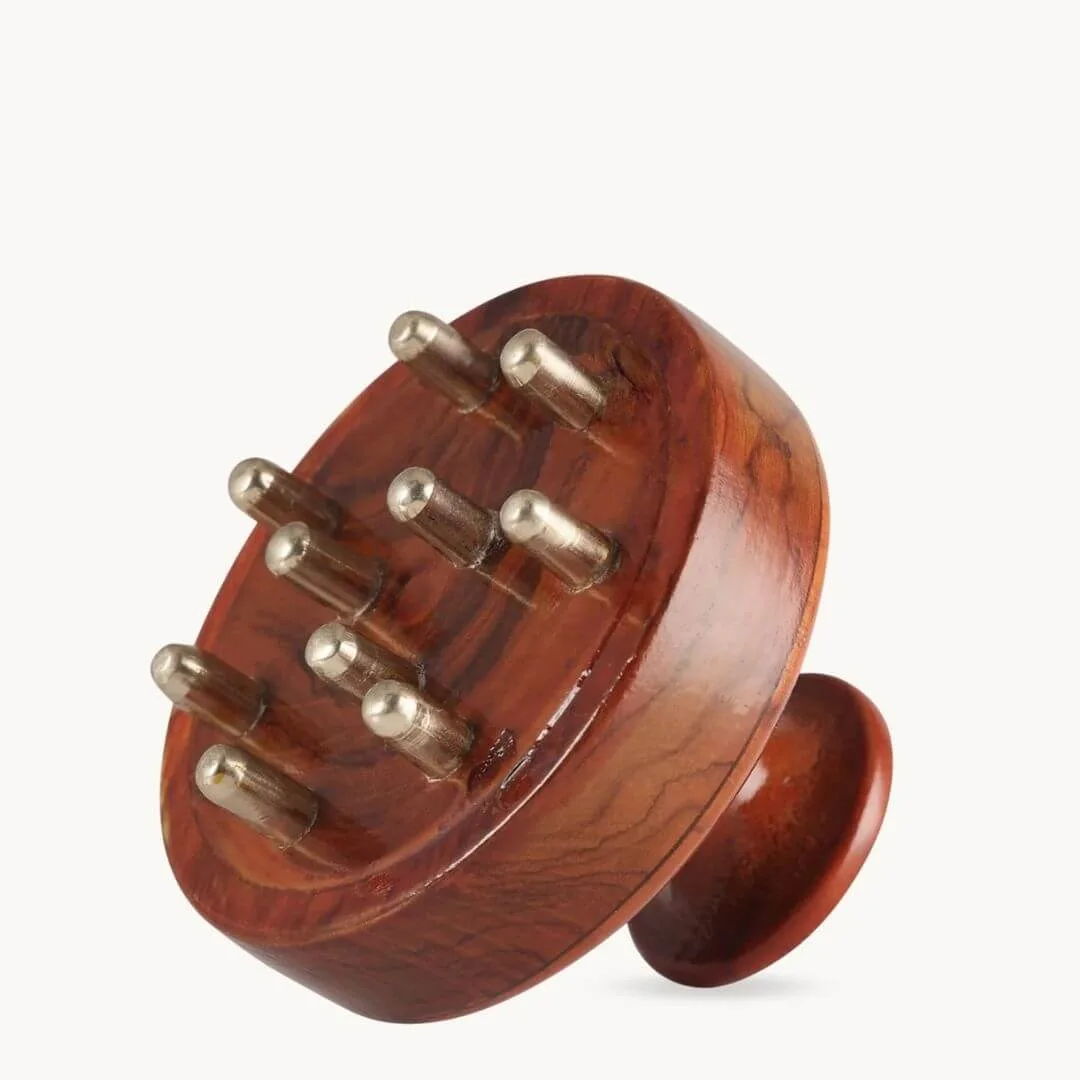
Shiroabhyanga, the head massage. Coconut oil sets below about 24 degrees, so the bottle is often solid: stand it in a bowl of warm water for a few minutes until the oil is liquid and pleasantly warm, and never use a microwave. Part the hair, apply a small amount to the scalp and work it in with the fingertips in slow circles for five to ten minutes, then draw the remaining oil through the lengths. Leave it on for at least half an hour, or overnight with a towel on the pillow, and wash the hair as usual. Once or twice a week is the usual rhythm.
Dressing the hair. A few drops warmed between the palms and smoothed over the lengths and ends after washing is the second classical use. The full sequence of the head massage is in our Abhyanga guide.
Who should ask first
Kunthalakanthi Thailam is for external use on the scalp and hair only. Do a small skin test behind the ear or on the inner forearm before the first full application, and keep the oil away from the eyes. If you are pregnant or wish to use any oil on a child, ask your doctor or a qualified Ayurvedic practitioner first.
Kunthalakanthi Thailam and Neelibhringadi Thailam
Both are coconut-based hair oils of the same classical tradition, used in the same way, and both carry Bhringaraja and Amalaki in the recipe. Neelibhringadi Thailam is named for its two lead plants, Neeli, the indigo leaf, and Bhringaraja, and the indigo gives it its dark colour; it is the fuller and better known recipe. Kunthalakanthi Thailam is named for its purpose, the lustre of the hair, and is the lighter dressing oil of the two.
Art of Vedas does not currently offer Kunthalakanthi Thailam
The closest oils in our range are the two classical head oils. Neelibhringadi Thailam is the coconut-based hair oil of the same tradition and the nearest to Kunthalakanthi Thailam in recipe and use. Brahmi Thailam is the head oil named for Brahmi, used for the same weekly Shiroabhyanga.