In brief: Kayyunyadi Thailam (also written Kayyonyadi Thailam, Kayyunyadi Keram or Kayyunyadi Velichenna) is a classical Ayurvedic hair oil named after Kayyunni, a vernacular name of Bhringaraj, Eclipta alba, which is cooked into an oil base, most often coconut oil. It is recorded in the Sahasrayogam and traditionally used for Shiroabhyanga, the oil massage of the scalp and hair. Art of Vedas does not currently offer Kayyunyadi Thailam; the closest oils in our range are Neelibhringadi Thailam and Brahmi Thailam. This guide covers what the oil is, how the texts describe it, the Keram and Thailam forms, and how a classical hair oil is used.
What Kayyunyadi Thailam is and where the name comes from
Kayyunni, also spelt Kayyonni, is the everyday name of Bhringaraj, Eclipta alba, a small herb with white flowers that grows in damp ground. The suffix adi means "beginning with", so Kayyunyadi is the oil whose recipe begins with Kayyunni, the usual way a classical preparation is named after its first ingredient. Thailam, Thailam and Taila all mean a medicated oil. Keram means that the base is coconut oil, and Velichenna is simply the vernacular word for coconut oil.
The classical description
The classical recipe names, among others, the fresh juice of Kayyunni, cooked into the oil base by the Sneha Paka method together with a paste of further plants that the texts list. The oil is recorded in the Sahasrayogam among its oils for the head. Where the texts describe it, they do so in the language of the hair and scalp, and this guide keeps to that description without adding claims of its own.
Keram or Thailam: the base oil
Many hair oils of the southern tradition exist in two forms. The Keram form is made in coconut oil, which Ayurveda describes as cooling. The Thailam form is made in sesame oil, which is described as warming and is the base of most classical massage oils. The plants are the same; the base changes the character. A label that reads Kayyunyadi Keram or Kayyunyadi Velichenna is the coconut form; a label that reads Kayyunyadi Thailam may be either, so the ingredient declaration is the place to check.
Character in Ayurvedic terms
The tradition describes the coconut form as a cooling oil, Sheeta, and places it with Pitta. Bhringaraj itself is described in the texts as bitter and pungent in taste. The sesame form is closer to neutral and suits cooler months. A qualified Ayurvedic practitioner can tell you which form suits your constitution and the season.
How a classical hair oil is used in practice
Kayyunyadi Thailam belongs to Shiroabhyanga, the oil massage of the scalp described in the classical daily routine, Dinacharya. Warm the oil by standing the closed bottle in a bowl of warm water for a few minutes; do not use a microwave. Part the hair and work a small amount into the scalp with the fingertips, in slow circles from the crown outwards, then draw what is left through the lengths. Leave it on for 30 to 60 minutes, or overnight, and wash it out with a mild shampoo. Two or three applications a week is the usual rhythm. Our Abhyanga guide covers the full routine.
Who should ask first
A classical hair oil is for external use only. Do a small skin test on the inner forearm before the first full application, keep the oil away from the eyes and do not apply it to broken skin. In pregnancy, and before using any oil on a child, ask your doctor or a qualified Ayurvedic practitioner first; a practitioner is also the right person to ask whether coconut or sesame is the better base for you.
Art of Vedas and Kayyunyadi Thailam
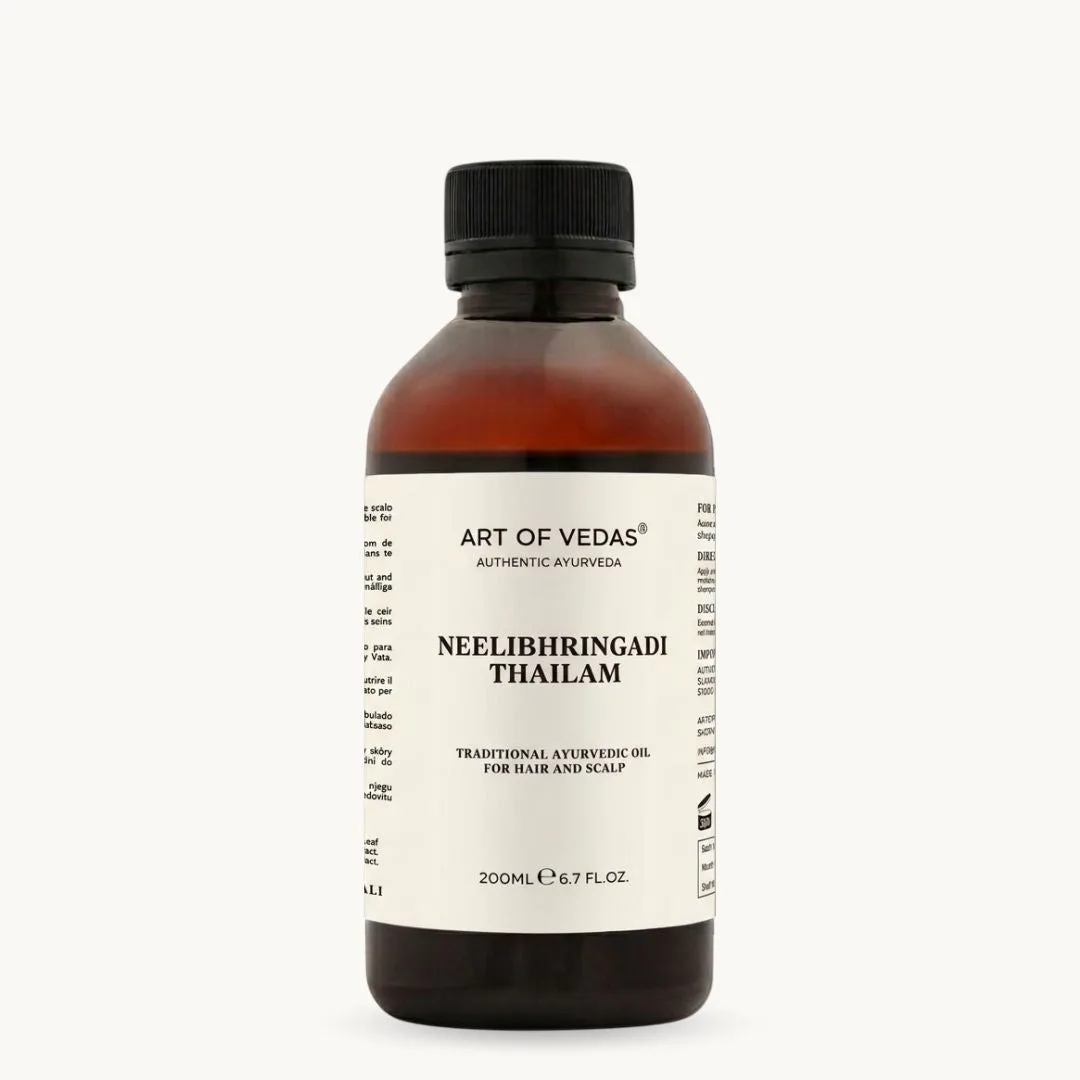
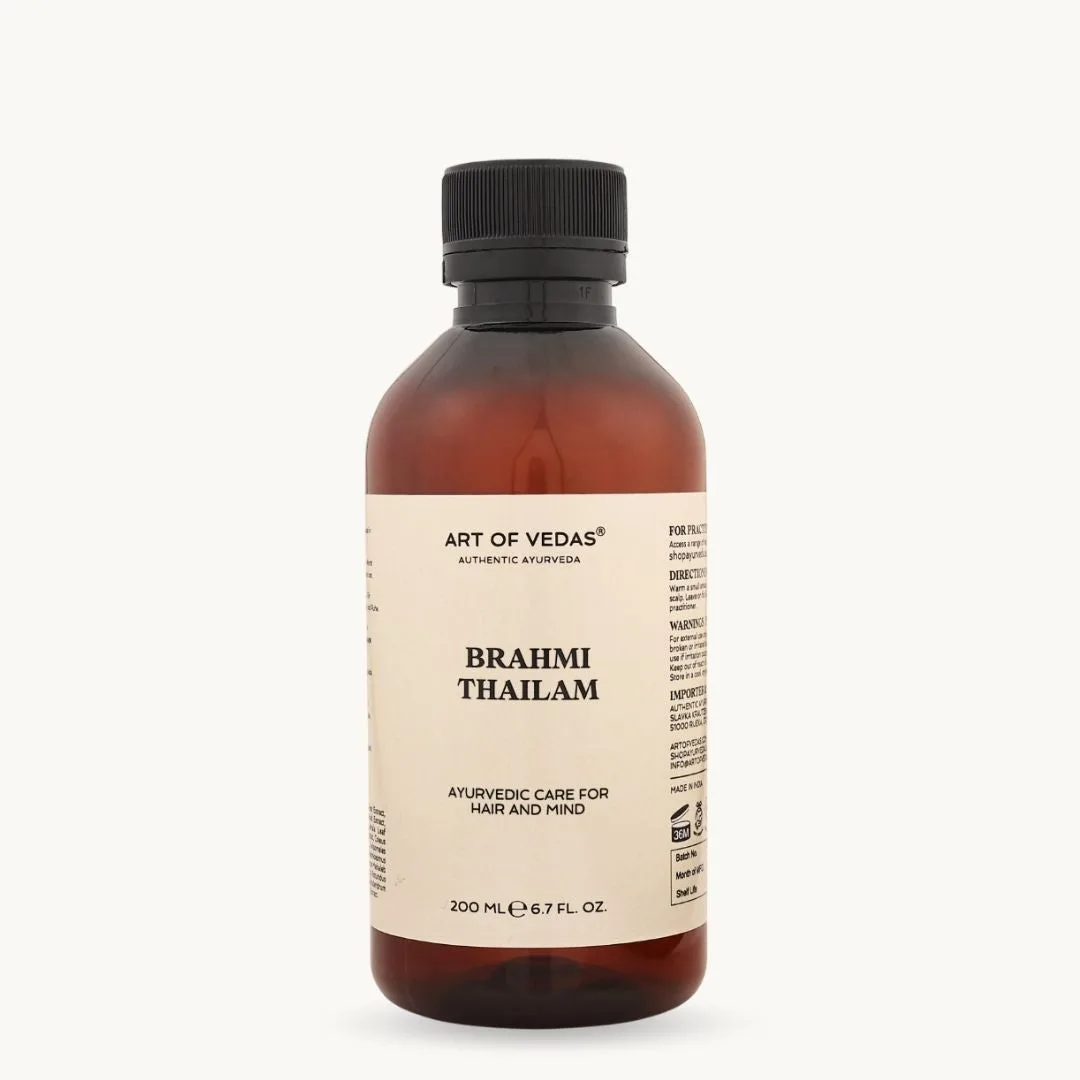
Art of Vedas does not currently offer Kayyunyadi Thailam. The closest oils in our range are Neelibhringadi Thailam and Brahmi Thailam. Neelibhringadi is the better-known relative: its recipe begins with Neeli, the indigo plant, and continues with the same Bhringaraj. The Art of Vedas Neelibhringadi Thailam declares indigo, Bhringaraj, balloon vine and Amla juices with coconut milk in a sesame oil base. Brahmi Thailam is the plainer head oil in our range, built around Brahmi in a sesame base. For an overview of every classical oil we carry, see our complete guide to traditional Ayurvedic Thailams.