This article is part of our The Complete Guide to Dhanwantharam Thailam: Ancient Ayurvedic Oil for Modern Wellness guide series.
Abhyanga as a Pillar of Ayurvedic Daily Routine (Dinacharya)
In Ayurveda, daily life is considered the first and most important space for self-care. Rather than separating wellness from routine, classical texts describe dinacharya - a structured daily rhythm that supports steadiness, awareness, and balance. Within this rhythm, abhyanga, the practice of self-massage with oil, holds a central place.
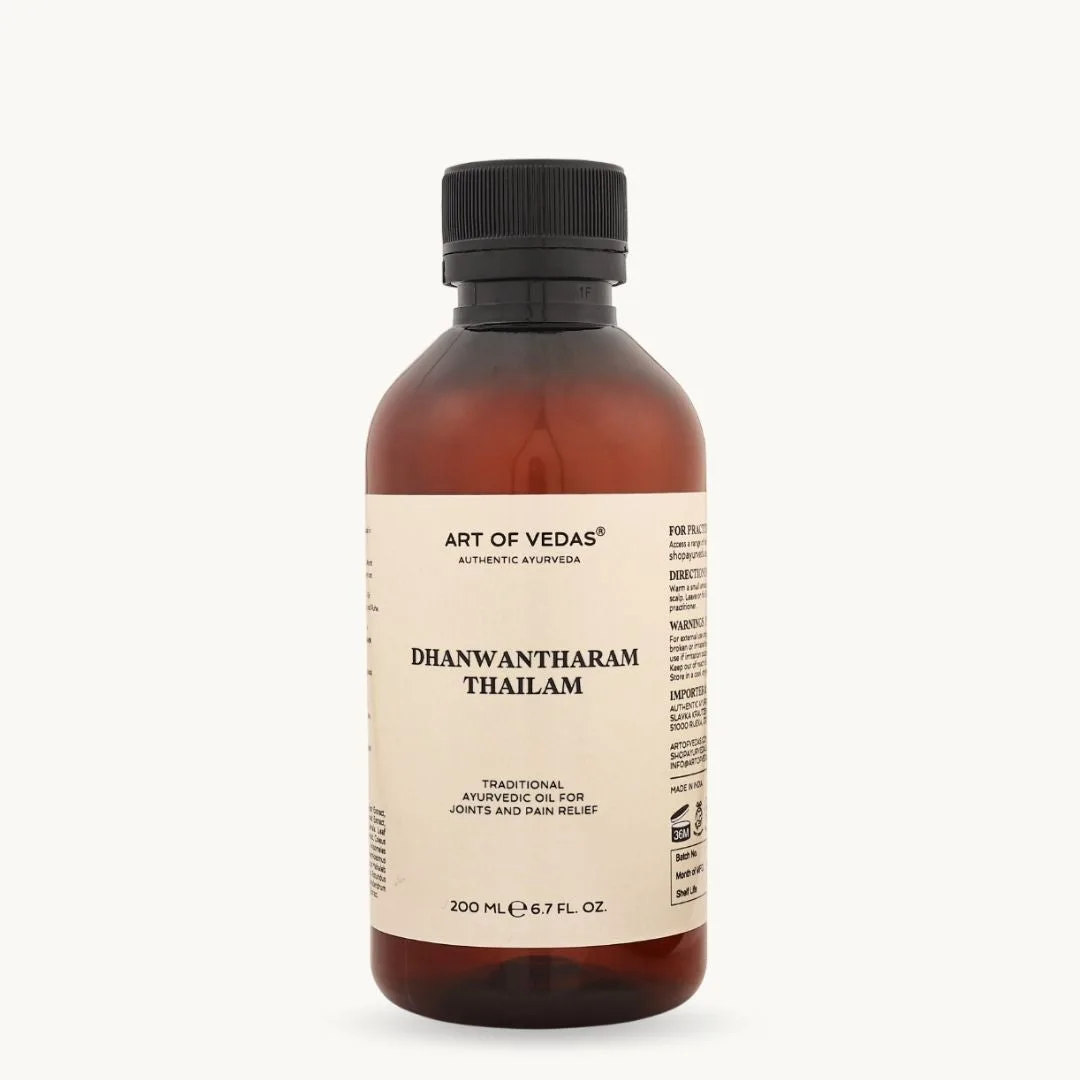
Abhyanga is not framed as a technique to fix problems or produce outcomes. Instead, it is a ritual of nourishment and presence, designed to help the body transition smoothly through the day. Among the oils traditionally used for this practice, Dhanwantharam Thailam is especially valued for its grounding, steady character and suitability for regular use.
At Art of Vedas, abhyanga is approached as a cultural self-care ritual rather than a performance - one that reflects continuity, patience, and respect for classical Ayurvedic living.
This guide offers a complete, tradition-aligned understanding of abhyanga with Dhanwantharam Thailam. It focuses on how and why the practice is performed, how to adapt it to modern life, and how to maintain authenticity - without medical claims or therapeutic promises.
The Philosophy Behind Abhyanga: More Than Just Massage
Ayurveda views touch as a form of communication. Through oil application, the body receives signals of warmth, continuity, and care. Classical texts such as the Ashtanga Hridaya describe oiling the body as a daily act of sneha - a concept that includes lubrication, affection, and inner softness.
Abhyanga is therefore:
-
A ritual, not a technique
-
A daily conversation with the body, not a performance
-
A practice of consistency, not intensity
When practiced regularly, it supports a sense of rhythm and embodiment that aligns with Ayurvedic living - a philosophy that Art of Vedas consistently emphasizes in its approach to traditional wellness.
Dhanwantharam Thailam is traditionally chosen for abhyanga because of its:
-
Balanced, non-stimulating character
-
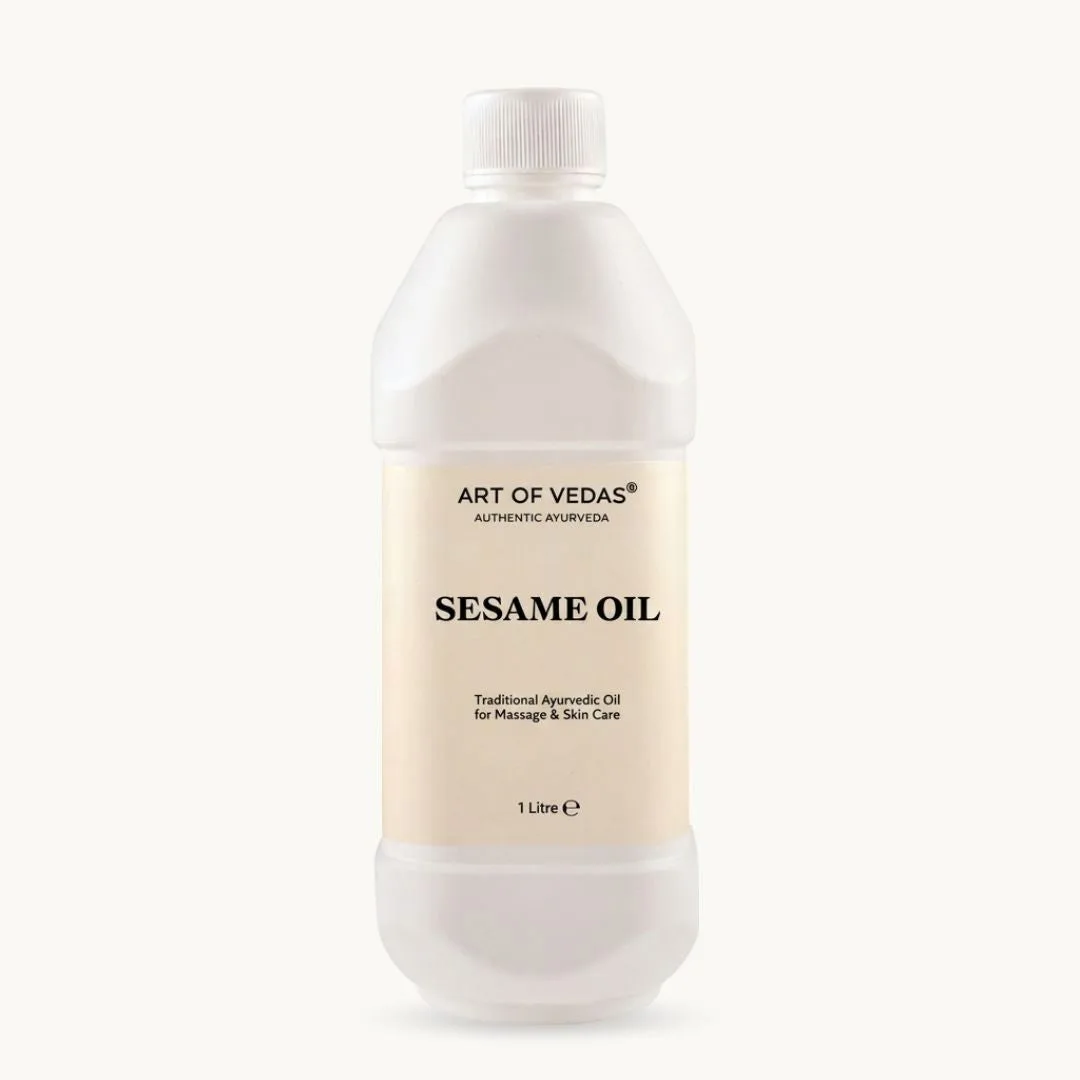
Sesame oil base, valued in Ayurveda for daily oiling
-
Herbal profile suited to long-term, repetitive use
Unlike oils intended for occasional or focused application, Dhanwantharam Thailam is culturally positioned as a routine companion - an oil that integrates seamlessly into everyday life. This philosophy of steady, repeatable care is central to how Art of Vedas aligns with classical oil traditions.
Preparing for Your Abhyanga Practice
Creating a Sacred Space
Abhyanga is traditionally performed in a warm, quiet environment. Even a small corner of your home can become suitable when distractions are minimized and time pressure is reduced.
Gathering Your Materials
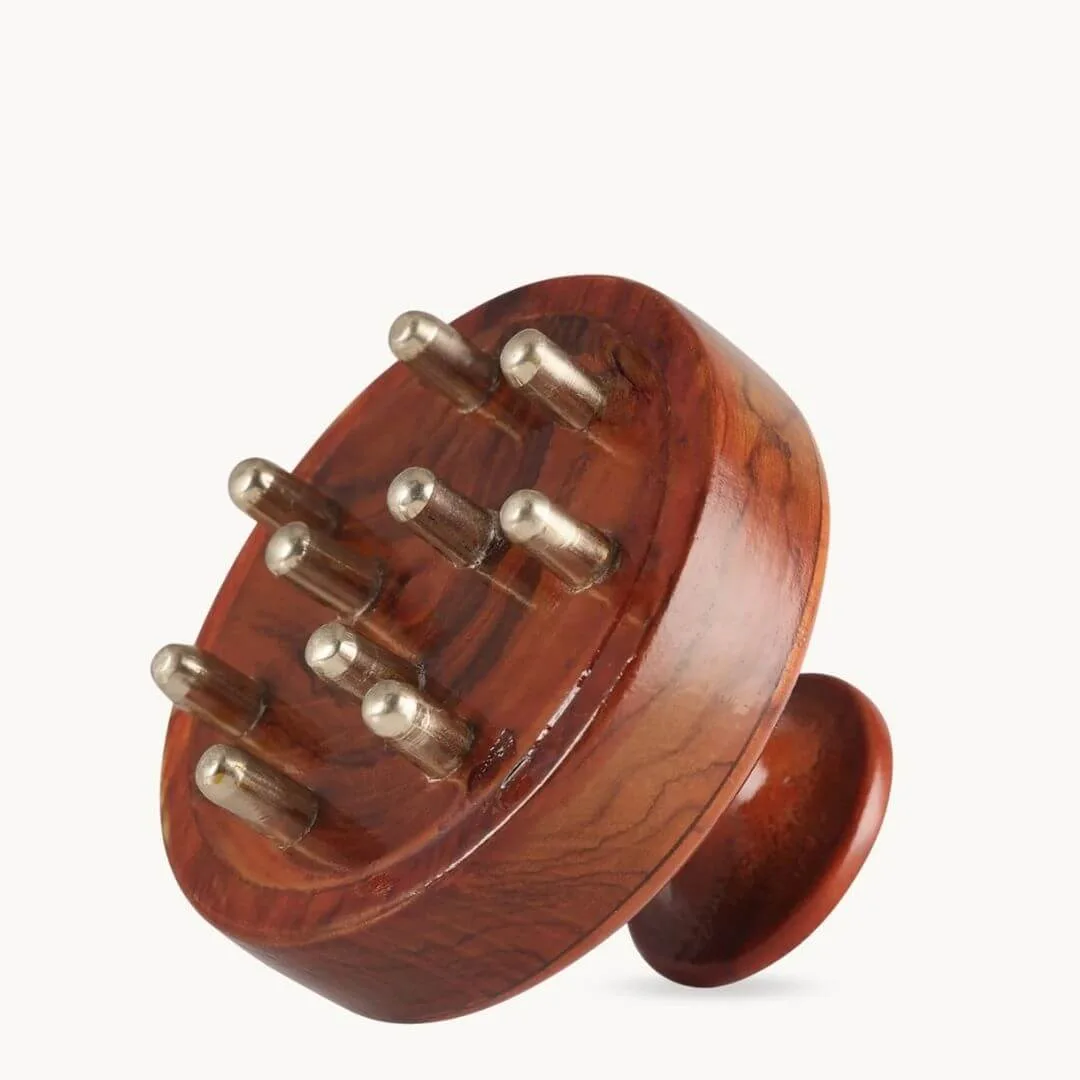
You will need:
Warming the Oil: Traditional Methods
Oil is gently warmed by placing the container in warm water. Direct heating is traditionally avoided. The oil should feel comfortably warm, never hot.
Best Time of Day According to Ayurveda
Abhyanga is traditionally practiced in the morning before bathing, though evening application is also used in certain lifestyles. Ayurveda prioritizes consistency over rigidity - choose a time you can maintain regularly.
Full-Body Abhyanga: Step-by-Step Traditional Technique
Abhyanga follows a general directional logic rather than strict rules. Movements are slow, rhythmic, and intentional.
Head and Scalp Massage Sequence
Oil is first applied to the scalp using gentle circular motions. This step is often brief and may be omitted on days when hair washing is not desired.
Face and Neck Techniques
A very small amount of oil is used. Strokes are light and outward-moving, respecting the sensitivity of facial skin.
Arms and Hands: Direction and Pressure
Long strokes are applied along the length of the arms, with circular motions around joints. Pressure remains moderate and consistent.
Torso: Heart Center and Abdomen
Strokes over the chest are gentle and symmetrical. The abdomen is massaged in slow, circular movements, traditionally clockwise.
Lower Body: Legs and Feet
Legs receive long, grounding strokes. Feet are given special attention, as they are traditionally considered grounding points in Ayurveda.
Massage Strokes and Pressure: Ayurvedic Principles
Ayurveda emphasizes:
-
Long strokes on long bones
-
Circular strokes on joints
-
Even pressure, never force
The goal is not muscle manipulation but rhythmic contact.
Duration: How Long Should Abhyanga Take?
Traditional abhyanga can last anywhere from 10 to 30 minutes. Shorter sessions practiced consistently are valued more than occasional long ones.
The Resting Period: Allowing Oil Absorption
After massage, a brief rest period allows the oil to settle. This pause is considered part of the practice, not an optional step.
Bathing After Abhyanga: Traditional Ayurvedic Approach
Warm water bathing is traditionally preferred. Mild cleansers are used sparingly to avoid stripping the oil completely from the skin.
Frequency: Daily, Weekly, or Seasonal Practice?
Classically, abhyanga is described as a daily practice, though modern adaptations may include:
-
Daily short sessions
-
Weekly full-body oiling
-
Seasonal intensification
Ayurveda supports adaptation without abandoning intention - an approach also reflected in Art of Vedas' philosophy of practical tradition.
Adapting Abhyanga for Different Doshas
While Dhanwantharam Thailam is broadly used, individuals may adjust:
-
Quantity of oil
-
Pressure
-
Frequency
Self-observation guides these adjustments rather than fixed rules.
Seasonal Variations in Technique and Oil Quantity
Cooler seasons traditionally invite more oil and longer sessions. Warmer seasons often favor lighter application and shorter duration.
Mini-Abhyanga: Quick Versions for Busy Lifestyles
Mini-abhyanga may focus only on:
-
Feet
-
Hands
-
Neck and shoulders
These brief rituals preserve continuity when time is limited.
Self-Care vs. Professional Ayurvedic Massage
Abhyanga is fundamentally a self-practice. Professional massage serves a different cultural role and does not replace daily oiling rituals.
Common Mistakes and How to Avoid Them
Common missteps include:
Simplicity and presence are the traditional safeguards.
Tracking Your Experience: Building Awareness
Ayurveda values noticing patterns:
This awareness refines practice naturally.
Integrating Abhyanga with Other Wellness Practices
Abhyanga traditionally complements:
-
Simple, warm meals
-
Regular sleep routines
-
Quiet mornings
Integration matters more than expansion.
Conclusion: Making Abhyanga a Sustainable Life Practice
Abhyanga with Dhanwantharam Thailam is not about mastering technique - it is about cultivating relationship. Through consistent, respectful oil rituals, the body is reminded daily of steadiness and care. When approached without urgency or expectation, abhyanga becomes one of Ayurveda's most enduring gifts: a sustainable, deeply human practice woven into ordinary life - an understanding closely reflected in the ethos of Art of Vedas.
Frequently Asked Questions
1. How much Dhanwantharam Thailam should I use for full-body abhyanga?
Enough to lightly coat the skin without excess; quantity varies by season and comfort.
2. Can I do abhyanga before bed or should it be in the morning?
Morning is traditional, though evening practice is also used in some routines.
3. Do I need to wash my hair every time I include scalp massage?
No. Scalp oiling can be occasional rather than daily.
4. How warm should the oil be for abhyanga?
Comfortably warm to the touch, never hot.
5. Can I do abhyanga if I have a busy schedule?
Yes. Mini-abhyanga practices are traditionally accepted.
6. Should I massage toward or away from my heart?
Long strokes follow the limbs; joints are massaged in circles.
7. Can I do abhyanga during menstruation?
Practices vary by tradition; many prefer rest or lighter routines.
8. How long should I leave the oil on before bathing?
Traditionally 10, 30 minutes, depending on time and comfort.
9. Where can I buy authentic Dhanwantharam Thailam?
Authentic Dhanwantharam Thailam is best purchased from specialized Ayurvedic retailers, trusted wellness platforms such as Art of Vedas.
10. Can children practice abhyanga with Dhanwantharam Thailam?
Yes, gentle oiling is part of many cultural traditions, adapted to age and comfort.